


Flutter management
Content
General information
Depending on the manufacturer and device, there may be a specific algorithm to search for the presence of 2/1 flutter (2 atrial activities for one ventricular stimulation), which can lead to rapid ventricular pacing, with one out of every two atrial signals falling into post ventricular atrial blanking.
Brand specific information
Abbott
No such algorithm; when a 2/1 flutter occurs, it is necessary to shorten the duration of atrial blanking post ventricular pacing.
Biotronik
2:1 lock in protection algorithm
An algorithm (protection 2:1 lock in) has been developed to detect under-detection of masked flutter with absence of folding, as every second atrial activity falls within the far-field atrial protection after ventricular pacing.
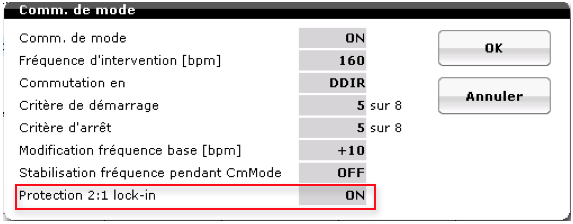
When the device detects 8 consecutive atrial events in the atrial far-field window, and the stimulated ventricular rate is greater than 100 bpm, it suspects 2/1 masked flutter and lengthens the AV delay to a maximum value of 300 ms over one cycle. If the atrial cycle is lengthened, the device concludes that there is cross-hearing and does not switch; on the other hand, if the atrial cycles are not modified by the change in AV delay, it concludes that there is atrial flutter and switches.
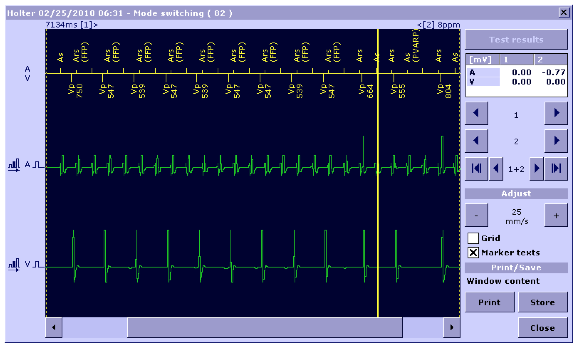
Operation of the 2:1 lock-in protection algorithm: 8 consecutive cycles with alternating As and Ars (FFP); lengthening of the AV delay; the second cycle becomes Ars without modification of the duration of the atrial cycles; flutter diagnosis and mode switching;
Boston Scientific
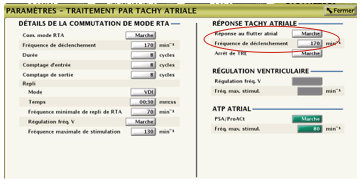
Response to atrial flutter (RAF)
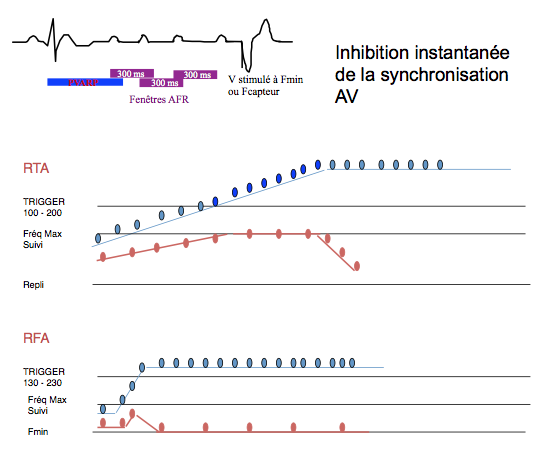
The objectives of this algorithm are to prevent pacing in a vulnerable atrial period (by inhibiting all atrial pacing until the RAF windows have ended) and to ensure immediate fallback in the event of atrial events exceeding the programmable RAF frequency. This fallback is maintained as long as atrial events continue to exceed the RAF frequency.
In atrial flutter, an atrial signal detected in the PVARP triggers an RAF window (if RAF programmed at 230 min-1, RAF window of 260 ms); if an atrial signal is detected within this window, it triggers a new window (classified as AS in refractory period).
Ventricular pacing is unaffected by RAF, and occurs as expected (minimum frequency or sensor frequency).
Medtronic
Masked flutter detection algorithm
This algorithm looks for the presence of an unseen atrial signal falling into atrial blanking post ventricular pacing when:
- there is a succession of rapid AS-VP cycles
- there are 8 consecutive AS-AS intervals which are less than 2 times the sum of AV delay + atrial blanking post ventricular stimulation and less than 2 times the interval corresponding to the frequency of detection of an atrial arrhythmia.
In this case, at the 9th cycle, the algorithm increases the PRAPV so that the next atrial event (AR) appears in the refractory period, the ventricle is not stimulated over a beat and the next flutter wave (AS) is unmasked and no longer hidden in the post-stimulation atrial blanking.
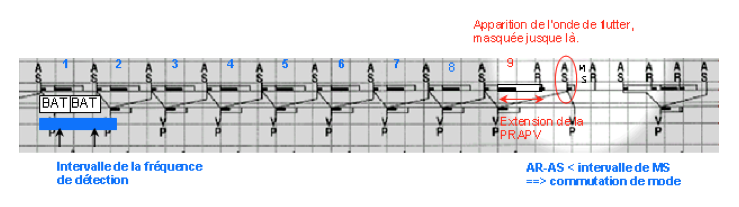
This algorithm was present on older pacemaker platforms, where post-ventricular atrial blanking was absolute. It should be remembered that on the new platforms, post-ventricular atrial blanking is no longer absolute (when the PVAB method is set to partial or partial +), and that a signal falling into blanking is counted for arrhythmia diagnosis, which limits the interest of this type of algorithm.
Microport
No such algorithm; when a 2/1 flutter occurs, it is necessary to shorten the duration of atrial blanking post ventricular pacing.