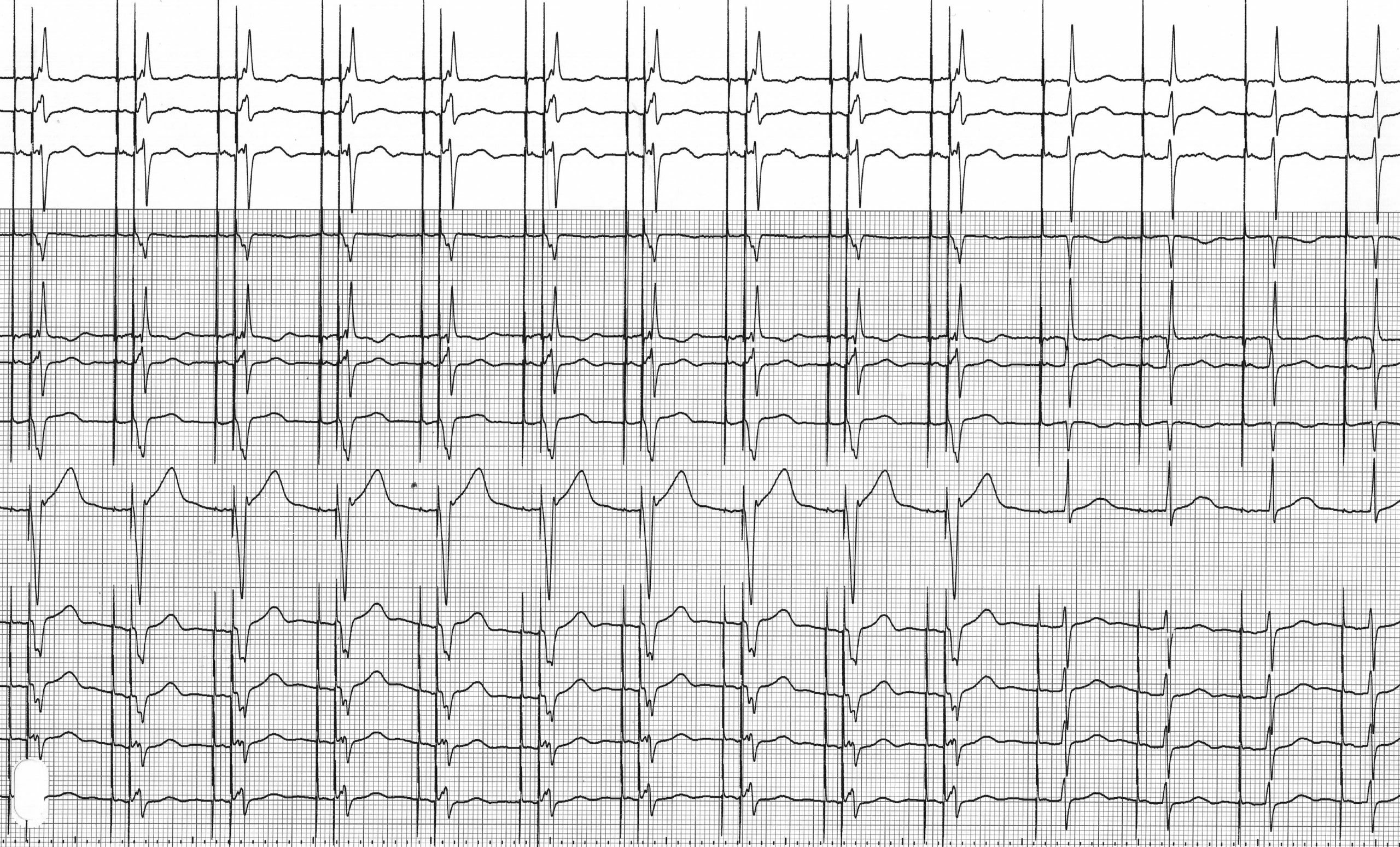
Trace 4.4: Reduction of ventricular pacing percentage
Patient information
Same patient as in the previous trace; programmed to DDD mode at 70 bpm, then to MVP (Managed Ventricular Pacing) mode.
ECG
Question
Regarding this ECG, which of the following is/are the correct answer(s)?
Comments
ECG description
Initially, the pacemaker is programmed in DDD mode with a trace identical to the previous one; at the end of the trace, the pacemaker is programmed to MVP mode, and spontaneous atrioventricular conduction resumes (atrial pacing and ventricular sensing);
Explanation
There is a wealth of literature demonstrating the harmful effects of prolonged right ventricular pacing. Similarly, any reduction in unnecessary ventricular pacing helps conserve battery power and optimize the pacemaker’s lifespan. Manufacturers have proposed various modes (such as MVP for Medtronic pacemakers) to reduce the percentage of ventricular pacing without compromising patient safety when an atrioventricular conduction disturbance occurs. The primary indication for this type of mode is therefore the presence of sinus dysfunction with preserved or paroxysmally impaired atrioventricular conduction.
The MVP mode (AAIDDD) allows for ADI mode pacing while monitoring atrioventricular conduction. The operation of this algorithm is relatively simple, with a single criterion for switching to DDD mode. During ADI mode operation, the parameters associated with single-chamber atrial pacing apply. Ventricular detection is active.
In this graph, the major advantage of this algorithm is clear. Indeed, compared to DDD pacing, programming this mode significantly reduces the percentage of pacing. Over the long term, this should result in benefits in terms of ventricular remodeling and the incidence of atrial arrhythmias. Analyzing the percentage of ventricular pacing is therefore an important part of follow-up care for patients with sinus dysfunction, with the goal of minimizing unnecessary ventricular pacing as much as possible.
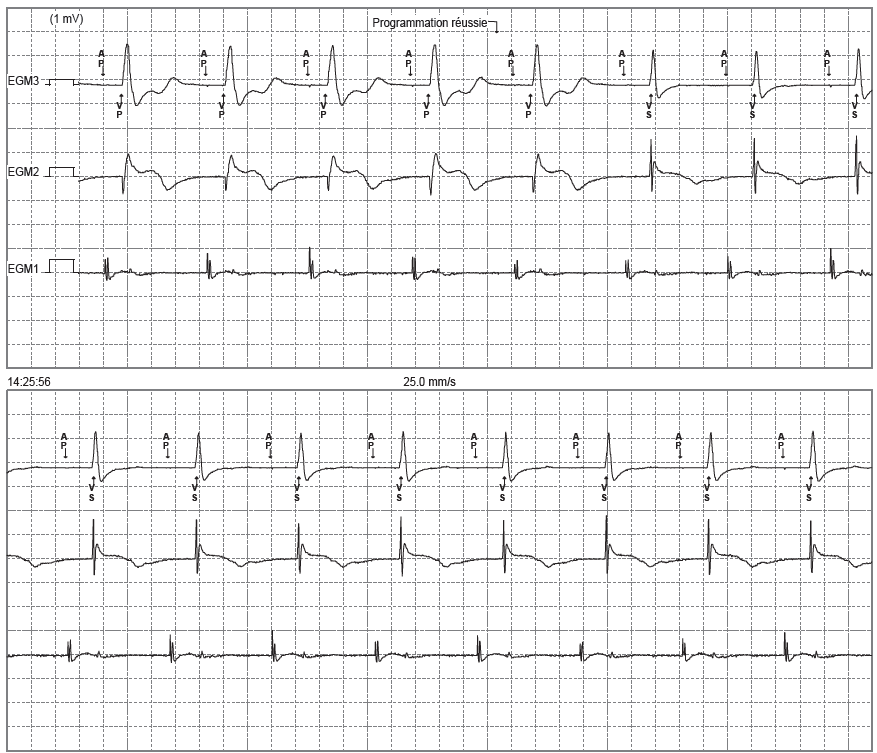
Trace description
The EGM confirms the restoration of spontaneous conduction following programming of MVP mode (programming successful);
To remember
Various manufacturers have developed specific pacing modes to reduce the percentage of unnecessary right ventricular pacing in non-dependent patients. Physicians must be familiar with the specific operating characteristics of each manufacturer’s device in order to interpret the unique features of each trace.