RESONATE X4 CRT-D, quadripolar LV lead (LV paced LVTip1>>Can, LV sensing LVTip1>>LVRing2); DDD 60-130 bpm, sensed AV delay 90-130 ms, BiV pacing with LV offset 0 ms; sinus rhythm
LATITUDE remote transmission 19 months after implant, with an alert
Loading Viewer…
Trace
Alert of this transmission: “Cardiac Resynchronization Therapy pacing of < 85%”, 83% over the last 24 hours
RV lead: pace threshold 0.4 V at implant, 2.2 V in office 7 weeks before the transmission, 2.6 V @ 0.4 ms on the last daily measurement; pace impedance 450 → 304 → 300 Ω; R wave 4.0 → 2.6 mV (then N/R: the RV is always paced). The RV lead has changed since implant
LV lead: threshold 0.7 V @ 0.4 ms (1.7 V at implant), impedance 617 Ω, R wave 24.3 mV: nothing abnormal in the LV numbers
Pacing percent on the day of the transmission: RV 100%, LV only 86% (atrial 37%). For six months the daily LV % (red) has run below the RV % (purple, about 100%), and it drops further in the last days
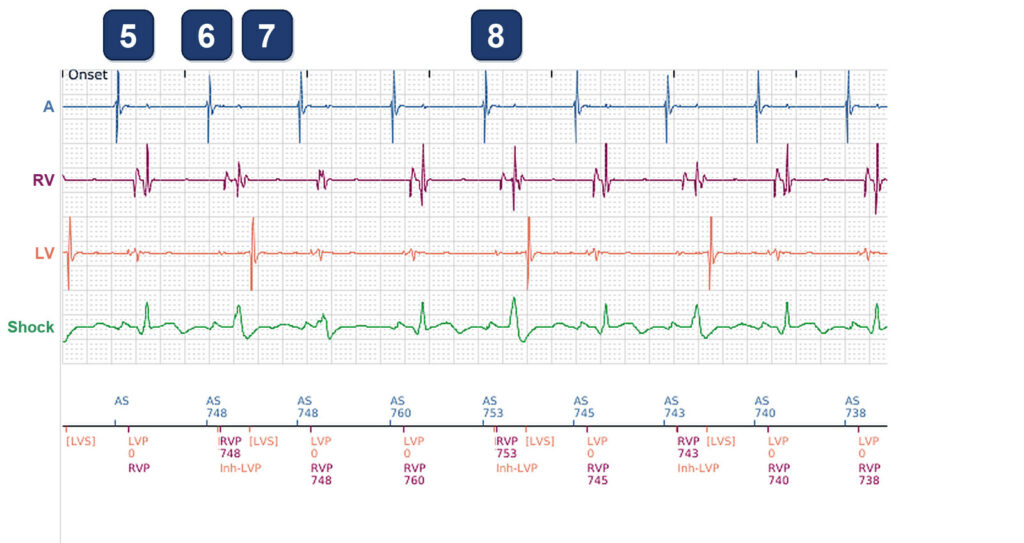
Presenting EGM: sinus rhythm at 80 bpm (AS 748 ms), LV and RV paced together about 110 ms after the AS (LVP 0, RVP). About 90 ms after every AS the LV channel shows a small signal: atrial activity seen by the LV lead (far-field atrial signal); here it is not sensed
Next beat: that small signal is sensed (orange LV tick just before RVP, its label hidden), 15-20 ms before the BiV pace is due. The LV pace falls in the LV protection period: it is withheld (Inh-LVP) and only the RV is paced (RVP 748)
Without its pace the LV is activated late by the RV pace: a large LV deflection about 250 ms after RVP, sensed in the refractory period ([LVS]), and a different shock EGM: no resynchronisation on this beat
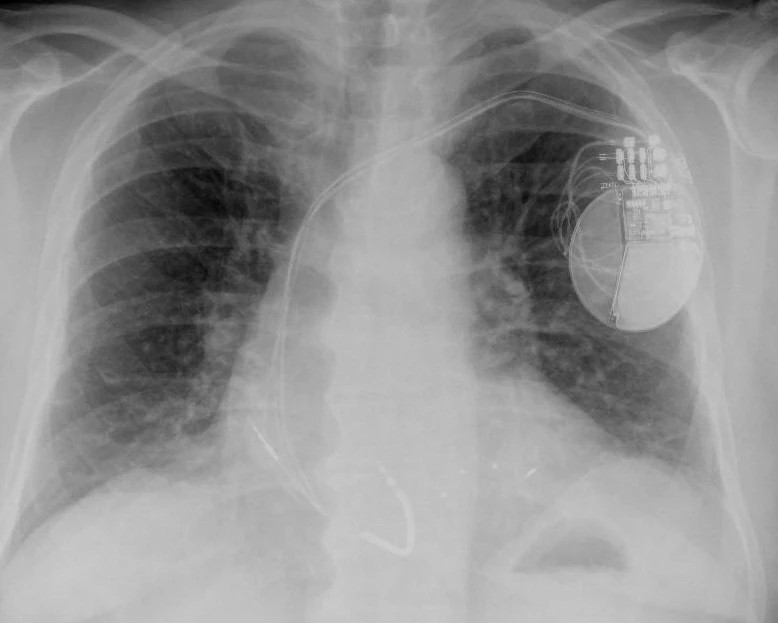
The same at RVP 753 and RVP 743: 3 beats out of 9 are RV-only here. The RV is paced on every beat, the LV only on the others: the gap between RV % and LV %. LV sensing was then programmed Off; one week later the X-ray (below) showed the RV and the LV leads both in the right atrium
Comments
CRT pacing alert, RV 100% but LV 86%: on every second or third beat the atrial (far-field) signal, sensed on the LV channel just before the BiV pace, withholds the LV pace (Inh-LVP) and only the RV is paced. One week later the RV and the LV leads were both in the right atrium
Points to remember
RV % higher than LV % on a Boston CRT: look for Inh-LVP on the EGM. An LV sense just before the BiV pace opens the LV protection period: the LV pace is withheld and only the RV is paced, so the beat counts as RV paced but not LV paced
A small signal on the LV channel after every atrial event is atrial activity seen by the LV lead (far-field atrial signal): its sensing electrodes are close to the atrium. Think of a lead moving back towards the atrium, and check the chest X-ray and the lead trends
Compare the lead table with the implant values: here the RV lead had changed (threshold 0.4 → 2.6 V, impedance 450 → 300 Ω, R wave 4.0 → 2.6 mV), while the LV numbers stayed normal and did not show the LV lead moving
Programming LV sensing Off stops the inhibition but does not hold a lead in place: one week later both the RV and the LV leads were in the right atrium
Chest X-ray one week after the transmission (frontal view): the CRT-D in the left pectoral region; the RV lead and the LV lead have both dislodged into the right atrium
Take home message
Atrial signals on the LV channel mean the LV lead is close to the atrium: think of lead dislodgement and get a chest X-ray, even when the LV numbers look normal. Turning LV sensing off stops the inhibition, not the lead from moving