


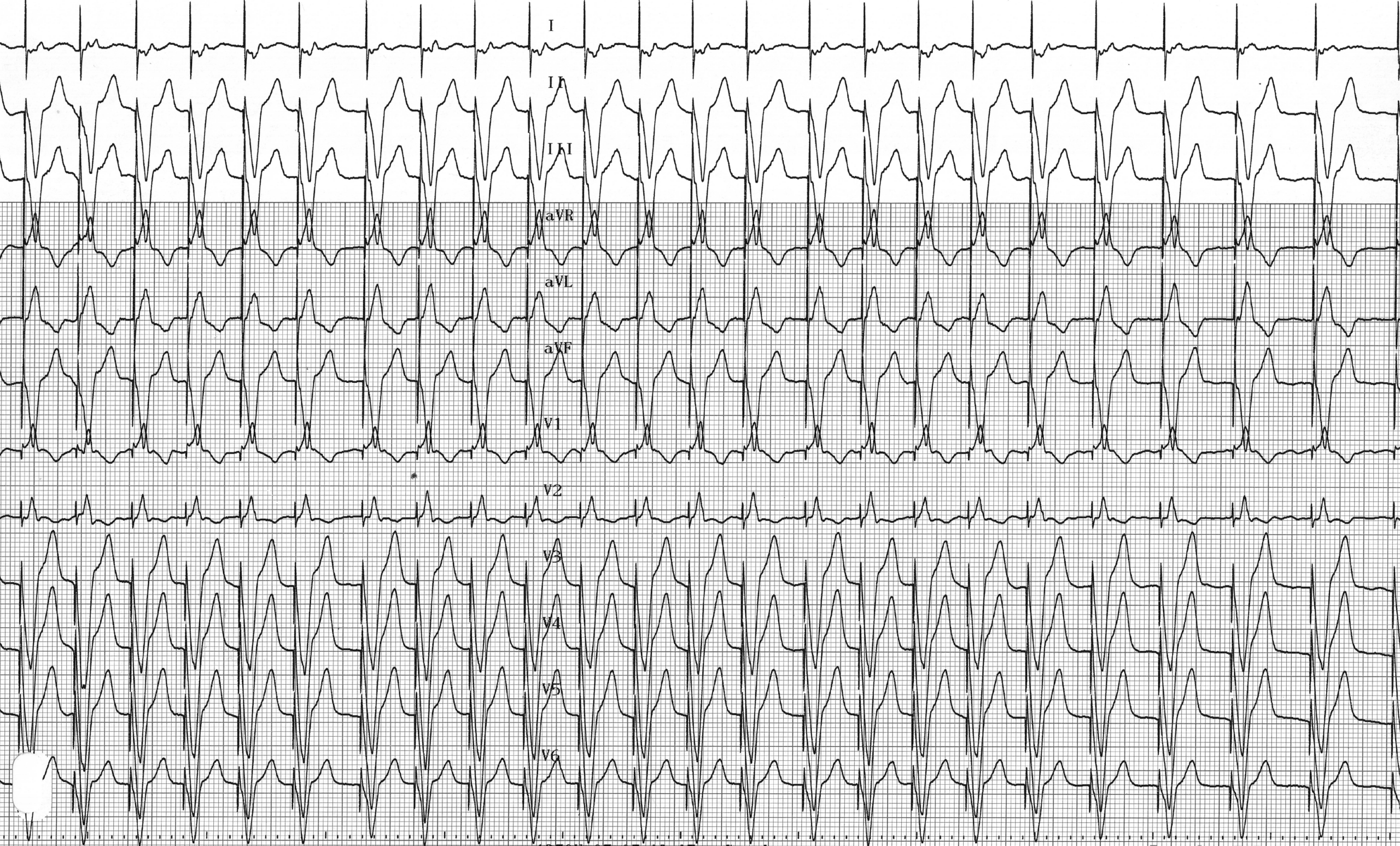
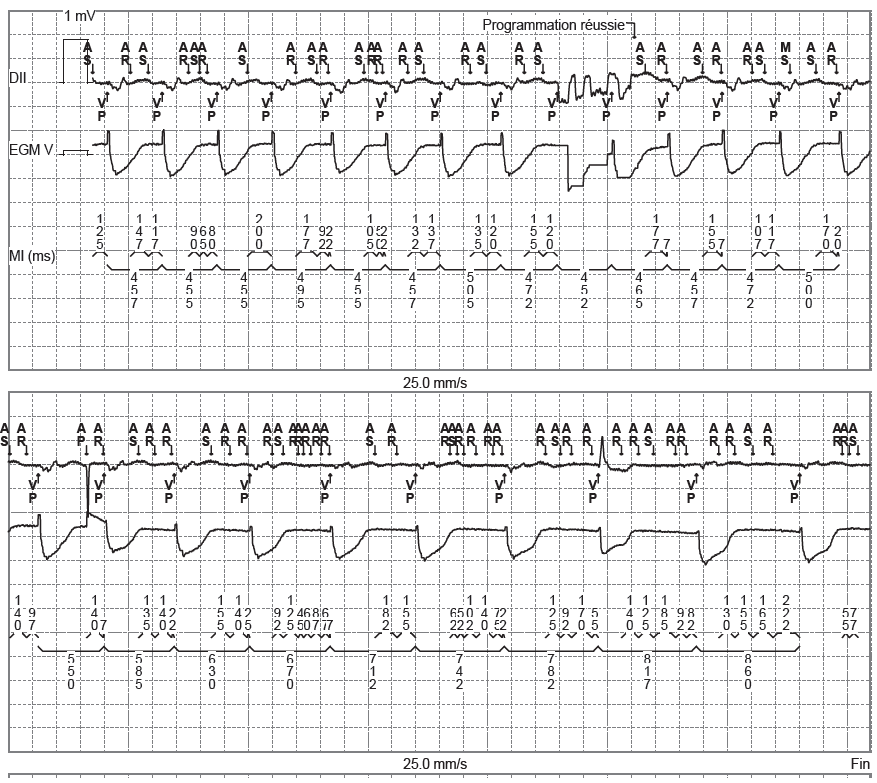
Trace description
The EGM shows the deceleration and stabilization of the stimulation rate following programming of the mode-switching algorithm;
Commentary
These waveforms show the normal operation of a dual-chamber pacemaker during an episode of atrial fibrillation; programming the mode switch allows a return to a more physiological heart rate than in the previous waveforms. To prevent a sudden drop in ventricular rate, the return to the base rate or the controlled rate is gradual.
The ideal mode-switching algorithm has the following characteristics: 1) rapid triggering to avoid prolonged rapid ventricular pacing during the initial detection phase of the arrhythmia; 2) the ability to quickly switch back to a synchronous mode at the end of the arrhythmia episode; 3) good ability to detect atrial arrhythmias even in the presence of atrial signals of varying amplitude and frequency; 4) ability to avoid mode switches in response to cross-talk, noise, or sinus tachycardia.
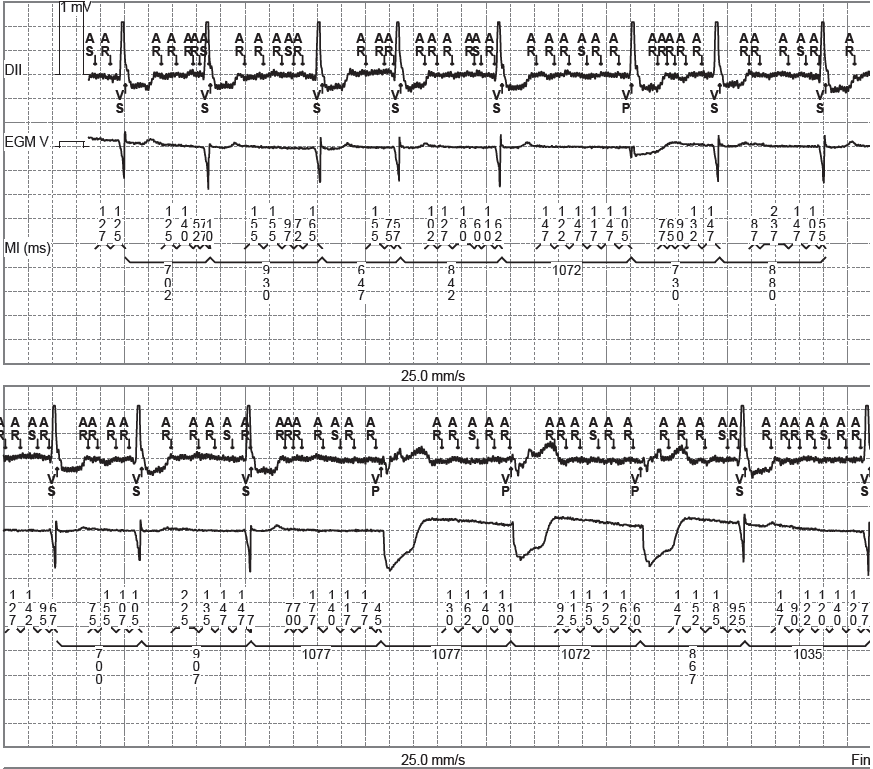
Trace description
The EGM confirms the diagnosis of AF with a few stimulated cycles when the rate reaches the programmed minimum rate;
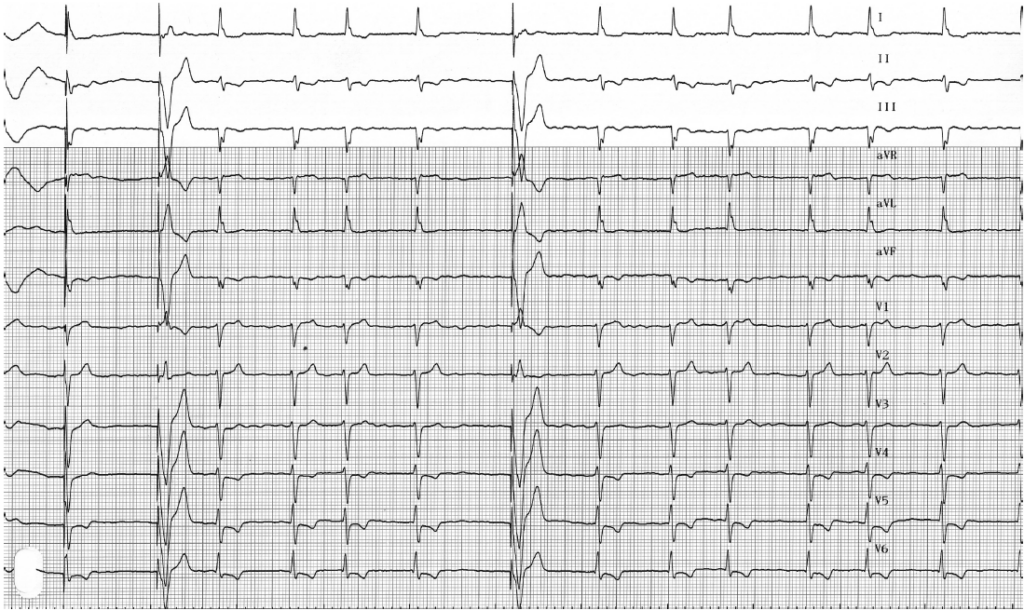
Trace description
Slowing the pacing rate allows the spontaneous rhythm to resume; prolonging ventricular diastole makes it easier to detect a rapid, disorganized atrial arrhythmia; ventricular pacing now occurs only during the few prolonged diastoles (slow AF);
English English French