ECG description
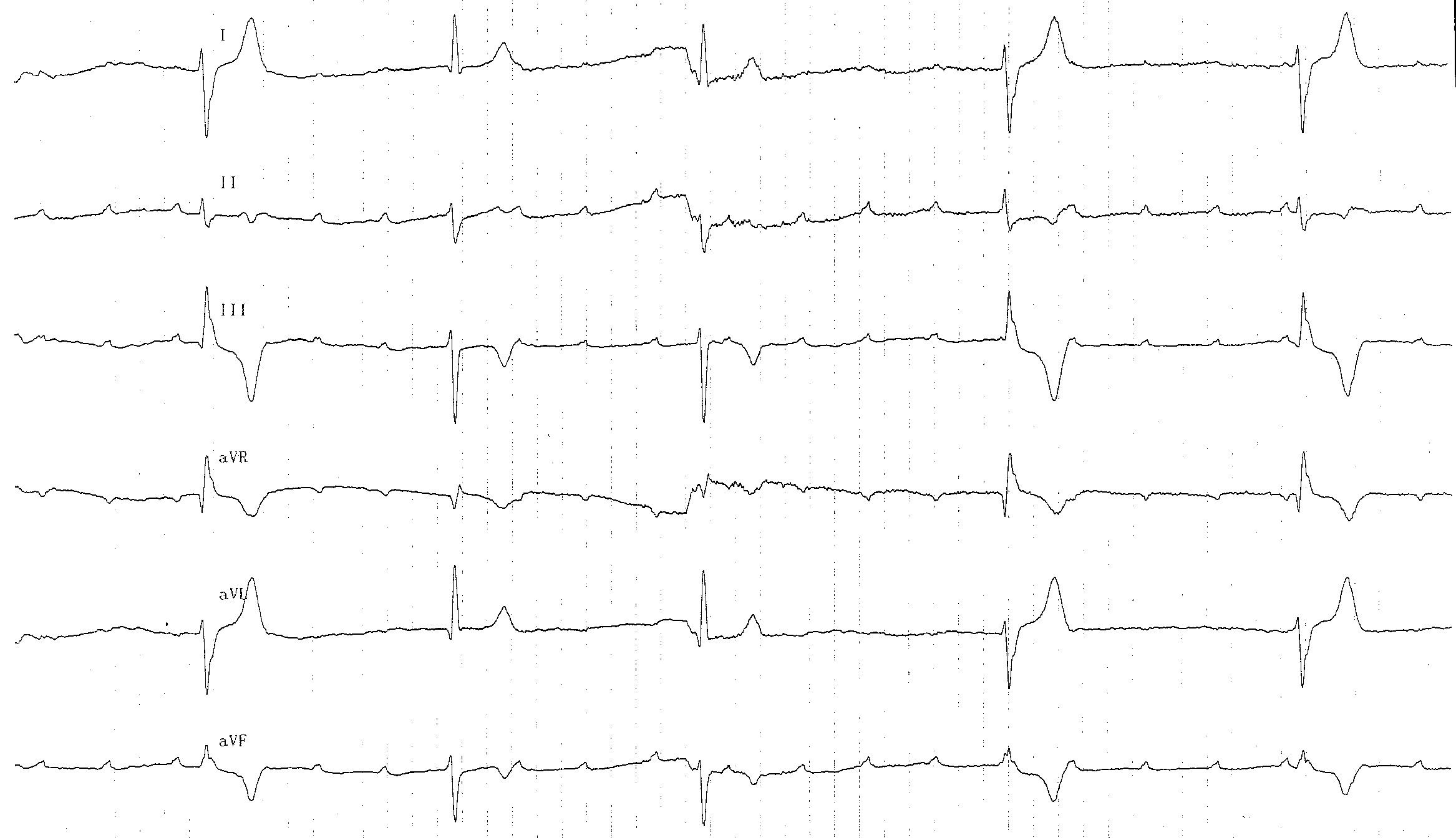
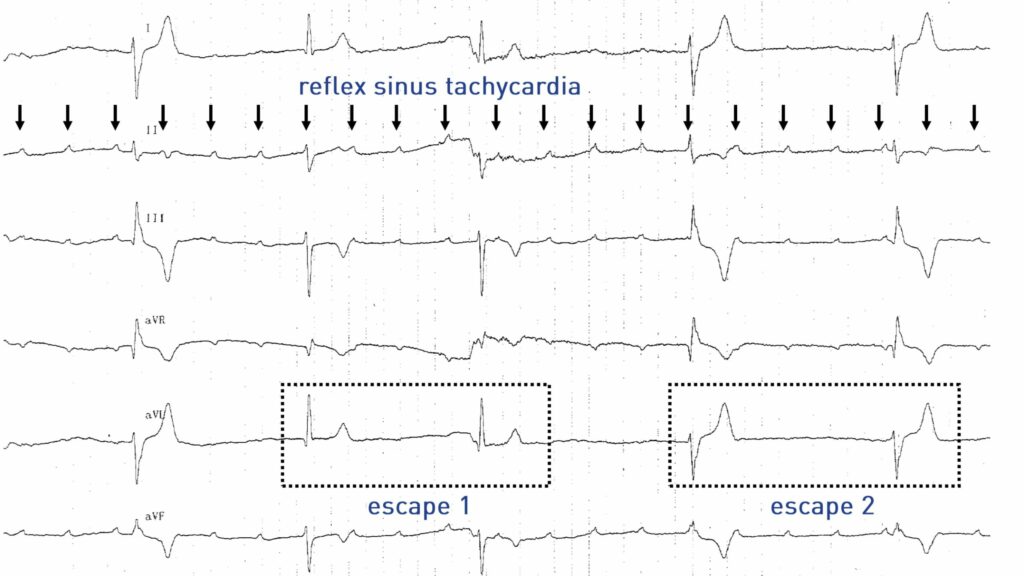
Third-degree AV block with atrioventricular dissociation (sinus tachycardia at 100 beats per minute); alternation between junctional escape and ventricular escape QRS complexes; intermittent ventricular escape with narrow QRS and left anterior fascicular block (narrow QRS, q wave in leads I, aVL, and large S wave in leads II, III, aVF, left axis); when the junctional escape focus in not active, lower-situated ventricular escape (wide QRS, right axis) associated with a decrease in heart rate (longer RR interval when escape rhythm is ventricular than when escape rhythm is junctional);
Explanation
An escape rhythm in a patient with AV block III is usually regular, with the electrocardiogram showing atrioventricular dissociation and presence of regular ventricular bradycardia with monomorphic QRS complexes. Occasionally, the escape rhythm can be unstable, its activity slowing down or interrupting abruptly, resulting in the occurrence of severe symptoms of varying degree depending on the pause duration and possibly leading to sudden death. This tracing shows the fragile character of the junctional escape rhythm of this patient. When present, the QRS is relatively narrow, the rate is slow but nonetheless ensures correct hemodynamics. When this escape rhythm disappears, a lower-situated ventricular escape focus arises with broad QRS complexes at a slower rate causing the onset of symptoms and suggesting a major risk of sudden death. This patient underwent emergency pacemaker placement.
To remember
When the sinus node, i.e. the center of automaticity with the fastest intrinsic rate, is impaired (sinus node dysfunction) or when atrial sinus activity is blocked (atrioventricular block), other centers of automaticity (escape rhythm foci) with lower intrinsic rates may take over. The lower the location of the atrioventricular block (distal conduction disturbance), the greater the risk of the escape rhythm being slow, fragile and intermittent, which explains the increased risk of syncope or sudden death.