VF, device shock with AF induction -Incepta ICD
Go to the casebook version optimized for the mobile experience
Patient
- 72-year-old male with ischemic cardiomyopathy; implanted with an Incepta dual-chamber defibrillator
Summary
- episode classified in the VF zone
- electric shock of 41 Joules
EGM layout
- rrapid ventricular arrhythmia with atrioventricular dissociation
- ventricular undersensing but 6/10 criterion remains verified
- ATP Quick Convert
- ineffective ATP and capacitor charging
- end of charge with shock delivery
- termination of ventricular arrhythmia
- atrial cycle sensed in the refractory period; atrial pacing in the vulnerable atrial period
- induction of AF
Take home message
- shocks delivered for VT or VF are synchronized with ventricular sensing, regardless of the phase of the atrial cycles
- although the exact incidence of this pro-arrhythmic effect is not well known, an electric shock delivered by a defibrillator in the setting of a ventricular arrhythmia can induce an AF episode when it occurs during the vulnerable atrial period
- various studies have shown that the risk of AF induction seems higher for low-energy shocks, particularly when one of the coils is located in the right atrium (double-coil shock)
- induced AF episodes are generally relatively short, although more sustained episodes may occur in patients with an abnormal atrial substrate
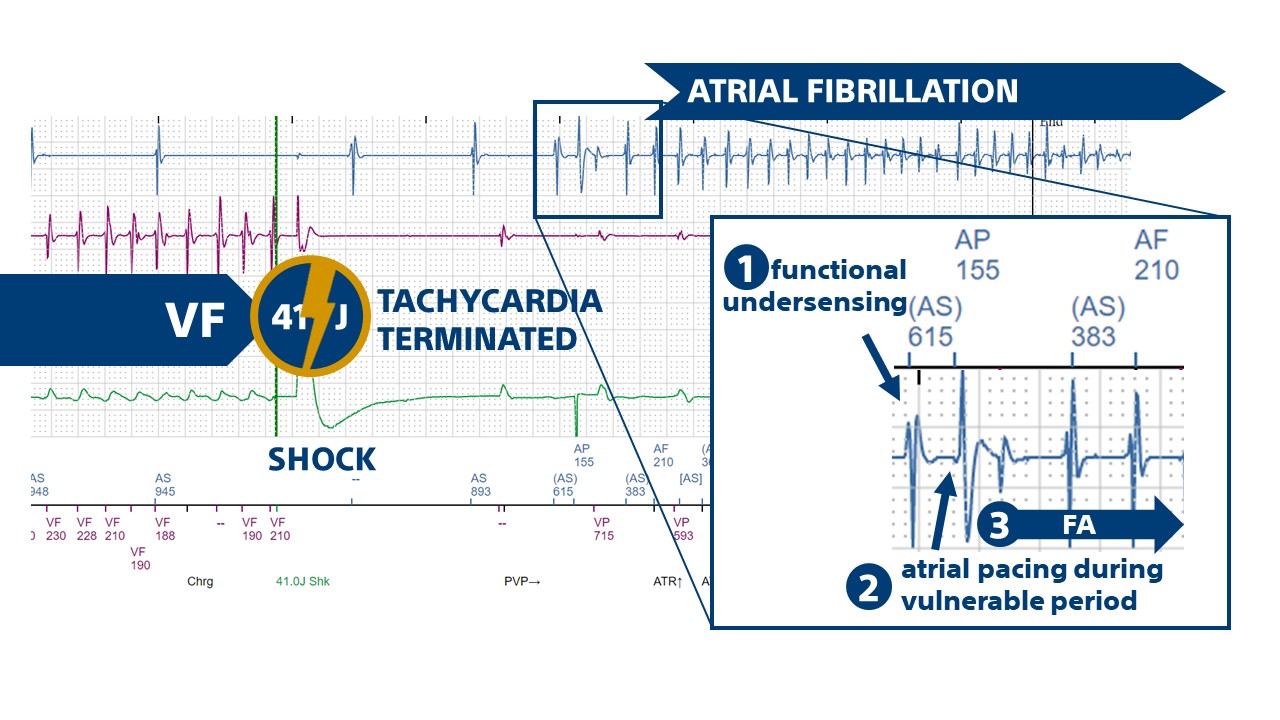
The tracing shows how the shock delivered during VF terminates ventricular arrhythmia, with immediate onset of AF (probable combined effect of the pro-arrhythmogenic effect of the shock and atrial pacing in a vulnerable period).
Read more about related topics