

Microport - Pacing modes
Content
SafeR mode
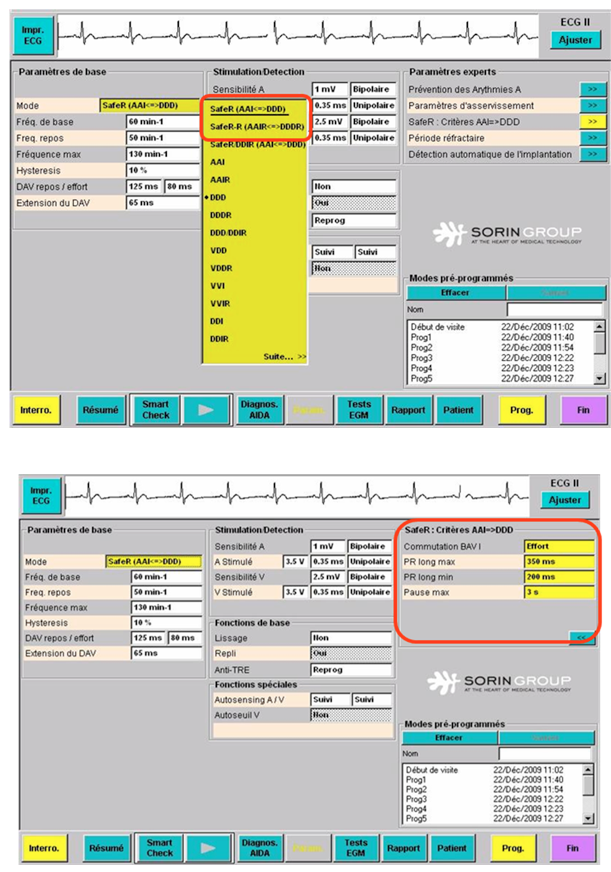
SafeR mode is a specific mode that allows operation in ADI mode when conduction is preserved, with switching to DDD mode for different degrees of AV block (first-degree AV block, second-degree AV block, third-degree AV block, pause). There are therefore different switching criteria.
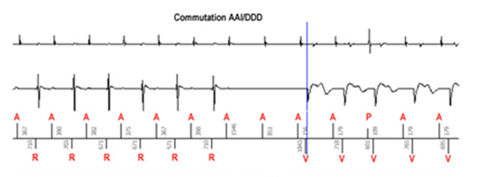
Switching between ADI-DDD
The pacemaker operates in ADI mode with continuous monitoring of atrioventricular conduction. It switches to DDD mode based on four criteria:
1. Third degree AV-block
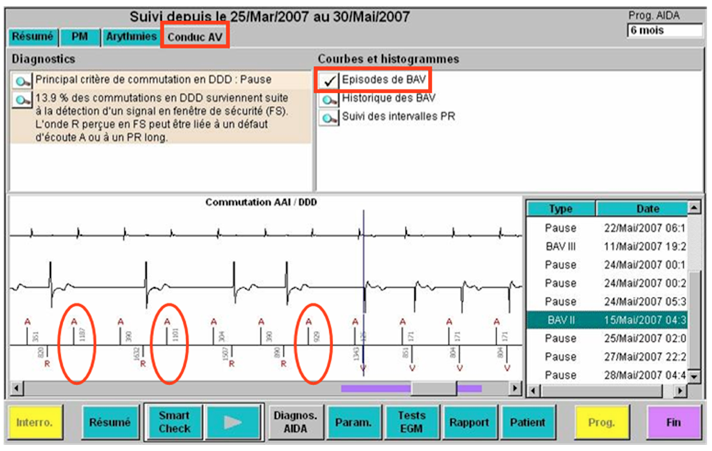
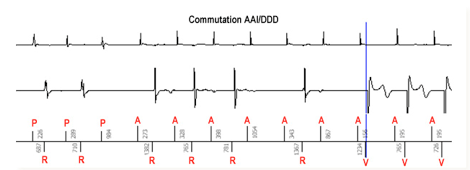
Switching to DDD mode if 2 consecutive atrial events are blocked (non-programmable parameter).
2. Second degree AV-block
Switching to DDD mode if 2 consecutive atrial events are blocked (non-programmable parameter).
3. First degree AV-block
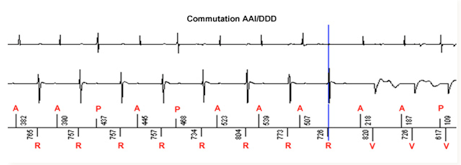
Switch to DDD mode if patient PR > programmed long PR, 6 times in a row
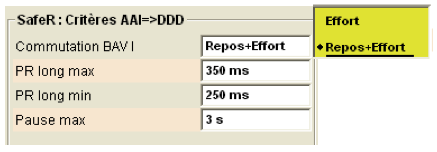
For this AVB I criterion, possibility of programming for exertion (switching possible only during exertion) or exertion + rest (switching possible during rest and exertion).
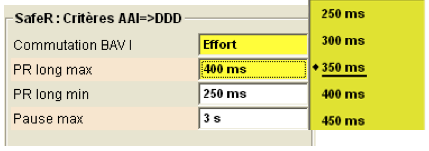
Possibility to program different values defining the long PR.
4. Pause
Switch to DDD mode if ventricular pause exceeds a programmed value (2, 3, or 4 seconds).
Return from ADI to DDD mode
The pacemaker switches back to ADI in two circumstances:
1. After 12 consecutive detected ventricular events (non-programmable)
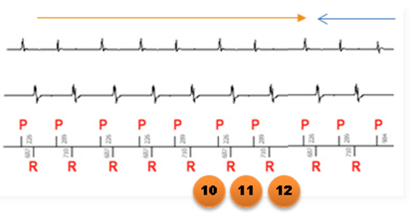
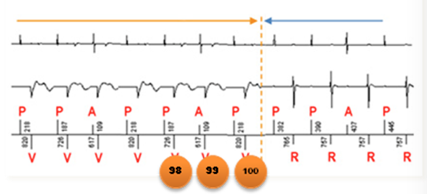
2. Systematically after 100 stimulated cycles (non-programmable);
It is therefore possible to observe blocked P waves during this new search;
Sustained switching to DDD
Sustained switching to DDD until 8 a.m. the following day in the event of persistent AVB:
- More than 45 episodes of AAI switch to DDD per day
- More than 15 episodes of AAI switch to DDD per day for 3 consecutive days
- More than 50% of time spent in DDD for one hour
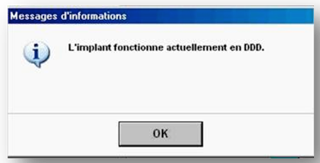
The device then switches to AAI mode every morning at 8 a.m. and if 12 consecutive R waves are detected.
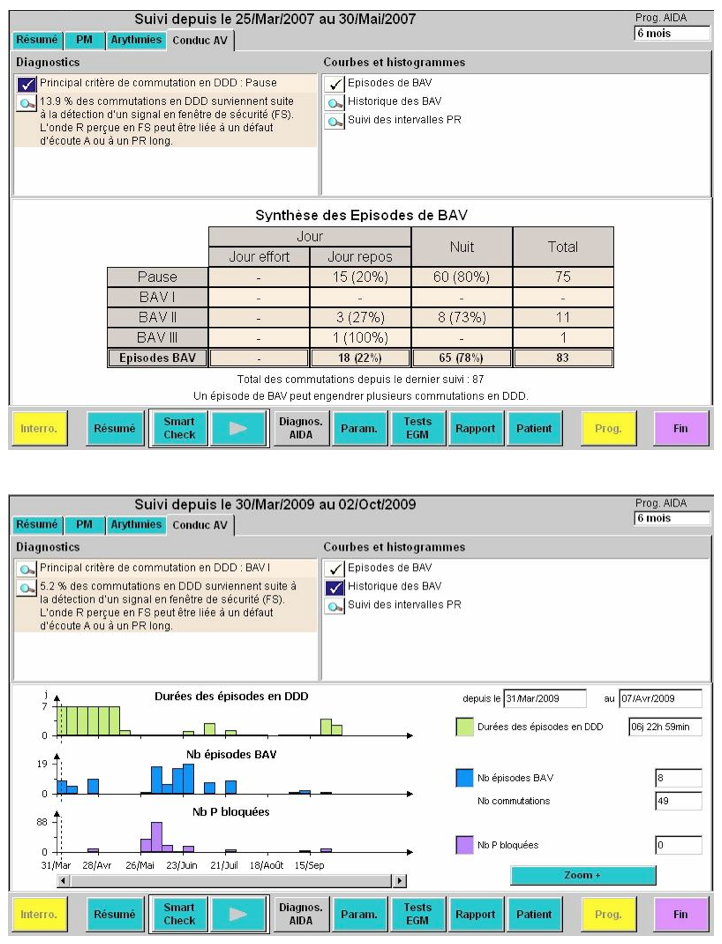
One of the strengths of these pacemakers is the ability to view the EGMs and count the number of switching episodes.