Microport - AV delay, PMT, refractory periods
Content
Atrial refractory periods
Blanking and post-atrial refractory period
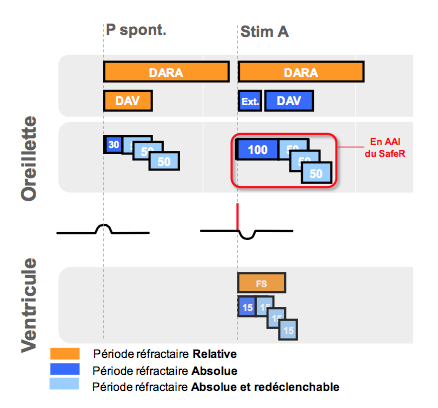
Following atrial detection, an 80 ms refractory period is triggered in the atrial chamber. The first 30 ms are an absolute refractory period and the following 50 ms can be automatically retriggered in the event of detection. The value of this period cannot be programmed.
In DDD mode, following atrial pacing, the periods corresponding to the AV delay are absolute refractory periods in the atrial chamber.
Following atrial detection or pacing, another relative refractory period is triggered in the atrial chamber. Its duration is dynamic and is calculated based on the atrial rhythm. It only takes effect after the end of the 80 ms atrial refractory period. The purpose of this Window is Atrial Rhythm Acceleration Detection (hence its name: WARAD).
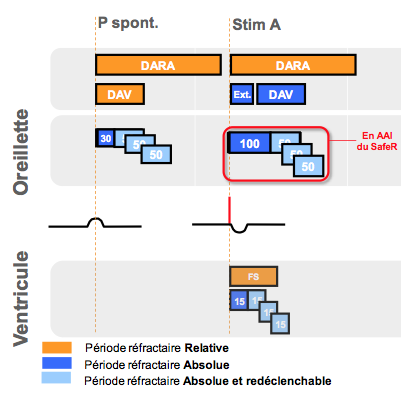
When SafeR dual-chamber pacing mode is programmed and operating in ADI, a 150 ms refractory period is triggered in the atrial stage. The first 100 ms are an absolute refractory period and the following 50 ms are automatically retriggerable. The value of this period is not programmable.
Post-ventricular atrial refractory periods
Post-ventricular atrial blanking (PVAB)
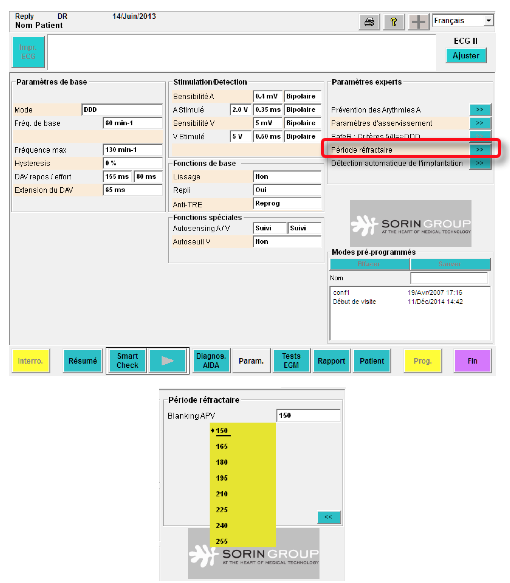
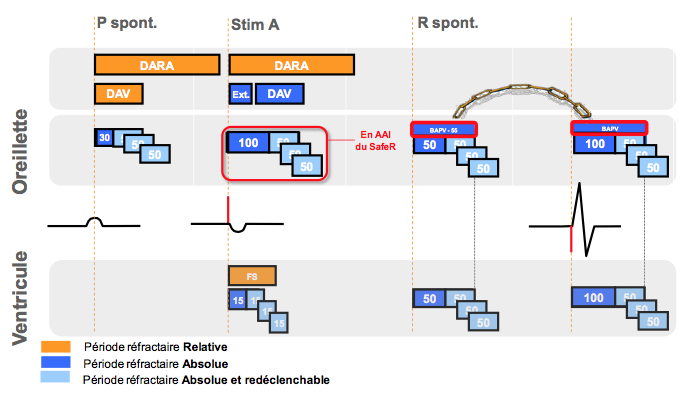
Following ventricular pacing, an absolute refractory period of 150 ms (nominal value) is triggered in the atrial stage. The first 100 ms are an absolute refractory period and the following 50 ms are automatically re-triggerable.
Following ventricular detection, an absolute refractory period of 100 ms (nominal value) is triggered in the atrial chamber. The first 50 ms are an absolute refractory period and the following 50 ms are automatically re-triggerable.
When the user changes the PVAB value (post-stimulation), they also change the post-detection PVAB.
Ventricular refractory periods
Blanking and post-ventricular refractory period
Following ventricular detection, a 100 ms refractory period is triggered in the ventricular stage. The first 50 ms are an absolute refractory period and the following 50 ms are automatically retriggerable. The value of this period is not programmable.
Following ventricular pacing, a 150 ms refractory period is triggered in the ventricles. The first 100 ms are an absolute refractory period and the following 50 ms are automatically re-triggerable. The value of this period is not programmable.
Ventricular refractory periods following atrial stimulation
1. Ventricular blanking following atrial stimulation
Following atrial stimulation, an absolute refractory period of 30 ms is triggered in the ventricles. The first 15 ms are an absolute refractory period and the following 15 ms can be automatically re-triggered in case of detection. The value of this period is not programmable.
2. The safety window
Following atrial pacing, a relative refractory period of 95 ms is triggered in the ventricles. The value of this period cannot be programmed. It only takes effect after the end of ventricular blanking following atrial pacing. If ventricular detection occurs between the end of blanking (ventricular following atrial pacing) and the end of the safety window, ventricular pacing is delivered at the end of the safety window.
When SafeR dual-chamber pacing mode is programmed and operating in “AAI” (more precisely in ADI), the refractory periods are those of a dual-chamber pacemaker. Ventricular detections of “AV cross-talk” or PVC in the safety window may occur. There will be no ventricular pacing at the end of the safety window. In this situation, the SafeR algorithm therefore considers these detections in the safety window to be blocked A pacing (switching to DDD on AV Block III criterion). Details of the SafeR mode are explained in the chapter on reducing the rate of unnecessary ventricular pacing.
Pacemaker mediated tachycardia
Preventing the onset of PMTs
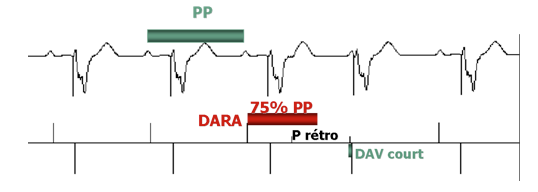
Following detection of an PVC, the atrial refractory period is extended to 500 ms (RetroPwatch). This RetroPwatch applies to a maximum of 3 successive PVCs. The P waves detected in the RetroPwatch are symbolized by a “small p” marker.
The WARAD also protects the device against the occurrence of a PMT by maintaining a long atrial refractory period.
Diagnosis of PMT by the pacemaker
The “Anti-PMT” algorithm is always active in atrial monitoring mode (cannot be deprogrammed).
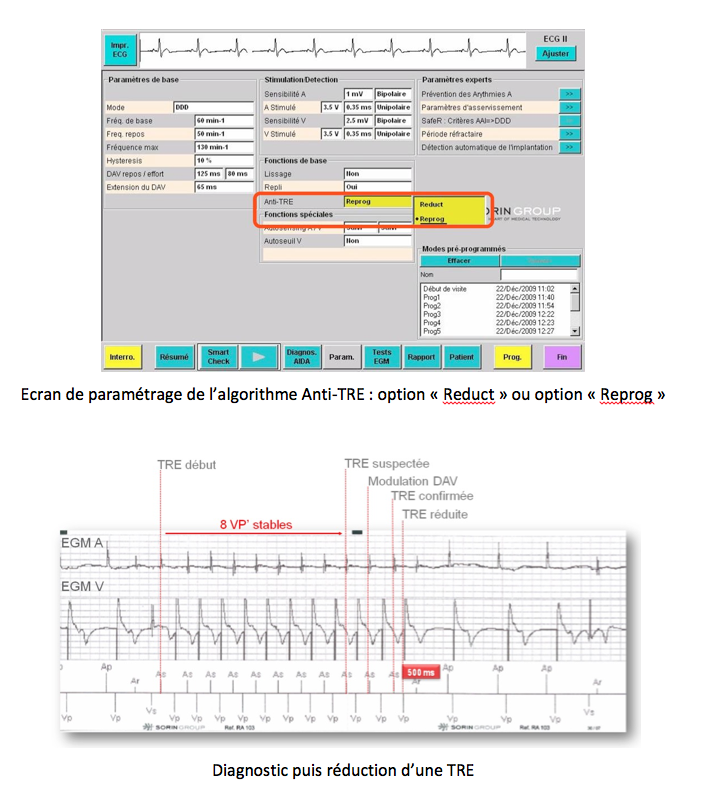
Initial detection phase over 8 cycles (analysis of the last 8 consecutive ventricular cycles (non-sliding)): the device measures the retrograde conduction time (VP) and suspects PMT if the VP intervals are stable (within 30 ms) and short (< 470 ms).
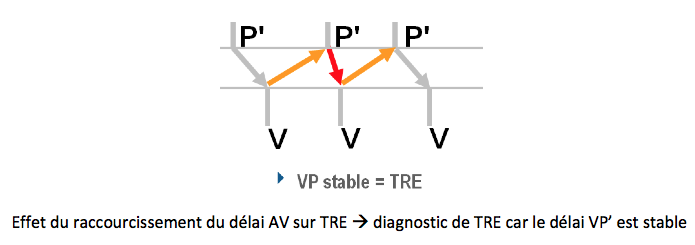
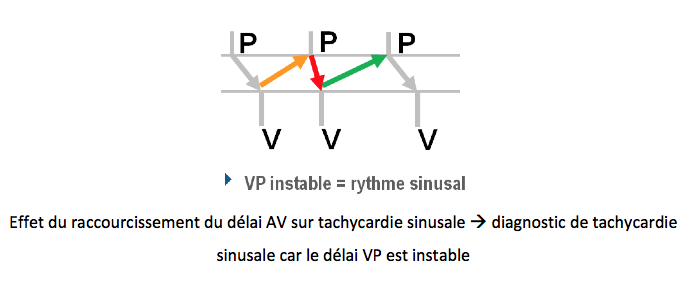
Confirmation phase over 2 to 4 cycles: the device modulates the AV delay (shortening the AV delay in most cases) to verify the stability of the VP interval (if so, it concludes PMT, otherwise sinus tachycardia).
PMT termination
The principle of this algorithm is to terminate a PMT by applying a relative atrial refractory period of 500 ms after ventricular pacing so that the next atrial event is detected within this refractory period. This refractory event is not synchronized to the ventricle for 1 cycle and the tachycardia is interrupted.
If the anti-PMT option is programmed to “Reduct,” the device applies a relative atrial refractory period of 500 ms after ventricular pacing in the event of confirmed PMT.
If the anti-PMT option is programmed to “Reprog,” the device applies a relative atrial refractory period of 500 ms after ventricular pacing in the event of confirmed PMT and automatically shortens the AV rest and exertion delays by 15 ms (limited to 125 ms for the resting AV delay and 80 ms for the exertion AV delay) to reduce the risk of PMT (which is favored by long AV delays).
Memory query
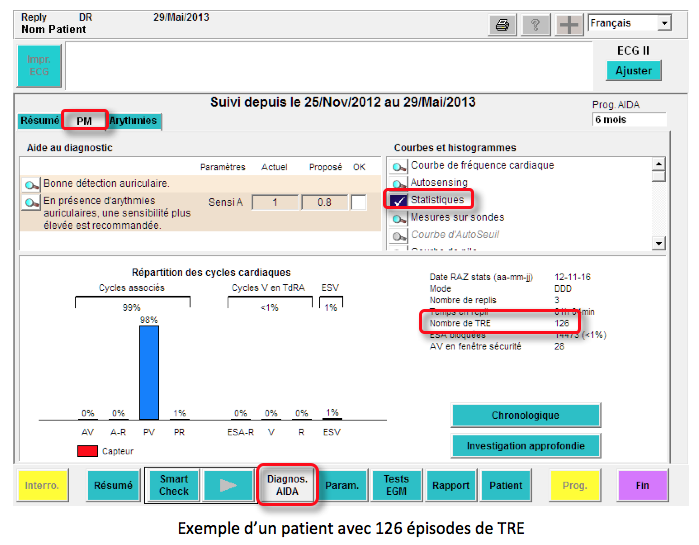
In the AIDA/PM tab, you can find the number of PMT episodes in the statistical data. The counter is saturated after 255 episodes.