


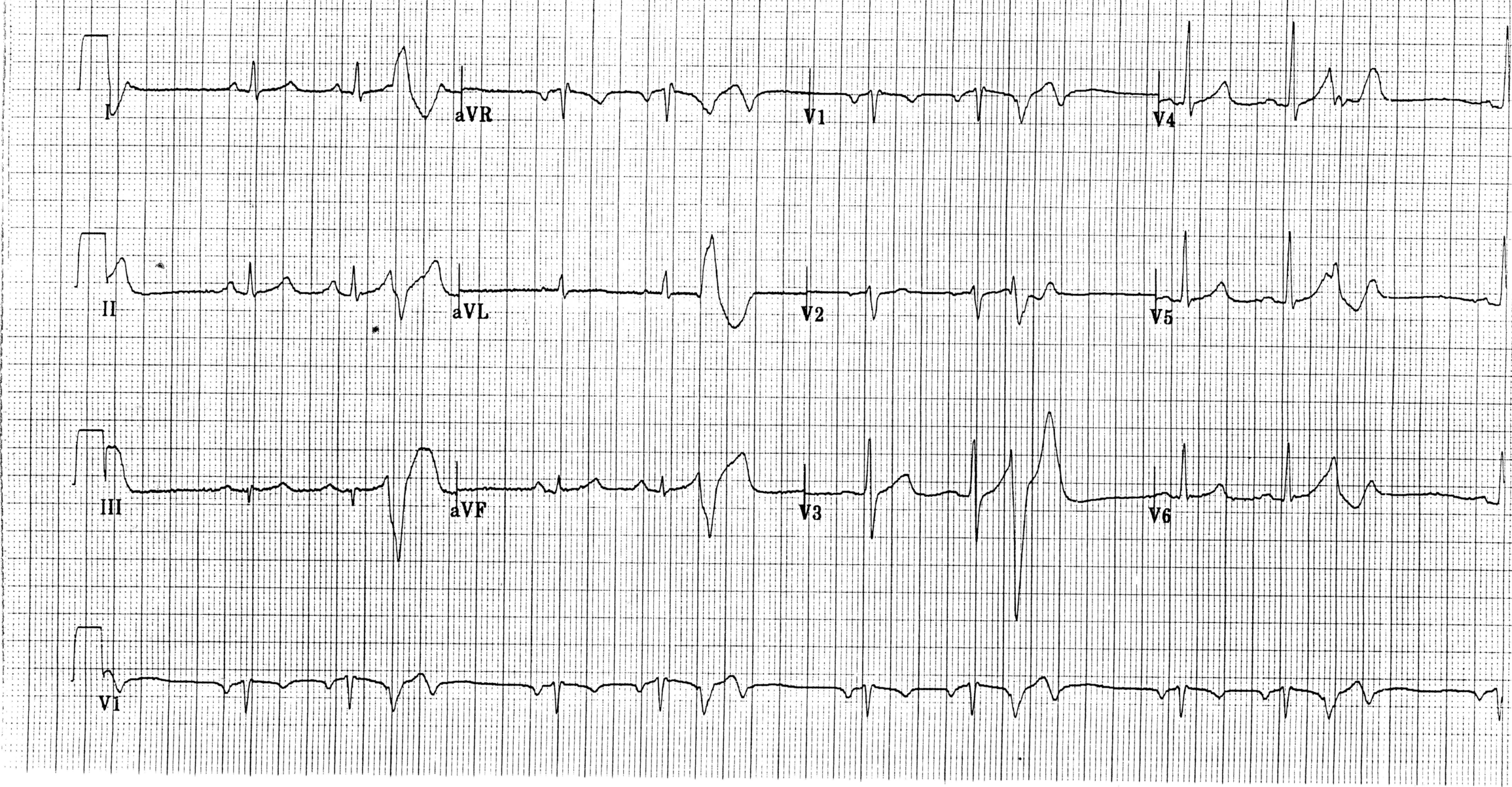
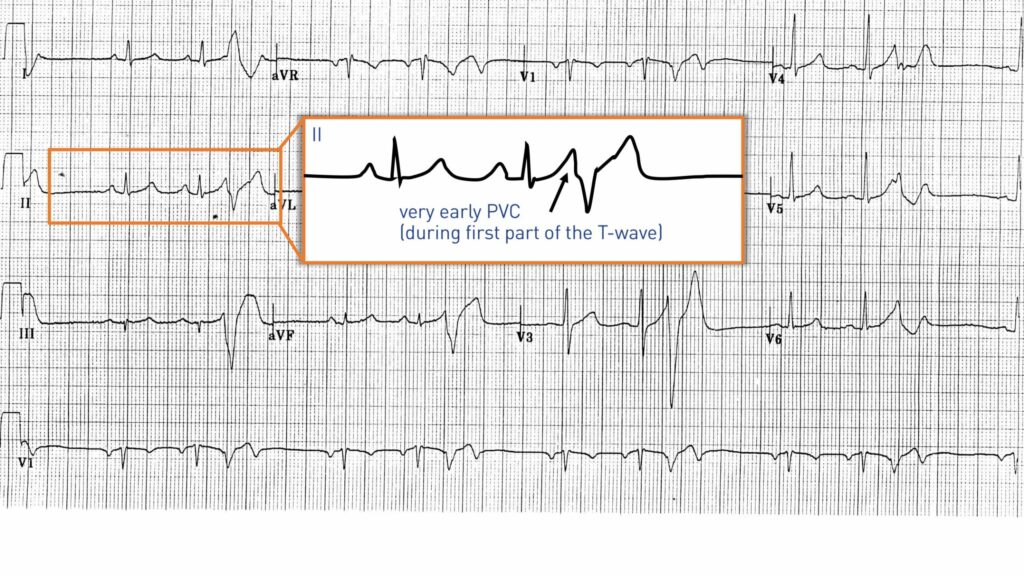
La présence d'un intervalle de couplage court entre le complexe ventriculaire précoce et le complexe QRS qui le précède constitue un facteur de risque majeur de survenue d'une arythmie ventriculaire. Les complexes ventriculaires prématurés, lorsqu’ils surviennent pendant la phase ascendante ou au sommet de l’onde T (phénomène R-sur-T), c’est-à-dire pendant la phase de vulnérabilité ventriculaire, sont considérés comme présentant un intervalle de couplage court et peuvent favoriser l’apparition d’une arythmie ventriculaire maligne (torsades de pointes à couplage court ou fibrillation ventriculaire). Les mécanismes déclencheurs de la fibrillation auriculaire et de la fibrillation ventriculaire sont probablement très similaires et impliquent une interaction entre un facteur déclencheur et un substrat. L’importance du réseau de Purkinje dans le déclenchement de certains épisodes de fibrillation ventriculaire a récemment été suggérée. Les fibres différenciées du réseau de Purkinje peuvent survivre après la survenue d’un infarctus transmural et développer des propriétés électrophysiologiques arythmogènes. À l’instar des veines pulmonaires dans la fibrillation auriculaire focale, le réseau de Purkinje peut être à l’origine du déclencheur initial d’une arythmie ventriculaire et peut également favoriser son maintien.
Le tracé observé sur cet enregistrement correspond à un complexe ventriculaire prématuré provenant du réseau de Purkinje distal du ventricule droit : les complexes sont très prématurés, relativement larges et présentent un retard à gauche. Les complexes précoces issus du réseau de Purkinje ventriculaire droit, comme chez ce patient, sont le plus souvent monomorphes, présentent un retard à gauche et un tracé à axe haut, et ont une durée moyenne d’environ 140 ms. Ceux provenant du réseau de Purkinje ventriculaire gauche sont généralement polymorphes ; ils sont également très précoces et se caractérisent par un QRS plus étroit (120 ms en moyenne).
Ce type très particulier de complexes précoces (intervalle de couplage très court) constitue un marqueur indéniable de gravité qui doit conduire à un bilan complet du patient, dès lors qu’il existe des antécédents de lipothymie/syncope ou des antécédents familiaux de mort subite. L'ablation par radiofréquence de ces complexes ventriculaires prématurés permet une guérison dans la majorité des cas, le défibrillateur implantable restant indiqué en prévention secondaire.
English English English French English English English French