


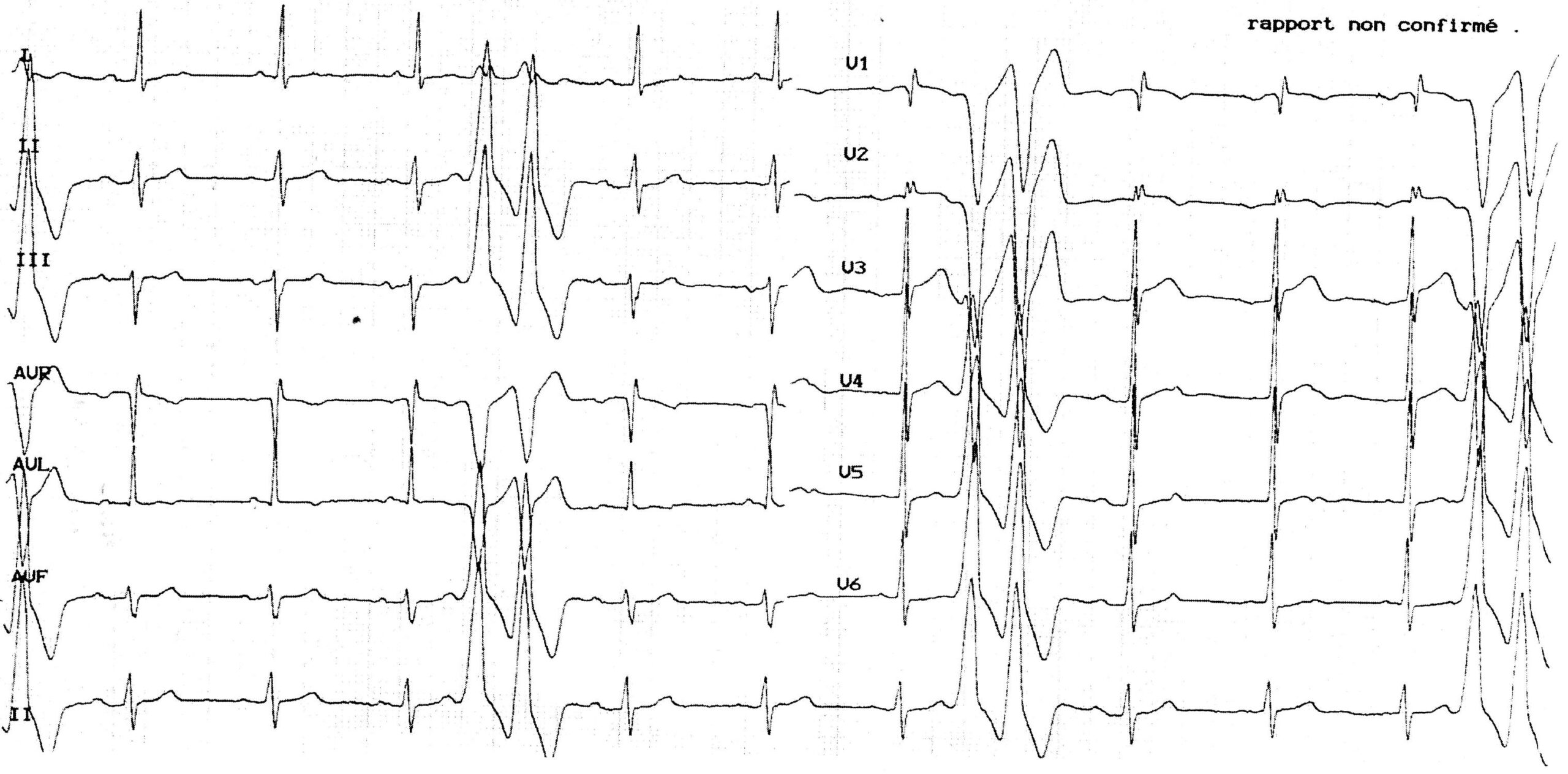
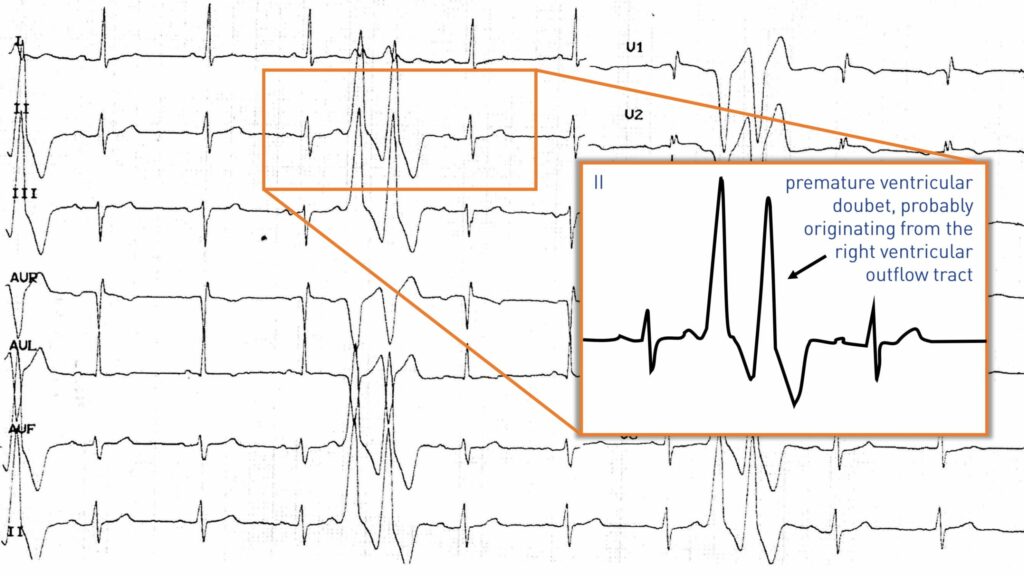
On parle de « couples ventriculaires » lorsqu'il y a succession de deux complexes ventriculaires prématurés consécutifs. Au-delà de trois ou cinq complexes ventriculaires prématurés consécutifs (selon la définition), on utilise couramment le terme de « tachycardie ventriculaire non soutenue » (si elle dure moins de 30 secondes).
Les complexes ventriculaires prématurés observés dans le cadre d’une dysplasie arythmogène du ventricule droit proviennent généralement du ventricule droit (retard gauche) et sont liés à la localisation des infiltrats fibro-adipeux. Ils sont plus courts, plus larges, souvent polymorphes et encochés (différents foyers pathologiques, associés à une propagation ralentie et désorganisée au sein du myocarde ventriculaire), ce qui permet de différencier ces asystolies des complexes ventriculaires prématurés infundibulaires bénins. La réponse à la stimulation catécholaminergique (test d’effort, test à l’isoprotérénol) diffère également, avec une augmentation significative de l’irritabilité à l’effort. Les complexes précoces constituent parfois le premier signe de l’apparition de cette cardiomyopathie.
English English English French English English English French