

Une fréquence sinusale normale correspond, par définition, à une fréquence au repos comprise entre 50-60 et 100 battements par minute. Il est toutefois fréquent et sans caractère pathologique d'observer, pendant la journée ou plus souvent la nuit, un ralentissement de la fréquence cardiaque chez une personne sportive ou vagotonique (l'activité sinusale pouvant parfois descendre en dessous de 40 battements par minute). On considère généralement qu’une bradycardie sinusale (avec ou sans rythme d’échappement) est pathologique lorsqu’elle entraîne l’apparition de symptômes.
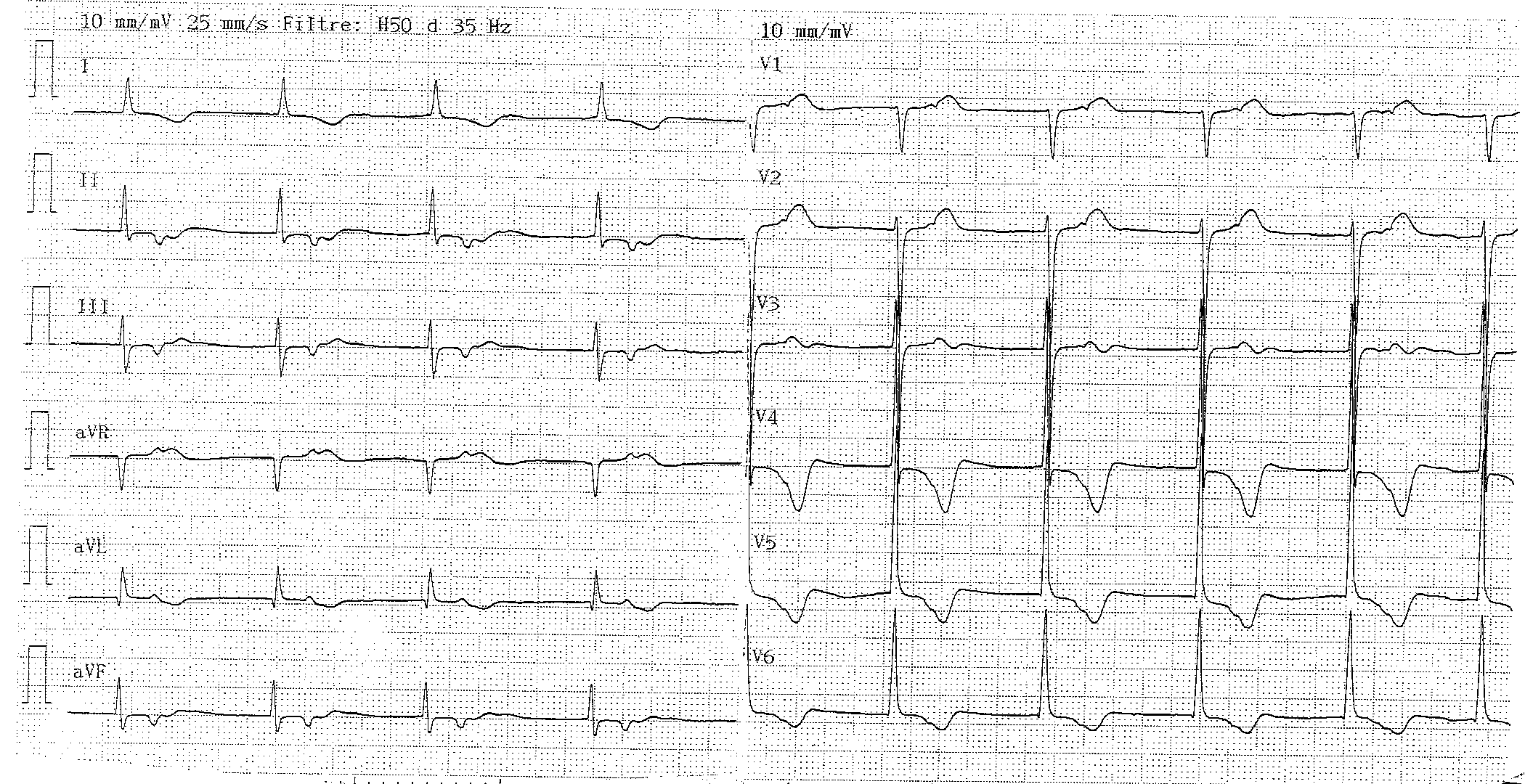
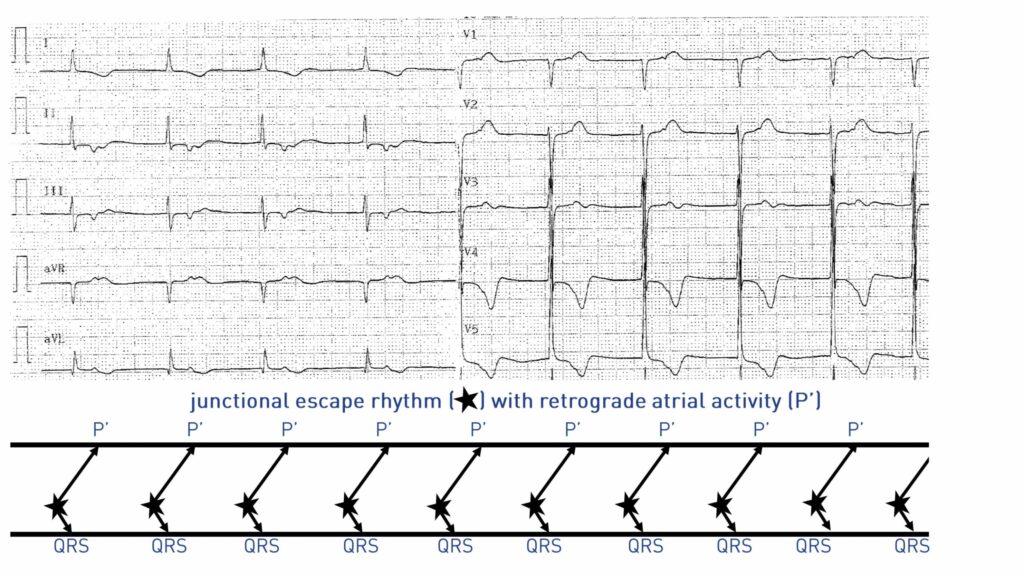
Le tracé observé chez ce patient correspond à une absence totale d'activité sinusale, associée à un rythme d'échappement jonctionnel et à une conduction auriculaire rétrograde. Deux types de mécanismes peuvent être en cause : 1) l'absence d'impulsions sinusales et 2) un bloc de sortie sinusale au niveau du myocarde auriculaire (bloc sino-auriculaire du 3e degré). En l'absence d'activité sinusale, la dépolarisation ventriculaire peut être déclenchée par un centre d'automatisme secondaire qui génère l'impulsion par dépolarisation spontanée de phase 4. Lors d’un épisode de dysfonctionnement du nœud sinusal, le foyer ectopique est le plus souvent jonctionnel et se situe dans la partie inférieure du nœud auriculo-ventriculaire ou dans la partie adjacente du tronc commun du faisceau de His, appelée région nodo-hisienne. Si aucun foyer jonctionnel n’apparaît, un foyer ventriculaire (situé en partie inférieure, QRS large) ou, occasionnellement, un autre foyer auriculaire lent (le plus souvent un foyer du sinus coronaire, avec une activité auriculaire négative dans les dérivations inférieures) peut faire office de stimulateur cardiaque de secours. Lorsque l’échappement est jonctionnel, l’aspect du complexe QRS est généralement identique à celui observé en rythme sinusal. Dans de rares cas, on peut observer un tracé légèrement modifié, bien que les mécanismes à l’origine de ces différences morphologiques discrètes ne soient pas entièrement élucidés.
English English English French English English English French