Single-chamber discrimination, Rhythm ID and an atrial fibrillation episode - Resonate ICD
Patient
- 59-year-old male; implanted with a Resonate single-chamber defibrillator for hypertrophic cardiomyopathy;
Summary
- discrimination based on Rhythm ID (threshold programmed at 94%)
- episode of tachycardia at 167 beats/minute with inhibition of therapies (Rhythm ID correlated: True)
EGM layout
- irregular tachycardia with ventricular electrograms appearing fine on the shock channel; alternation between cycles classified as VT-1 and VS; correlation (C = correlated) between all cycles and the reference morphology (percentage above the programmed threshold of 94%).
- end-of-episode marker V-EpsdEnd (corresponding to the previous episode not visualized on this plot), criterion 8/10 was not fulfilled.
- V-Epsd marker after 8 cycles out of 10 classified as VT1
- end of duration (V-duration marker); discrimination (RID+ ) favors SVT; for at least 3 beats/10 (rolling window), the vector during tachycardia is correlated with the reference vector (the last 10 ventricular complexes before the end of duration are correlated).
Take home message
- Rhythm ID discrimination is available on single, dual and triple-chamber defibrillators and is based on the comparison, at initial detection, between vectors during tachycardia and a reference vector recorded in the absence of tachycardia.
- the bipolar sensed EGM enables alignment (localization of QRS peaks), with comparison then being made on the shock channel (decomposition of the QRS complex into 8 equidistant points); use of the shock channel enables a broader and more accurate analysis of a signal than an analysis based solely on the bipolar sensing channel
- for each tachycardia cycle, a percentage similarity is determined and compared to a programmable threshold; if the percentage equals or exceeds the threshold, the ventricular electrogram is deemed correlated (favoring SVT), otherwise it is deemed uncorrelated (favoring VT).
- if at least 3 out of 10 ventricular cycles are correlated (rolling window of 10 cycles), the tachycardia is considered supraventricular and therapies are inhibited (indicated as RID+)
- if fewer than 3 out of 10 ventricular cycles are correlated, the tachycardia is considered ventricular and therapies are delivered (indicated as RID-).
- a cycle classified in the VF zone is always counted as uncorrelated, even if its correlation seems high
- programming of the RhythmMatch threshold parameter adjusts the correlation threshold to determine whether the cycle analyzed is correlated with its normal sinus rhythm template; this threshold is programmable on new platforms between 70% and 96%, with a nominal value of 94%; on older platforms this threshold was non-programmable and fixed at 94%.
- in this patient, the nominal threshold value was programmed (94%); all tachycardia vectors were judged to be correlated, explaining the diagnosis of SVT and the decision to inhibit therapies
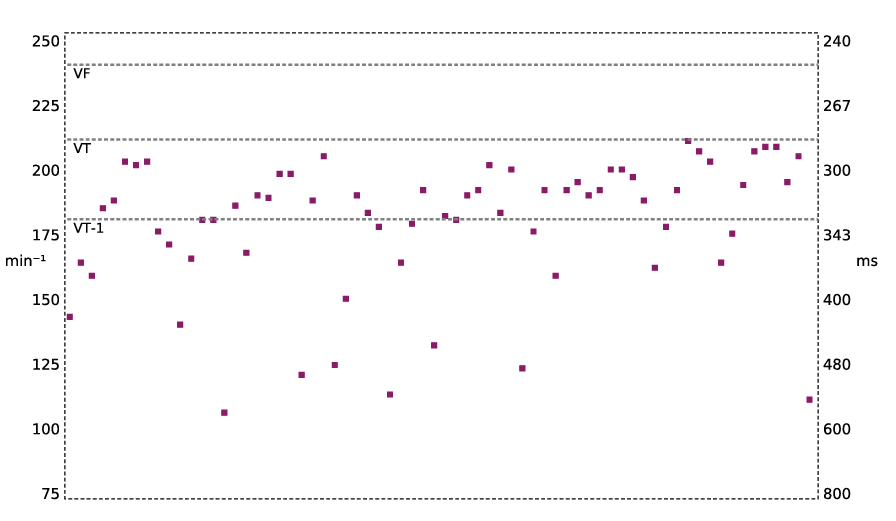
The interval plot corresponding to this episode is highly suggestive of atrial fibrillation, with great variability in ventricular cycles (cycles ranging from 100 to 210 beats/minute).