Shocks disabled
You receive the following transmission:
Explication
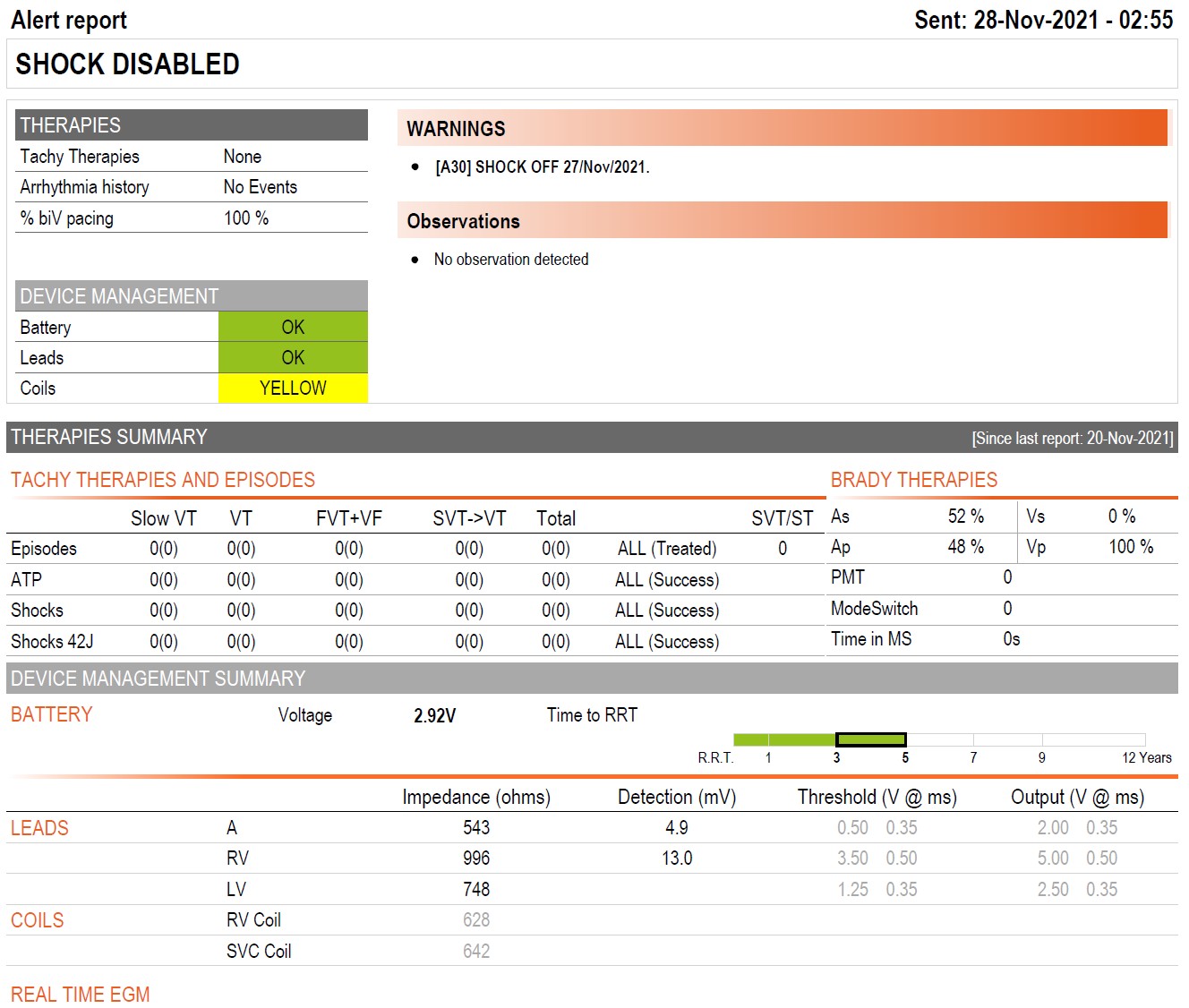
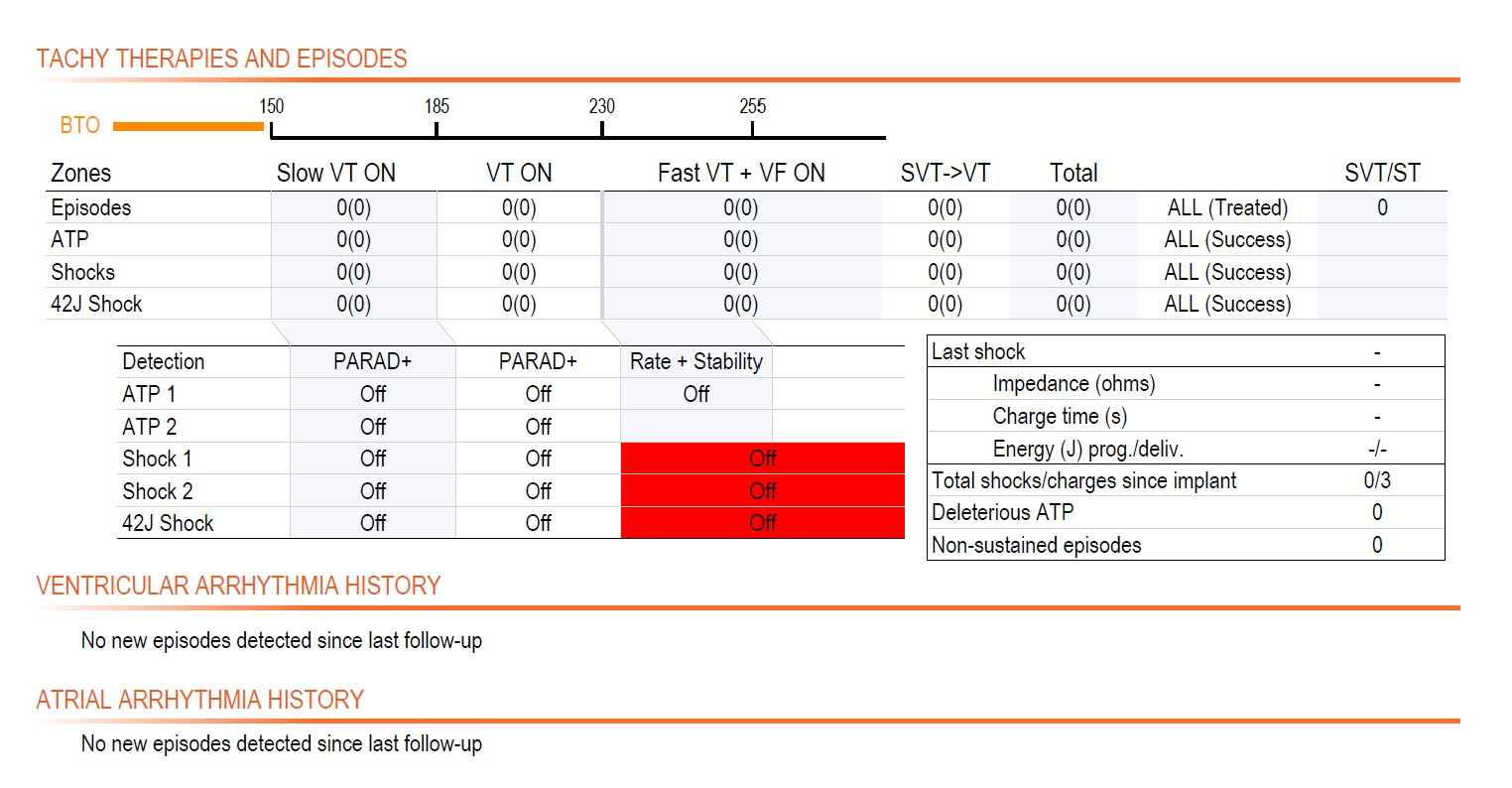
In contemporary ICDs with continuous remote monitoring, deactivated therapies will be sent as an alert during the next transmission. The therapies may have been deactivated, for example
before a surgical procedure in order to prevent inappropriate therapies (oversensing of noise). The healthcare professional may have inadvertently failed to reactivate the therapies after the
procedure. The remote monitoring system hereby acts as a safeguard, a rapid reminder to switch back on the therapies. The remote monitoring clinic may act by requesting the patient to come
into clinic to re-activate the therapies. Without remote monitoring, the patient is often not seen in-office for many months, exposing the patient to ventricular arrhythmias not treated by ICD
therapies. In this case, the therapies were de-activated just before an MRI. Thanks to the alert received the following day, the patient could be reprogrammed correctly within a short time span.
Of course, in certain cases, it may have been decided that the therapies remain de-activated. This most often occurs in the context of advanced comorbidities associated with a significant
reduction in life expectancy. During this shared decision-making process, it is important to note clearly in the hospital records that therapies have been de-activated intentionally
Take home message
When the therapies are left deactivated on purpose, in addition to keeping an adequate medical record, the remote monitoring alert “shock disabled” should be switched off.