
Chapter 2 · Therapies · Case 10
Anti-tachycardia pacing in the VT zone
Patient and episode
Patient
- 62-year-old male implanted with a Momentum CRT defibrillator
Summary
- Episode classified in the VT zone
- 1 burst
The recording
Tap a number on the trace, or an entry in the list below
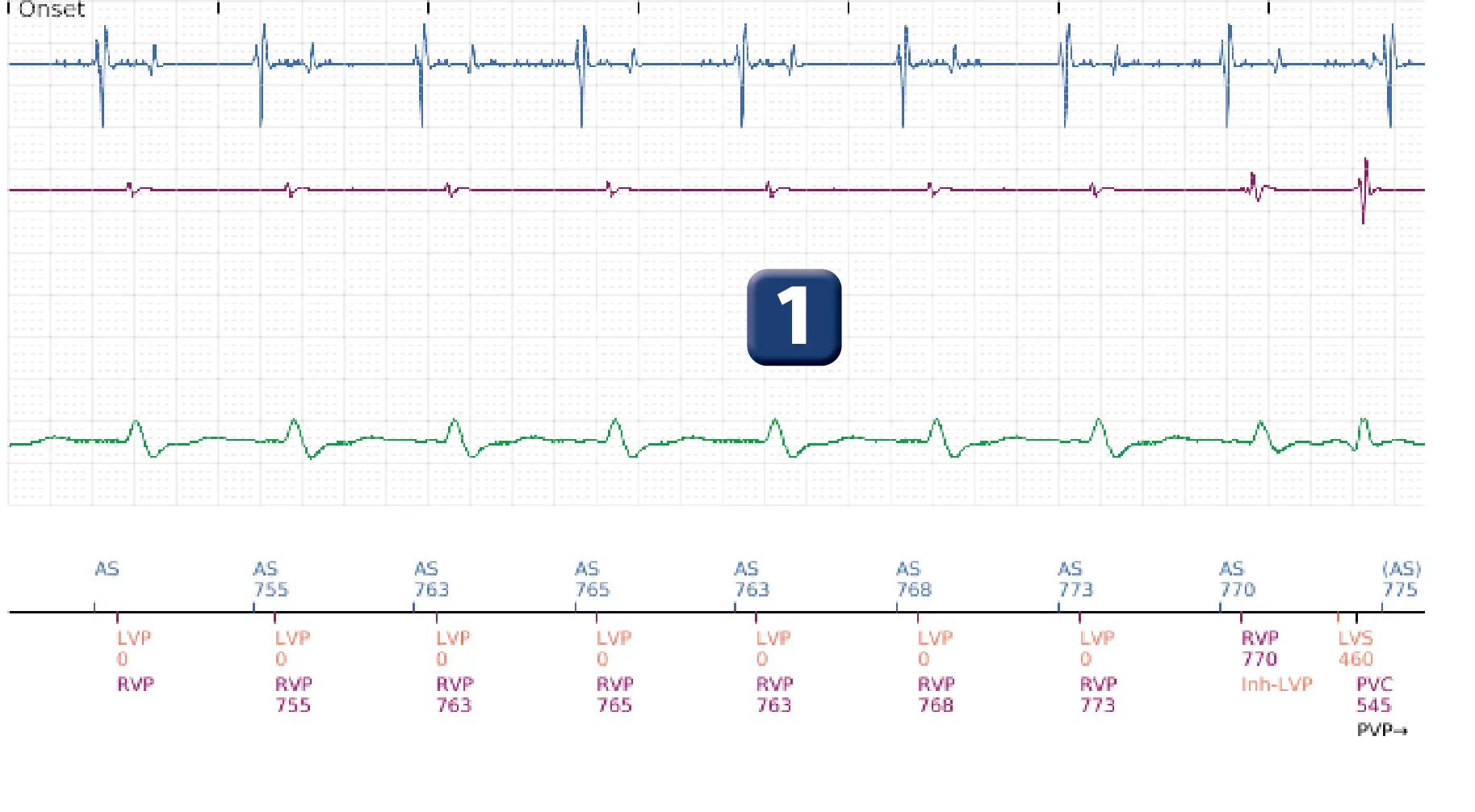
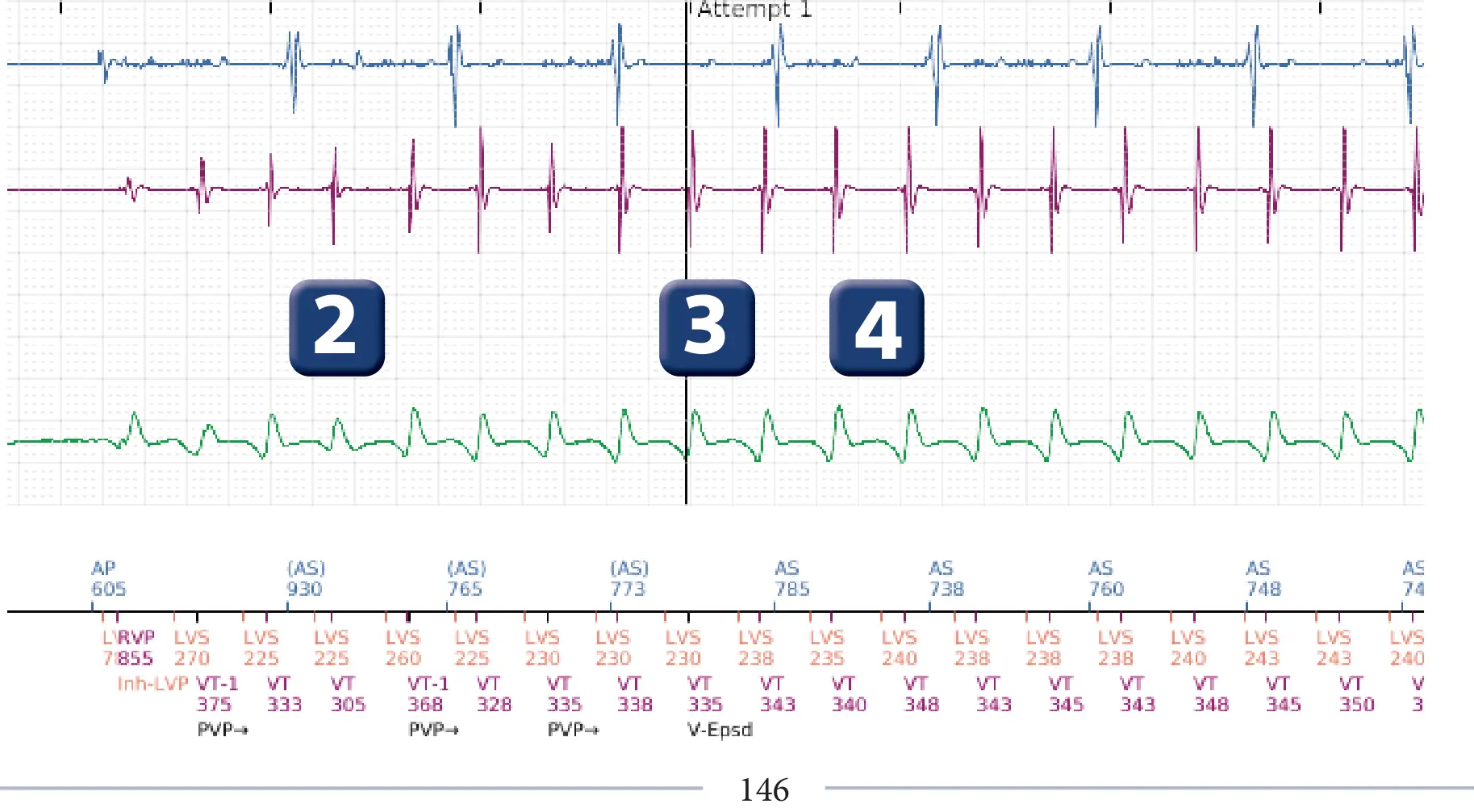
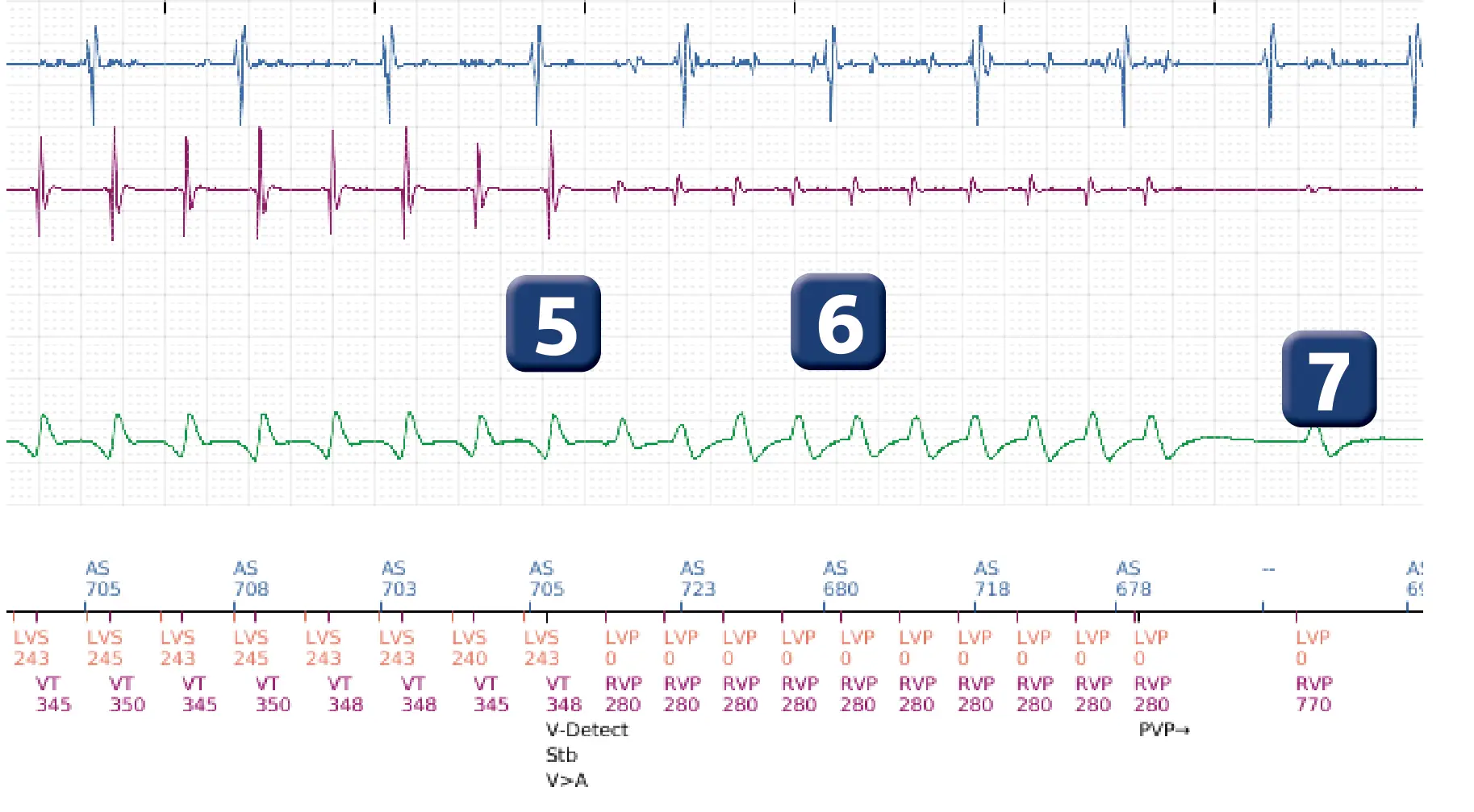
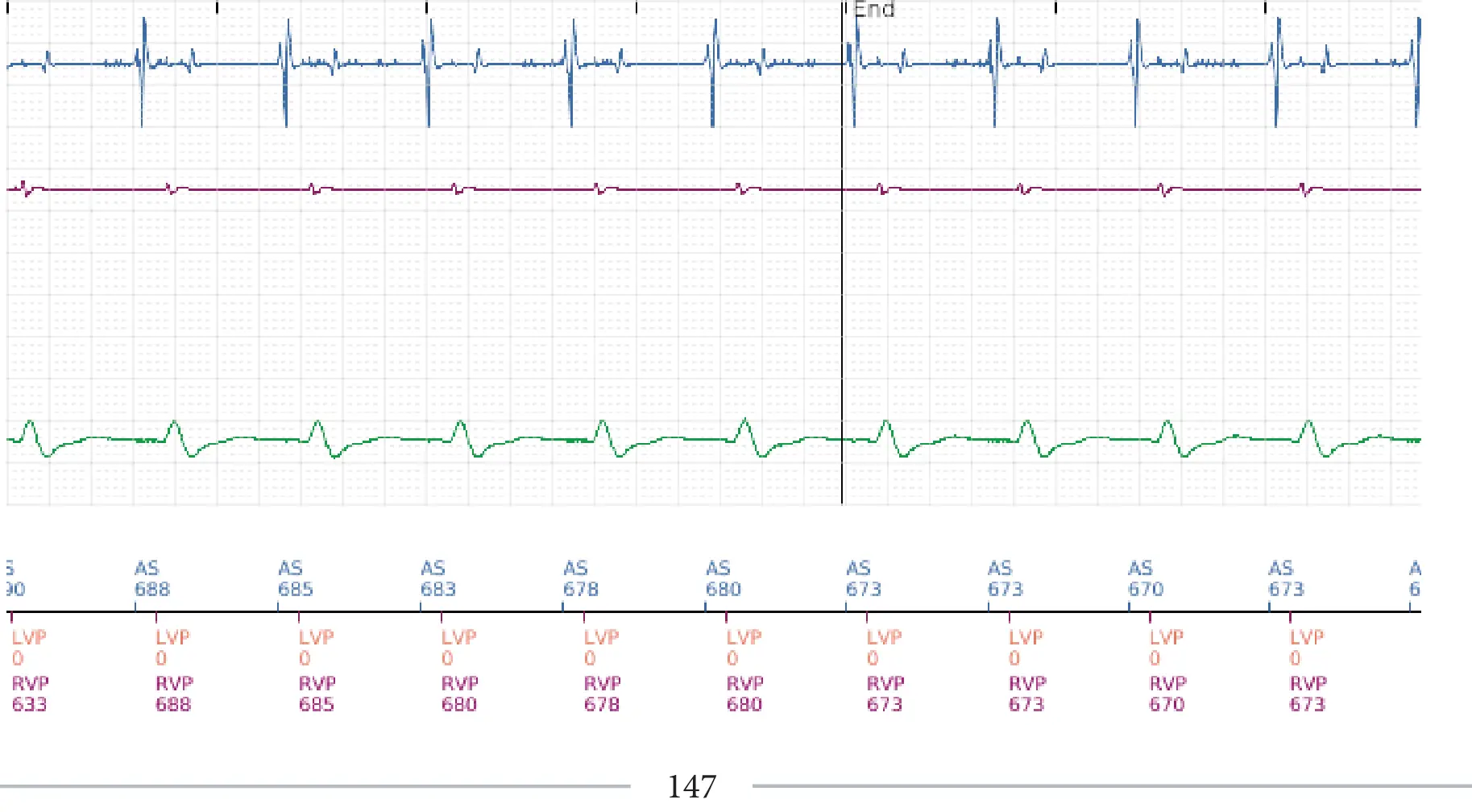
- Spontaneous atrial rhythm and biventricular pacing
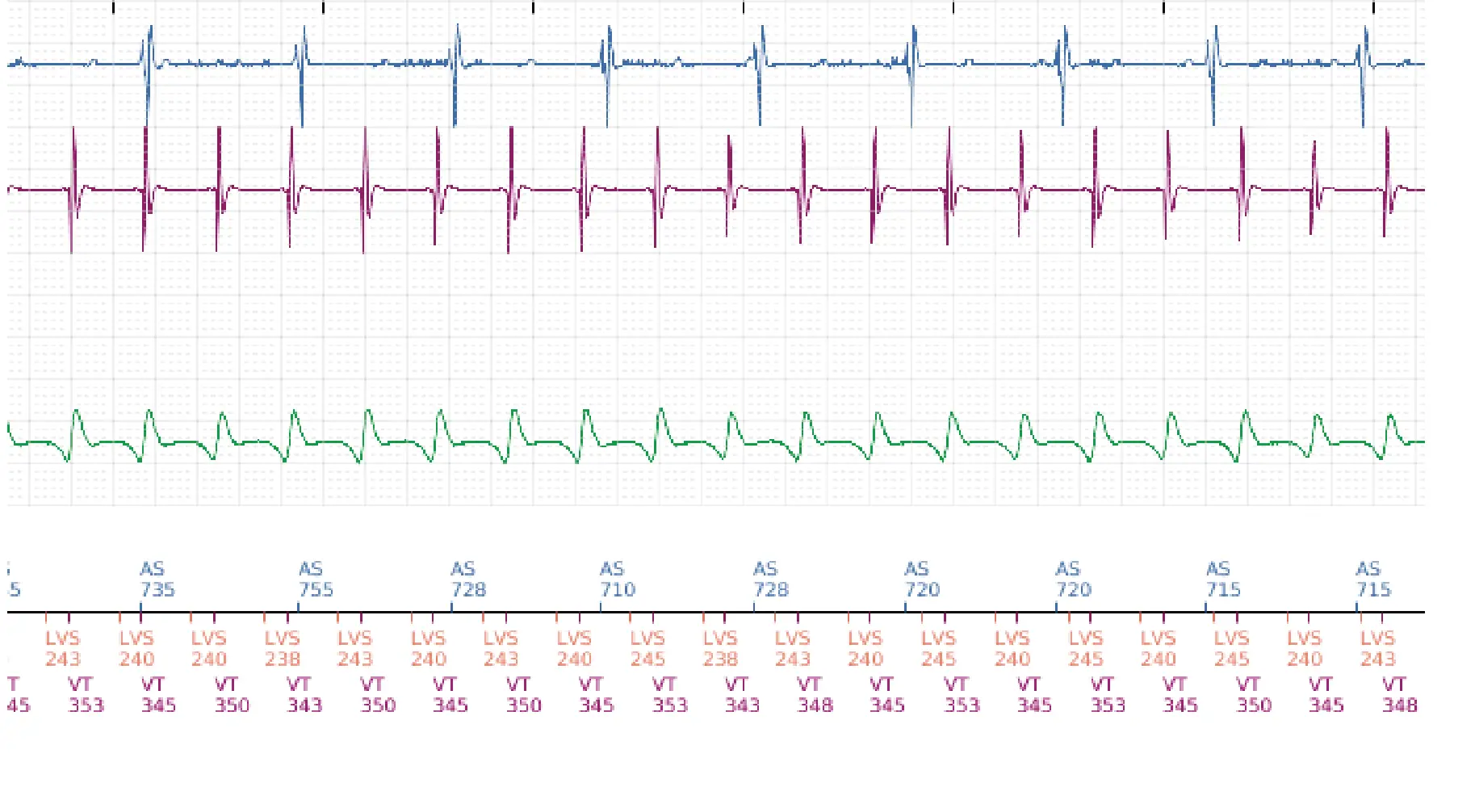
- Regular, monomorphic ventricular tachycardia (atrioventricular dissociation) diagnosed in the VT zone
- V-Epsd after 8 out of 10 cycles in VT or VT-1 zone
- Start of initial VT zone duration (12 seconds)
- Diagnosis of sustained VT (V-Detect) at end of duration (V>A)
- Burst of 10 complexes at fixed cycle length; biventricular pacing
- Effective burst and arrhythmia termination
Points to remember
- A priority when programming an implantable defibrillator is to reduce the number of shocks delivered as much as possible without compromising patient safety; the ideal scenario is to interrupt the tachycardia with the least aggressive and least painful therapy possible; anti-tachycardia pacing is therefore the preferred first-line therapy for organized reentrant tachycardias since it is less painful and reduces battery consumption compared to shocks.
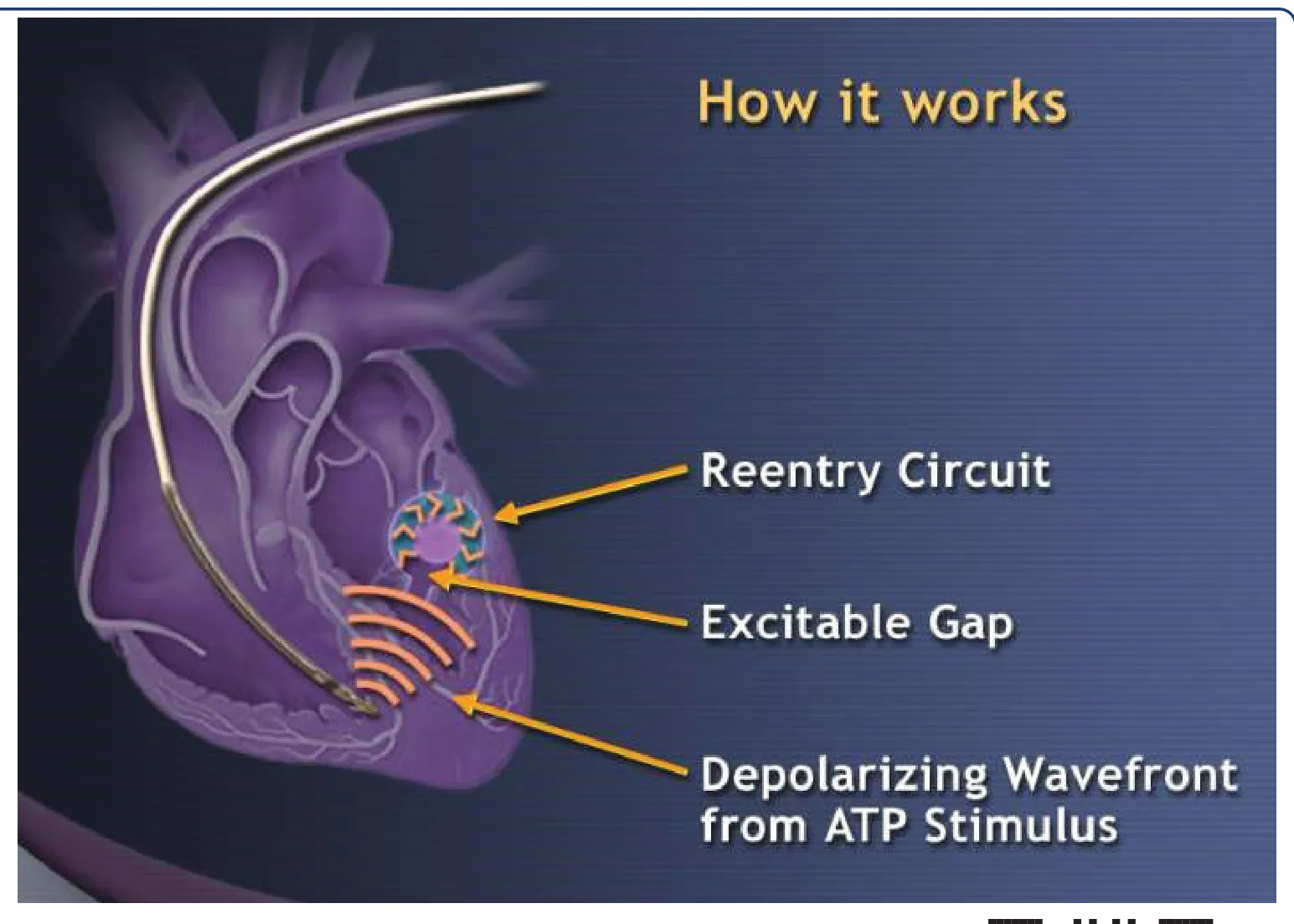
- The basic principle of anti-tachycardia pacing is based on the existence of an excitation window in a reentrant circuit during which rapid pacing can generate a new activation front that collides with the tachycardia circuit and interrupts it; the ventricle must therefore be paced at a higher rate than the tachycardia
- The efficacy of this type of therapy has been demonstrated for a wide range of ventricular tachycardia rates up to 240 beats/minute; anti-tachycardia pacing terminates around 90% of ventricular tachycardias with rates below 200 beats/minute, with a moderate risk of acceleration on the order of 1 to 5%.
- These observations have repositioned the implantable “defibrillator” as a first-line treatment for arrhythmias through rapid pacing, with the possibility of defibrillation as a back-up only.
- One or more ATP sequences can be programmed empirically, without the need for prior electrophysiological testing of efficacy
- This patient presented with numerous episodes of VT effectively treated by anti-tachycardia pacing; rapid and effective treatment by pacing enabled the patient to remain asymptomatic with a preserved quality of life while preserving the battery’s longevity
Practice out loud
Just describe the tracing. What do you think is going on? Describing the numbers can help.
00:00
0%
—
From Boston Scientific ICD — clinical cases by P. Bordachar, M. Strik, A. Thiyagarajah, S. Ploux. Published by Cardiocases. Every numbered marker on a recording is explained in the list beneath it; tap a marker on the trace or an entry in the list.
Order hardcopyon Amazon