
Chapter 2 · Therapies · Case 11
Anti-tachycardia pacing in the VT zone and post-detection duration
Patient and episode
Patient
- 73-year-old woman implanted with a Resonate CRT defibrillator
Summary
- Episode classified in the VT zone
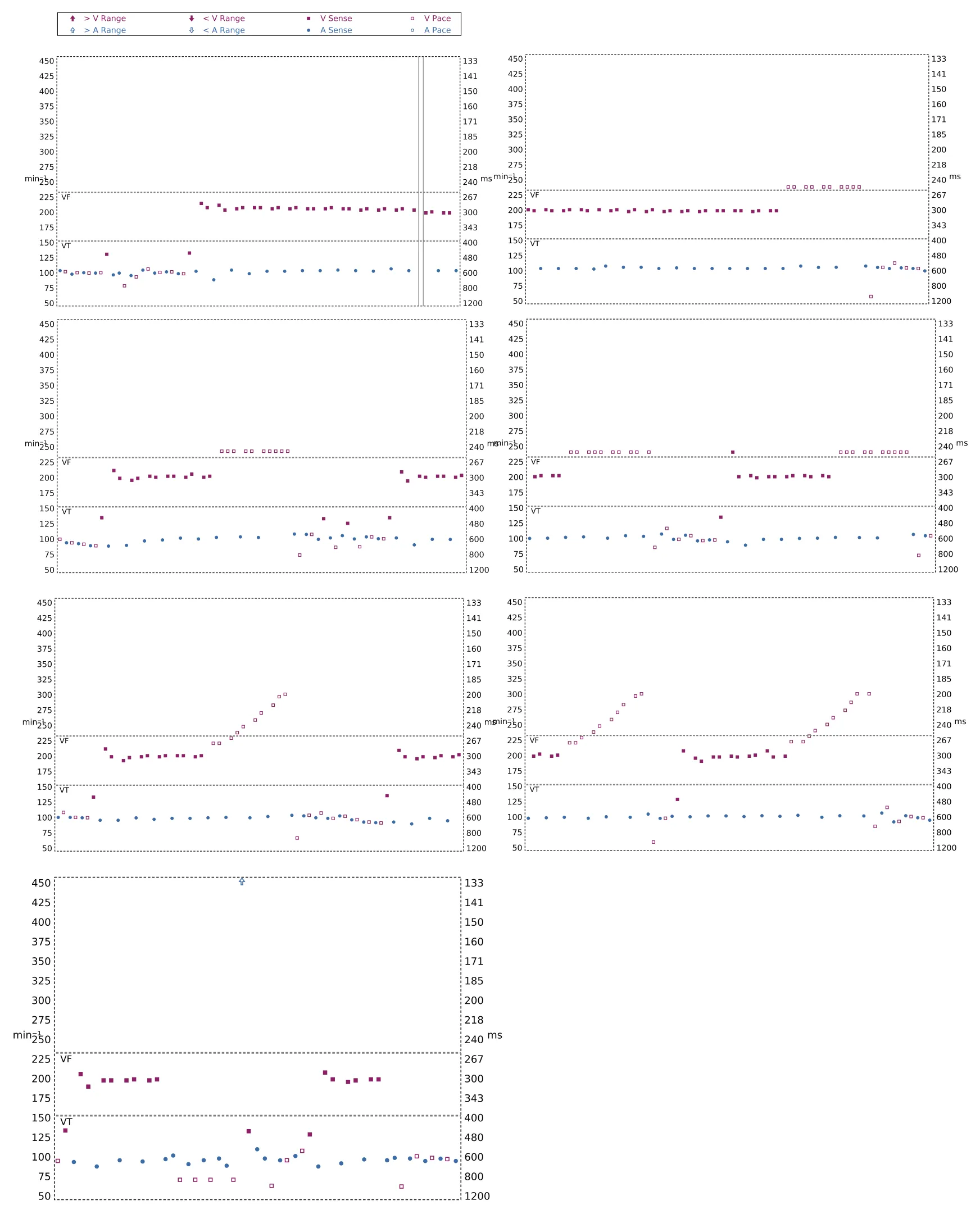
- 4 bursts + 3 ramps
The recording
Tap a number on the trace, or an entry in the list below
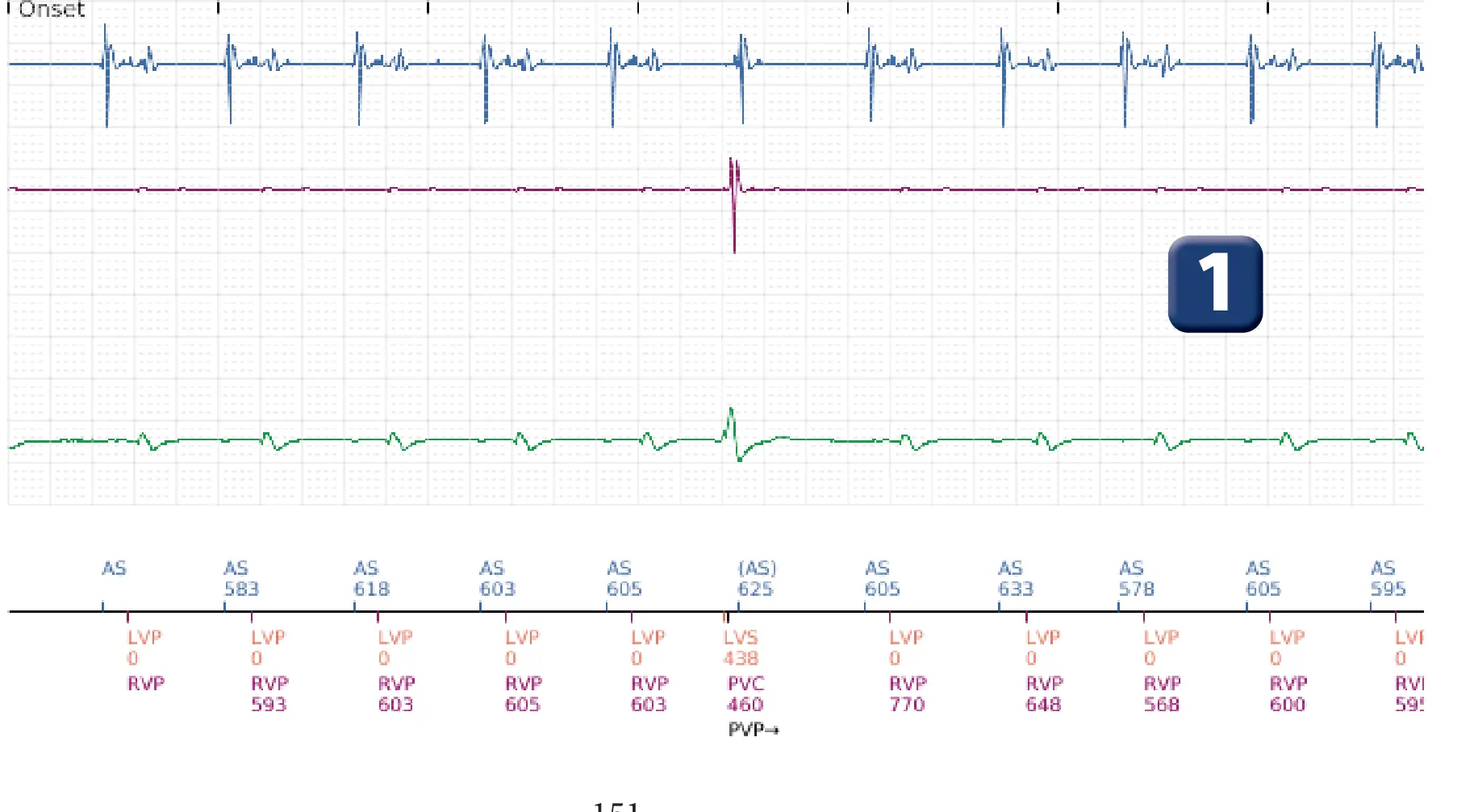
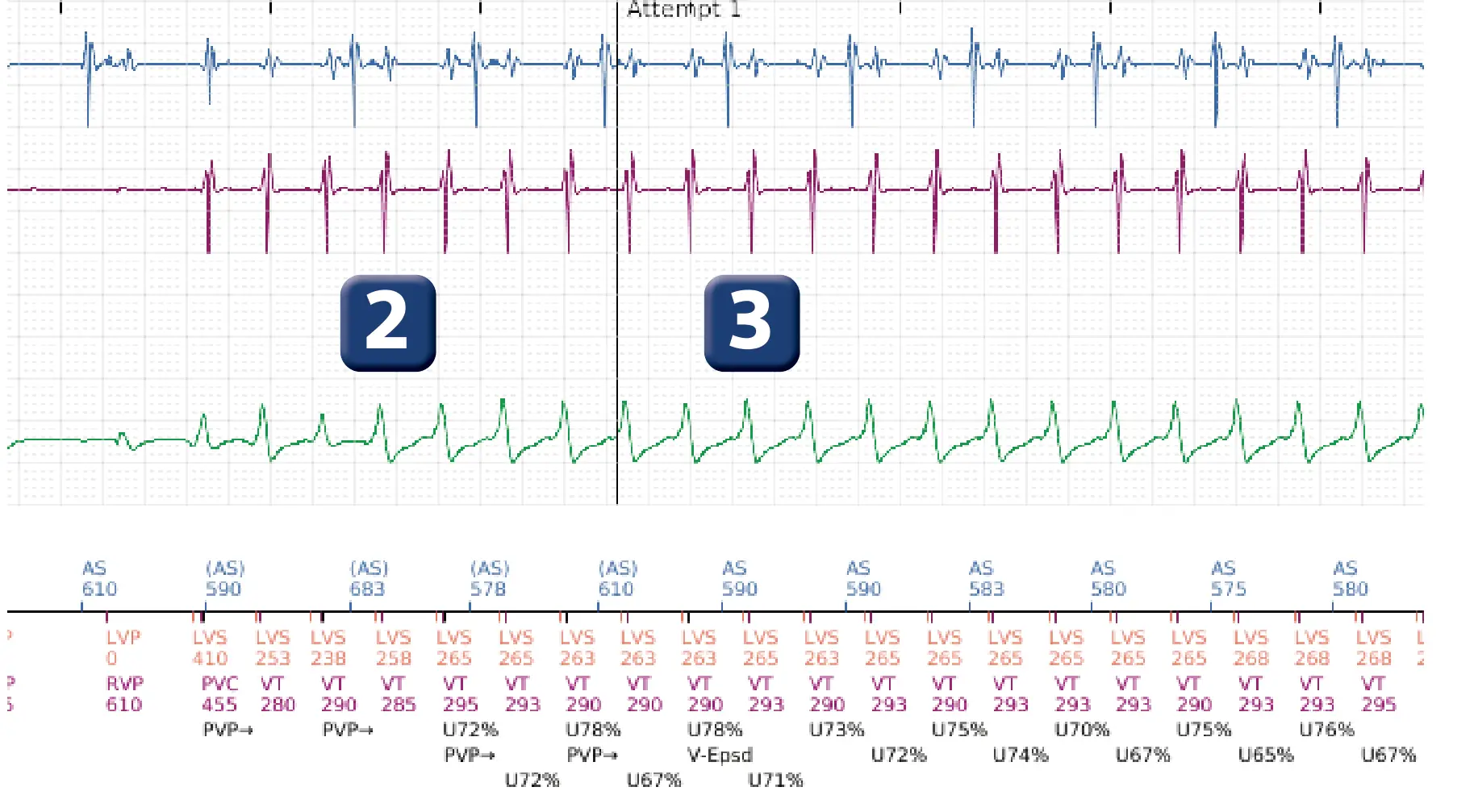
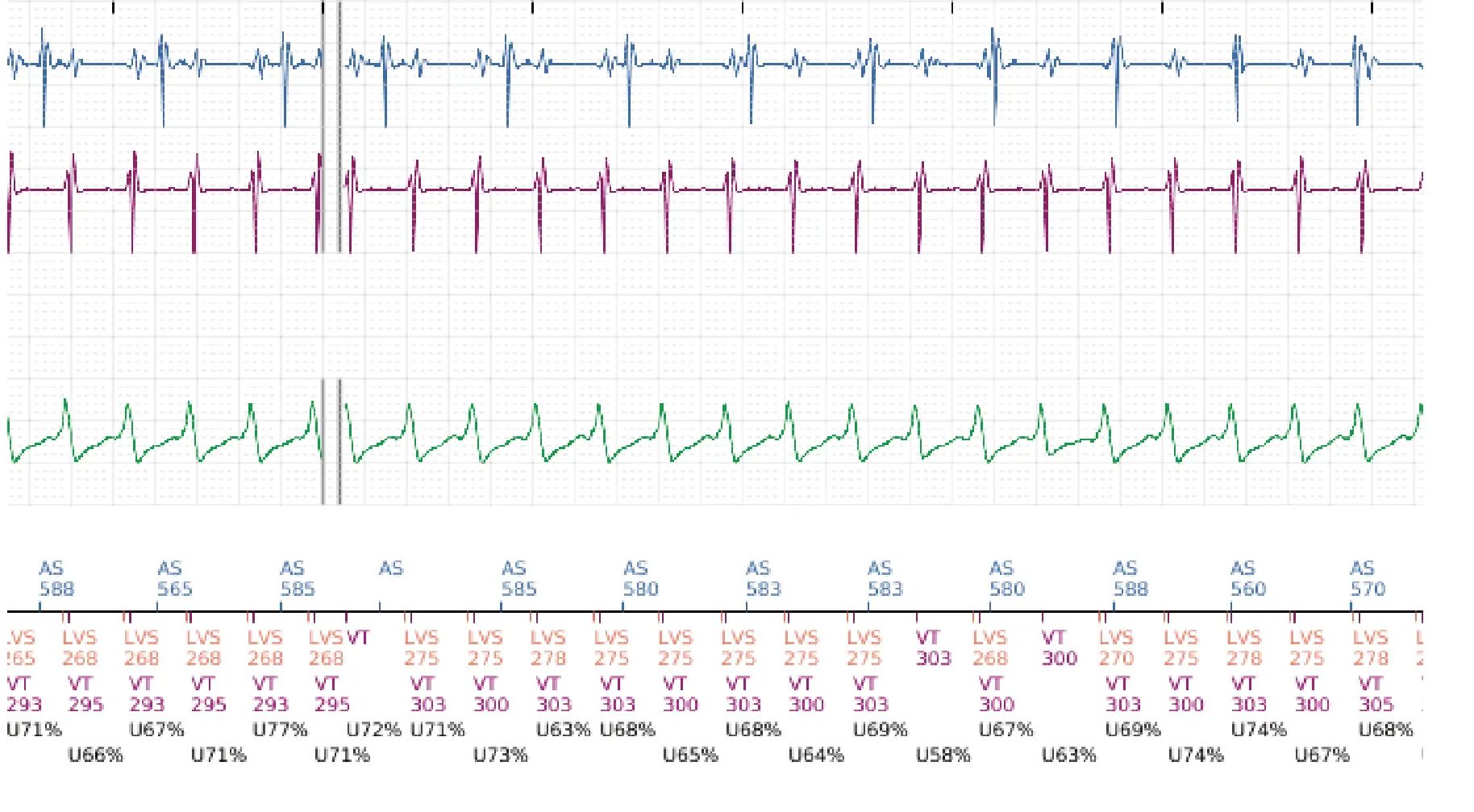
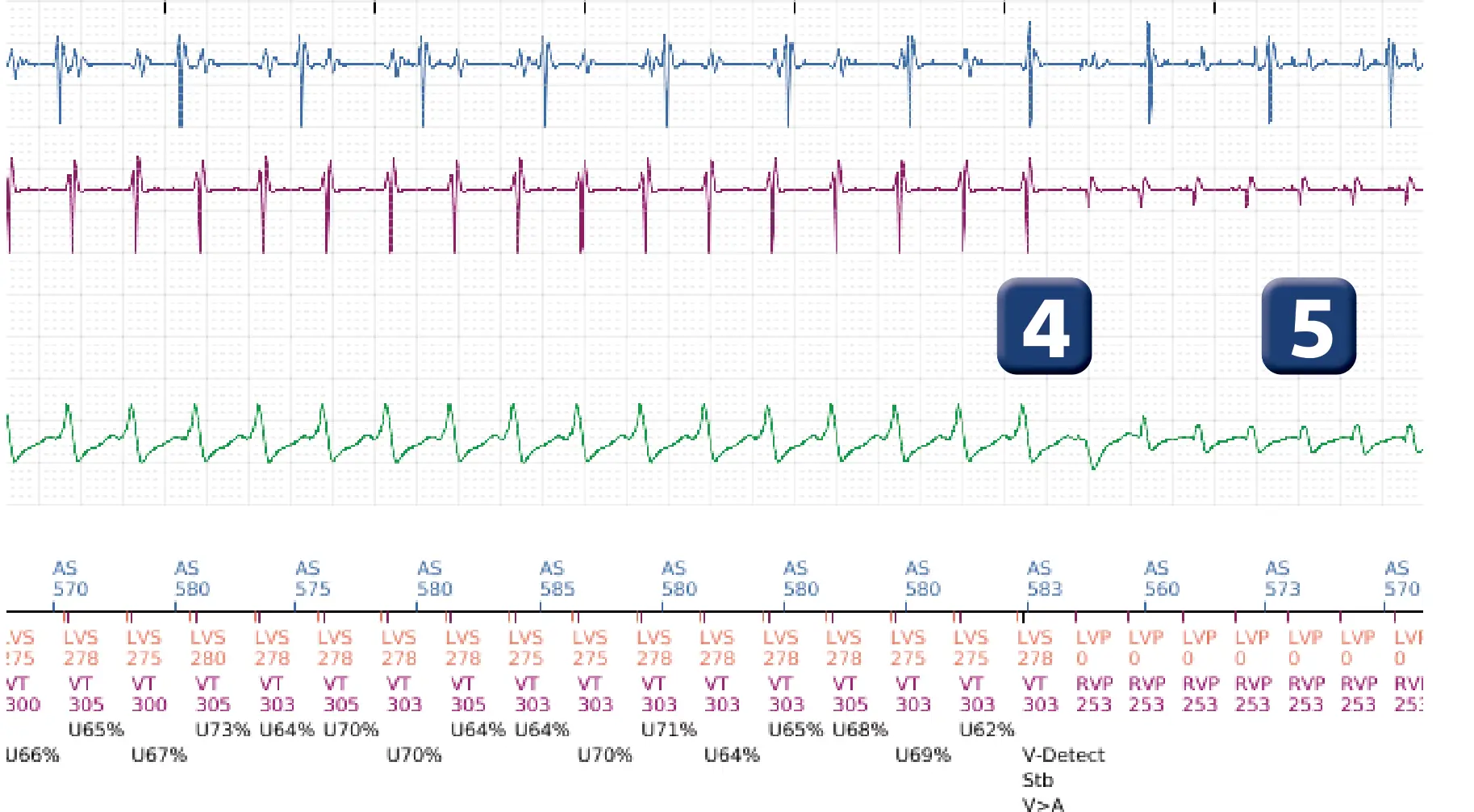
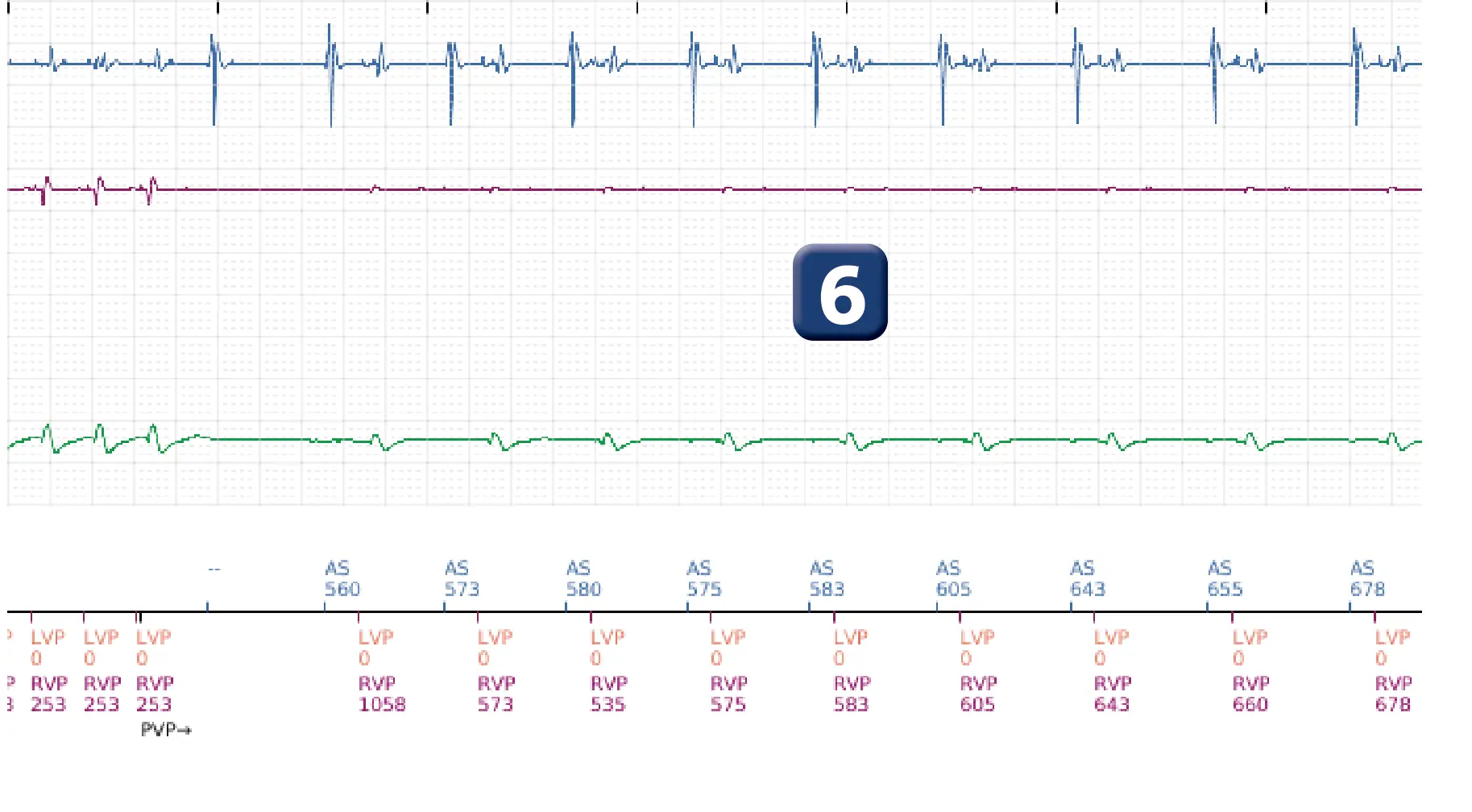
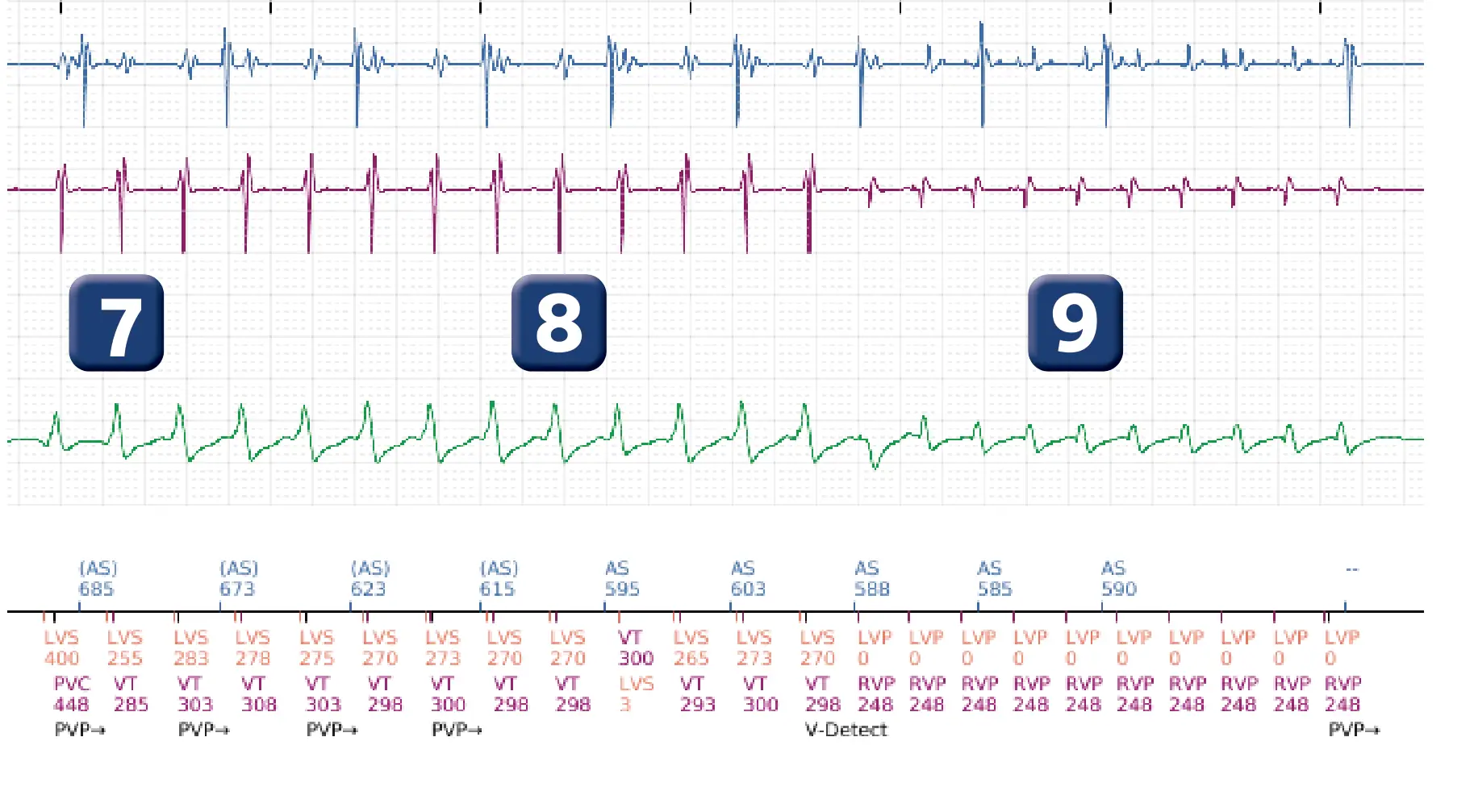
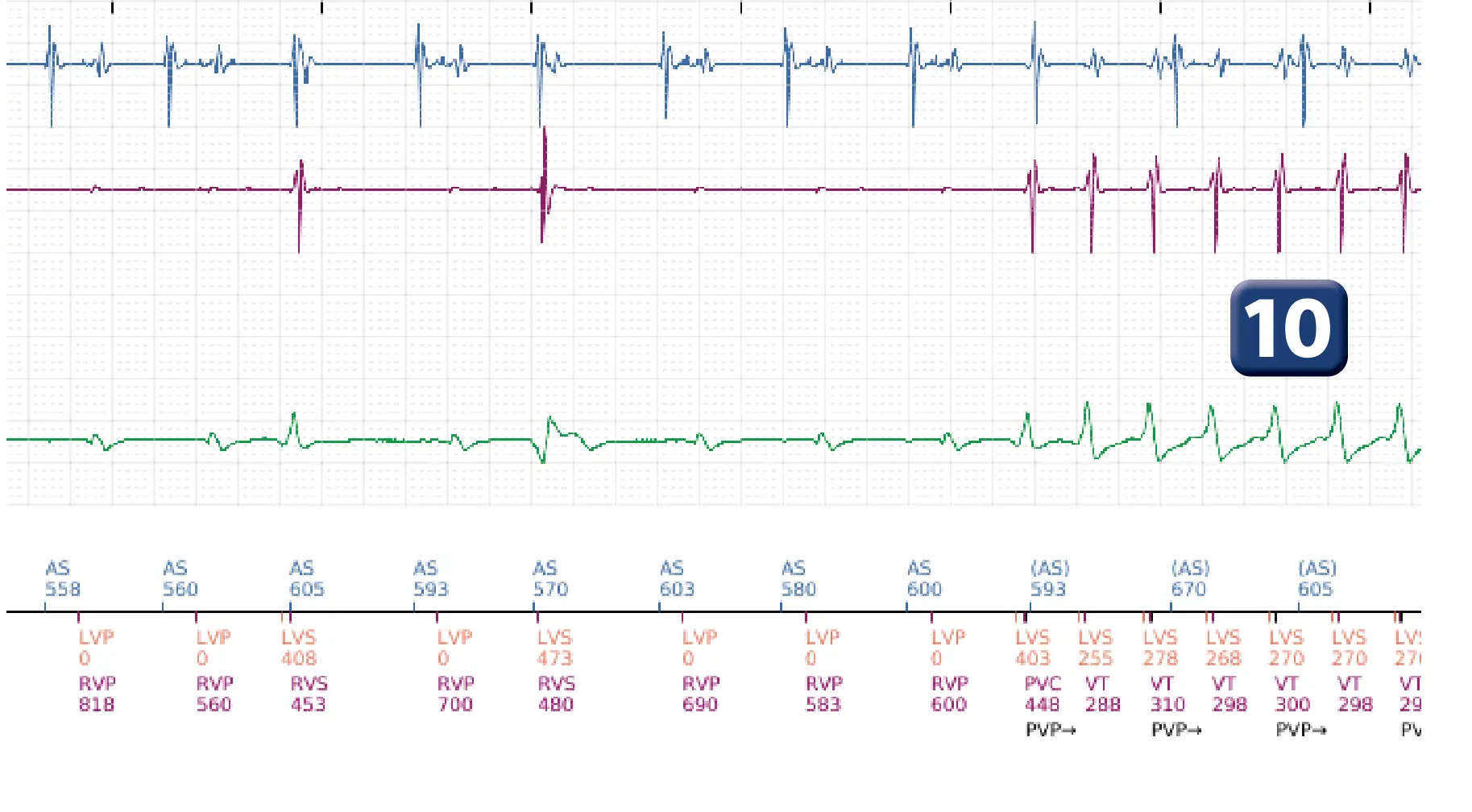
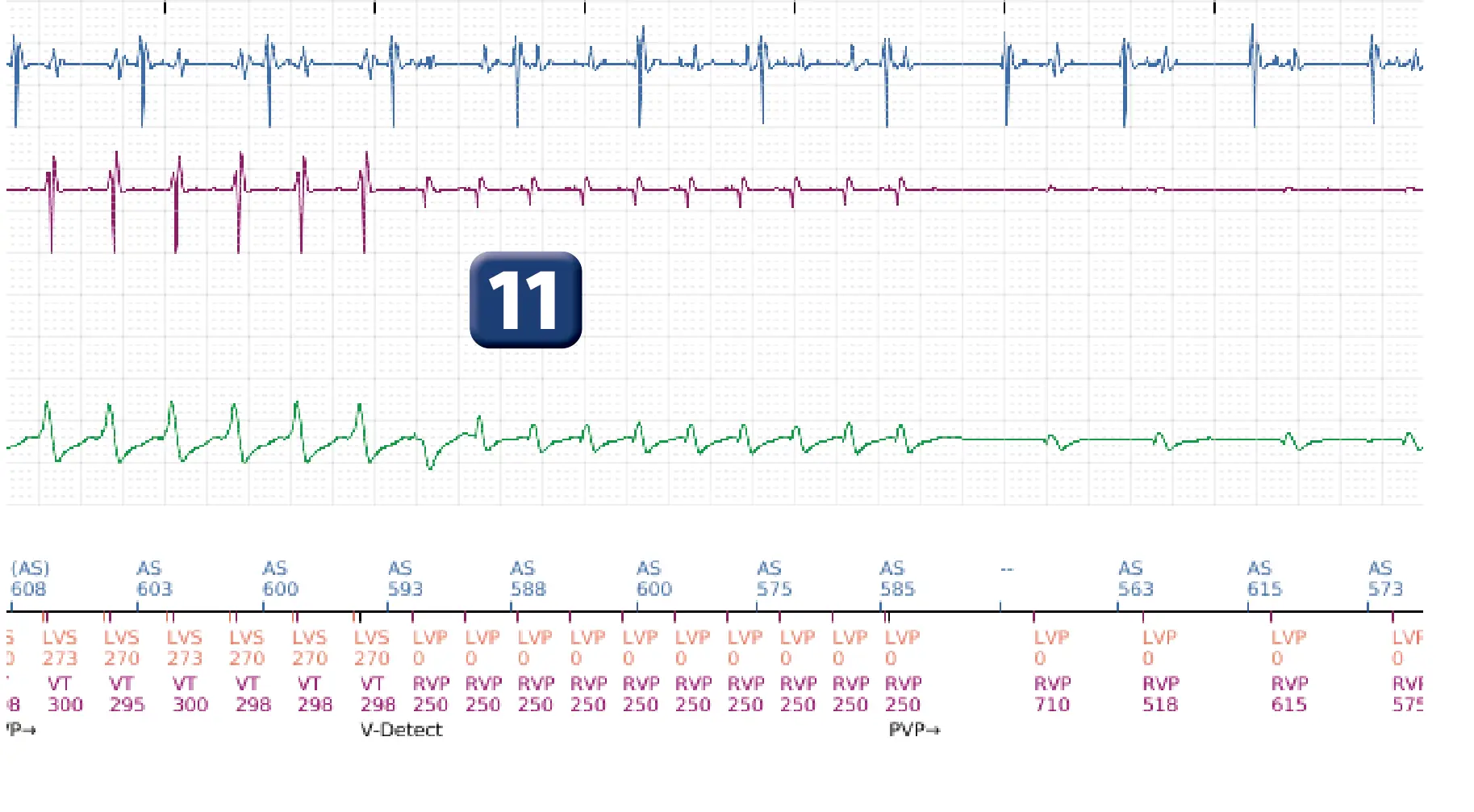
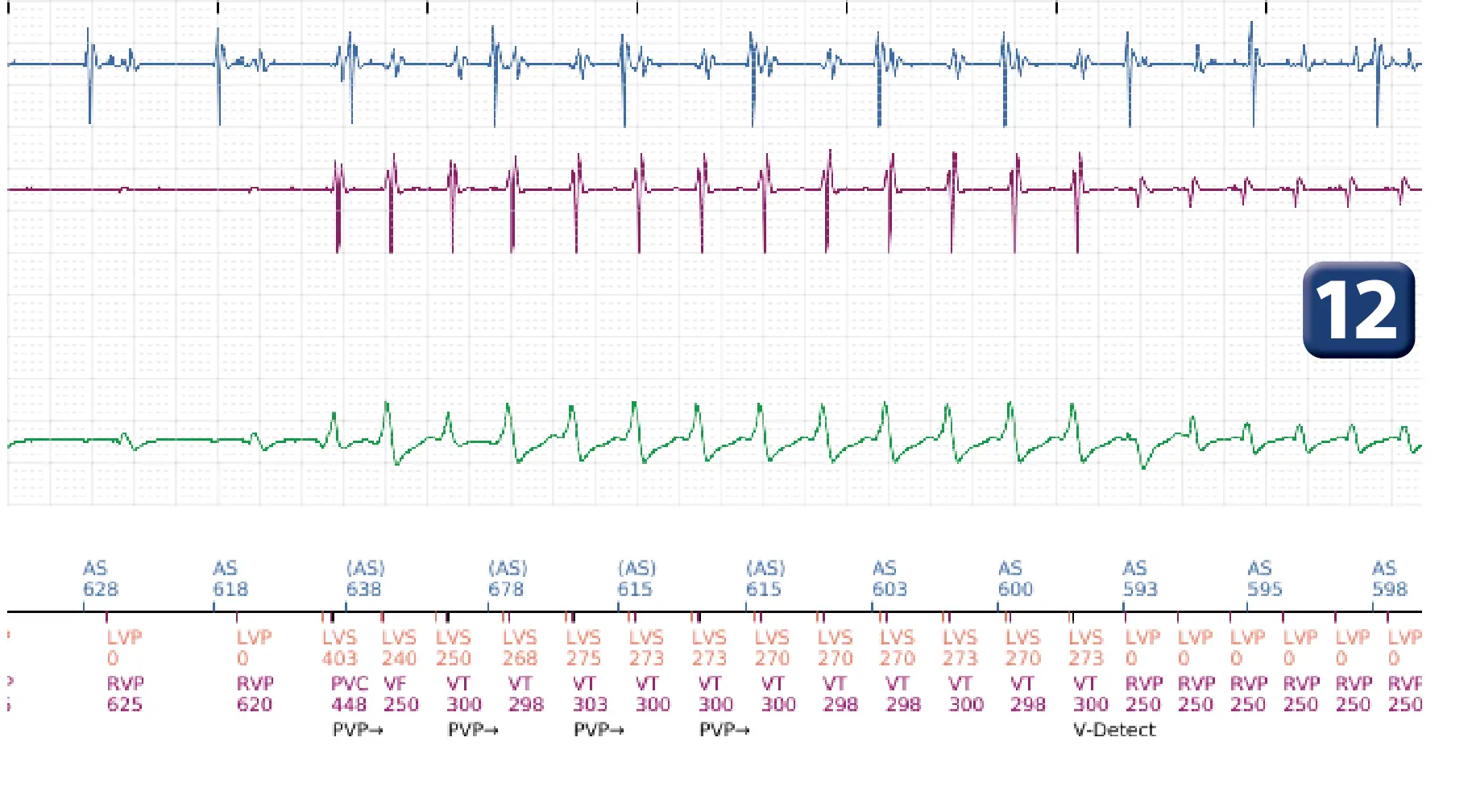
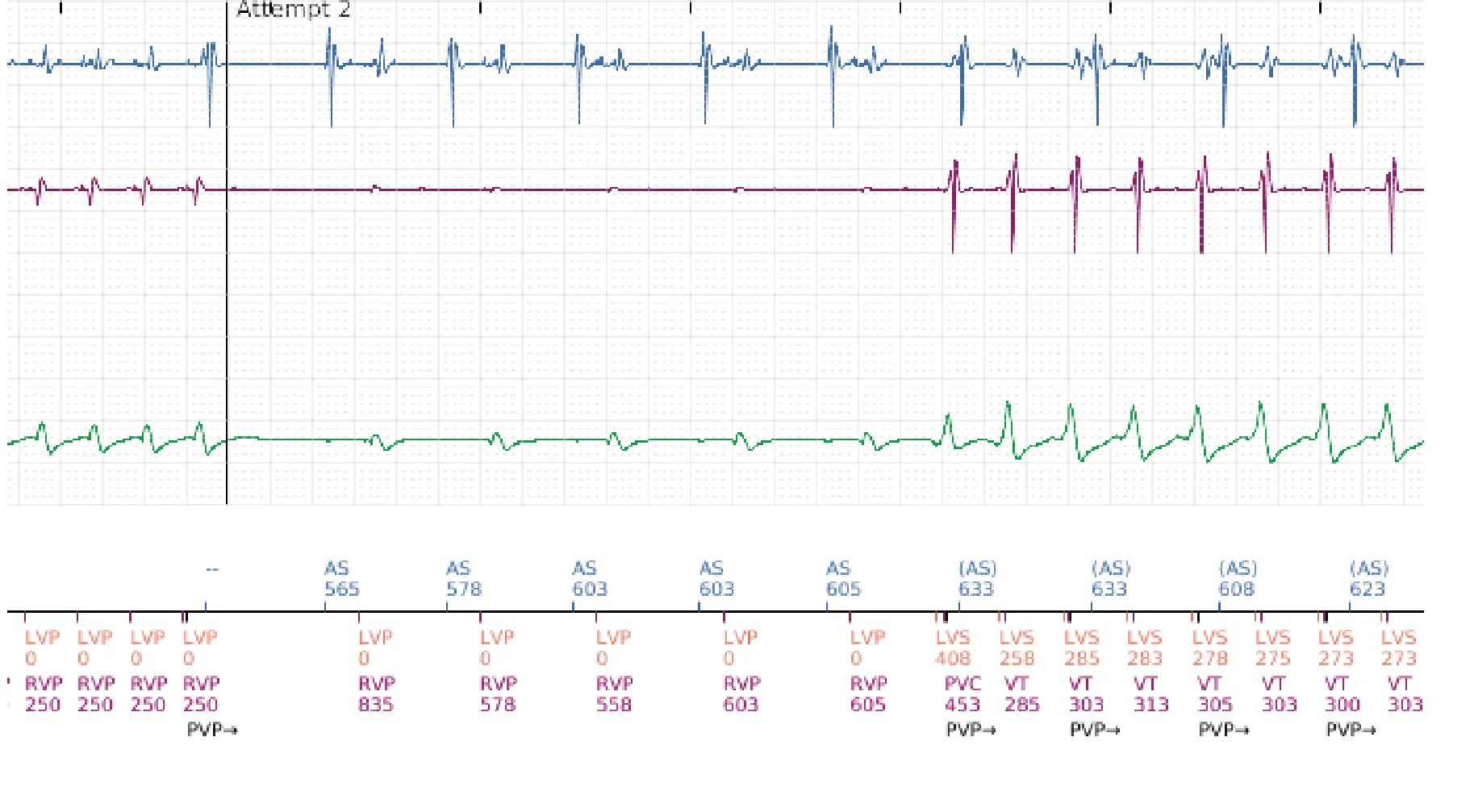
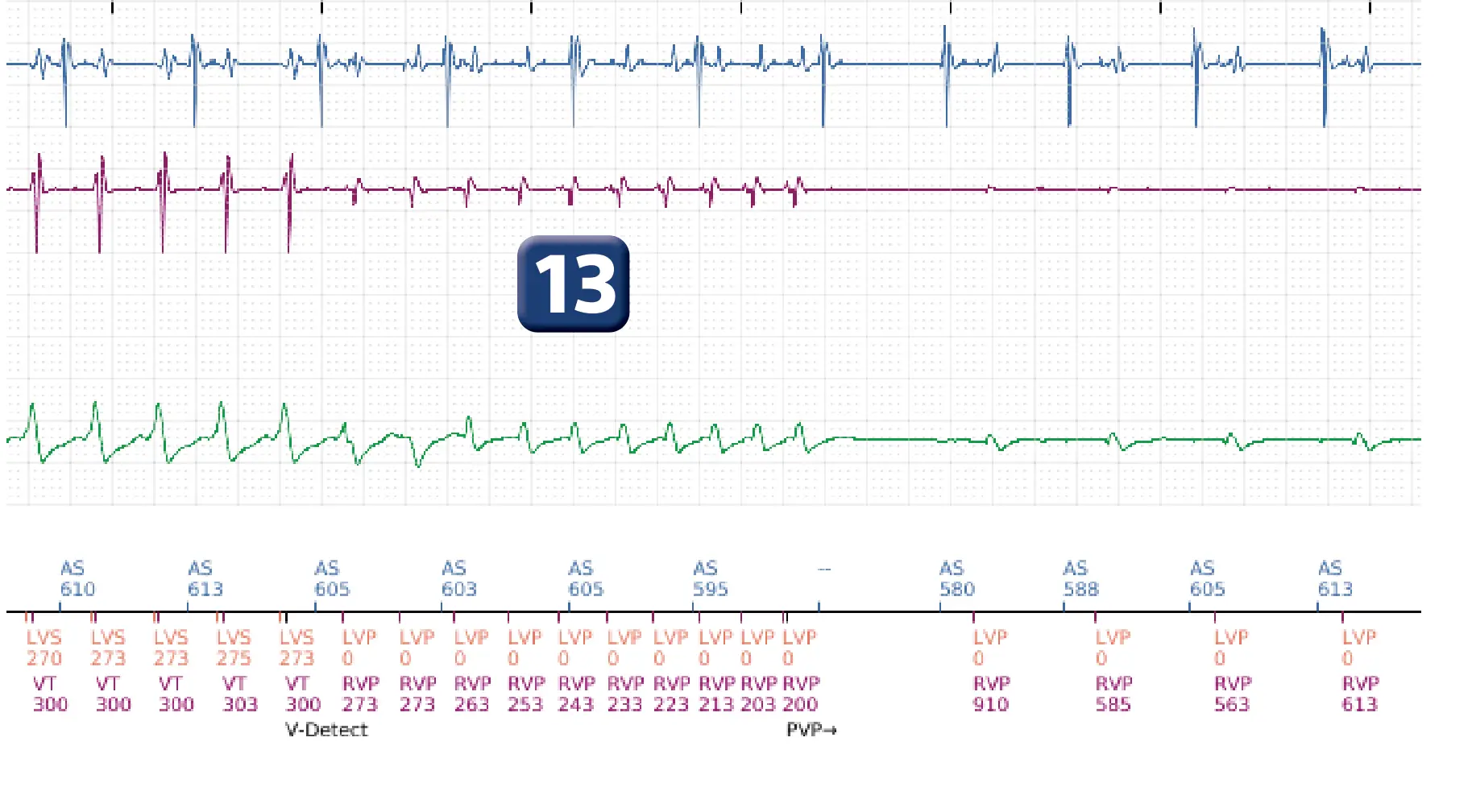
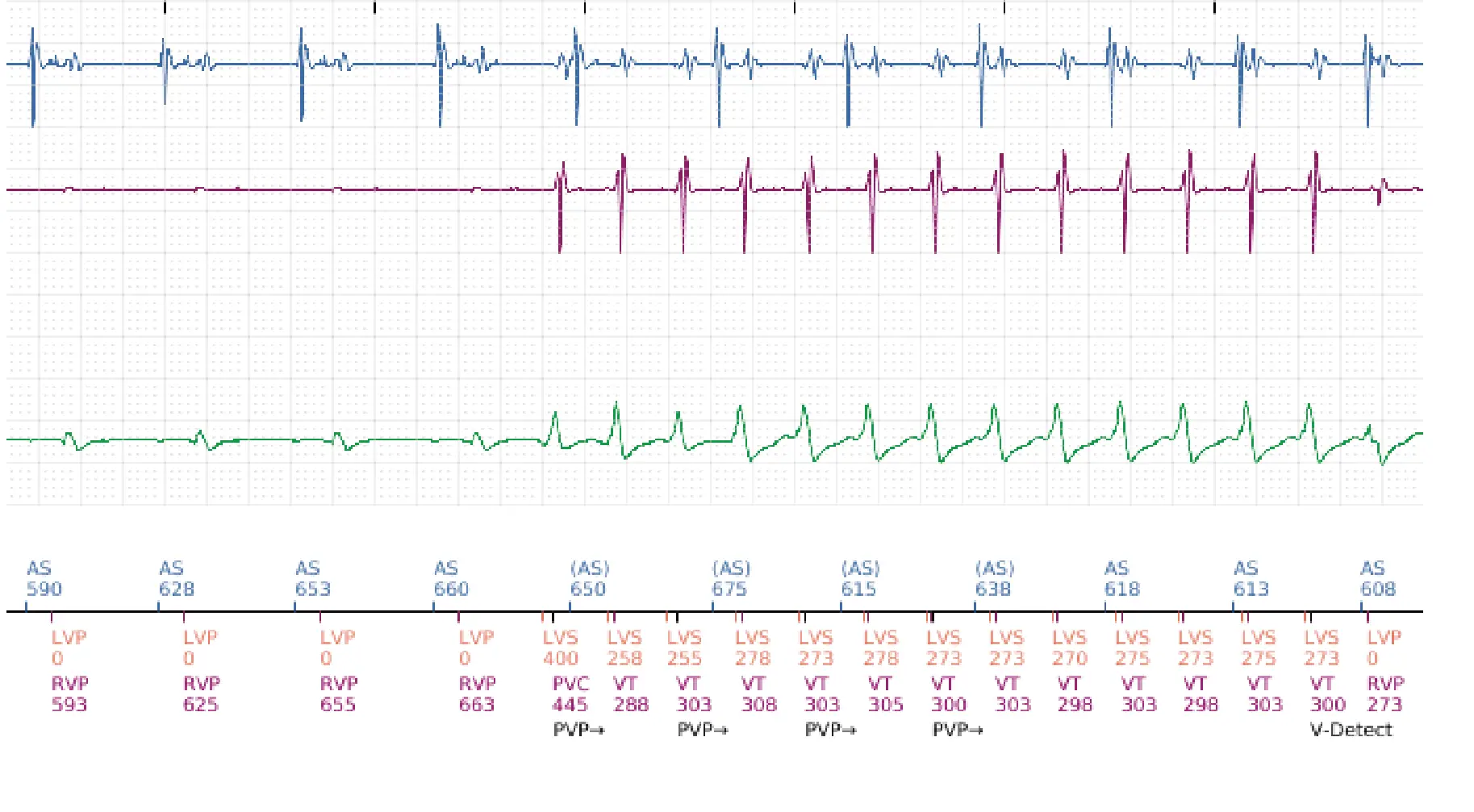
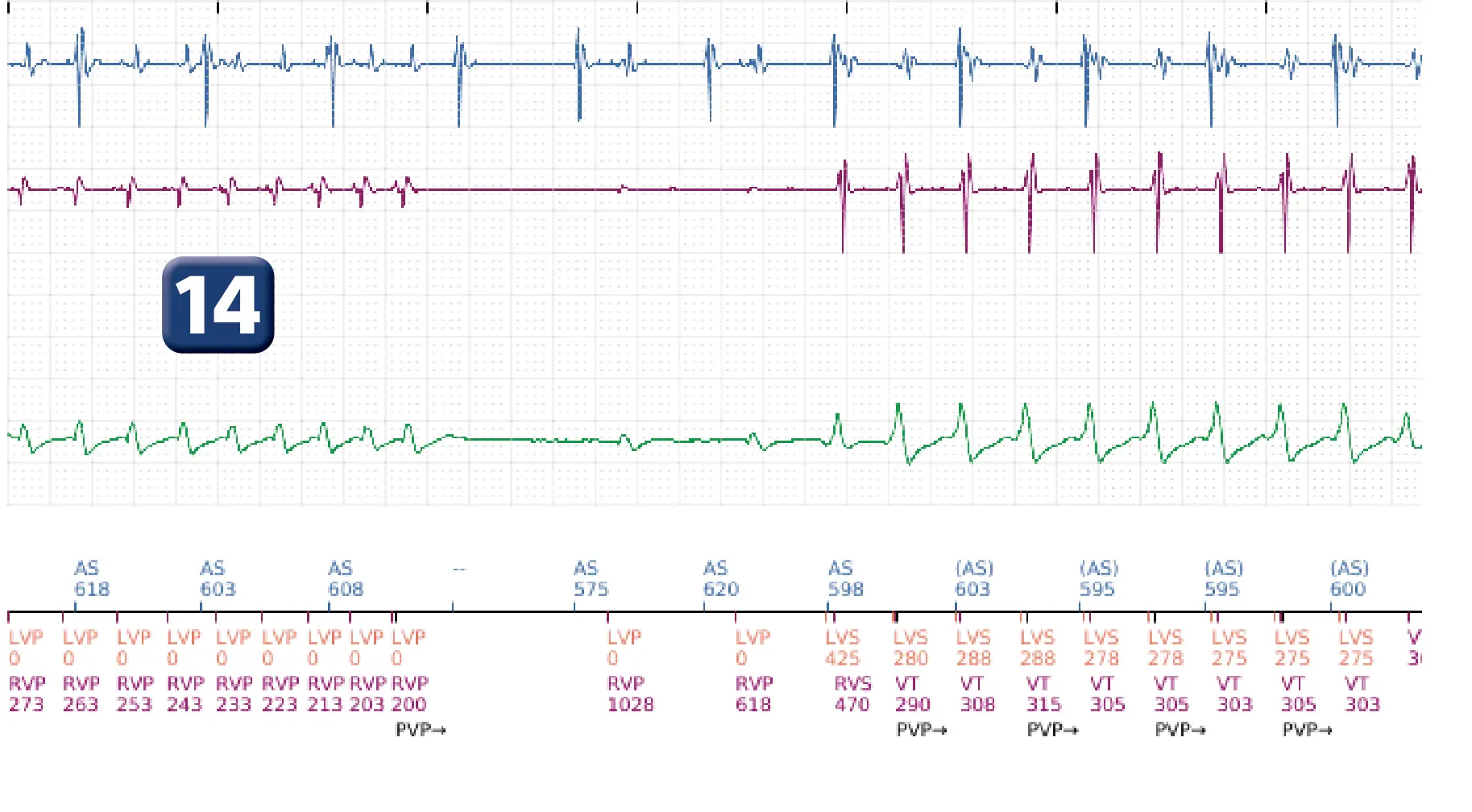
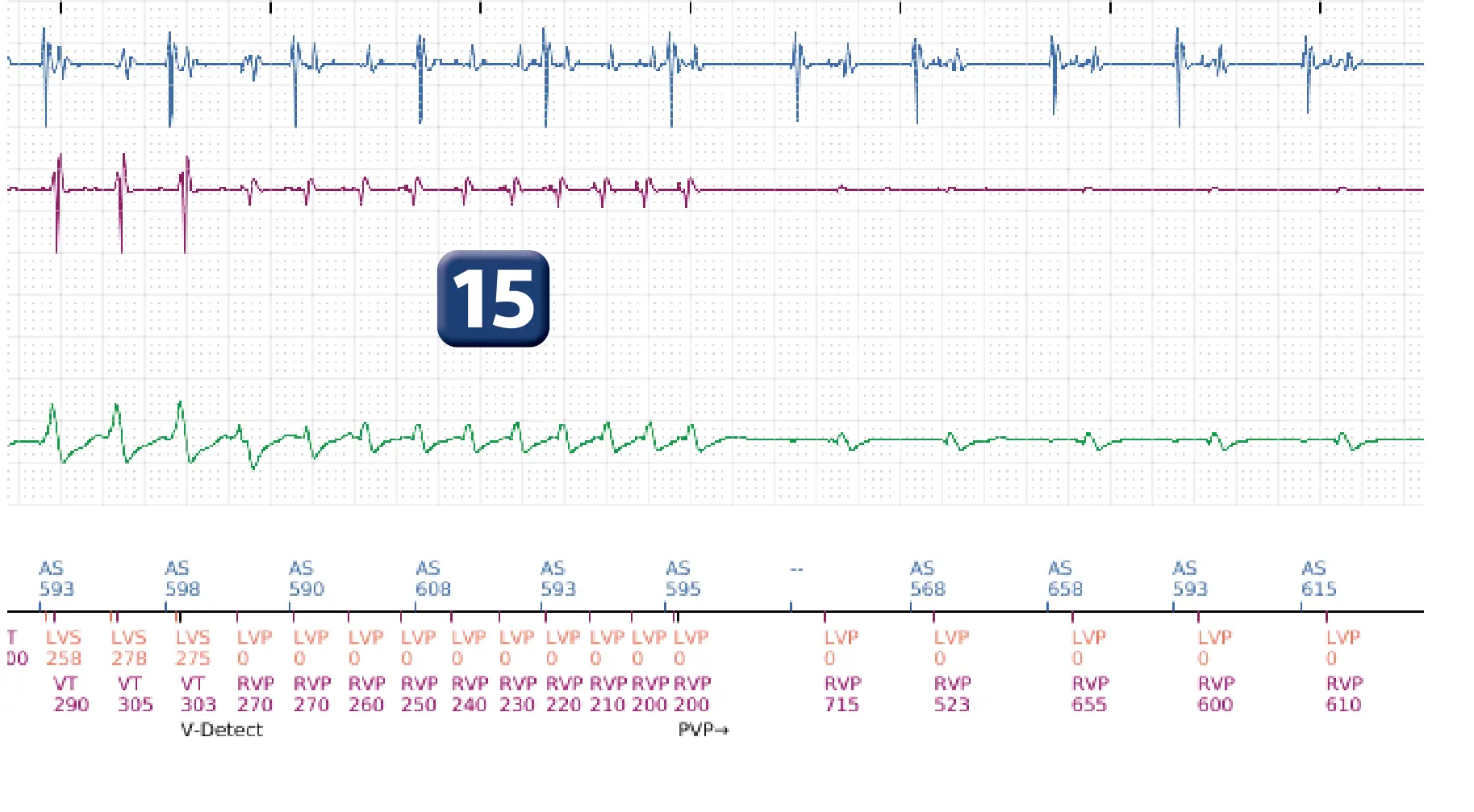
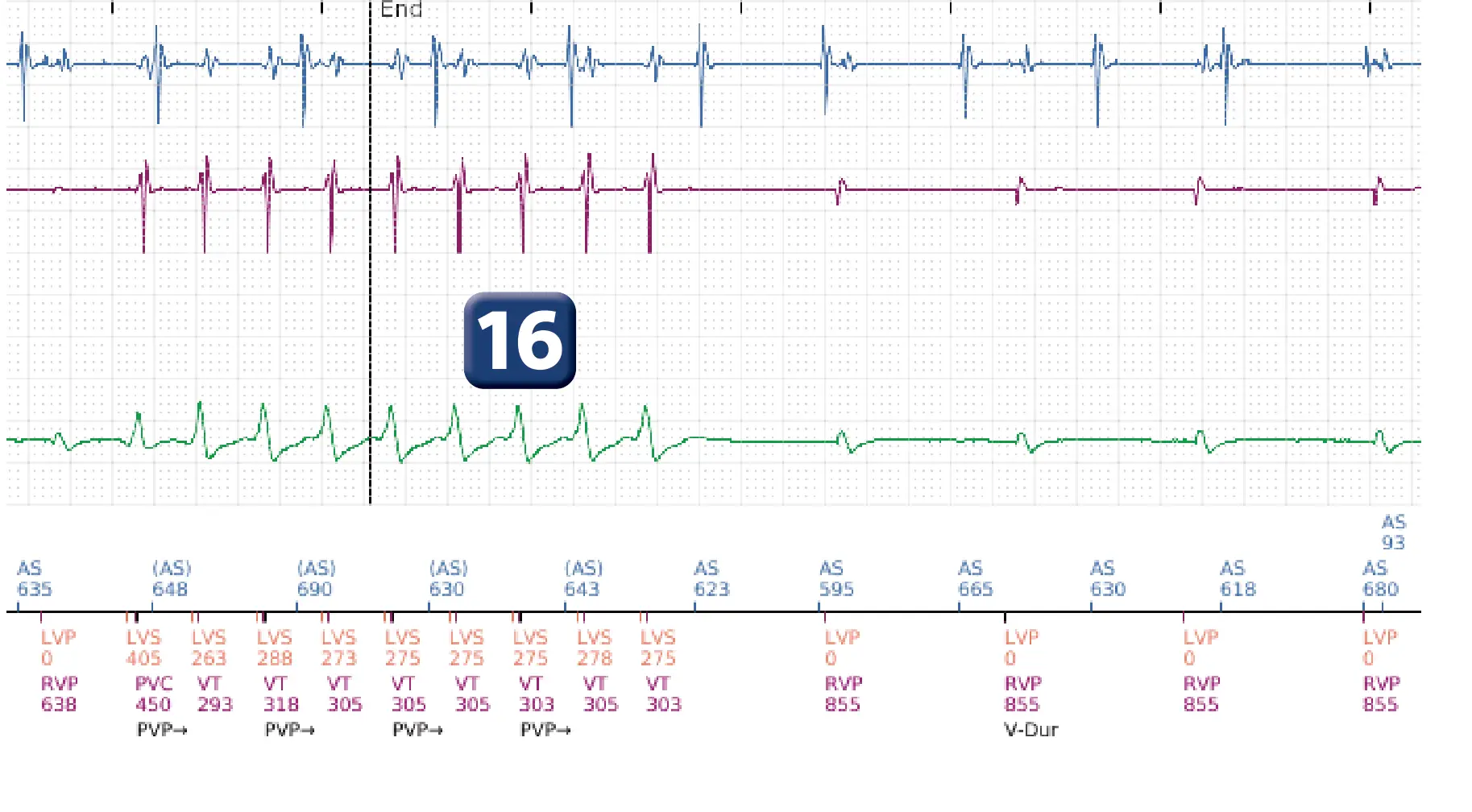
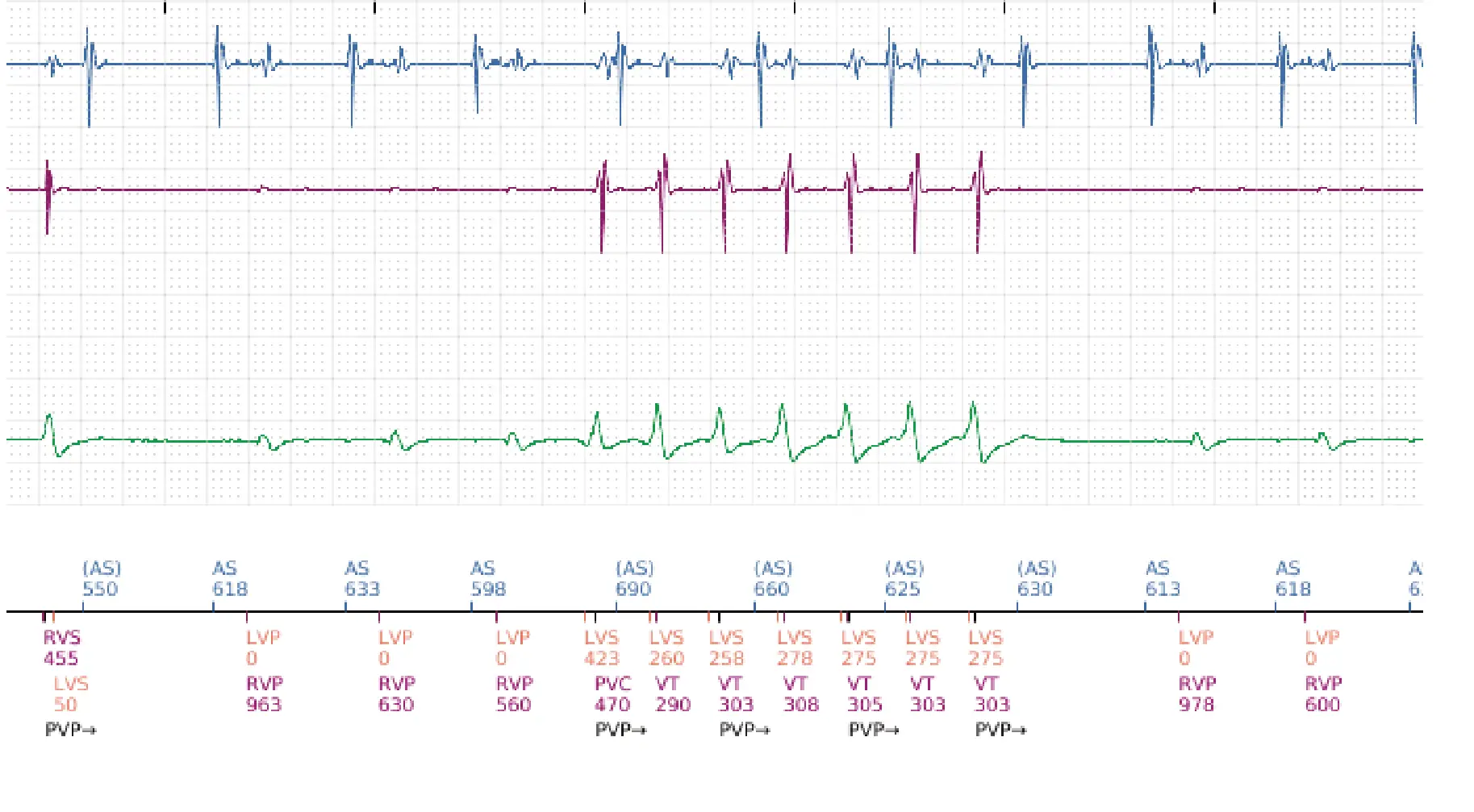
- Spontaneous rhythm in the atrium and biventricular pacing
- Regular, monomorphic ventricular tachycardia (atrioventricular dissociation) diagnosed in the VT zone
- V-Epsd after 8 out of 10 cycles in the VT zone and start of initial VT zone duration (12 seconds)
- Diagnosis of sustained VT (V-Detect) at end of duration (V>A)
- Burst of 10 complexes at fixed rate; biventricular pacing
- Effective burst and arrhythmia termination
- Restart of an identical VT before the V-EpsdEnd marker
- Criterion 8/10 verified and start of post-detection time (1 second)
- End of duration, burst (considered by the device as the second burst for the same episode)
- Effectve burst, but rapid VT recurrence
- Third burst
- Fourth burst
- First ramp (pacing with 10 ms increments between stimuli; shortest cycle length limited to 200 ms)
- Second ramp
- Third ramp
- NSVT (criterion 8/10 not met)
From the interrogation
Points to remember
- This clinical case highlights the importance of programming the redetection duration time for the VT zone; this patient presented with numerous episodes of VT which terminated spontaneously or following anti-tachycardia pacing; the initial duration was programmed at 12 seconds; anti-tachycardia pacing was effective, but the tachycardia recurred before the end-of-episode marker; the redetection time set at 1 second was then applied, leading to pacing after a limited number of tachycardia cycles
- For an anti-tachycardia pacing sequence, there is no additional delay between the end of the duration and therapy; on the other hand, to deliver a shock, charging time and post-charging confirmation are added; therefore in this patient, it seems advisable to lengthen the redetection duration for the VT zone (which is programmable in the VT zone and not in the VF zone) to encourage possible spontaneous termination of nonsustained VTs
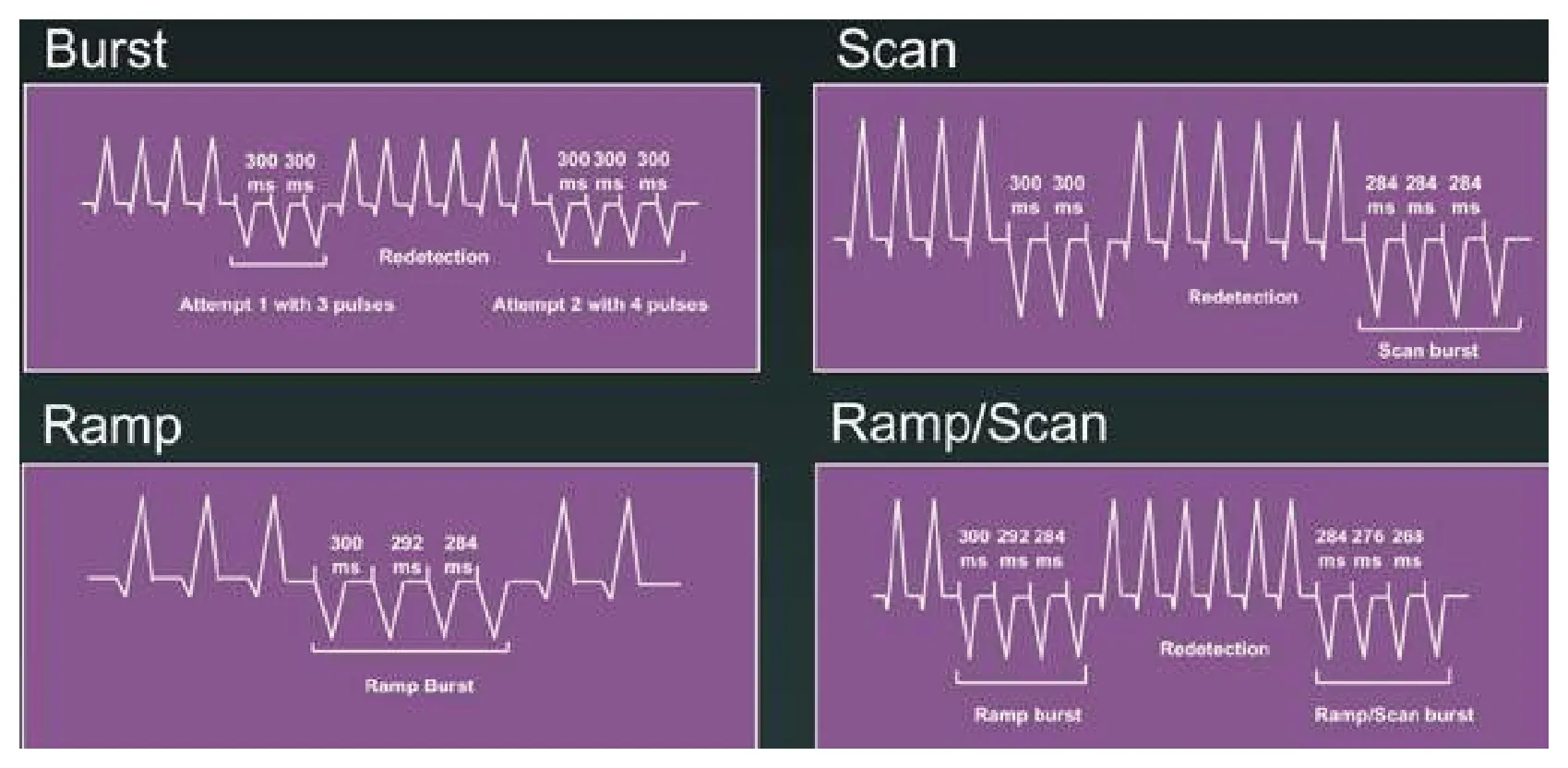
- Burst: interval duration is constant throughout a sequence
- Ramp: the interval is reduced from one stimulus to the next by the programmable decrement value
- Scan: interval duration is reduced from one burst/ramp to the next
Practice out loud
Just describe the tracing. What do you think is going on? Describing the numbers can help.
00:00
0%
—
From Boston Scientific ICD — clinical cases by P. Bordachar, M. Strik, A. Thiyagarajah, S. Ploux. Published by Cardiocases. Every numbered marker on a recording is explained in the list beneath it; tap a marker on the trace or an entry in the list.
Order hardcopyon Amazon