
Chapter 2 · Therapies · Case 9
Oversensing and anti-tachycardia pacing in the VF zone
Patient and episode
Patient
- 73-year-old male implanted with a secondary-prevention, dual-chamber defibrillator for ischaemic cardiomyopathy with sustained VT 8 years ago; box change with implantation of a Teligen defibrillator; multiple episodes of non-sustained VT or VF requiring 1 to 2 ATP sequences noted during a routine consultation
Summary
- Initially, the episode is classified in the VF zone
- ATP is delivered, the shock is diverted due to reconfirmation failure
- A second episode is diagnosed in the VT zone; a burst of ATP is delivered
The recording
Tap a number on the trace, or an entry in the list below
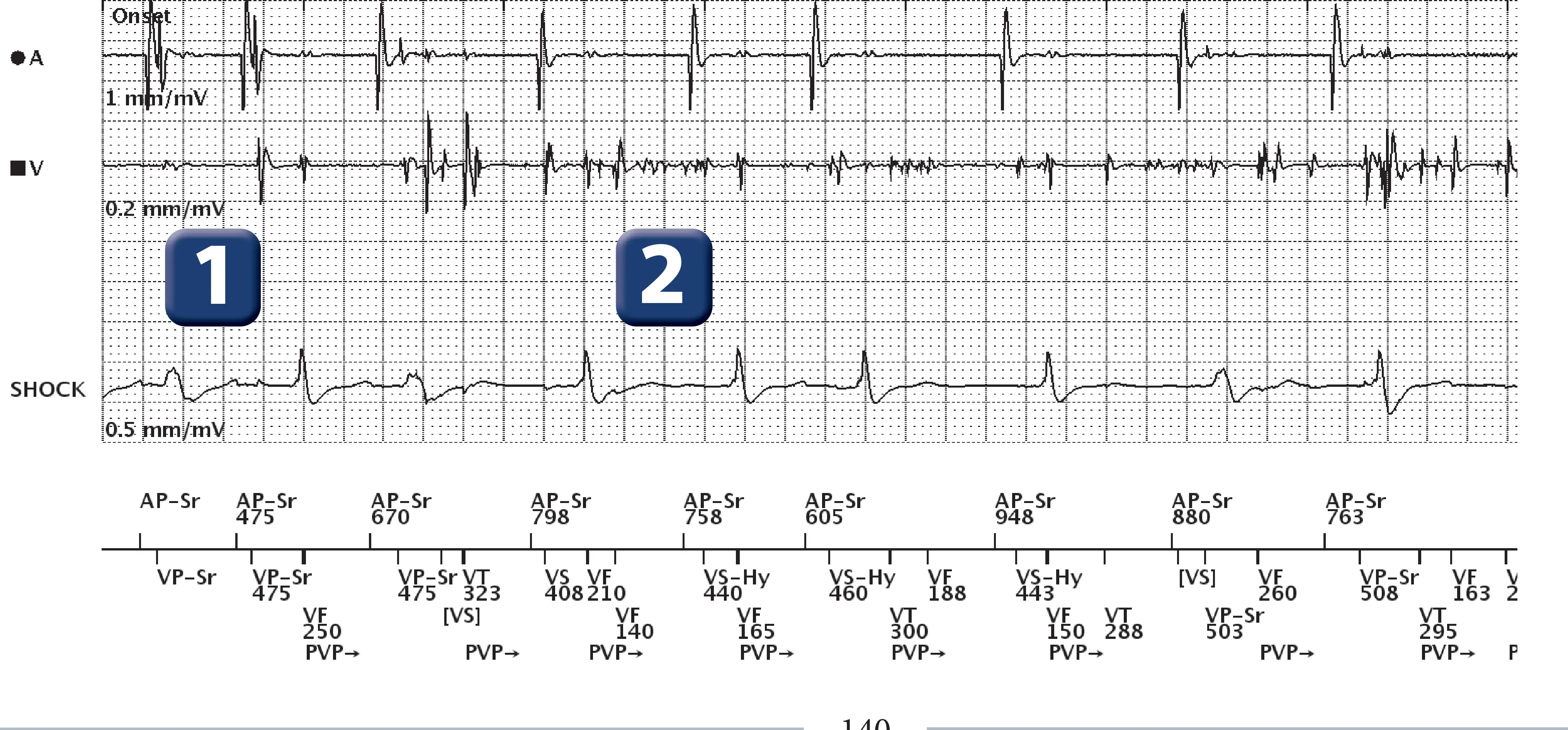
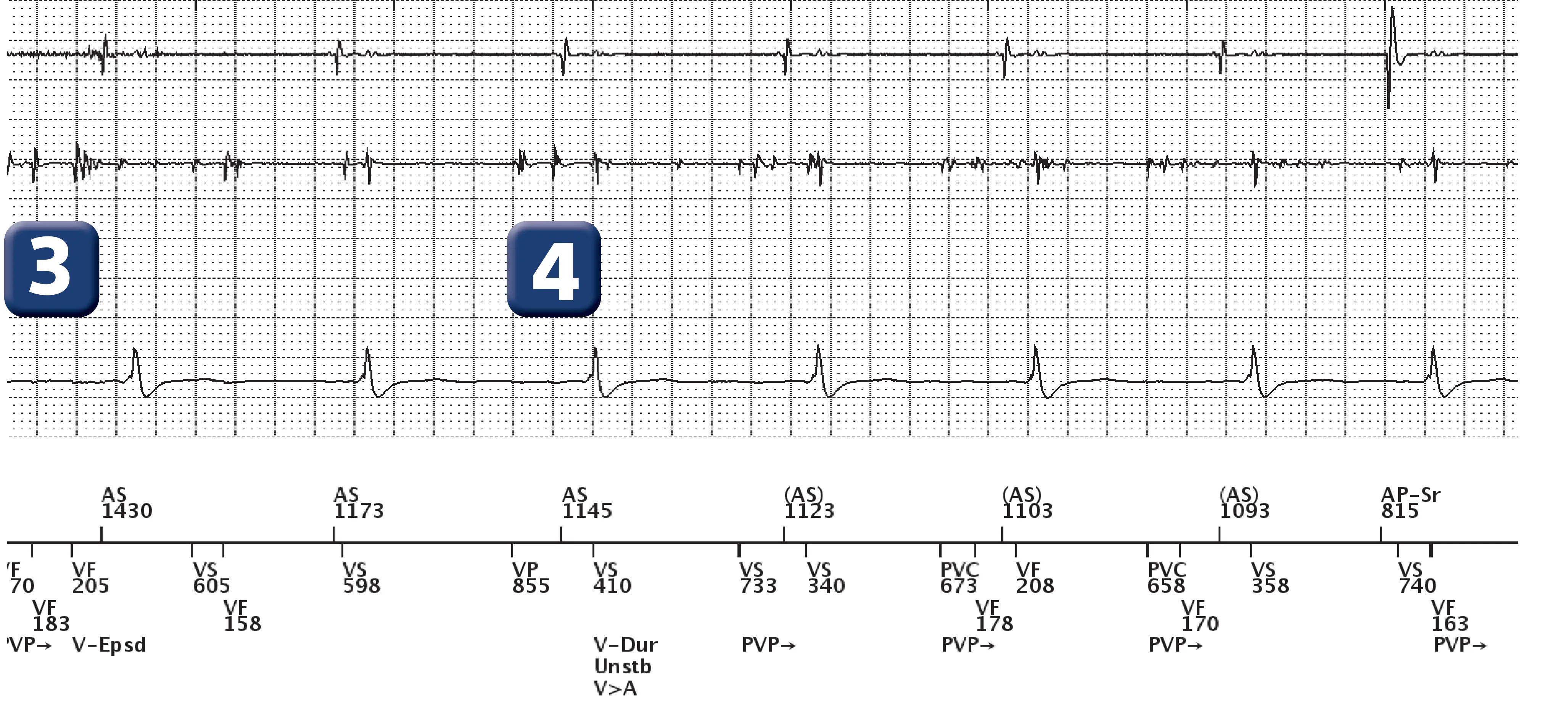
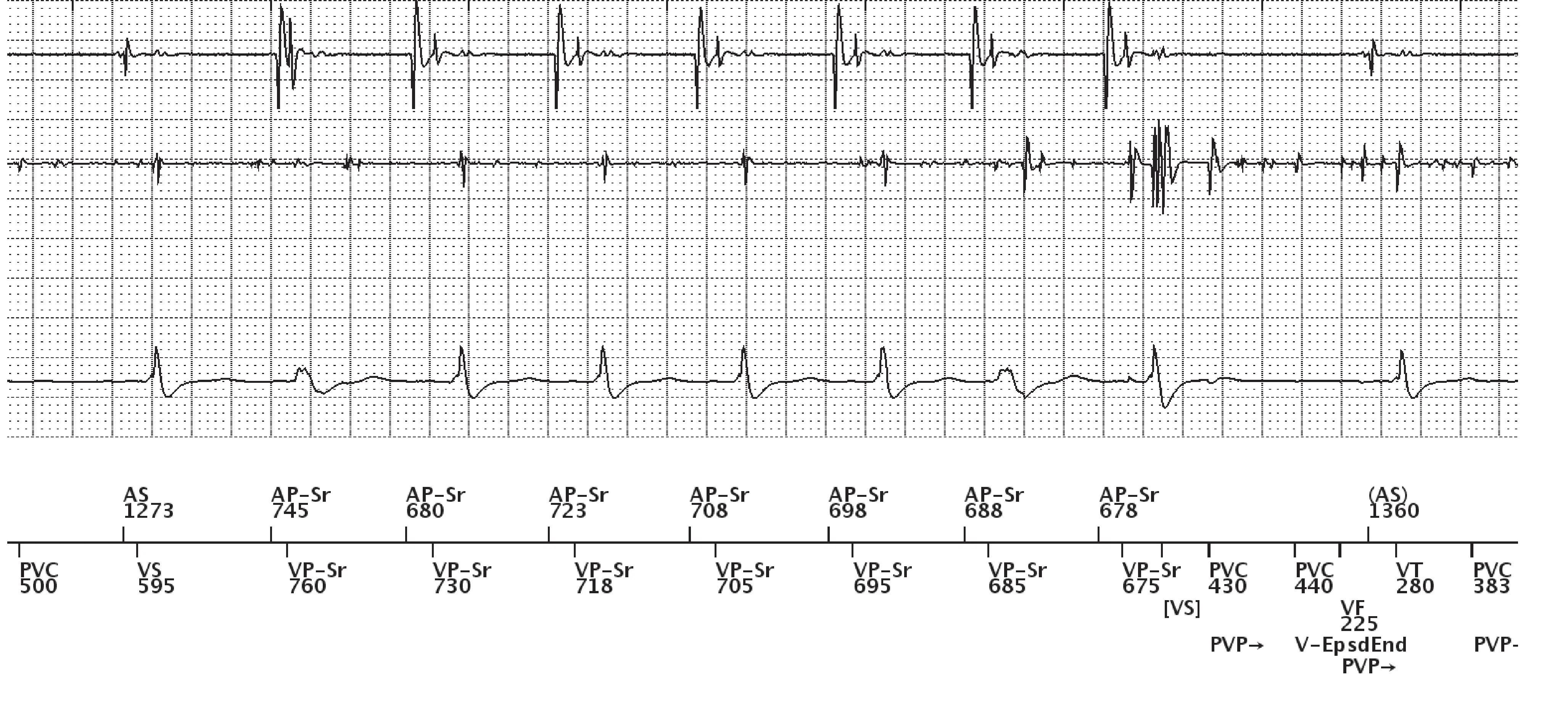
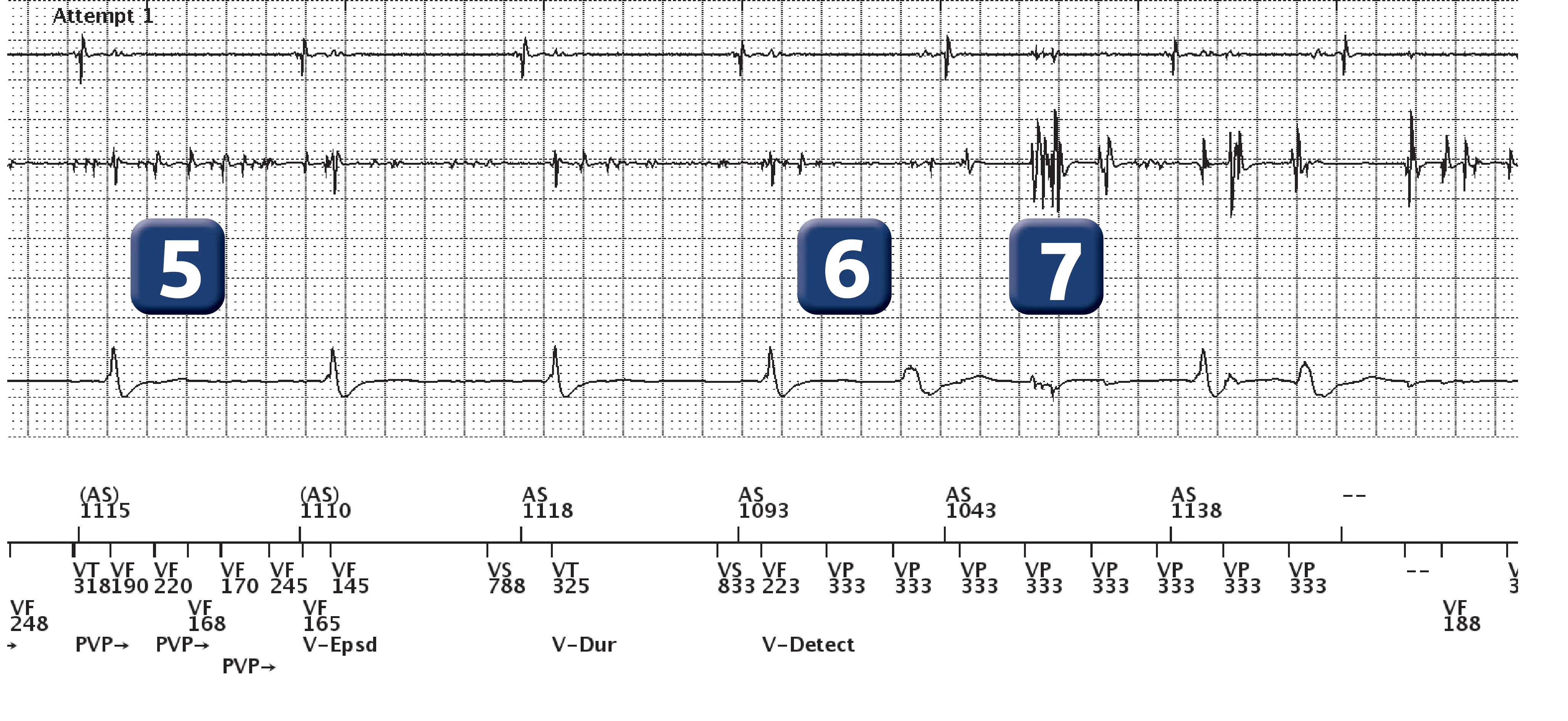
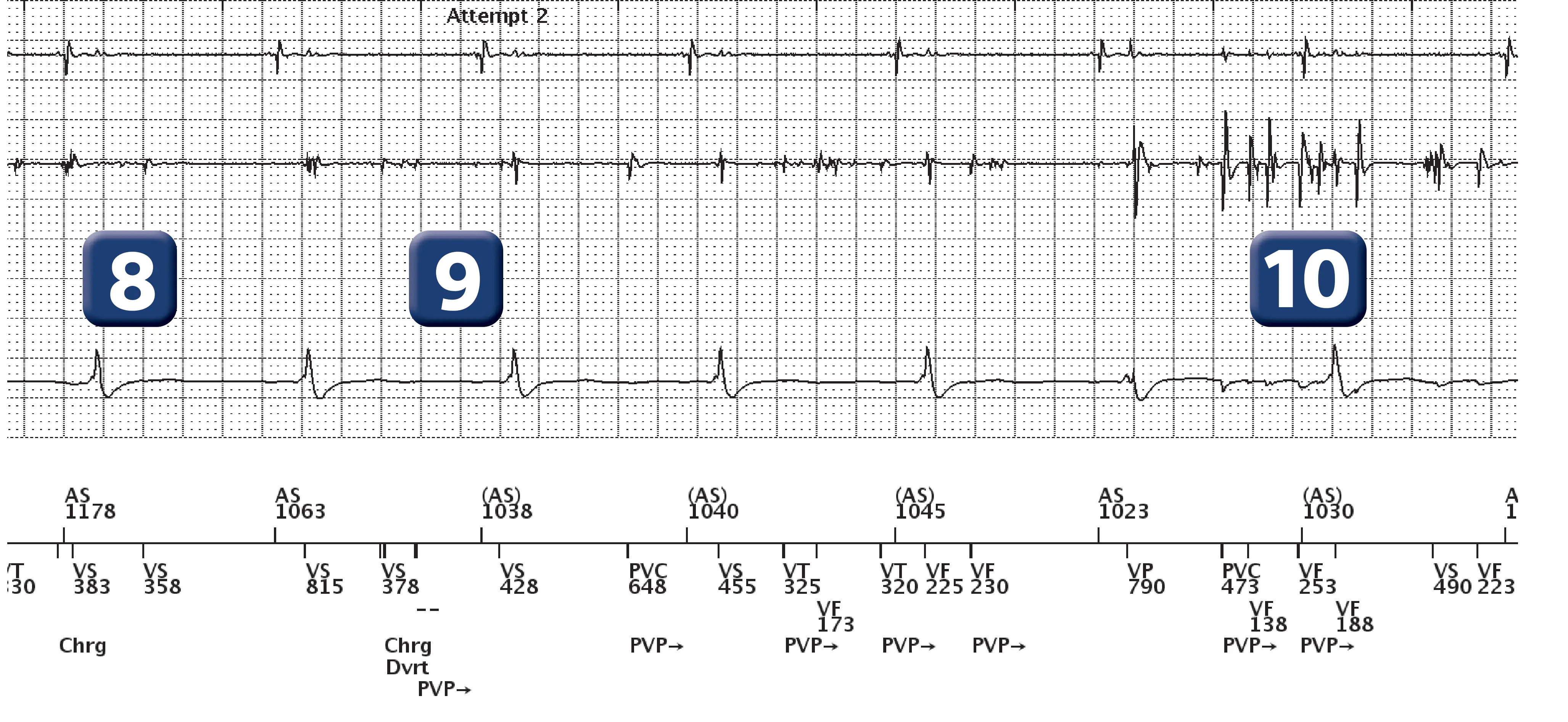
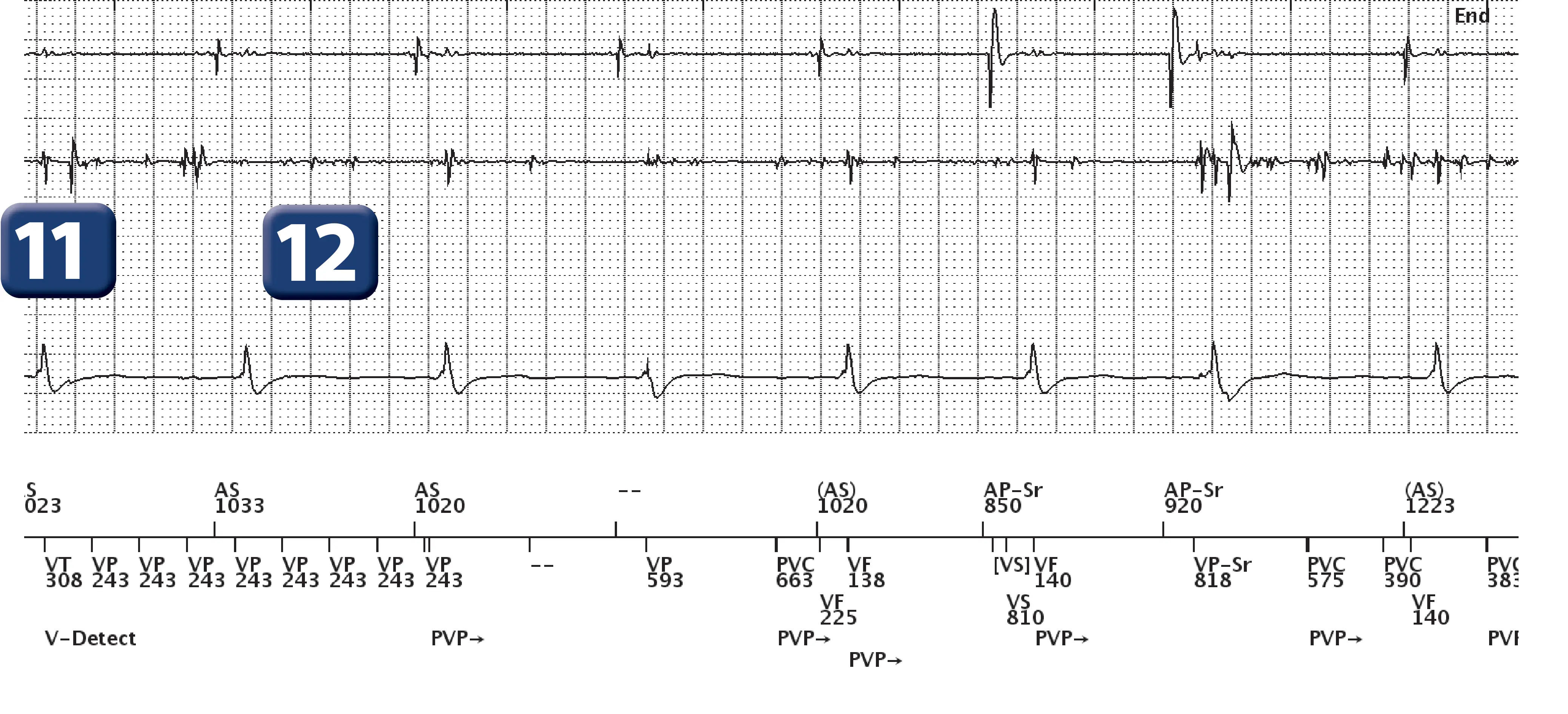
- AP-Sr VP-Sr cycle (Sr for sensor, meaning that the rate is set by the sensor: rate response)
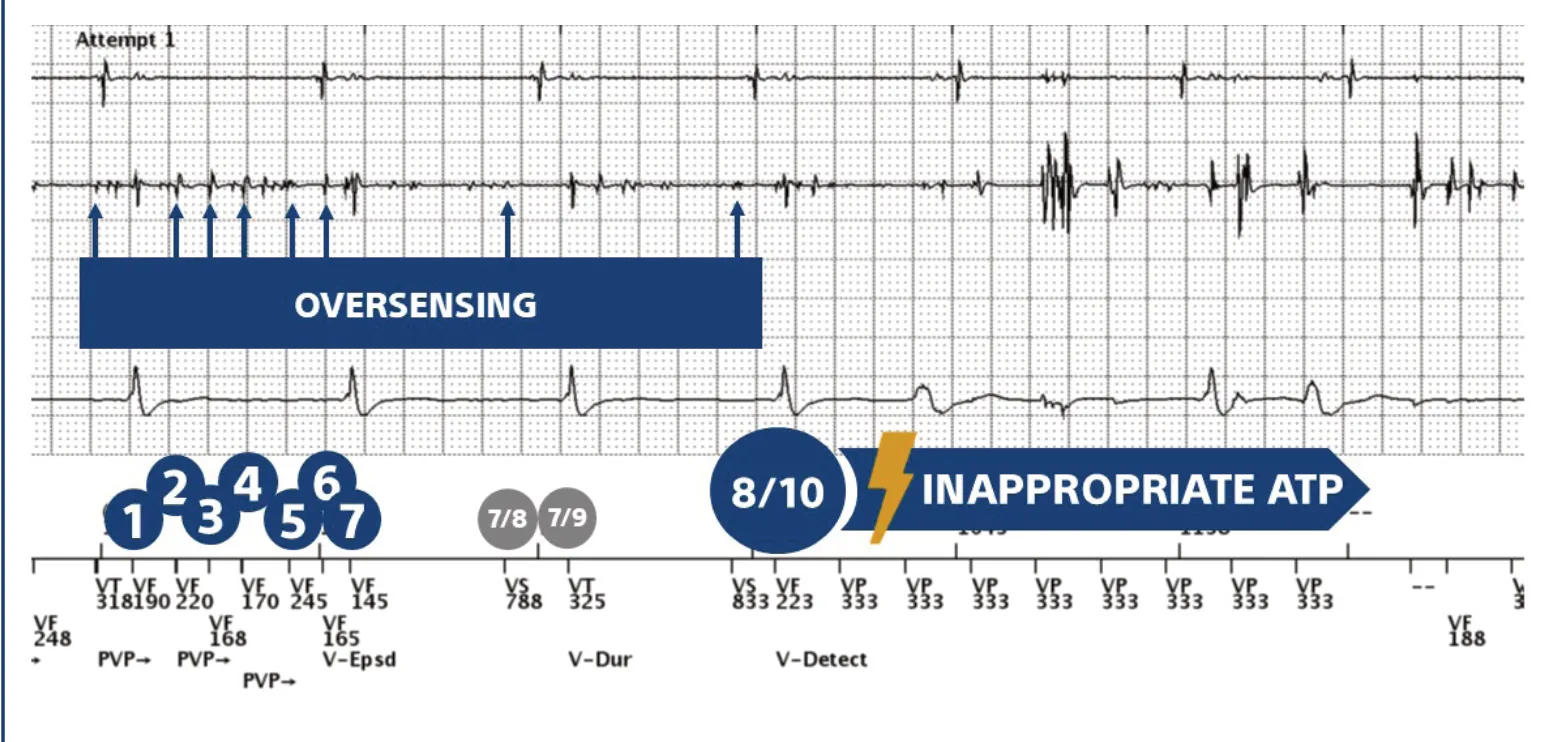
- Oversensing by the ventricular channel with signals of variable amplitude and morphology in the VT or VF zone; the shock channel shows no oversensing and allows differentiation of spontaneous ventricular activity; atrial pacing is at the sensor indicated rate ; the atrial rate is variable because it is influenced by ventricular oversensing
- VF counter is filled (V-Epsd)
- Oversensing is intermittent and at the end of the duration, the rhythm is considered sinus; no therapy is delivered
- New ventricular oversensing
- The VF counter is filled and at the end of the duration, the first therapy is delivered.
- During ATP (Quick Convert), ventricular capture is intermittent (2 effective stimuli, 6 ineffective stimuli)
- Oversensing continues following ATP and capacitor charging begins (the first cycle following the ATP sequence is not counted; 2 out of 3 cycles are then classified as VT or VF, explaining the start of capacitor charging).
- When oversensing stops, the charge is diverted (the 6/10 rapid cycle criterion is no longer met)
- Resumption of oversensing
- VT counter filled (V-Detect)
- An ATP sequence is delivered; ventricular stimuli do not capture
From the interrogation
Points to remember
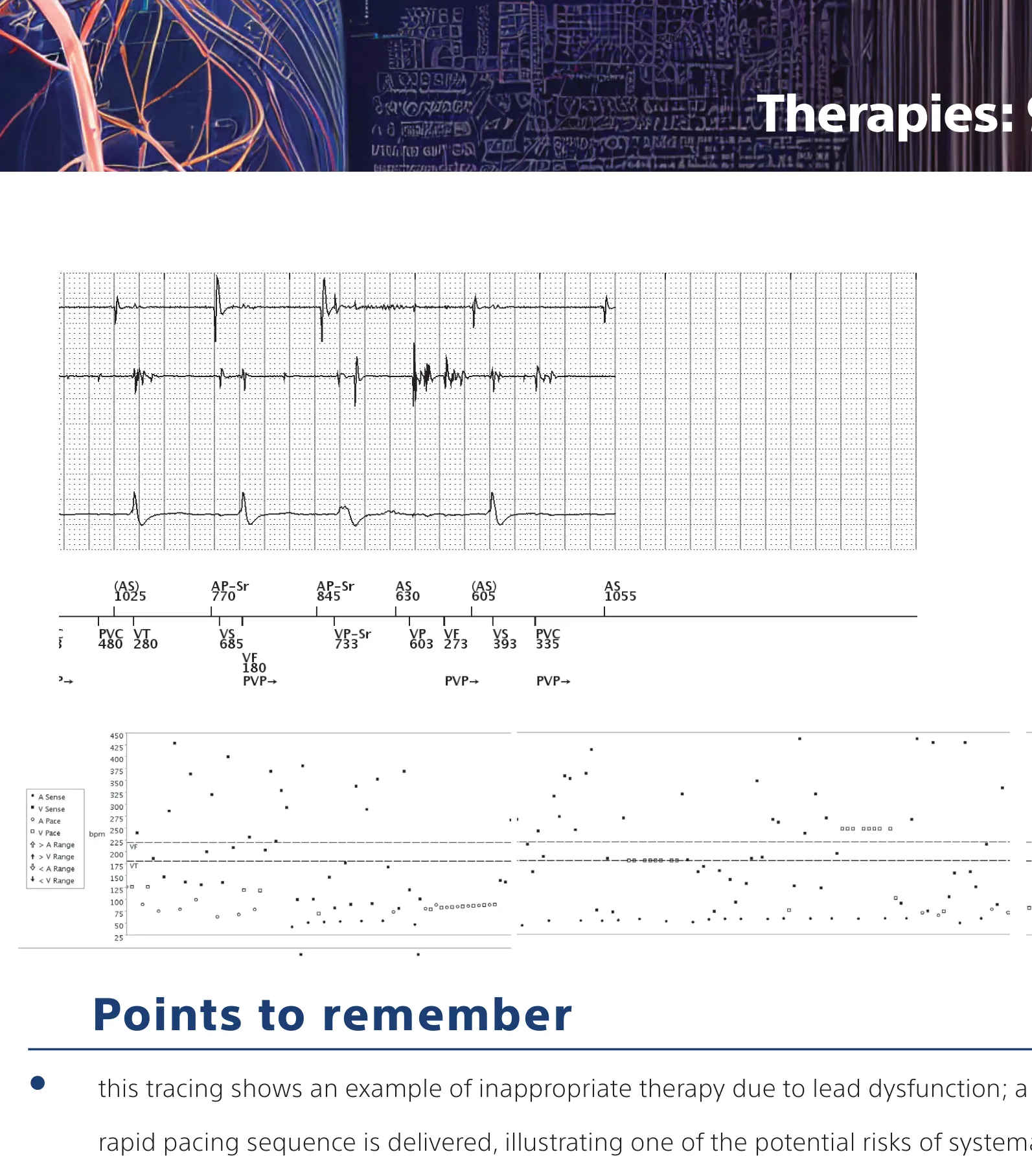
- This tracing shows an example of inappropriate therapy due to lead dysfunction; a very rapid pacing sequence is delivered, illustrating one of the potential risks of systematically programming a pacing sequence for rates up to 300 beats/minute; for these very high heart rates, there is an increased risk of inappropriate treatment by rapid pacing of non-physiological, false-positive tachycardias (lead fracture, oversensing of P, R or T wave, electromagnetic interference)
- In patients with ischemic cardiomyopathy, VT can be triggered by a rapid ventricular pacing protocol; this perfectly explains the potential pro-arrhythmogenic effect of inappropriate anti-tachycardia pacing , particularly when the pacing protocol is very aggressive in the VF zone; the pro-arrhythmogenic risk has been particularly well documented for anti-tachycardia pacing and for low-amplitude shocks (much more so than for maximum-amplitude shocks, which are less arrhythmogenic)
- In this example, the pro-arrhythmogenic risk is reduced, since ventricular capture is not always effective due to the lead dysfunction
- There is now a consensus favoring treatment with anti-tachycardia pacing over shocks for organized ventricular arrhythmias; in fact, many episodes diagnosed as VF by the defibrillator on the basis of a rate > 200 beats/minute correspond to rapid monomorphic VT, which can be effectively treated by pacing; anti-tachycardia pacing is painless and reduces battery consumption and should therefore be the preferred first-line treatment for organized ventricular arrhythmias, even when they are very rapid
- On the other hand, systematic programming of anti-tachycardia pacing for rates of up to 300 beats/minute has not been shown to be effective and carries a pro-arrhythmogenic risk if the therapy is inappropriate
Practice out loud
Just describe the tracing. What do you think is going on? Describing the numbers can help.
00:00
0%
—
From Boston Scientific ICD — clinical cases by P. Bordachar, M. Strik, A. Thiyagarajah, S. Ploux. Published by Cardiocases. Every numbered marker on a recording is explained in the list beneath it; tap a marker on the trace or an entry in the list.
Order hardcopyon Amazon