62-year-old man implanted with a Kora 100 DR MicroPort™ dual-chamber pacemaker for sinus dysfunction; both leads are well positioned with normal pacing impedances, proper sensing and satisfactory pacing thresholds;
Tracing Analysis
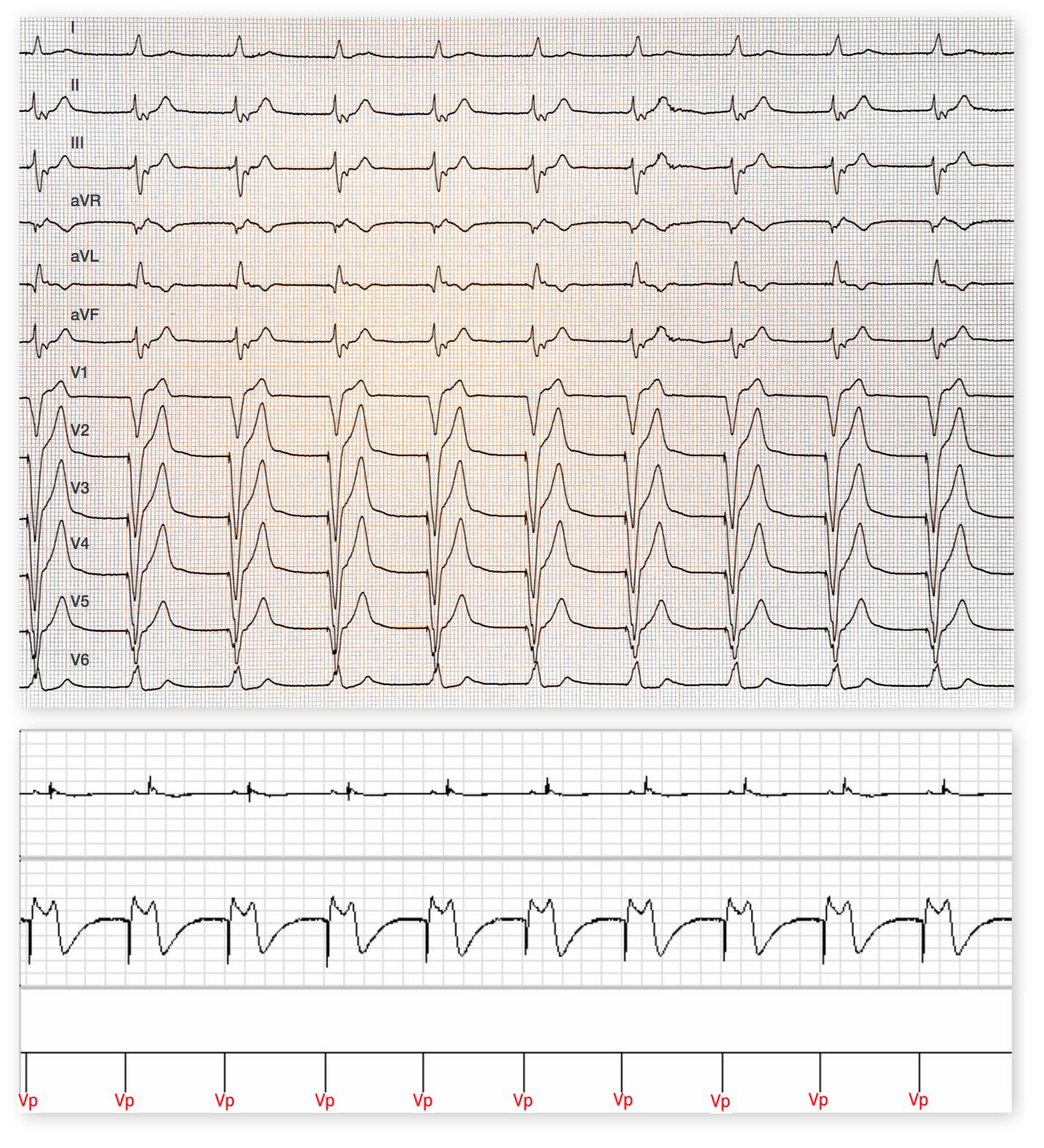
VVI mode 60 beats/minute: on this tracing, regular ventricular pacing at 60/min; in addition, there is a 1:1 retrograde atrial activation with a negative P’ wave in the inferior leads;
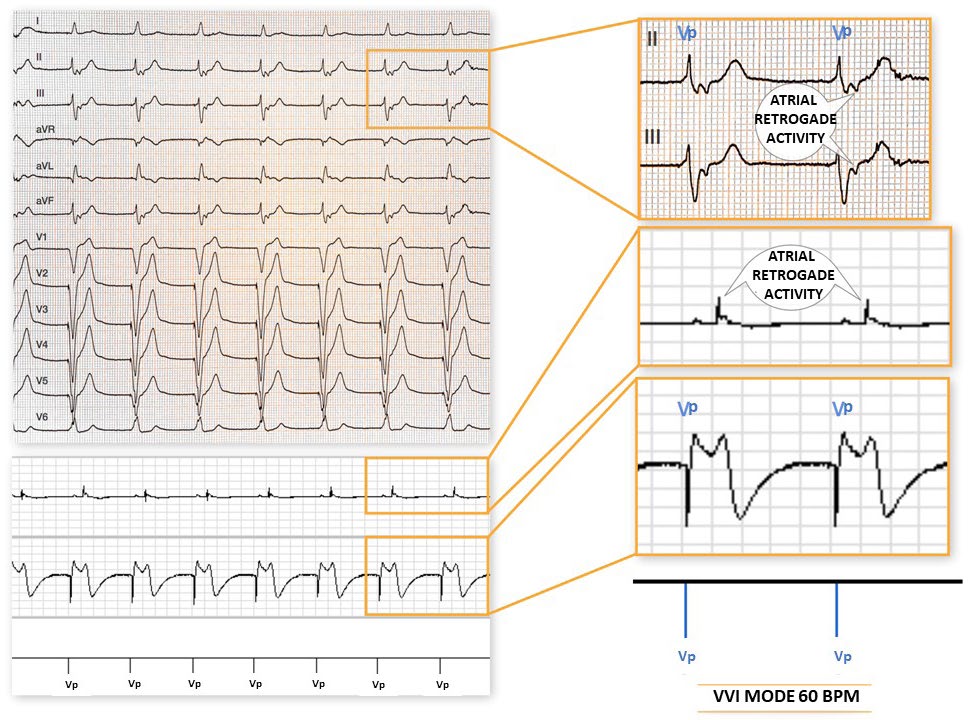
VVI mode provides single-chamber pacing at the programmed pacing rate, unless inhibited by a sensed event. Sensing only applies to the ventricle. An escape interval begins after any ventricular sensing and pacing. A single-chamber pacemaker operates in VVI mode when only one lead is positioned in the ventricle; VVI mode can also be programmed in a dual-chamber pacemaker as in the present example. For this patient, programming the basic rate is essential. Indeed, at 60 bpm, the basic rate is too high and there is permanent ventricular pacing with inversion of the physiological atrioventricular activation sequence. Indeed, the electrocardiogram highlights a retrograde conduction with possible pacemaker syndrome. The atrial contraction occurs while the atrioventricular valves are closed causing a retrograde flow to the pulmonary veins and vena cava. Pacemaker syndrome results from a complex combination of hemodynamic, neuro-humoral and vascular alterations secondary to the loss of atrioventricular synchrony. Symptoms related to the increase in atrial pressure and venous pressure can, at times, be very debilitating and can include dyspnea, orthopnea, pulsations in the neck and chest, palpitations, thoracic pain. Pacemaker syndrome corresponds to the presence of a repeated and retrograde atrial conduction (negative P’ waves in the inferior which can lead to a variable, if not 4400
Conversely, at 40 bpm, the minimum rate is lower than the intrinsic rate of the patient and no pacing is delivered. This allows: 1) to reduce energy consumption and prolong the life of the battery, 2) to avoid retrograde conduction and 3) to effectively pace only upon occurrence of paroxysmal conduction disorder. sequence with ventricular pacing (pacing artifact and wide QRS) leads); atrial contraction may occur against closed A-V valves, disabling symptomatology.