Single-chamber discrimination, Rhythm ID and sinus tachycardia - Resonate ICD
Patient
- 59-year-old male; ischemic cardiomyopathy; implanted with a Resonate single-chamber defibrillator
Summary
- discrimination based on Rhythm ID (threshold programmed at 94%)
- episode of tachycardia at 150 beats/minute with inhibition of therapies (Rhythm ID correlated: True)
EGM layout
- regular tachycardia with narrow ventricular complexes on the shock channel; progressive acceleration with cycles classified as VS then VT-1; correlation (C = correlated) of all cycles with the reference morphology ( above the programmed threshold of 94%).
- end-of-episode marker V-EpsdEnd (corresponding to the previous episode that is not visualized on this plot), criterion 8/10 having not been satisfied.
- V-Epsd marker after 8 cycles classified VT-1 following the end-of-episode marker
- end of duration; V-dur marker; rate slows with cycles classified as VS; all ventricular complexes remain correlated
Take home message
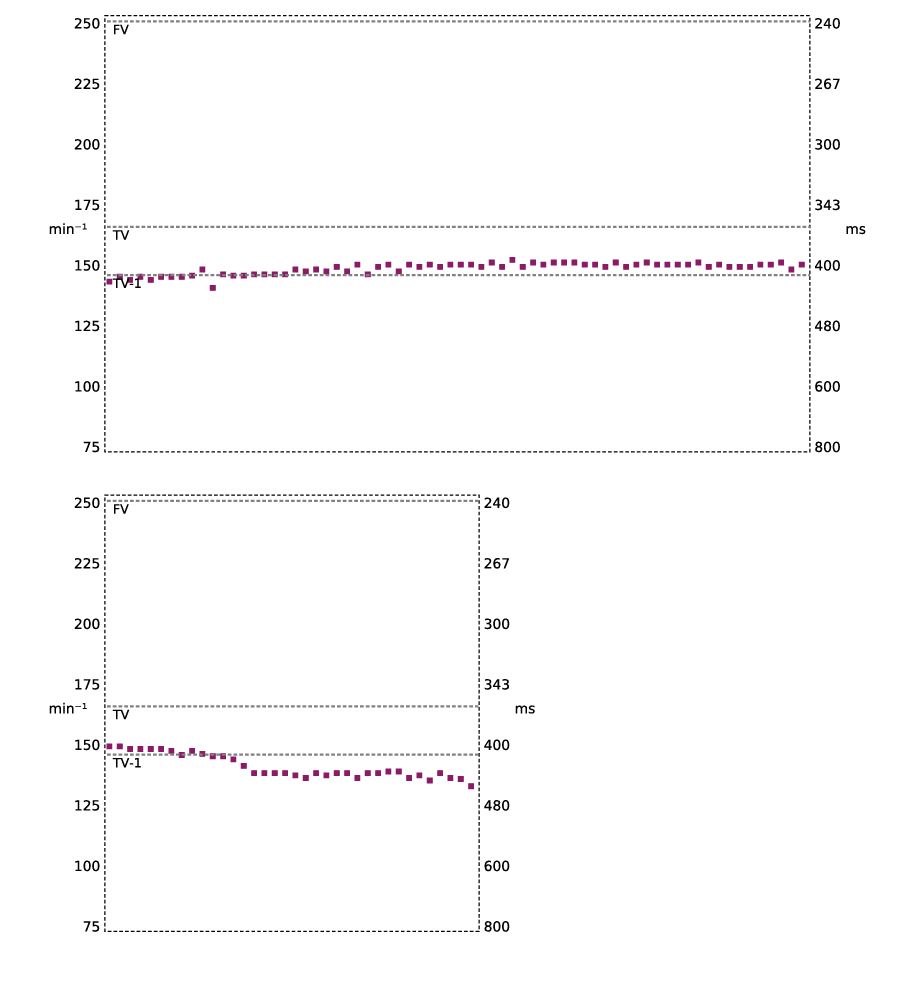
The interval plot corresponding to this episode is highly suggestive of sinus tachycardia, with progressive acceleration of ventricular cycles followed by gradual deceleration.
- Morphology discrimination is based on comparison with a reference ventricular electrogram, which can be acquired in real time during interrogation with a programmer, and then automatically updated by the device.
- there are two methods of automatic acquisition of a reference template by the device: passive and active
- for the passive method, the device searches for spontaneous ventricular activity every 2 hours to collect the reference template, without modifying any programming parameters
- in contrast, with the active method, the search for spontaneous ventricular activity is performed every 28 hours, with temporary modification of pacing parameters (pacing mode that encourages spontaneous ventricular activity with a slower pacing rate and longer AV delay); the active method is preferred in patients with a high ventricular pacing percentage (in totally dependent patients, no discrimination should be programmed)
- during follow-up interrogations, it is possible to check that the percentage match between spontaneous ventricular activity observed during the consultation and the reference ventriculogram is high (above the programmed threshold and as close as possible to 100%).
- in this patient, the nominal threshold value was programmed (94%); all tachycardia vectors were judged to be correlated, explaining the diagnosis of SVT and the decision to inhibit therapies
- the patients who benefit most from discrimination are those where the heart rate ranges of ventricular tachycardia and supraventricular tachycardia overlap (patients with slow VT, patients likely to present with rapid AF, young patients with rapid sinus tachycardia on exertion)