Single-chamber discrimination, Rhythm ID and correlation percentage - Incepta ICD
Patient
78-year-old male; implanted with an Incepta single-chamber defibrillator for ischemic cardiomyopathy;
Summary
discrimination based on Rhythm ID (threshold programmed at 94%)
tachycardia at 124 beats/minute
initially untreated episode (Rhythm ID correlated: True)
subsequent treated episode with exhaustion of all available treatments for the VT zone
EGM layout
regular tachycardia with ventricular elecgtrograms appearing fnarrow on the shock channel; progressive acceleration with cycles classified as VS then VT-1; initially, there is correlation (C = correlated) of all cycles with reference morphology (percentage above the programmed threshold of 94%).
end of duration for VT-1 zone (no therapy programmed in this zone)
acceleration of the tachycardia with cycles classified as VT; discrimination (RID+) is in favor of SVT; for at least 3/10 beats (rolling window), the vector is correlated with the reference vector (the last 10 ventricular complexes are correlated)
V-detect marker; discrimination (RID-) is in favor of VT; the vector correlates with the reference vector for fewer than 3 beats/10 in a rolling window (only 2 of the last 10 ventricular complexes have a percentage above the programmed threshold of 94%).
burst delivered (inappropriate)
following this burst, redetection of a VT episode; no discrimination based on morphology analysis is performed after therapy (ATP or shock) has been delivered
all therapies programmed in the VT zone are delivered
Take home message
the percentage of inappropriate therapies has fallen considerably since the very first studies of patients implanted with a defibrillator, and the annual rate is now between 1 and 5%; the reasons for this significant reduction are multifactorial (programming of longer detection times, programming in the first instance of detection zones for tachycardias > 187 beats/minute, programming of discrimination algorithms); it is therefore difficult to precisely isolate the effect of discrimination algorithms
international guidelines recommend programming discrimination algorithms based on the manufacturer, up to a rate of 230 beats/minute; for Boston ScientificTM single-chamber devices, discrimination based solely on morphology analysis is suggested, with a 94% correlation coefficient in nominal programming.
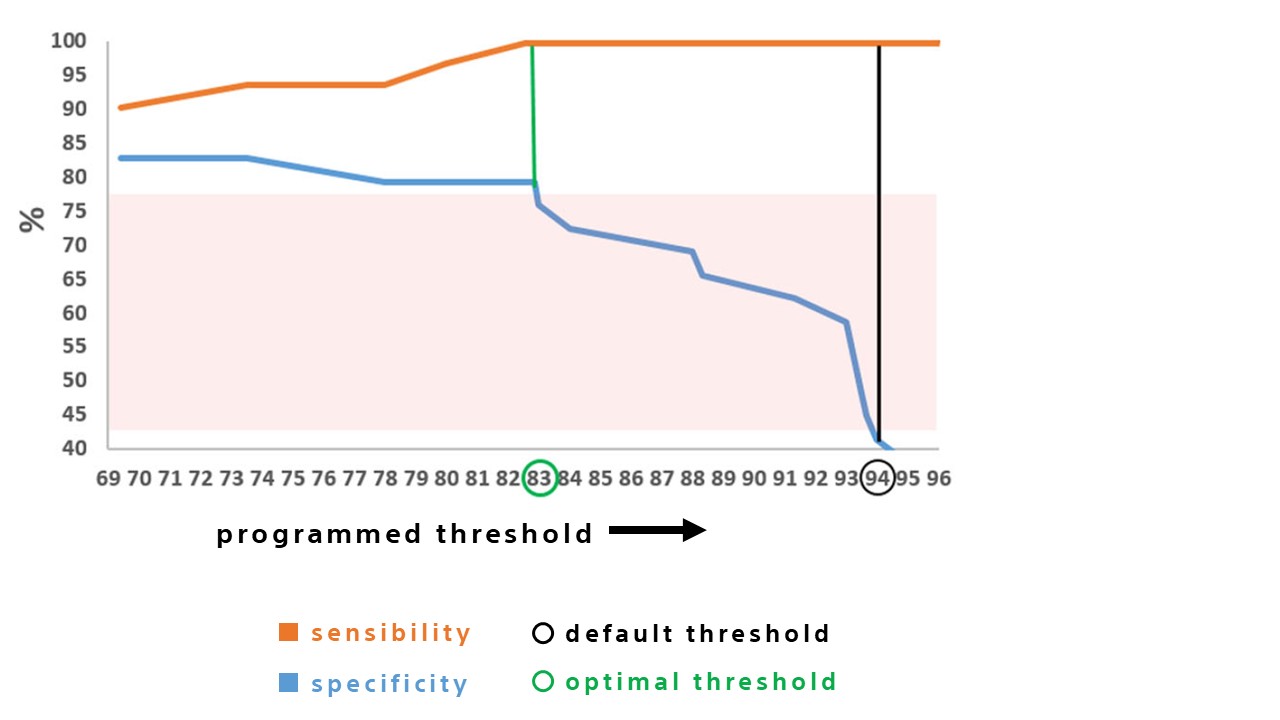
in a multicenter study, this 94% threshold provided perfect sensitivity (100%), but an average specificity of around 41%; this low specificity is all the more problematic since morphology is only applied to initial detection, increasing the risk, as in this patient, that if inappropriate therapy occurs and the rate remains high, all therapies in the VT zone may be delivered
this low specificity is especially problematic in single-chamber devices since the morphology discriminant is often used in isolation; in a double- or triple-chamber defibrillator, the failure of one discriminant can be corrected by the intervention of another discriminant (e.g. V>A criterion)
this example of sinus tachycardia is demonstrative: the arrhythmia is initially correctly identified as supraventricular with a sufficient number of correlated cycles; in a second phase, the correlation percentage decreases and the patient receives multiple inappropriate therapies
in the same multicenter study, lowering the threshold to 83% maintained perfect sensitivity (100%) with a substantial increase in specificity (79%)
this relatively low specificity at nominal settings compared to other manufacturers, who use relatively similar discrimination, may be explained by the specific manner in which the 8-point ventricular signal is analyzed, favouring sensitivity over specificity (making it easier to detect differences, favouring the occurrence of lower correlation values)
the nominal value of 94% did not seem appropriate in this patient and was modified which avoided inappropriate therapies during follow-up.
this clinical case also raises the question of systematically modifying this value in the first instance
This figure shows the differences in specificity as a function of the programmed threshold value; sensitivity remains at 100% up to a value of 83%.