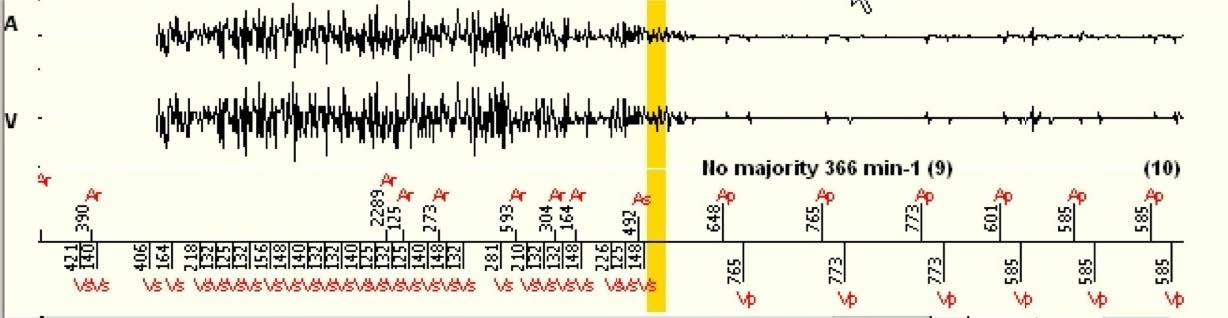
a defibrillator. The current is detected on all channels, the signals are chaotic, and of variable
amplitude.
The same risks are to be feared (inappropriate shock, and inhibition of pacing in device-dependent
patients). However, the solution is extremely simple: during the use of the diathermy knife, just
apply a magnet next to the defibrillator case which will inhibit both the detection of arrhythmias
as well as therapies.
The pacing function is not changed on the latest MicroPort models (Platinium). On previous platforms, pacing was delivered in DDD or VVI mode according to the permanent pacing mode
programmed at the magnet rate depending on the state of wear of the battery (96/min at the beginning of life (Beginning Of Service) and 8O/min at the time of replacement (Recommended
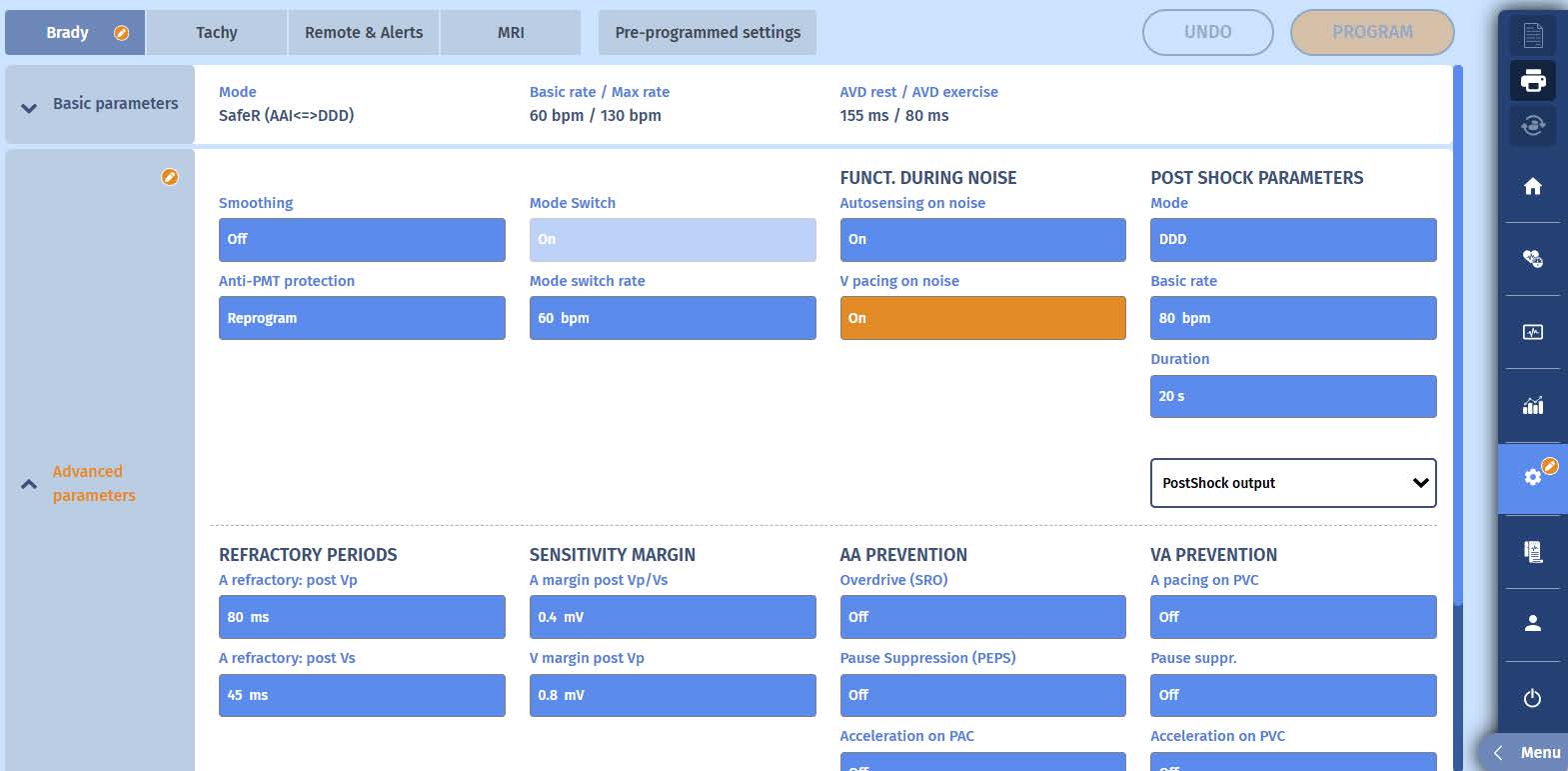
Replacement Time)). In contrast, for pacemaker-dependent patients only, there is a function that allows pacing when noise (electrical interference with a rate greater than 16 Hz) is detected
and properly managed, i.e. masked by the automatic retriggering of refractory periods (30 ms). At the end of the escape interval, if the refractory periods continue to be retriggered, pacing is
delivered. This corresponds to functioning in asynchronous mode (risk-free for a pacemakerdependent patient). The programmed mode is restored as soon as the interference is no longer
detected. This function is accessible from the “Settings” screen, “Brady” tab, in the “Advanced Settings” section. After clicking on “Functioning during noise”, it will be necessary to activate the
“V pacing on noise”.