1- What is the diagnosis made by the defibrillator for this episode?
This episode has been classified FVT by the device.
2- How many detection zones are programmed?
Two detection zones have been programmed.
3- What diagnosis does the interval plot suggest?
The graph shows a rhythm initially detected in the FVT zone with 3 bursts, then a ramp which appears to accelerate the tachycardia into the VF zone; a shock re-establishes a viable rhythm.
4- How many discriminators are programmed?
Wavelet and Stability are programmed.
5- What does the WV marker mean?
Initially, the patient presented with a regular, monomorphic tachycardia; the device diagnosed SVT based on Wavelet (WV); no therapy was delivered.
6- How do you explain that a burst was delivered?
The VF counter was completed again after 30 cycles classified as FS; the appearance of the ventriculograms appeared more or less identical to that observed at the start of the trace, but Wavelet concluded VT and therefore did not withhold therapies.
7- What do you think of the Wavelet results?
The similarity percentages ranged from 52% to 61% for the 8 complexes analysed and were therefore below the programmed similarity threshold (70%), which explains the diagnosis of VT/VF.
8- What effect does the ramp have?
The ramp accelerates the tachycardia into a very rapid VF.
9- What is the effect of the shock?
The shock terminates the arrhythmia.
- This patient had multiple episodes of atrial tachycardia which were well discriminated on the basis of morphology; he also had a few episodes which were poorly discriminated with inappropriate therapies; in this example, the discrimination error resulted in the occurrence of a ramp which induced a potentially lethal VF; a shock re-established a viable rhythm.
- The specificity of discrimination based exclusively on Wavelet is imperfect in certain patients; discrimination only applies to initial detection and an error may lead to multiple inappropriate therapies (no discrimination if tachycardia continues after the first therapy delivered).
Certain factors may explain the imperfect specificity in certain patients:
- Wavelet performance depends directly on the quality of the discrimination signal (EGM2), which is usually the Can-RVCoil channel. The richer the signal, the greater its amplitude. During implantation, therefore, care must be taken to ensure that the Can-RVCoil signal amplitude is >3mV. This amplitude can be measured using the Medtronic analyzer, by collecting the unipolar signal from the RV coil and measuring the peak-to-peak amplitude (to do this, print out the signal).
- Outside the implantation procedure, you can measure the amplitude of the Can-RVCoil signal by selecting this channel on the programmer and making a printout. If the amplitude is too low, a different analysis vector can be selected (source EGM2: Can-RingRV; TipRV-CoilRV; TipRV-RingRV; Can-SCV; Can -RV-SCV). Note that changing the EGM2 vector deactivates the noise algorithm (which only works with the Can-CoilRV vector). It should also be borne in mind that near-field signals (TipRV-CoilRV; TipRV-RingRV) are generally less rich and therefore less effective for morphology analysis.
- On the other hand, the signal amplitude may be too large for the EGM2’s sampling range (nominal +/-12mV), which may result in signal amputation. In this case, you may need to select a larger scale (Parameters->Data collection configuration->EGM2 range).
- Automatic reference collection does not include frequency or AV delay hysteresis, so it cannot operate on a CRT-D. On a CRT-D, we recommend acquiring a Wavelet reference manually at each consultation.
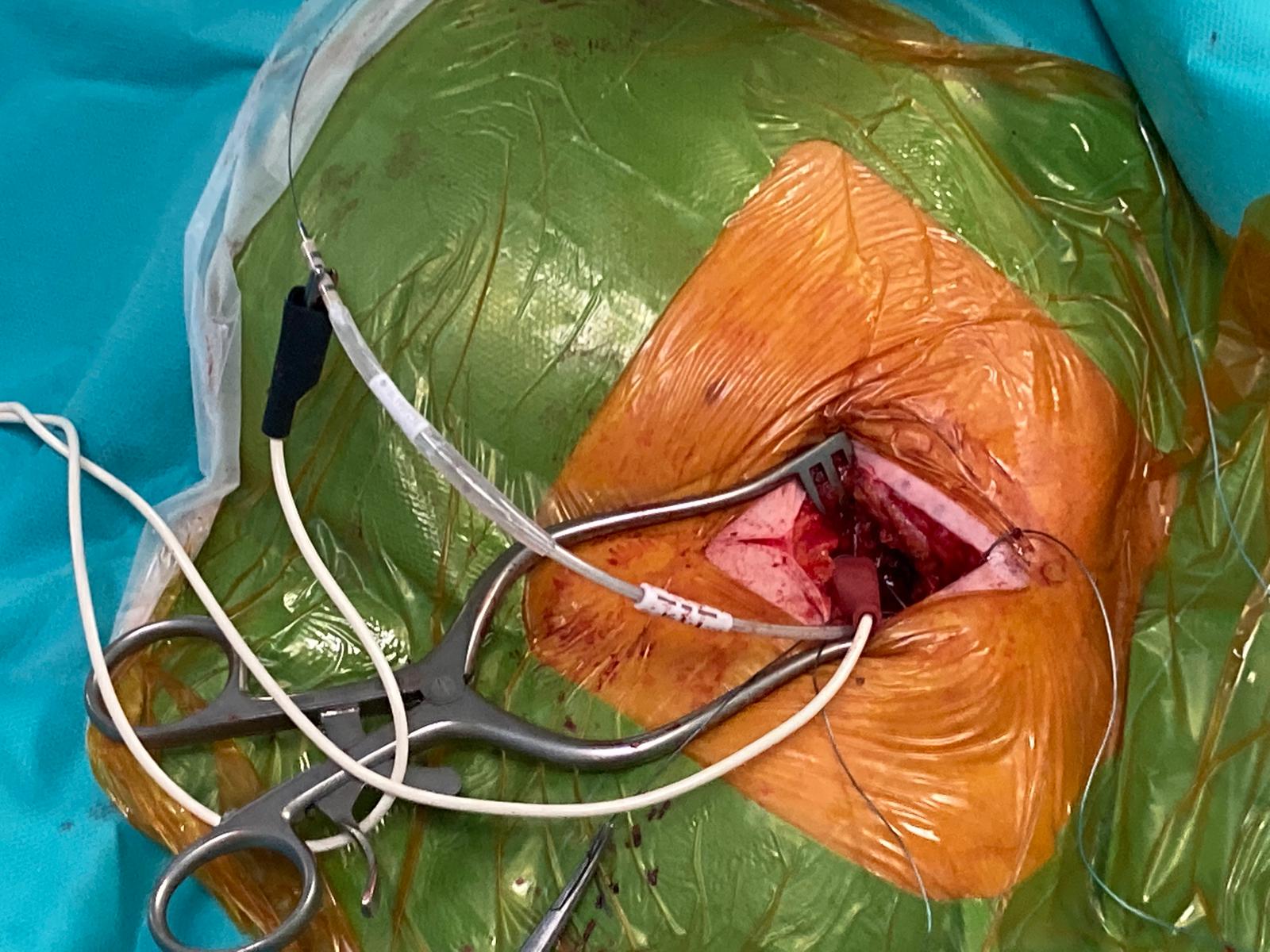
The Can – RV Coil signal can be acquired using the analyzer by connecting the unipolar signal on the RV Coil electrode and by measuring the peak-to-peak amplitude.