


Dual-chamber discrimination and discrimination error due to signal variability on the shock channel

Patient

  • 49-year-old man; hypertrophic cardiomyopathy; implanted with an Autogen dual-chamber defibrillator


Summary

  • tachycardia episode with atrial rate equal to ventricular rate (V>A False)
  • initially, correlation of Rhythm ID: True; inhibition of therapies
  • in a second step, Rhythm ID: False; AF: true + stable rhythm (threshold value set at 20 ms)
  • all VT zone therapies are delivered (ATP + 6 shocks)


EGM layout

  1. regular tachycardia 1/1 (AS-VS)
  2. acceleration of atrial cycles (cycles classified as AF) and ventricular cycles (cycles classified as VT)
  3. after 8 consecutive VT cycles, V-Epsd marker; signal quality in the shock channel is variable (some cycles are considered correlated, others uncorrelated)
  4. end of duration; for the device, the rhythm is stable with a diagnosis of AF; therapies are not delivered because RID+ (at least 3 correlated ventricular complexes out of 10).
  5. cycle-by-cycle discrimination continues, still with RID+.
  6. signal variability on the shock channel; RID- (less than 3 correlated cycles out of the last 10); stable rhythm with diagnosis of AF: suspicion of double tachycardia and first therapy is delivered.
  7. redetection and new therapies; all therapies in the zone are then delivered

Take home message

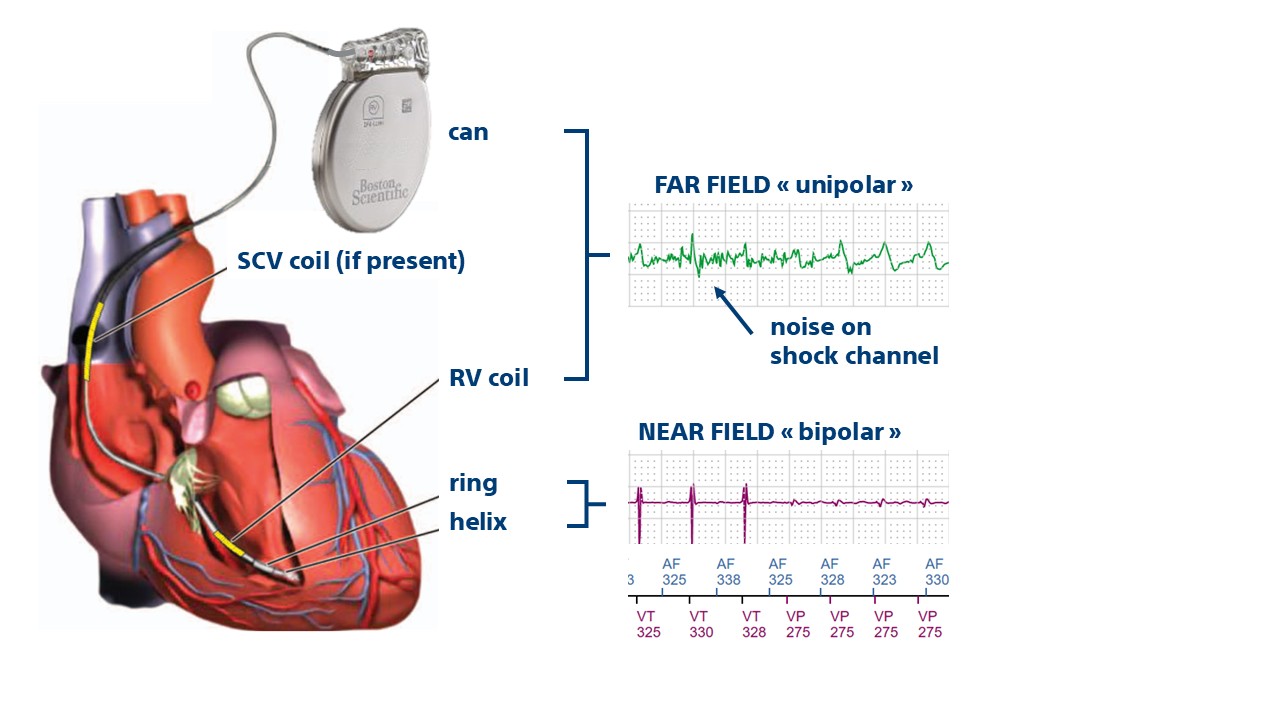
  • this trace shows an example of inappropriate therapies for supraventricular tachycardia; the ventricular rate is not higher than the atrial rate (V>A rate: false); initially, discrimination is correct with ventricular cycles correlated with the reference ventricular electrogram (RID+); in a second phase, a series of inappropriate therapies is delivered following variable signal quality on the shock channel (RID- and stable rhythm)
  • in this example, signal quality was impaired by the oversensing of myopotentials on the shock channel.


The shock channel is recorded between the RV coil and the defibrillator can located in the left pre-pectoral space; it is therefore a “unipolar” signal (only one electrode is located in the heart); this trace shows the poor quality on the shock channel signal due to oversensing of pectoral myopotentials which explains the lack of correlation with the reference ventriculogram and the occurrence of inappropriate therapies.

X