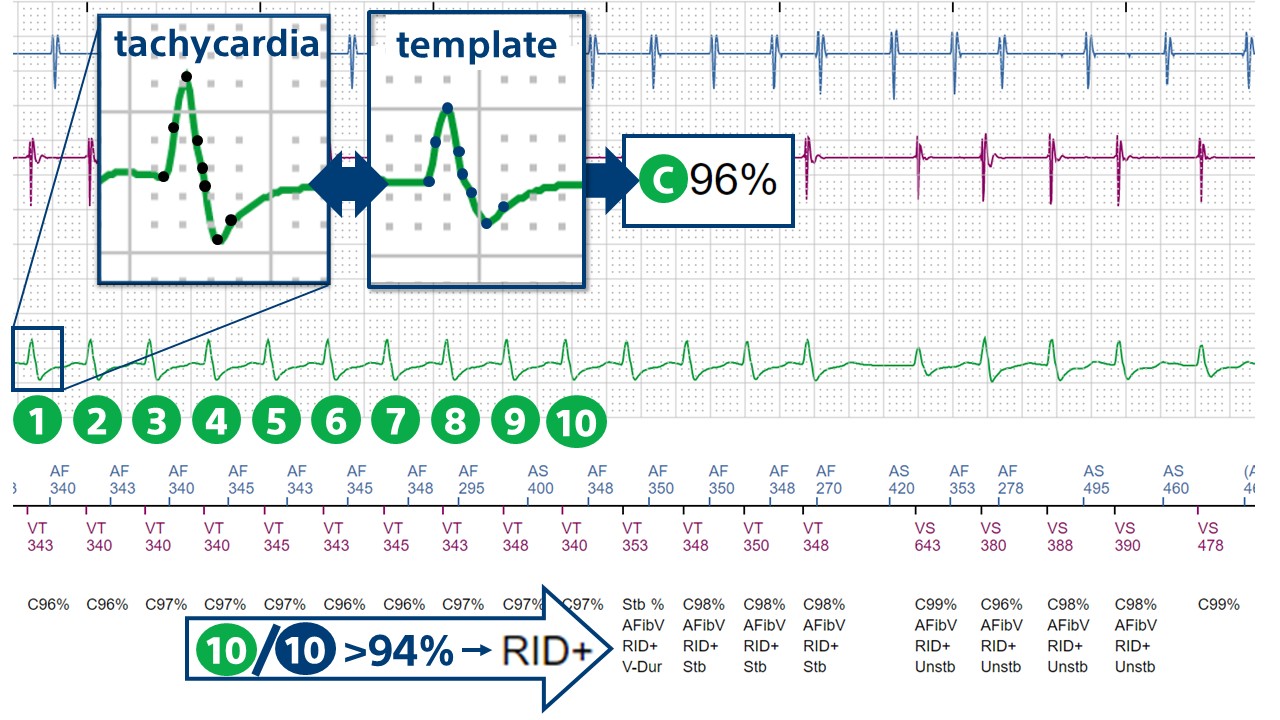
66-year-old man with a dual chamber defibrillator for ischemic cardiomyopathy
Summary
episode detected in VT zone at 165 beats/minute
Rhythm ID discrimination
criterion V>A : False
Rhythm ID correlated: True
EGM layout
probable atrial tachycardia with variable conduction; alternating VS and VT cycles
correlated ventricular complexes (percentage exceeding the programmed threshold value of 94%)
after 8 out of 10 cycles in VT zone: V-Epsd marker
end of duration; discrimination is in favor of SVT (RID+); in fact, for at least 3 beats/10 (rolling window), the vector is correlated with the reference vector (the last 10 ventricular complexes before the end of duration are correlated).
cycle-by-cycle morphology analysis continues; the rate slows down and cycles are classified as VS; on this cycle, the 6/10 criterion for VT is no longer satisfied.
Take home message
this trace corresponds to an episode of atrial tachycardia correctly discriminated by the device on the basis of the Rhythm ID algorithm; first stage, V>A: false; second stage, at least 3 out of 10 correlated ventricular cycles: true (RID+); diagnosis of SVT and continuation of cycle-by-cycle analysis with verification that the V>A criterion is not satisfied and that the number of correlated cycles (value greater than the programmed threshold) remains sufficient.
atrial tachycardias/flutter 1/1 are impossible to discriminate with an algorithm based on abrupt onset (often present like in VT) and stability (stable rhythm like in VT); the Rhythm ID option is therefore clearly preferred in patients with this type of arrhythmia, provided this discriminant works properly (good signal quality, appropriately set threshold)