
Chapter 2 · Therapies · Case 3
Anti-tachycardia pacing in the VF zone
Patient and episode
Patient
- Male implanted with a triple chamber defibrillator (Viva Quad CRT-D) for ischaemic cardiomyopathy.
The recording
Tap a number on the trace, or an entry in the list below
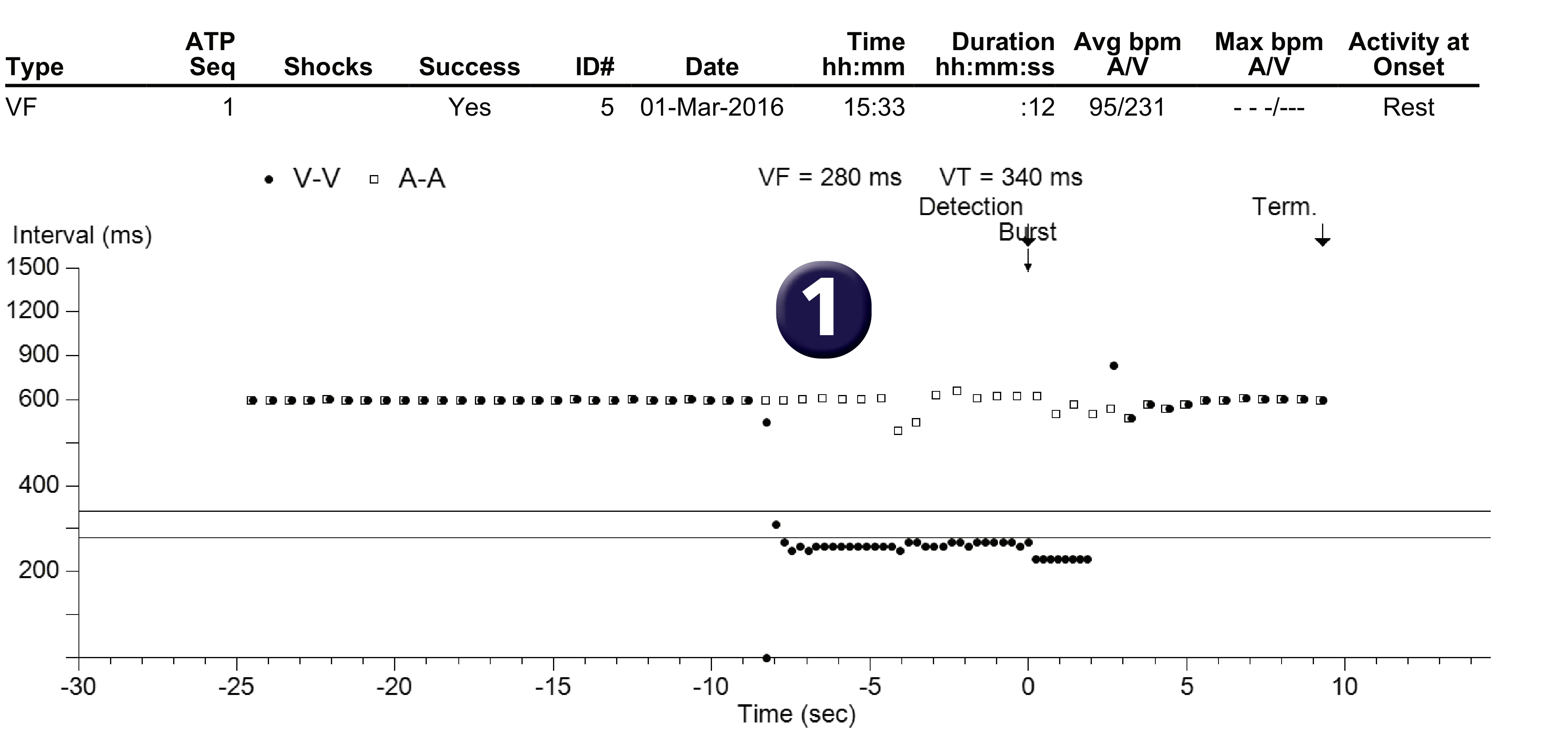
Rate / interval plot
EGM
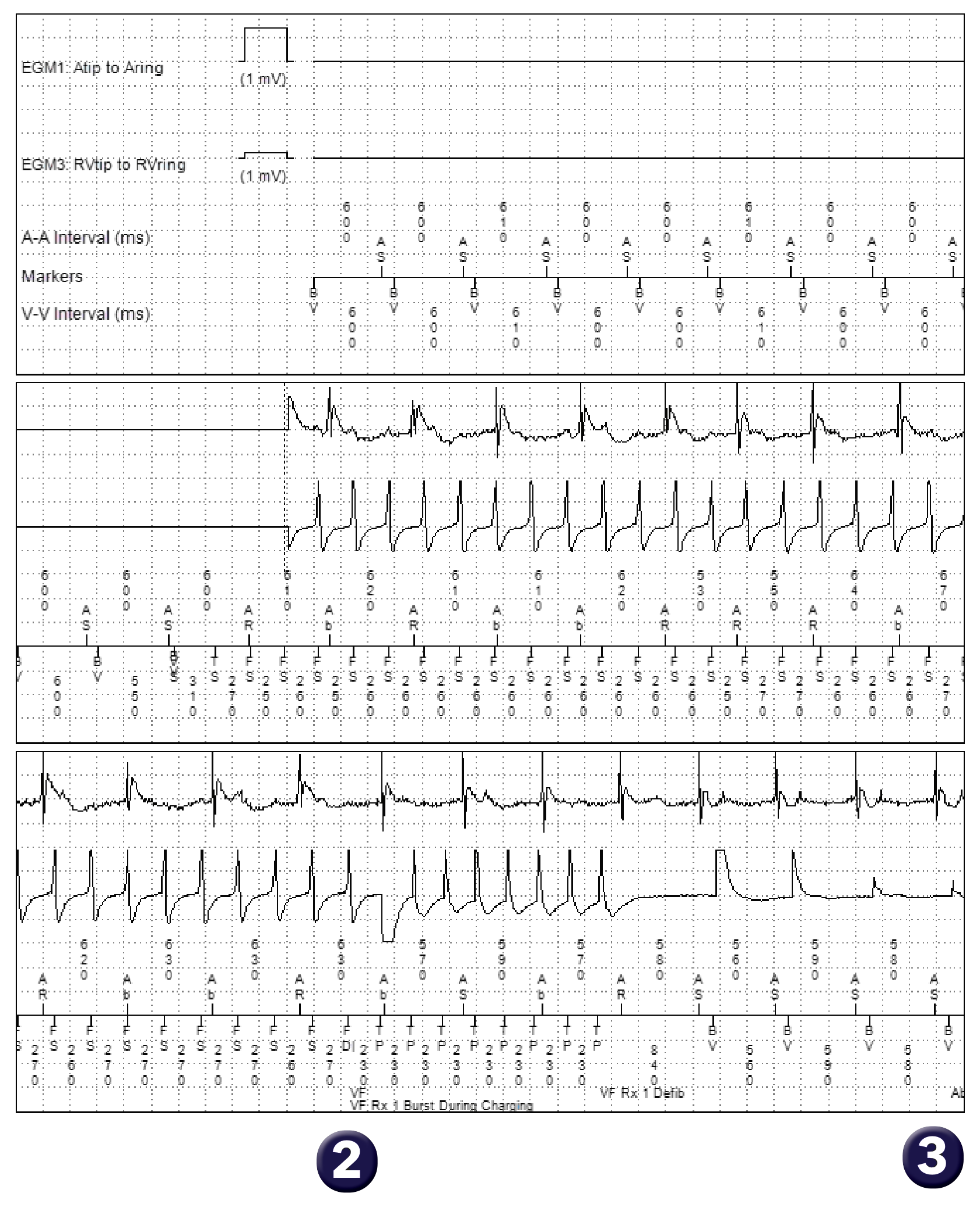
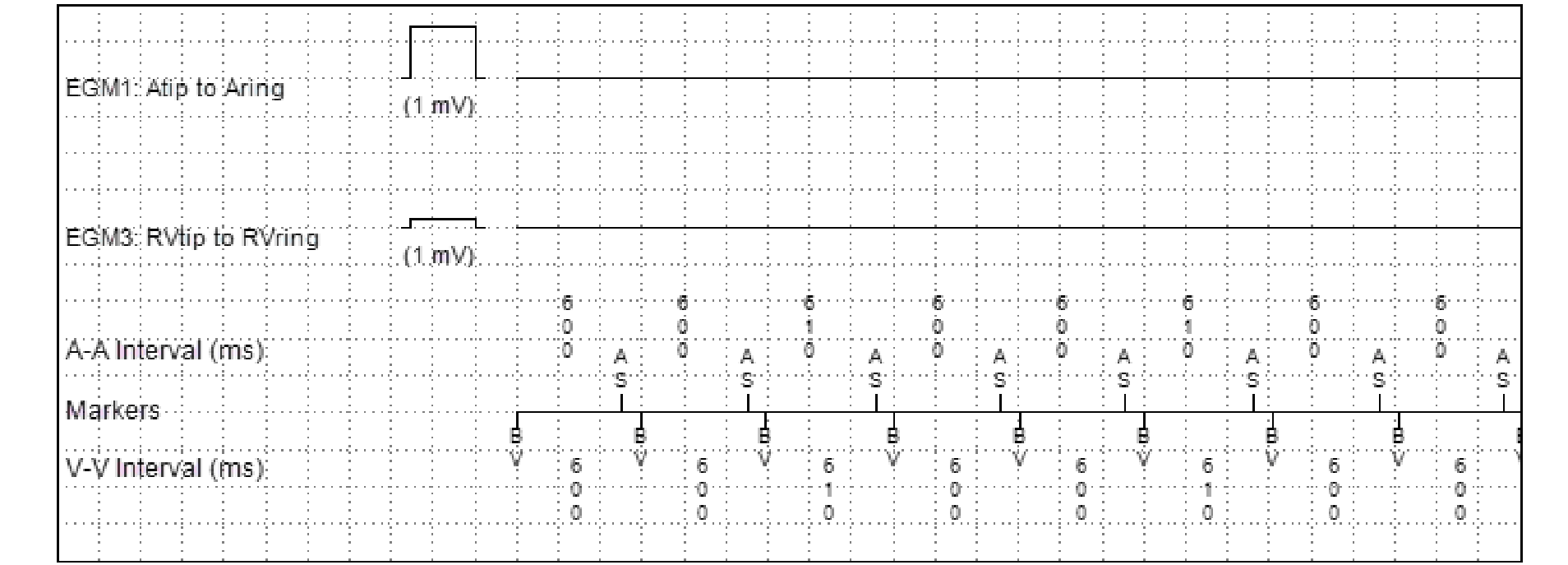
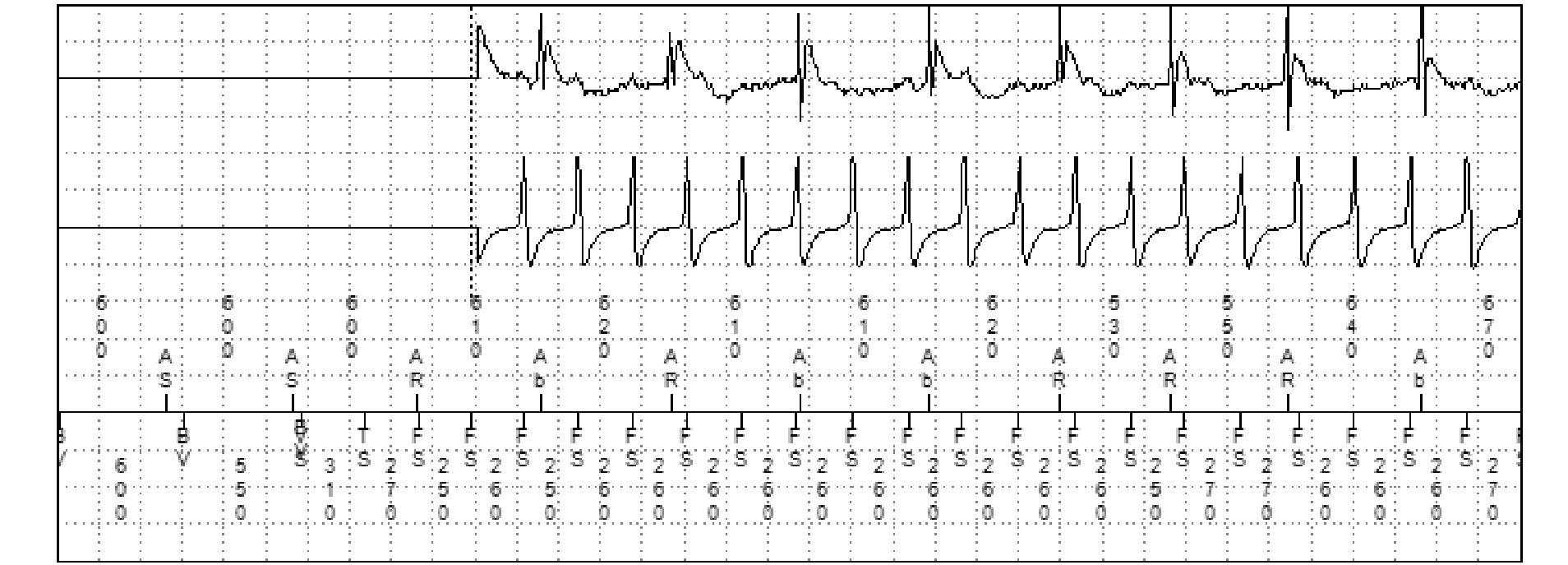
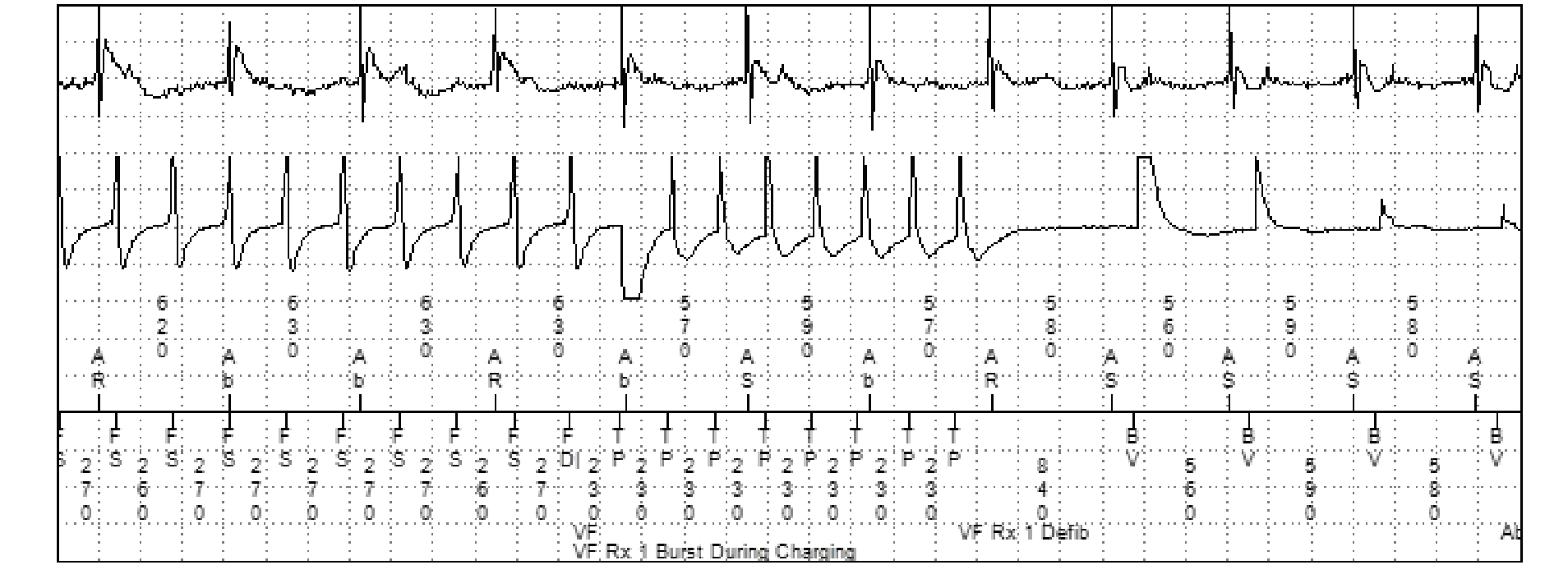
- What diagnosis is suggested by the interval plot? Probable episode of monomorphic VT detected in the VF zone and treated by a burst which appears to be effective
- What therapy is delivered by the device? The episode is detected in the VF zone; when the initial VF counter is filled, a burst during charging is delivered.
- What does the «abandon» message mean? Charging of capacitors began as soon as the VF counter was filled; the burst was effective with termination of the arrhythmia; after 4 consecutive paced ventricular cycles, the criterion for confirming persistence of the arrhythmia is not met (criterion of 2/5 rapid cycles) and charging is interrupted (therapy abandoned).
Points to remember
- For MedtronicTM defibrillators, a maximum of 6 shocks can be delivered for a single episode in the VF zone.
- Although the output of each shock can be programmed independently, it is usual to program a maximum output shock (35 Joules) for shocks 2 to 6; on the other hand, the output of the first shock can either be programmed at the device’s maximum output, at a value 10 Joules lower (25 Joules), or at a lower output tested during an induction procedure.
- Programming a medium-output first shock (between 15 and 20 Joules) reduces the charge time and the delay between the onset of arrhythmia and delivery of the shock, and may in certain specific cases, reduce the risk of loss of consciousness.
- The choice of output for the first shock in the VF zone therefore represents a compromise: medium output may be sufficient to stop VF after a short charge time, but if this fails, the second shock of maximum energy will be delivered following a longer duration in VF; high energy from the outset is more effective for VF, but at the cost of a longer initial charge time.
Practice out loud
Just describe the tracing. What do you think is going on? Describing the numbers can help.
00:00
0%
—
From Medtronic ICD — clinical cases by P. Bordachar, A. Thiyagarajah, L. Fontagne, M. Strik, S. Ploux. Published by Cardiocases. Every numbered marker on a recording is explained in the list beneath it; tap a marker on the trace or an entry in the list.
Order hardcopyon Amazon