
Chapter 3 · Oversensing · Case 9
Shock during surgery
Patient and episode
Patient
- Man implanted with a triple-chamber defibrillator (Viva Quad XT CRT-D) for secondary prevention; electric shock delivered during shoulder surgery.
The recording
Tap a number on the trace, or an entry in the list below
Rate / interval plot
EGM

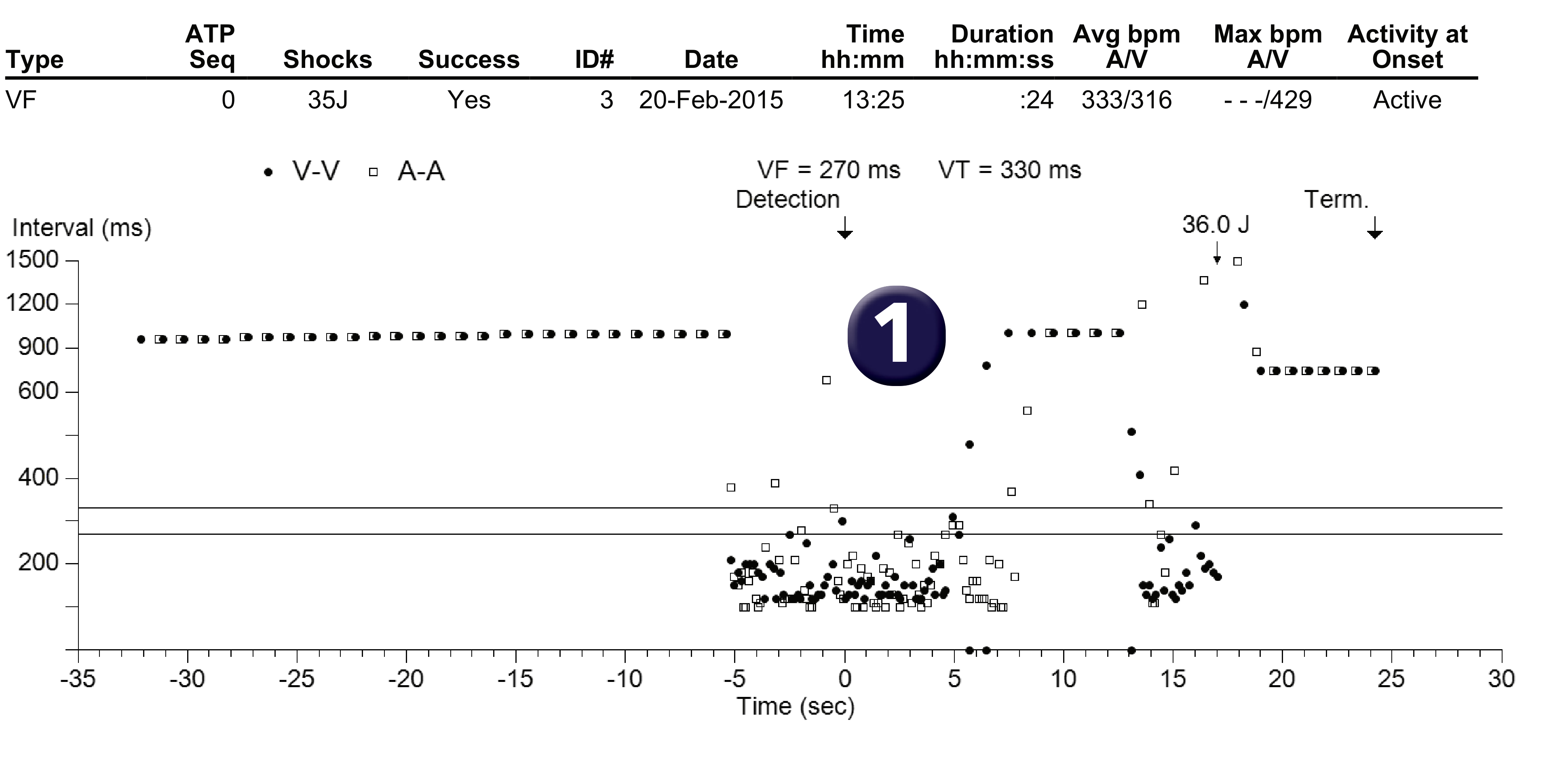
- Does the interval plot suggest a ventricular rhythm disorder or a problem with oversensing? The plot shows a sudden and simultaneous shortening of the ventricular and atrial cycle length, which become very short, within the VF zone, at the limit of the programmed blanking value (around 120 ms); the sudden and simultaneous acceleration of the atrial and ventricular cycles makes it highly unlikely that this episode is physiological and corresponds to a double tachycardia; therefore the most likely diagnosis is oversensing with an electric shock interrupting the oversensing.
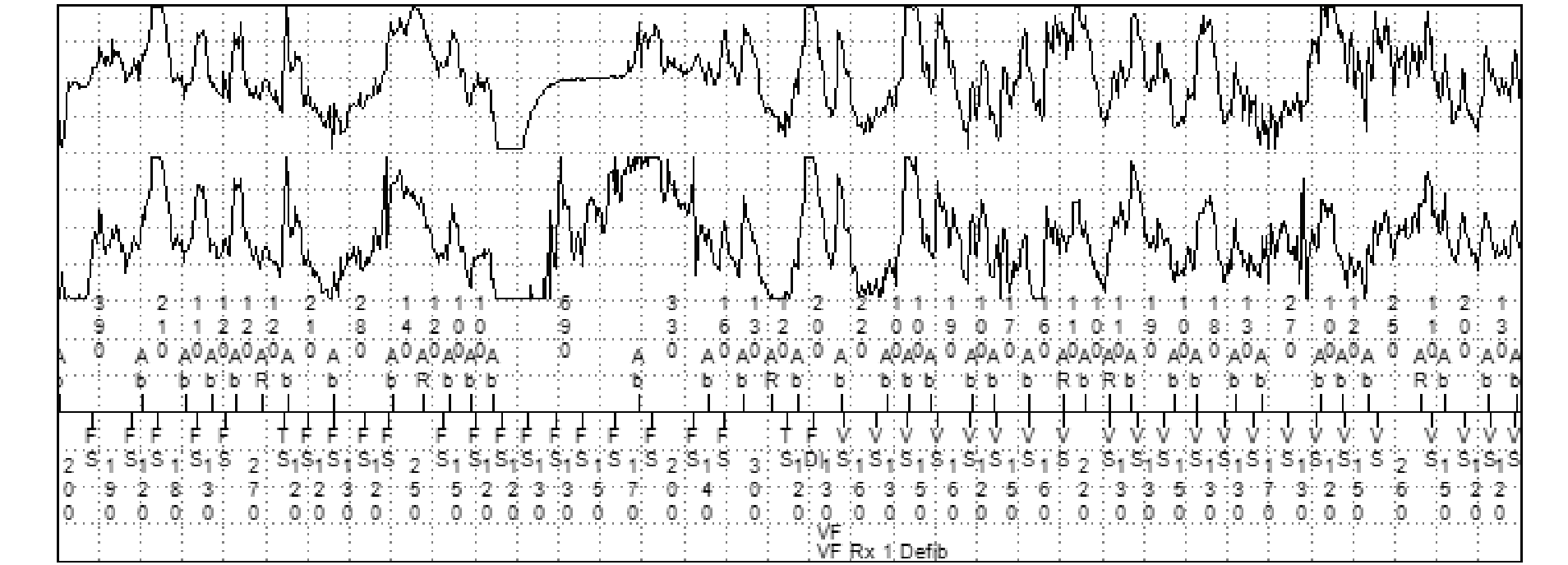
- What is your diagnosis? The EGM shows extremely polymorphic and clearly non-physiological signals in the atrial and ventricular channels; the oversensing is intermittent, which explains why the first charge is interrupted; when the oversensing resumes, the capacitors are already partially charged, so the electric shock is delivered after a very short charge time; the diagnosis is obvious in this setting since the electric shock occurred during the use of diathermy during surgery.
Points to remember
- On this trace, the appearance of the EGM is characteristic of oversensing related to the use of diathermy: polymorphic, very rapid, non-physiological signals are present on both channels.
- The diagnosis is usually obvious from the context in which the shock occurs.
- Receiving an electric shock can be a very painful experience that some patients find very distressing; some electric shocks are unavoidable... on the other hand, some electric shocks must be avoided at all costs!
- Some simple measures should be implemented when performing planned or emergency surgery: the surgeon should be advised to use the electrocautery device in bipolar mode, for short periods of time, and to place the plates at a distance from the unit so as to keep the defibrillation system outside the field generated by the electrocautery device; above all, the defibrillator should be temporarily deactivated to completely eliminate the risk of interference, and the patient should be monitored, with an external defibrillator available if necessary.
- Two options may be employed for deactivating the device: application of a magnet over the box or reprogramming of the device; application of a magnet is sometimes preferred because 1) in the event of true arrhythmia compromising the patient’s survival, the medical team can immediately reactivate the system by removing the magnet (resumption of tachycardia detection immediately upon removal of the magnet); 2) absence or delay in reactivation of therapies is not uncommon when the defibrillator has been reprogrammed.
Practice out loud
Just describe the tracing. What do you think is going on? Describing the numbers can help.
00:00
0%
—
From Medtronic ICD — clinical cases by P. Bordachar, A. Thiyagarajah, L. Fontagne, M. Strik, S. Ploux. Published by Cardiocases. Every numbered marker on a recording is explained in the list beneath it; tap a marker on the trace or an entry in the list.
Order hardcopyon Amazon