
Chapter 4 · Keeping up the CRT · Case 11
Ventricular episodes in a CRT-P: what started them?
Patient and episode
Patient
- VISIONIST CRT-P implanted almost 7 years earlier; DDD 45-185 bpm, RV-only ventricular pacing (LV paced 0%); ventricular episodes stored above 200 bpm. The patient reports dizziness when working on the computer
- Remote report with no alert, but two ventricular episodes: a “VT (V>A)” at 288 bpm (21 s) 5 days before the report, and an NSVT at 267 bpm (17 s) on the day of the report; also 9 ATR episodes
The recording
Tap a number on the trace, or an entry in the list below
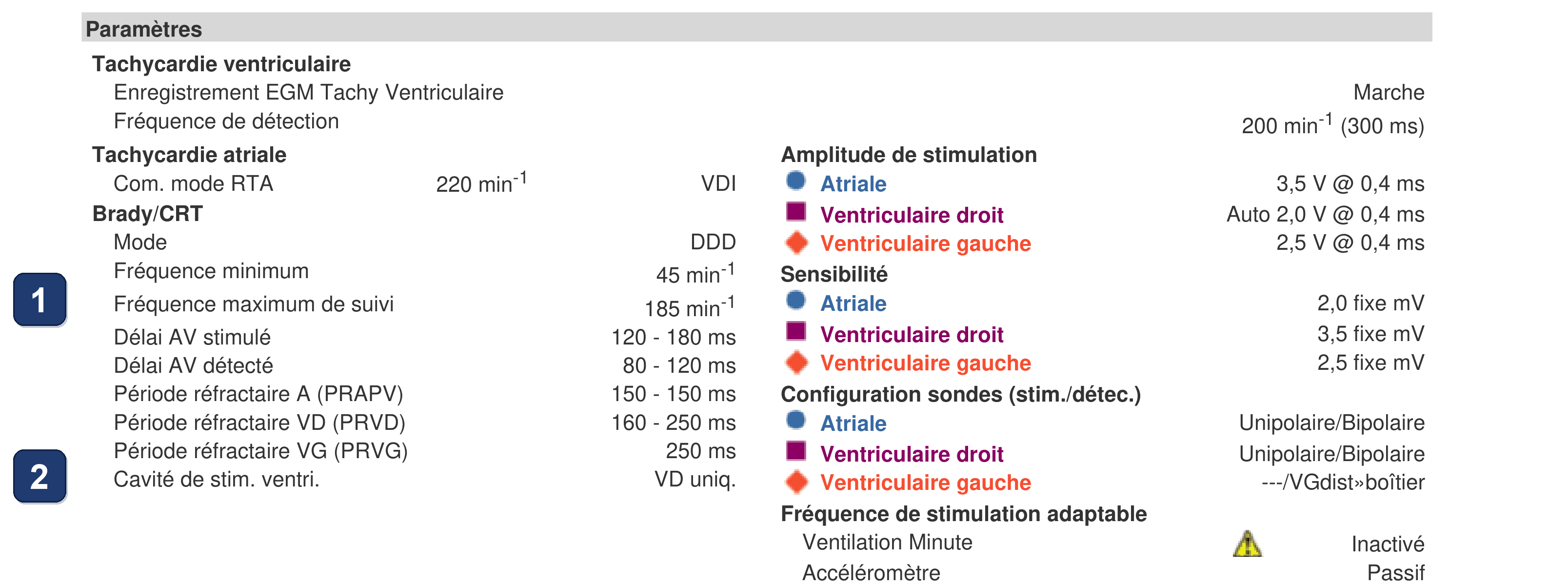
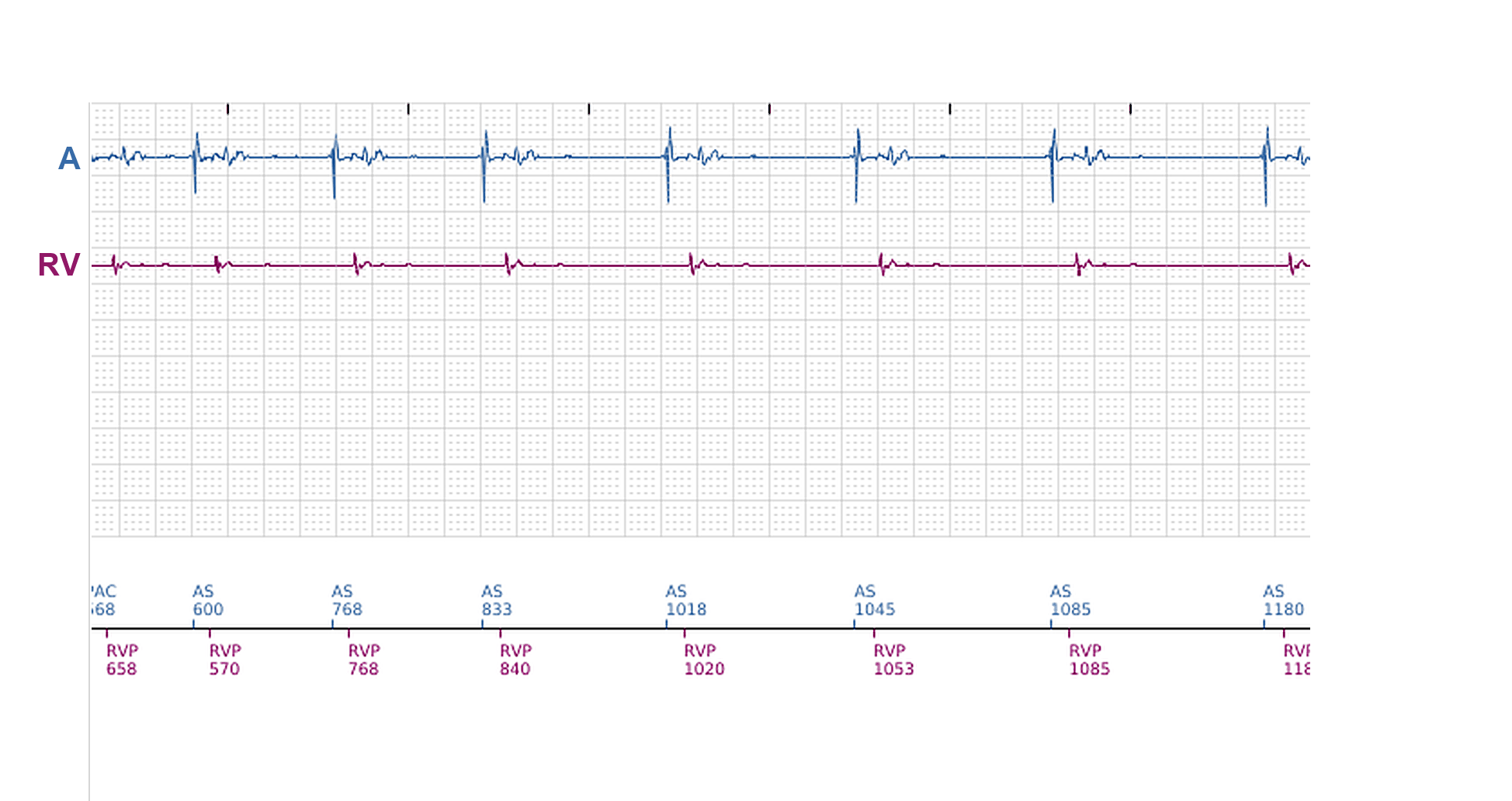
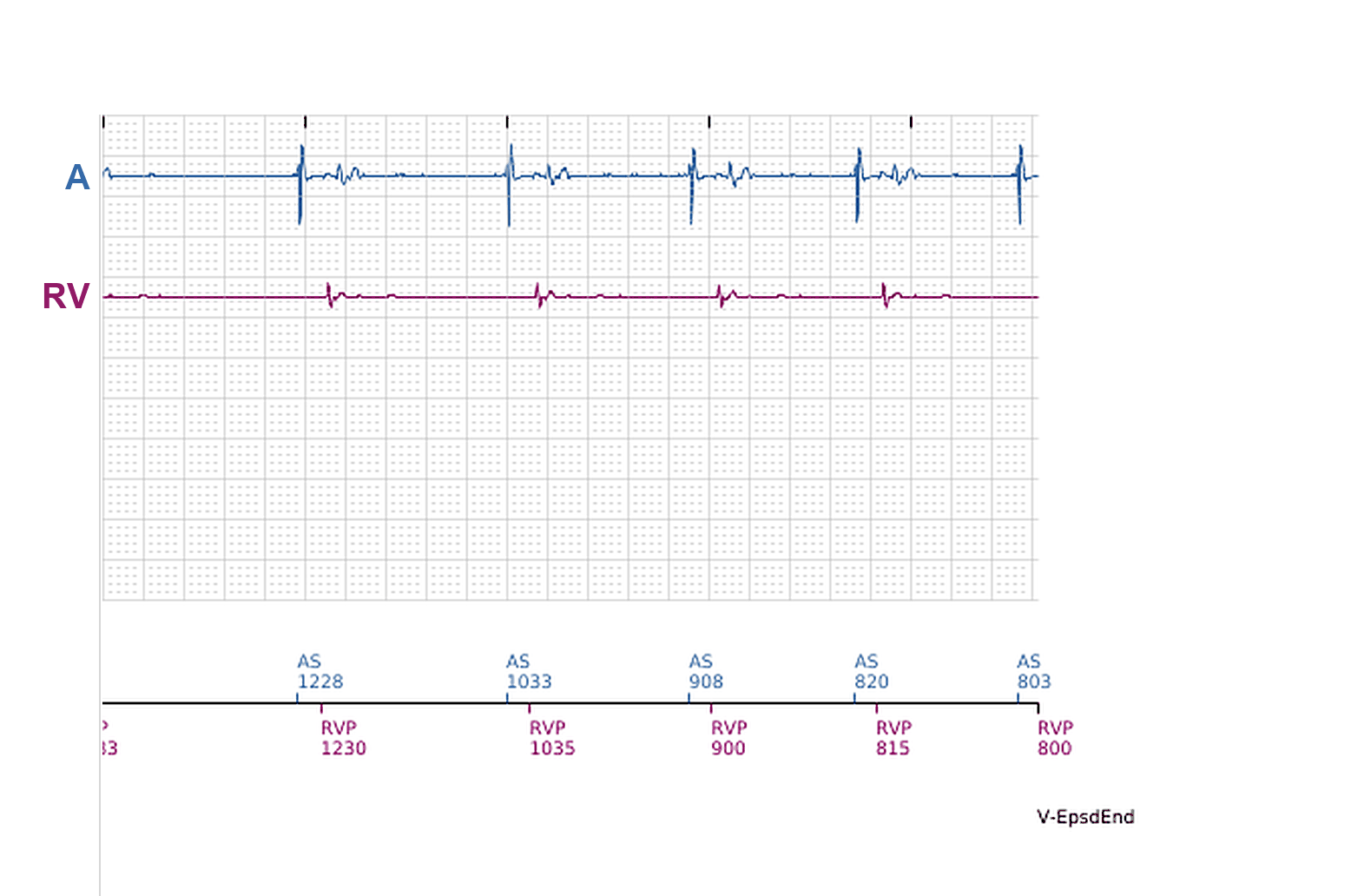

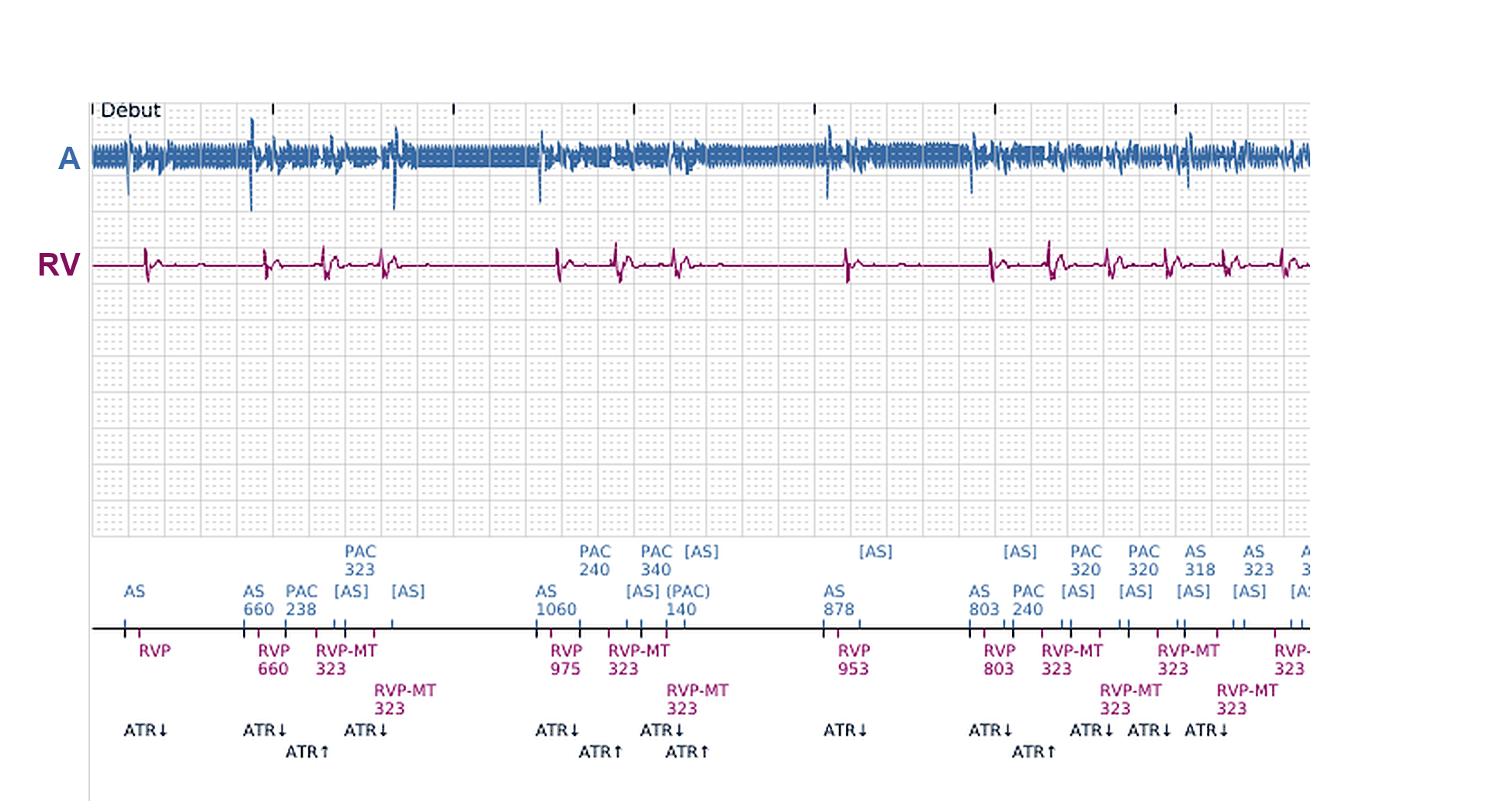
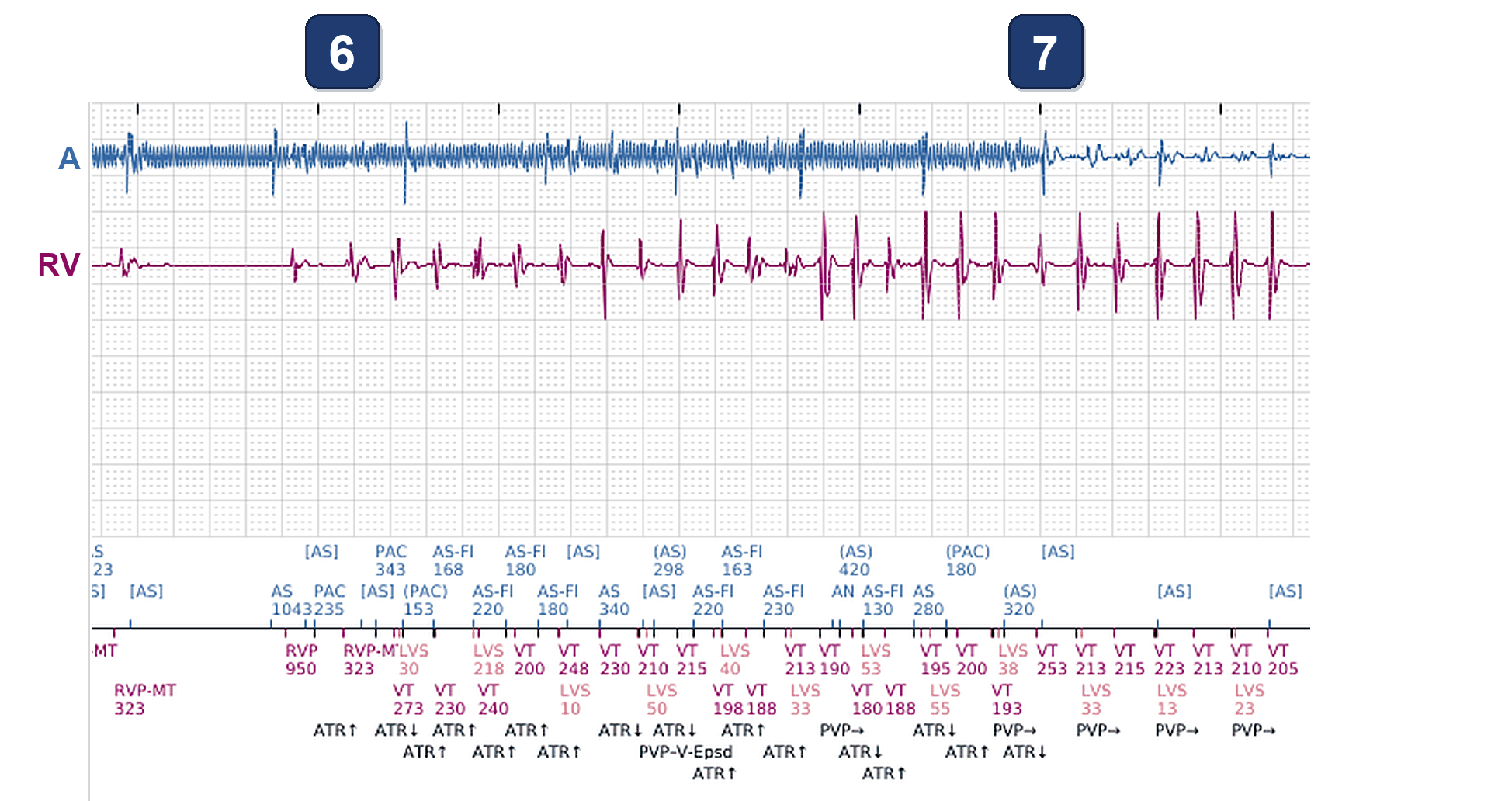
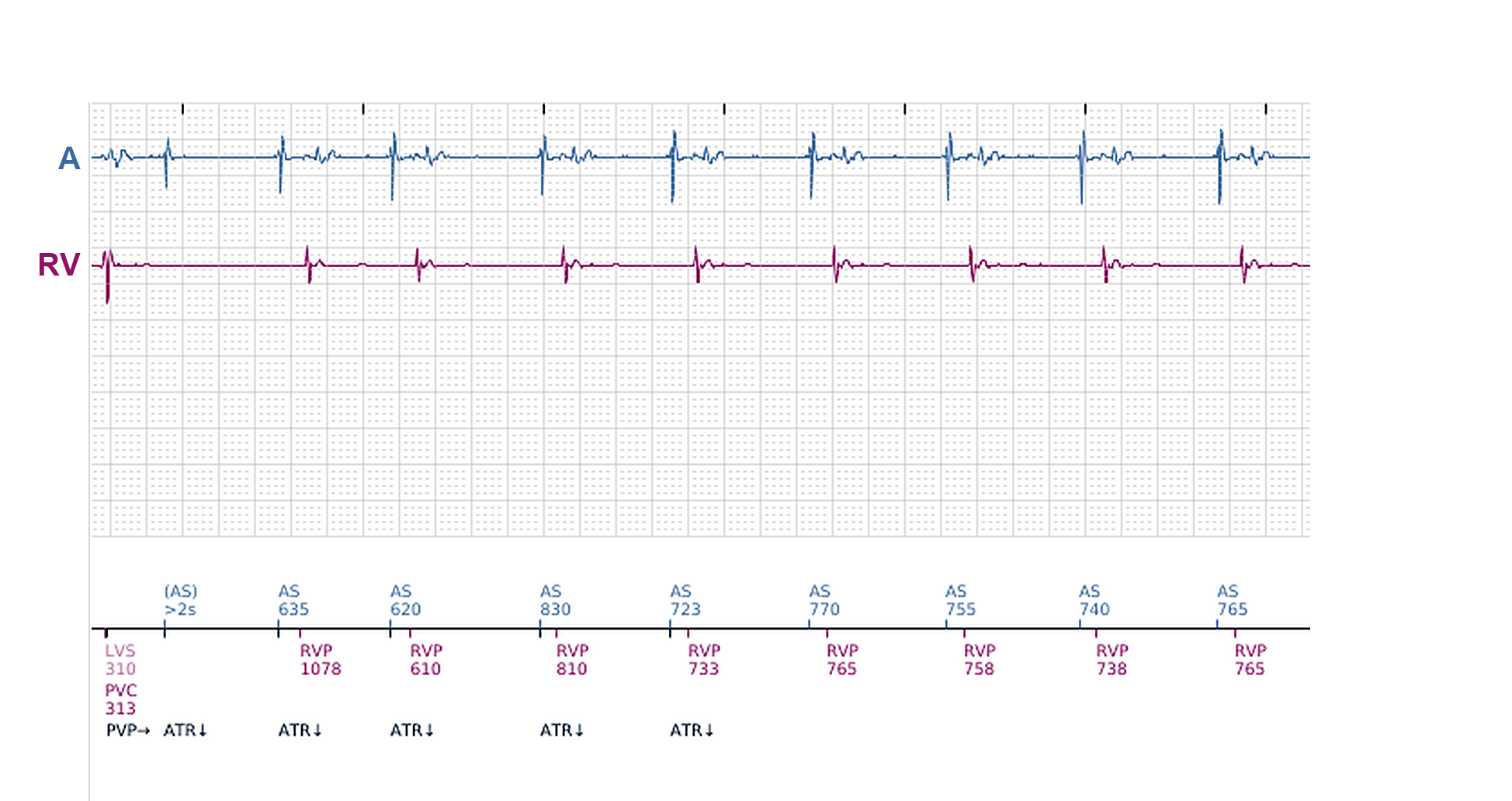
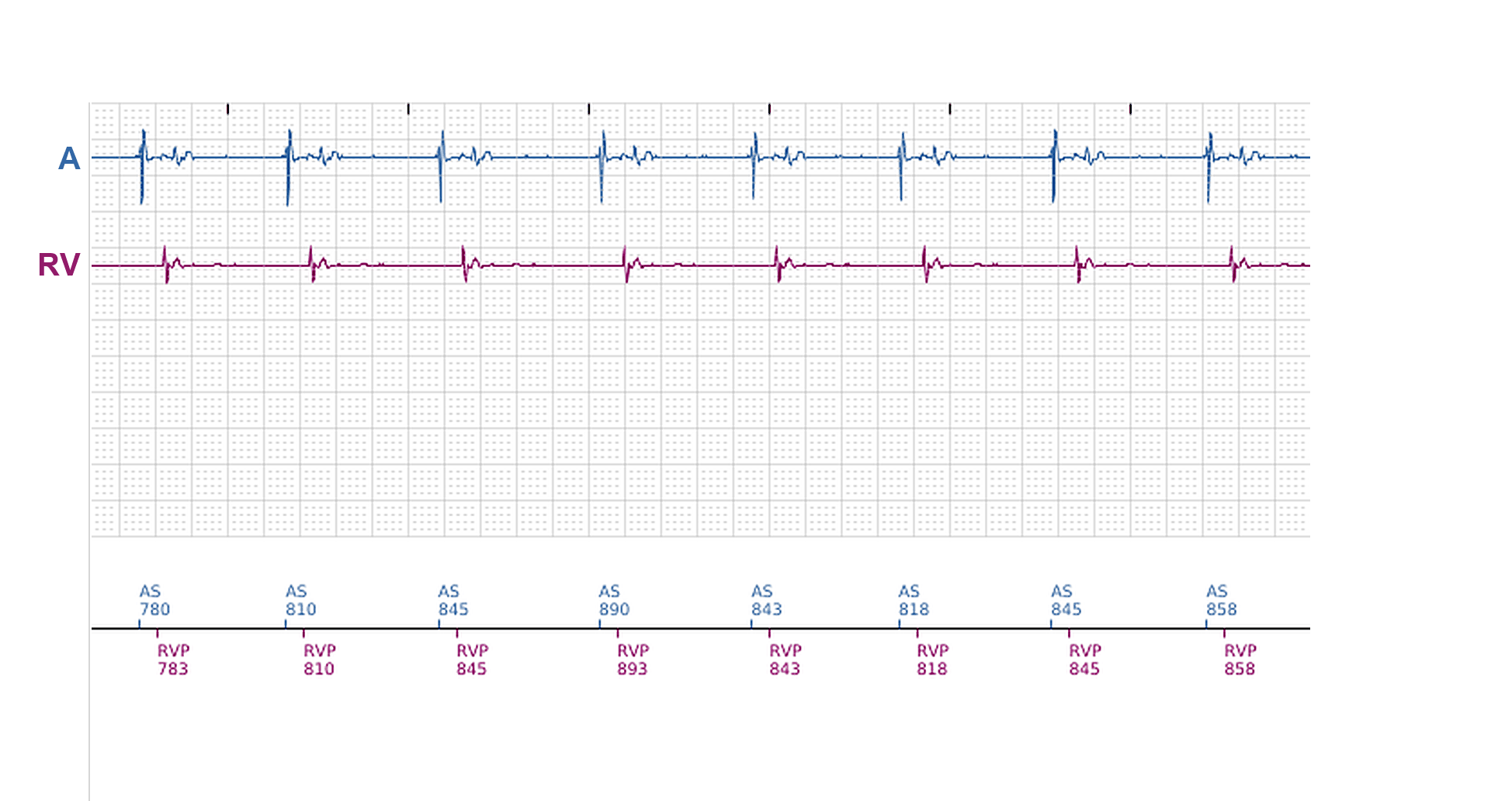
- Settings at the time of the report: maximum tracking rate (MTR) 185 bpm, sensed AV delay 80-120 ms, PVARP 150 ms (fixed); right column, atrial sensitivity fixed at 2.0 mV
- Ventricular pacing chamber “VD uniq.” = RV only: this CRT-P paces the RV alone (RVP markers, LV paced 0% on the counters)
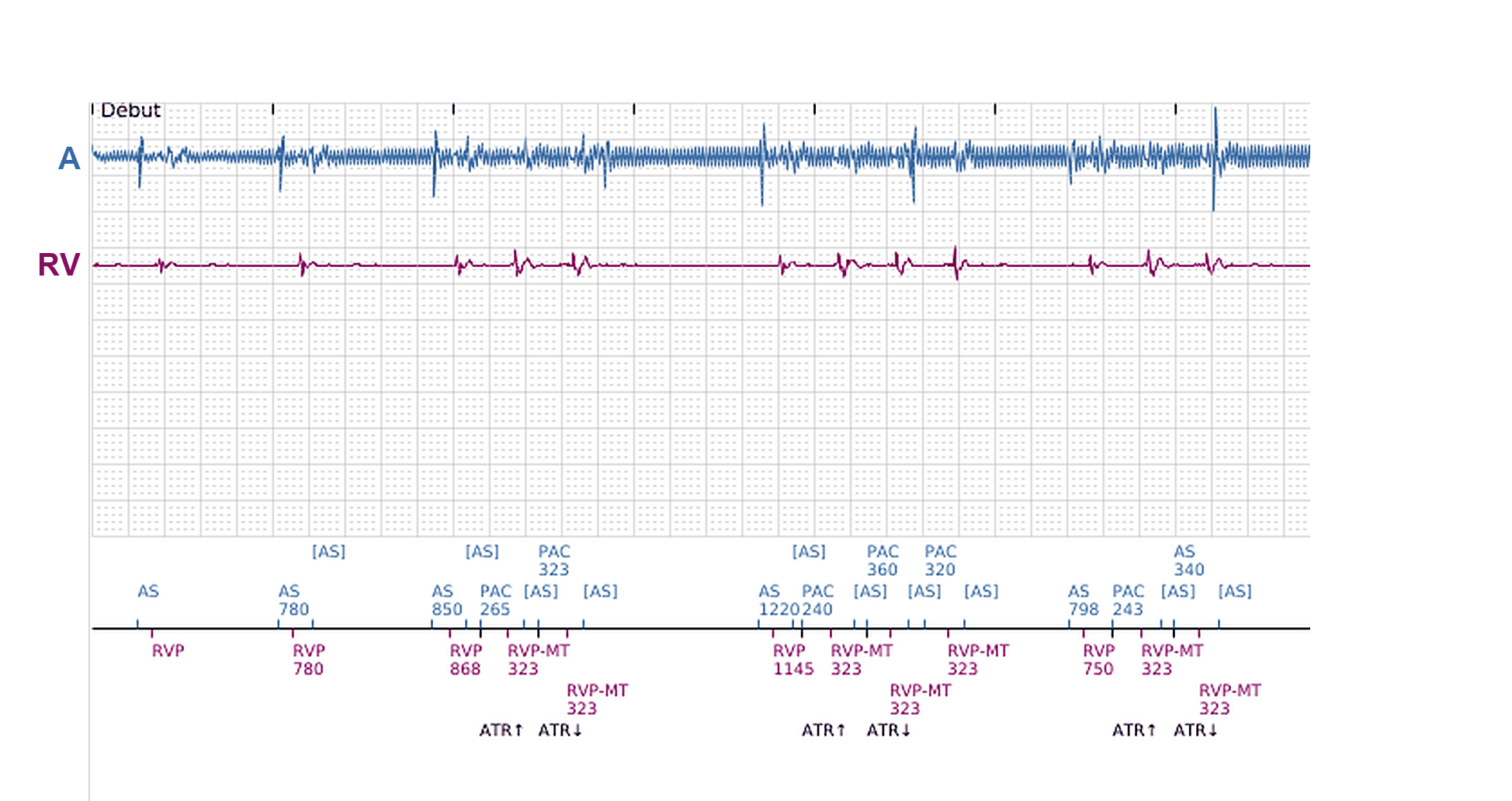
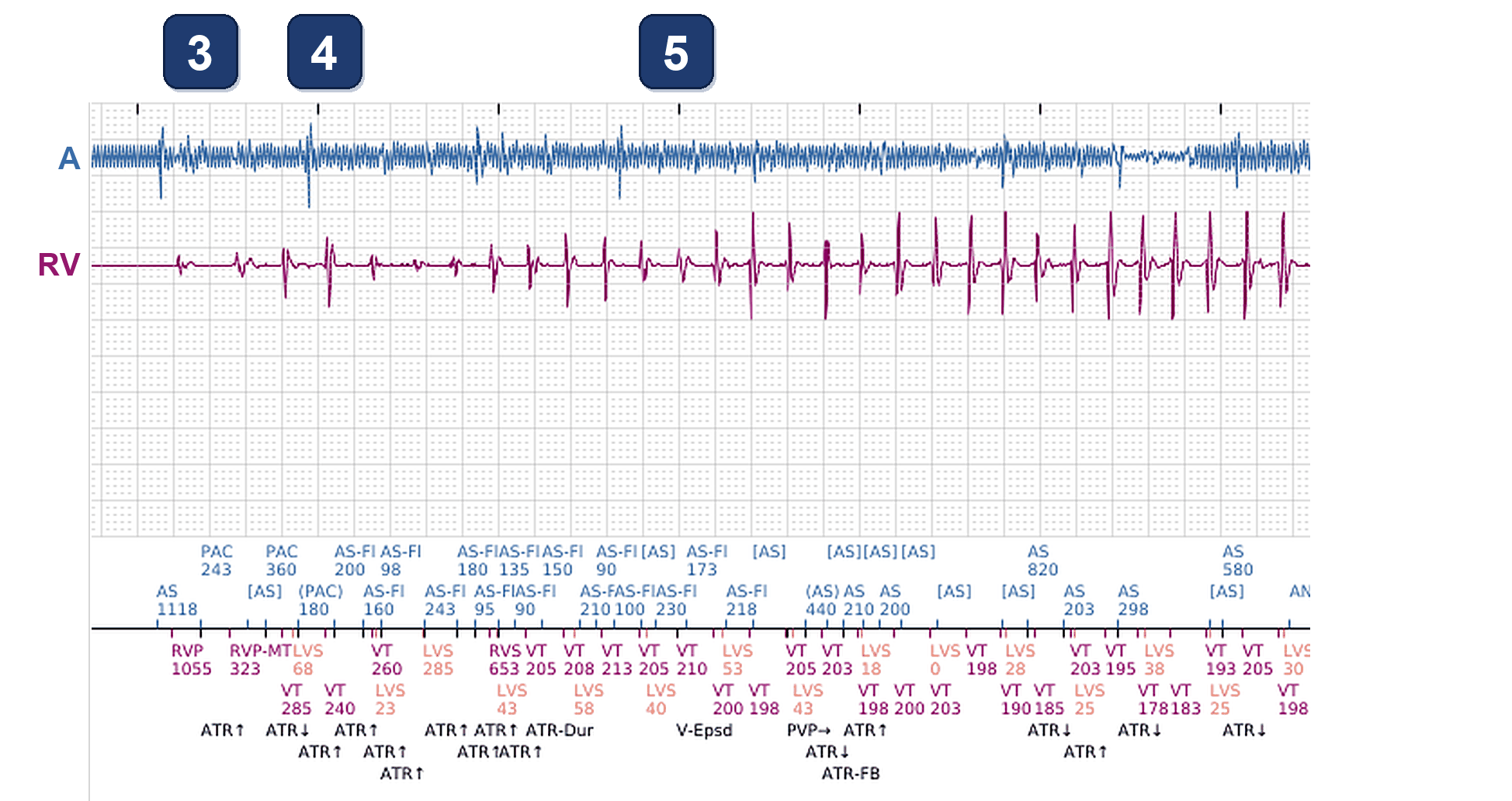
- First episode, 5 days before the report. The atrial channel carries a fast, regular noise (the PC); the true atrial events stand out. A sinus atrial event is tracked and paced after a long cycle. Just after this pace and the short PVARP, a noise deflection is sensed as an atrial event (PAC) and tracked: the RV is paced at the MTR (RVP-MT), a short cycle
- Onset of a polymorphic VT at around 250 bpm, accelerating to 300 bpm
- V-Epsd: sustained VT at around 290 bpm. The noise is now counted as a fast atrial rhythm: ATR-Dur, then fallback to VDI (ATR-FB). Fortunately the VT stops by itself, the episode lasts 21 s
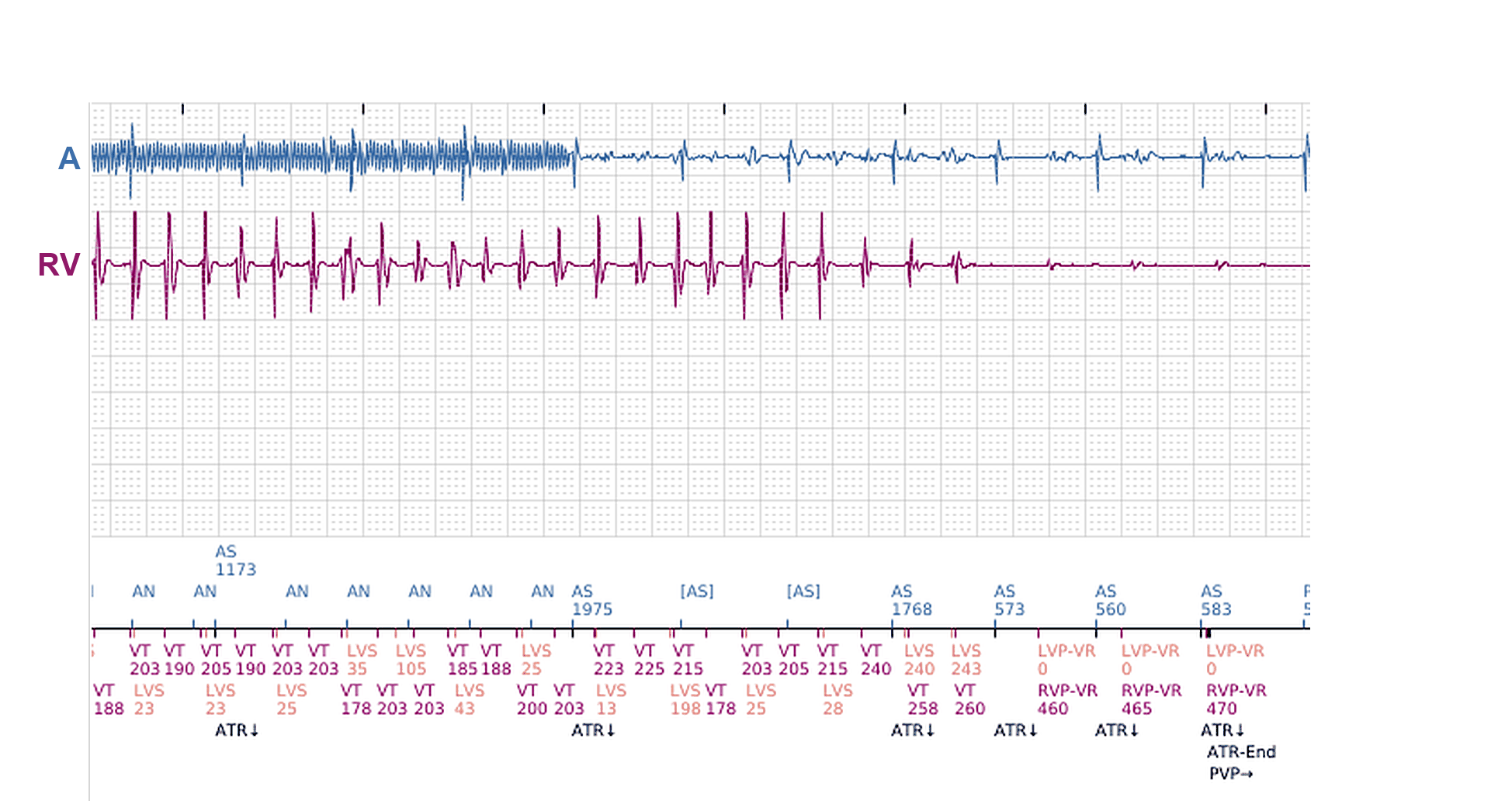
- Five days later, on the day of the report (the NSVT), the same start: a long cycle after a tracked sinus atrial event, then a noise deflection tracked at the MTR (RVP-MT, a short cycle), and the VT starts
- Here the noise stops: the atrial channel turns clean, but the VT goes on without the pacing; it stops by itself, the episode lasts 17 s
Points to remember
- When a pacemaker or a CRT-P stores a “VT”, look at the cycles just before it: here both episodes start right after a long cycle followed by a short one paced at the maximum tracking rate, a long-short sequence made by the pacing itself
- Then find what was tracked: here interference from a PC on the atrial channel. A noise spike just after the short PVARP (150 ms) was taken for an atrial event and the RV was paced at the maximum tracking rate (185 bpm); the mode switch came only during the VT, as the noise was sensed only on and off
- The other side of the MTR: a low MTR costs CRT when the sinus rate is high (the cases before), a too-high MTR (185 bpm here) with a short PVARP (150 ms) lets a single noise spike trigger a fast ventricular pace, which can start a VT. Remove the source of the interference and lower the MTR
- A CRT-P cannot treat a VT: both episodes, at 288 and 267 bpm, stopped by themselves after 21 and 17 s
Summary
- Interference from the PC on the atrial channel is tracked up to a high maximum tracking rate (185 bpm): RV pacing at the MTR right after a long cycle makes a long-short sequence, and a VT starts, twice
Clinical pearl
A stored VT may have been started by the pacing itself: look at the beats just before it. Here the device tracked interference from a PC up to the maximum tracking rate, and the long-short sequence it made started each VT
Practice out loud
Just describe the tracing. What do you think is going on? Describing the numbers can help.
00:00
0%
—
From Boston Scientific CRT — clinical cases by M. Strik. Published by Cardiocases. Every numbered marker on a recording is explained in the list beneath it; tap a marker on the trace or an entry in the list.