
Chapter 2 · Therapies · Case 11
Programming a first shock at maximum output in the VT zone
Patient and episode
Patient
- Male implanted with a single chamber defibrillator (Visia XT VR) for ischaemic cardiomyopathy.
The recording
Tap a number on the trace, or an entry in the list below
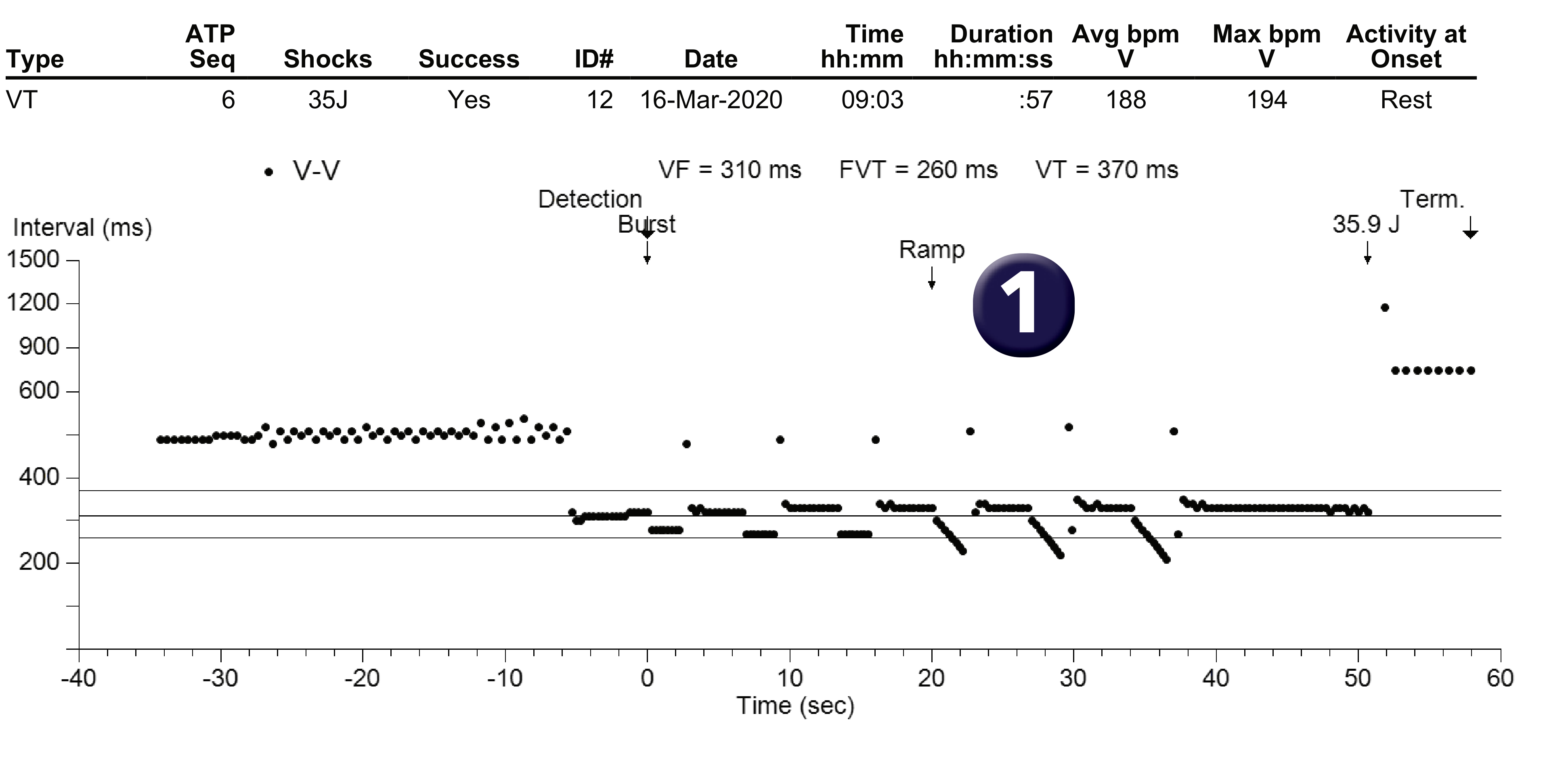
Rate / interval plot
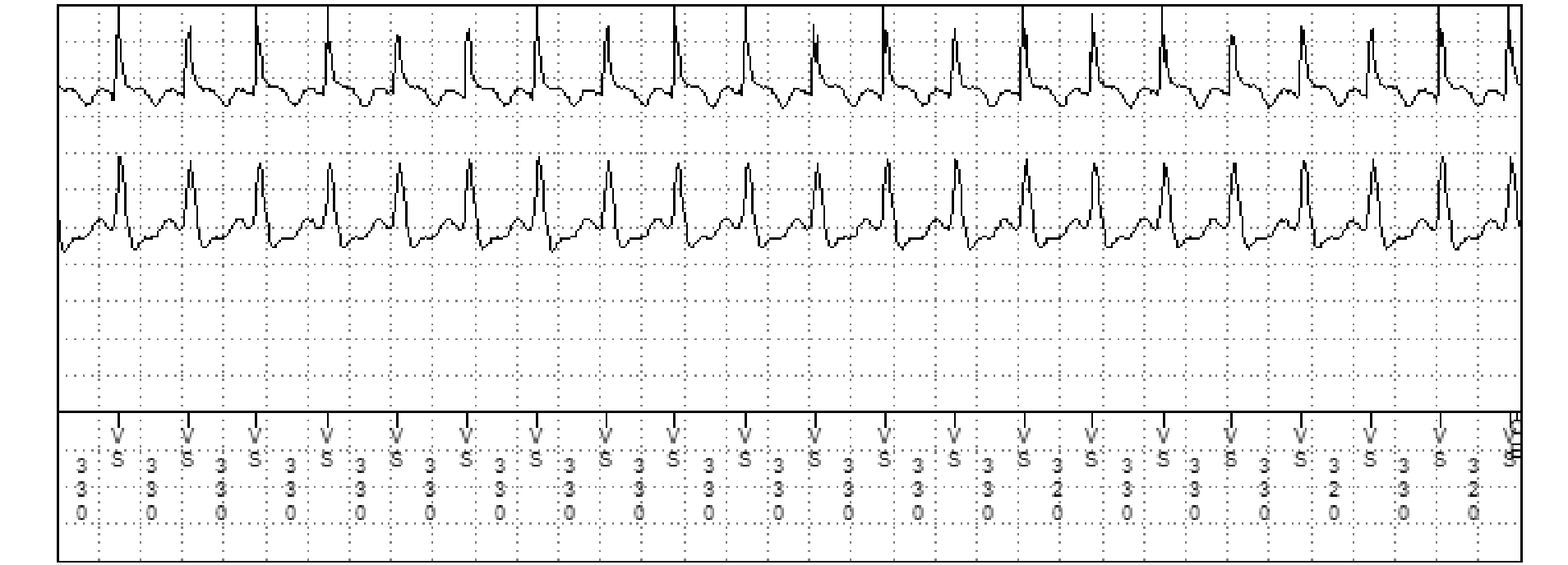
EGM


- What diagnosis is suggested by the interval plot? The plot shows an episode of ventricular arrhythmia with acceleration into the VT zone; the first 3 bursts and first 3 ramps do not revert the arrhythmia; a maximum output shock terminates the arrhythmia.
- What is your final diagnosis? Regular monomorphic ventricular tachycardia; the first 3 bursts (treatment 1) and first 3 ramps (treatment 2) are ineffective; maximum output shock (treatment 3) terminates the arrhythmia.
Points to remember
- Although there is no universal ‘optimal’ programming, the results of large studies concur on the need to reduce inappropriate or unnecessary therapies without compromising patient safety.
- Empirically programming a first shock of maximum energy in the VT zone, as in this example, reduces the risk of a pro-arrhythmogenic effect, increases the probability of terminating VT with the first shock, minimises the number of shocks delivered as far as possible and increases the probability of reverting AF if the shock is inappropriate
Practice out loud
Just describe the tracing. What do you think is going on? Describing the numbers can help.
00:00
0%
—
From Medtronic ICD — clinical cases by P. Bordachar, A. Thiyagarajah, L. Fontagne, M. Strik, S. Ploux. Published by Cardiocases. Every numbered marker on a recording is explained in the list beneath it; tap a marker on the trace or an entry in the list.
Order hardcopyon Amazon