
Chapter 3 · Discrimination · Case 7
Dual-chamber discrimination, atrial refractory periods and V>A criterion
Patient and episode
Patient
- 66-year-old male with severe ischemic cardiomyopathy; implanted with a dual-chamber defibrillator
Summary
- Initial diagnosis of supraventricular tachycardia based on Rhythm ID with no treatment
- Subsequent diagnosis of a VT with a series of 5 ATP bursts
The recording
Tap a number on the trace, or an entry in the list below
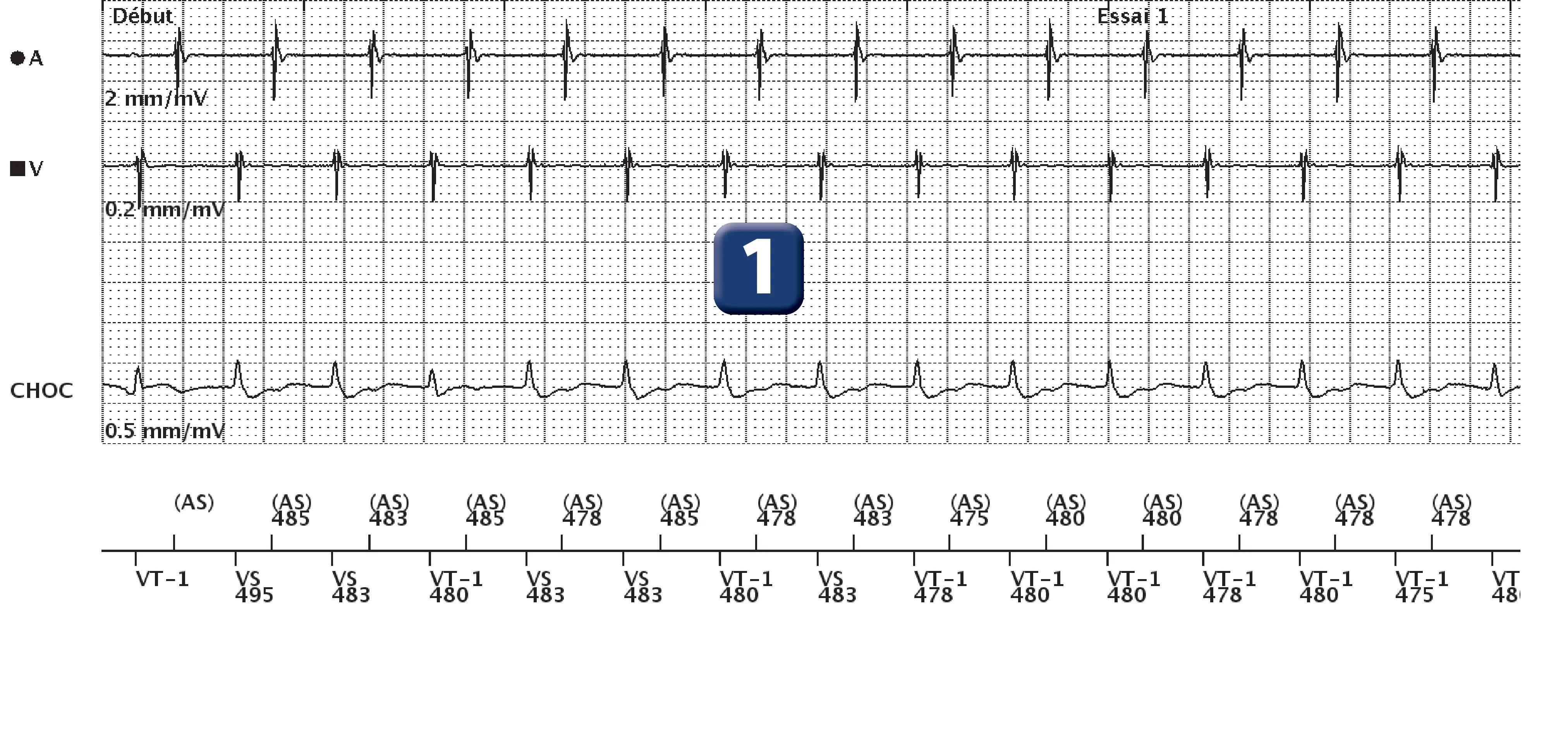
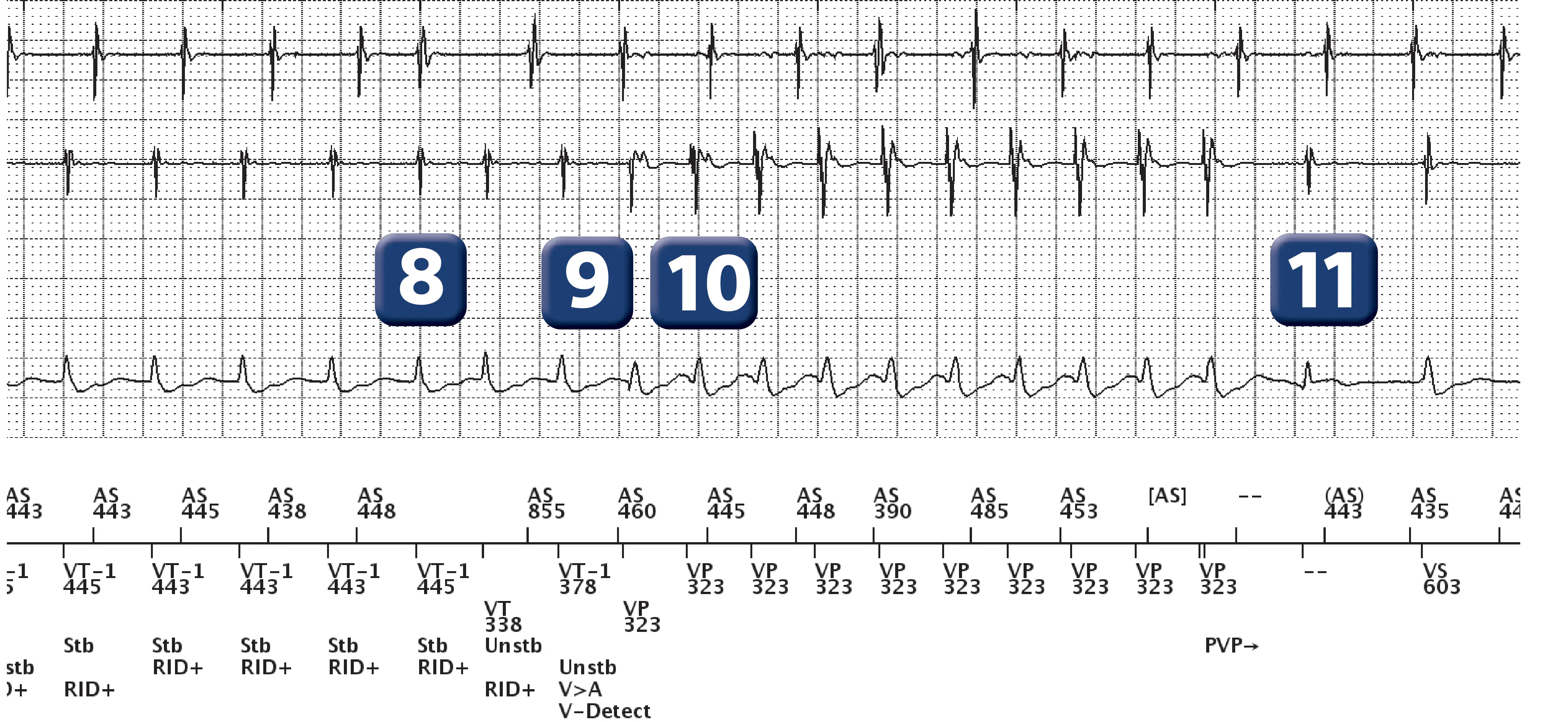
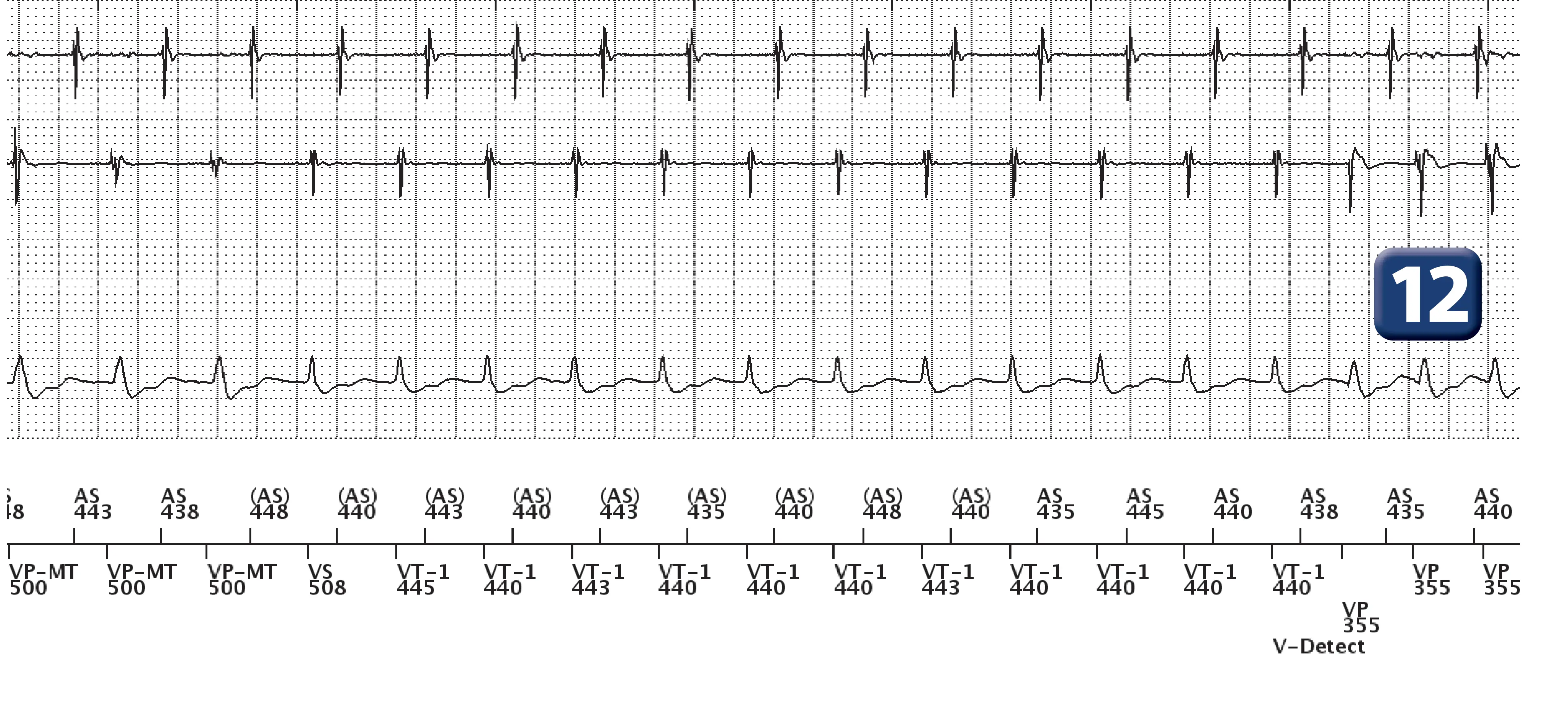
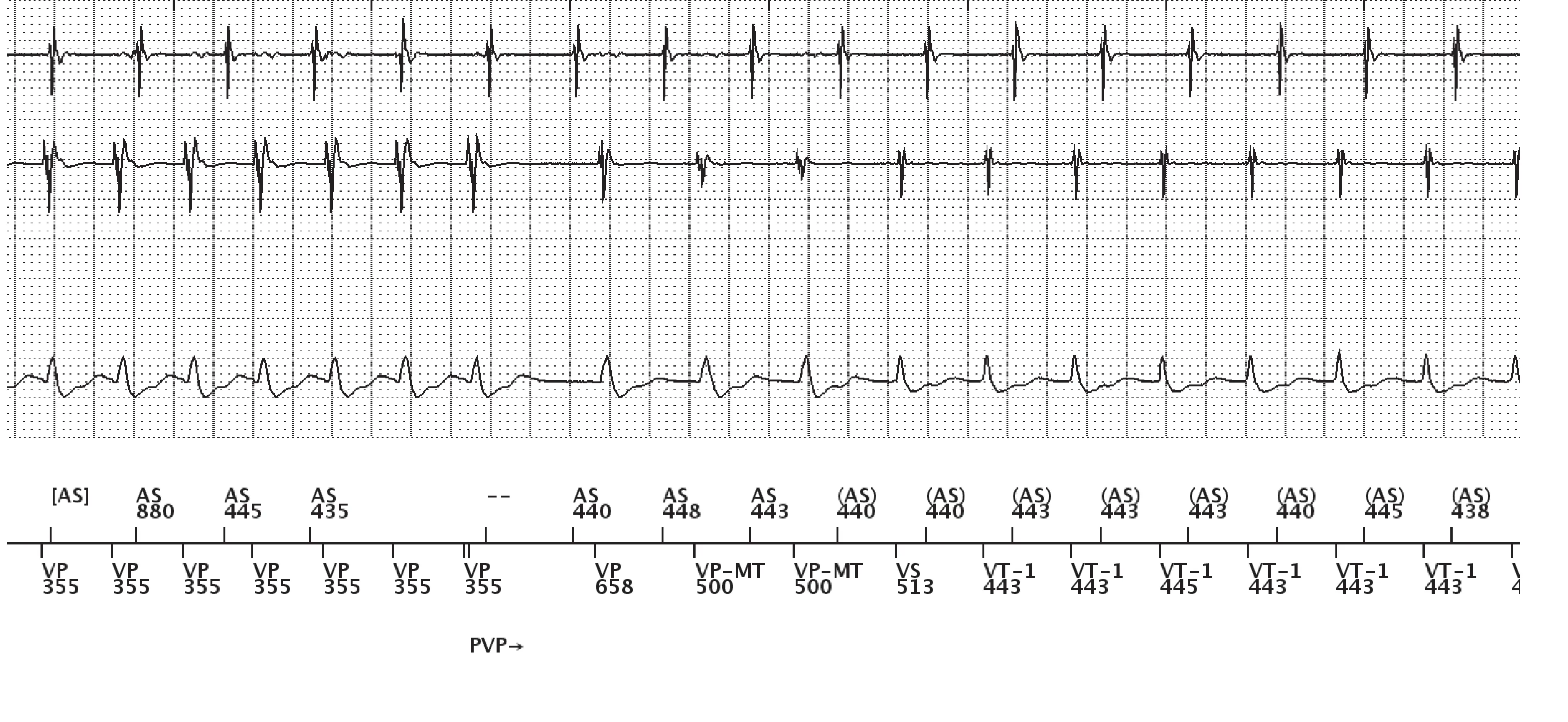
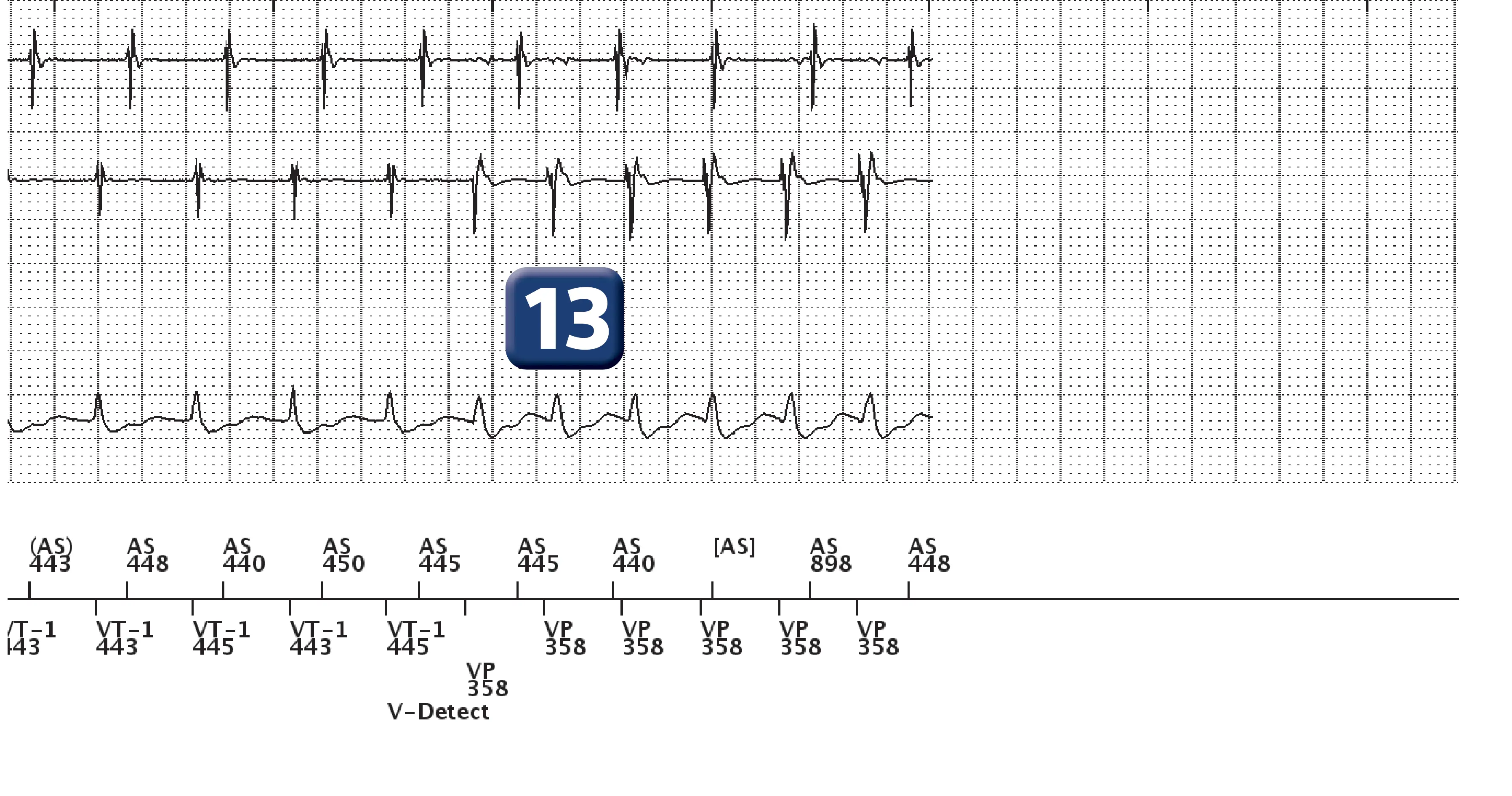
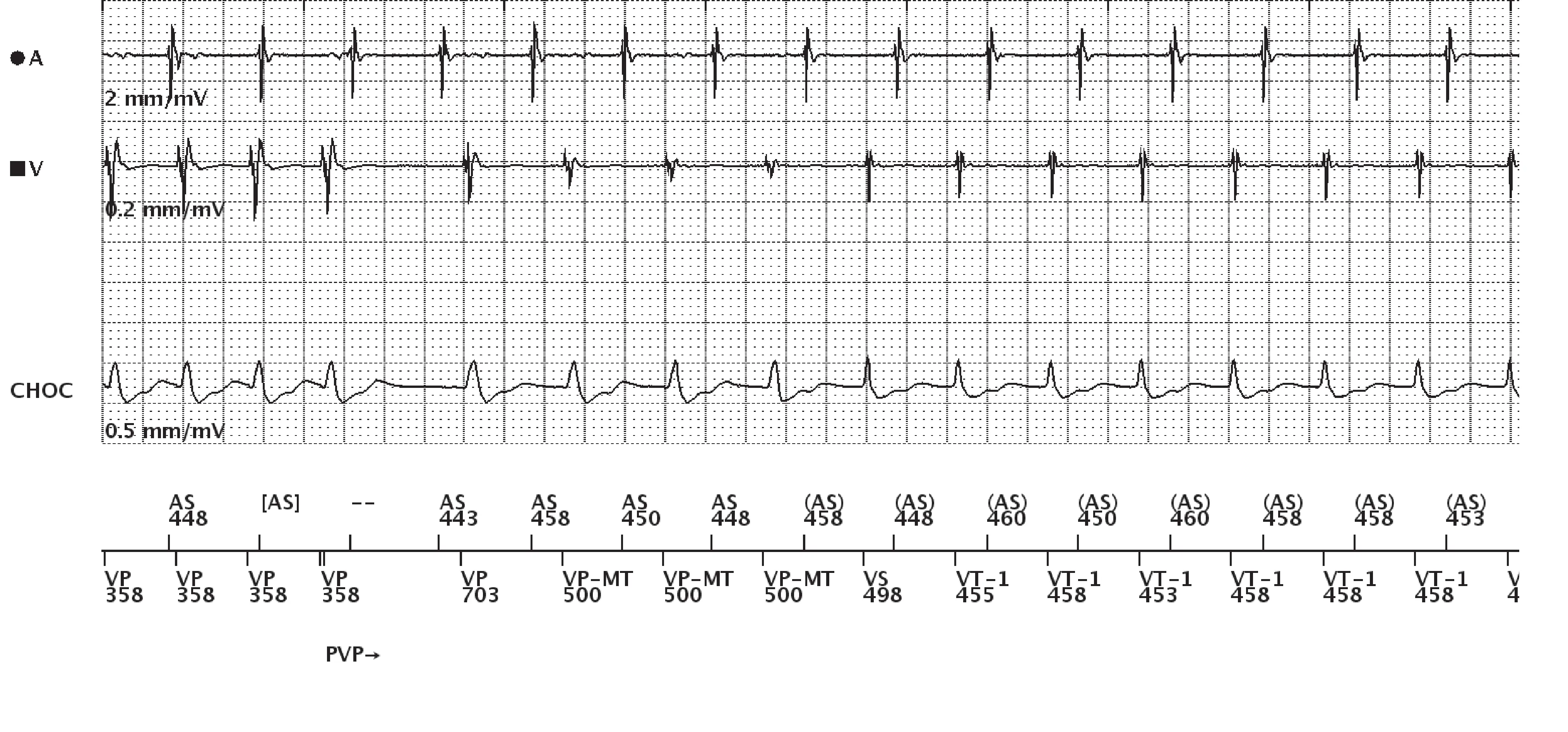
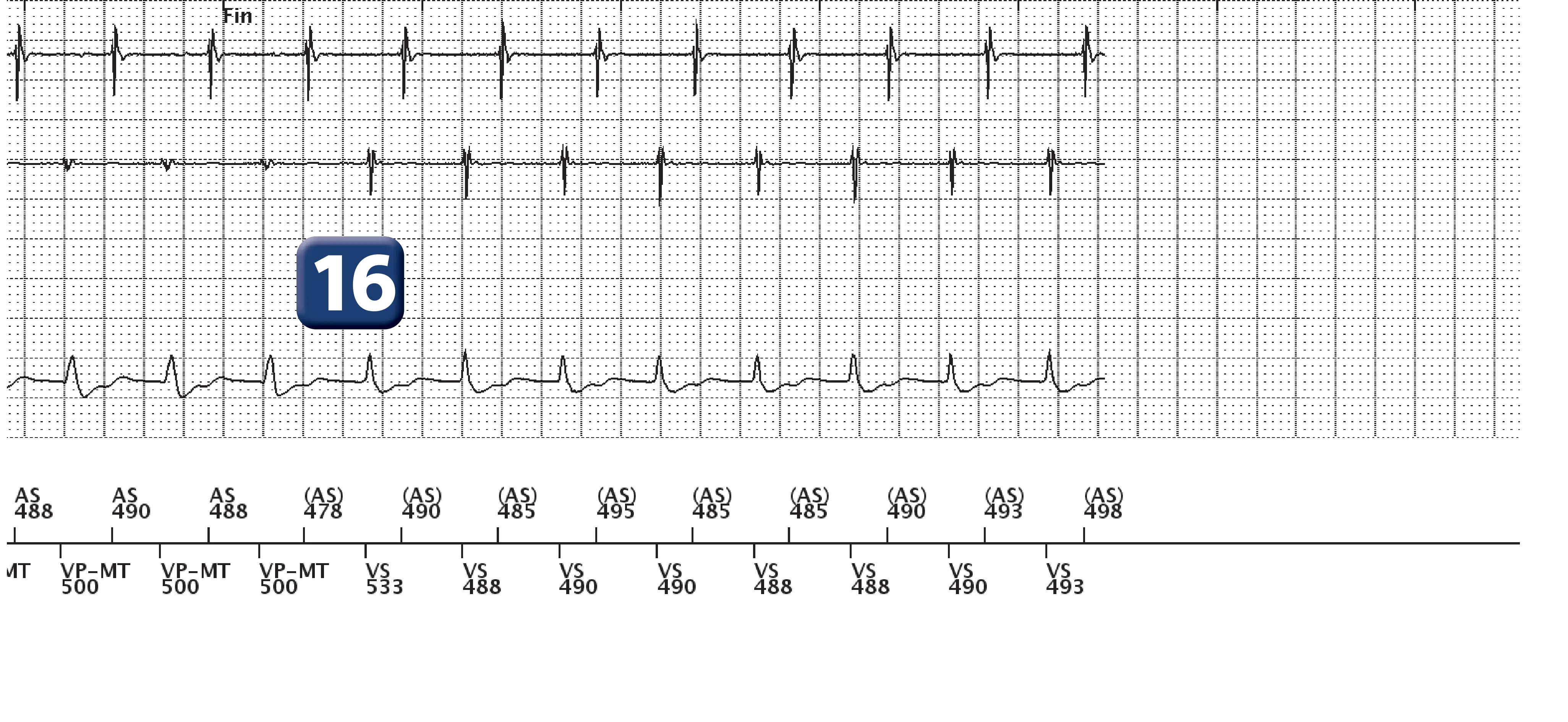
- Probable sinus tachycardia with 1/1 AV relationship; alternating cycles classified as VS and VT-1
- Criterion 8/10 met
- At the end of the duration, no therapy is delivered; the rhythm is stable and the tachycardia vectors are correlated with the reference vector.
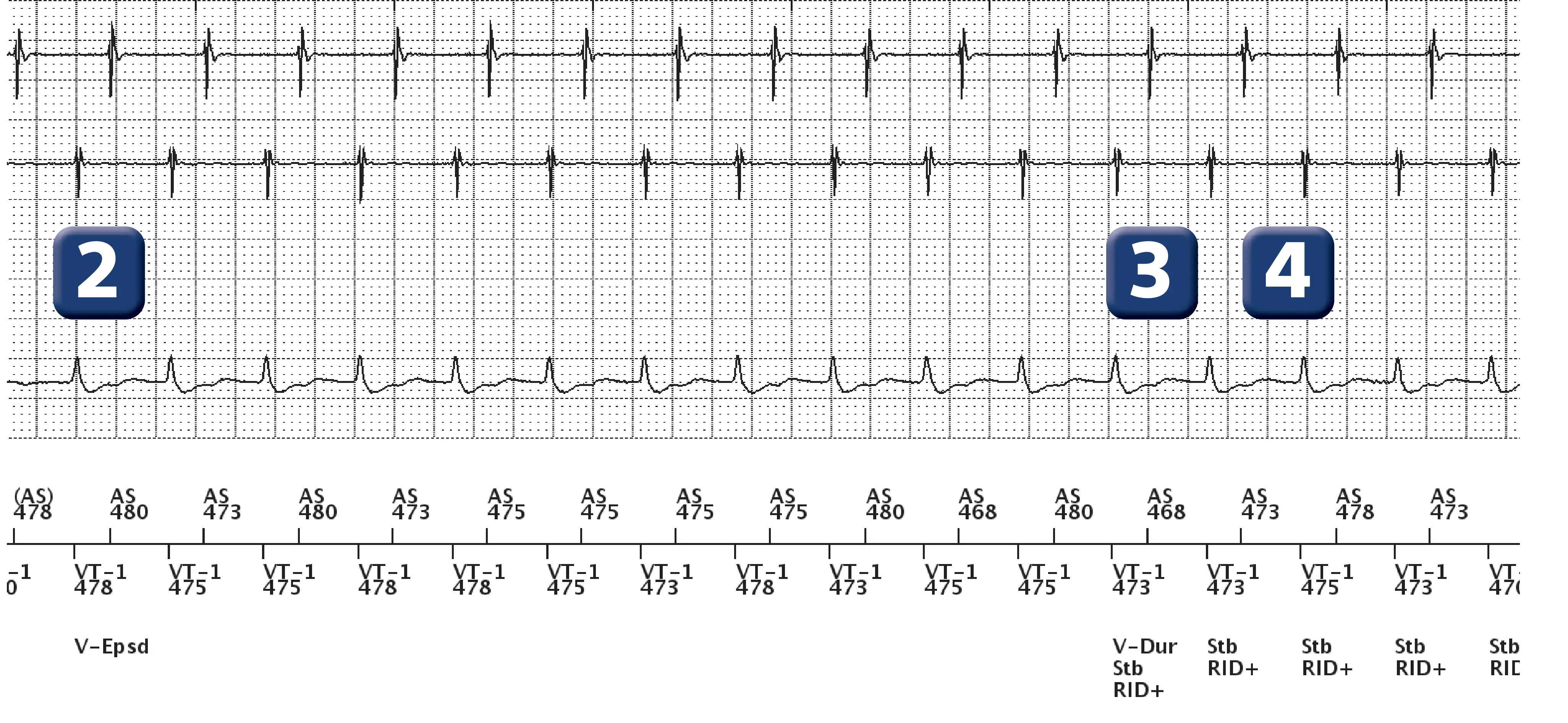
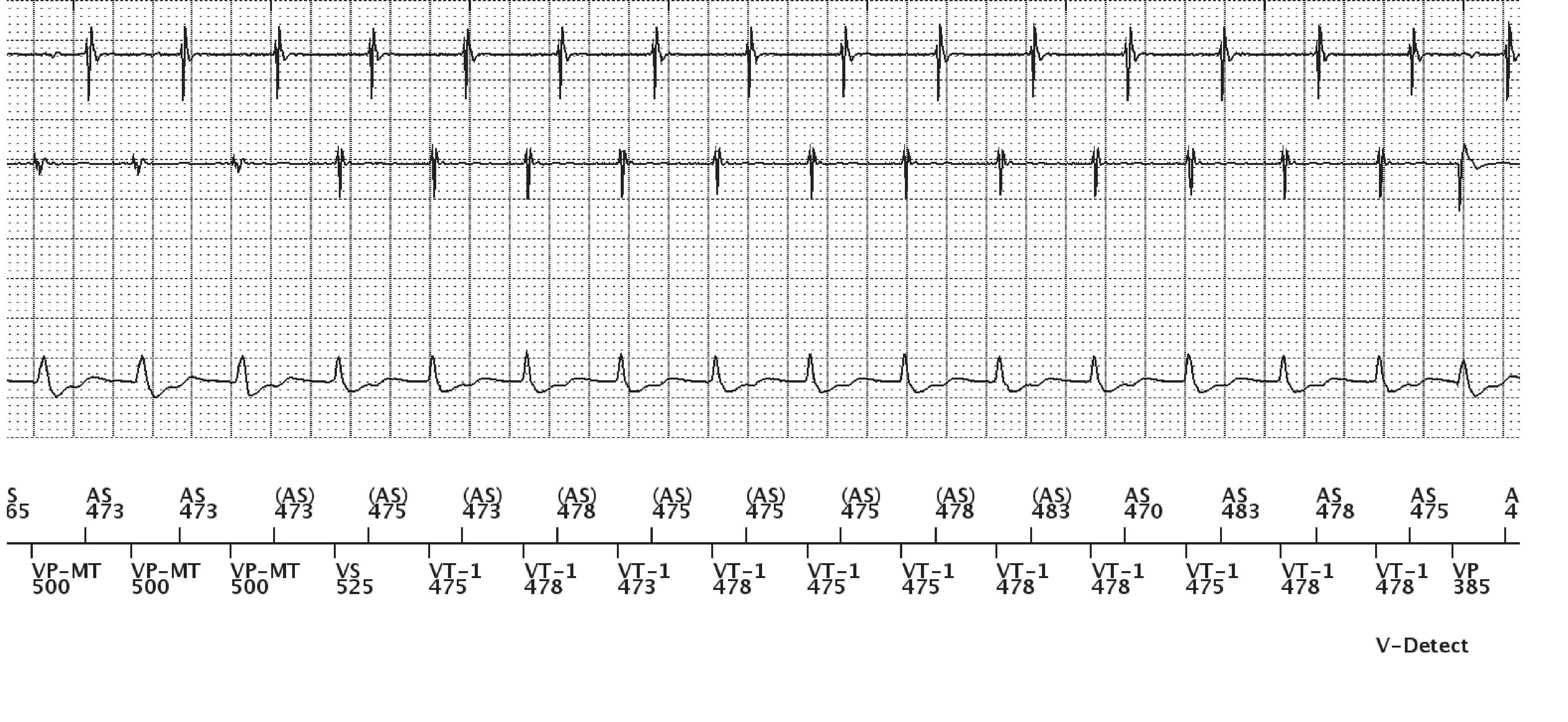
- Ongoing cycle-by-cycle analysis
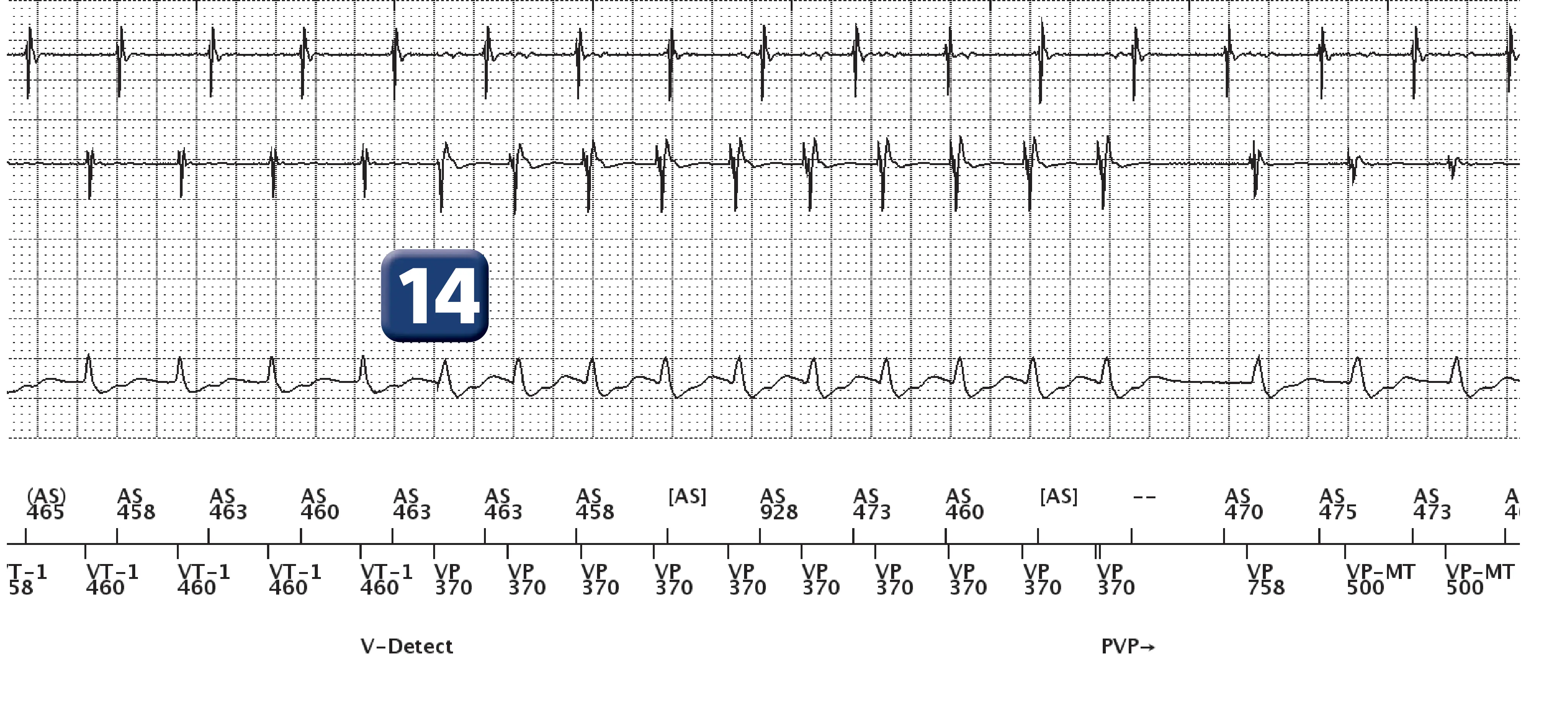
- Probable variation in the time at which the R wave is detected by the ventricular lead, explaining the variability of ventricular intervals; rhythm considered unstable; vectors remain correlated, no therapy delivered
- Stability criterion met again
- Probable atrial extrasystole with some irregularity to the rhythm
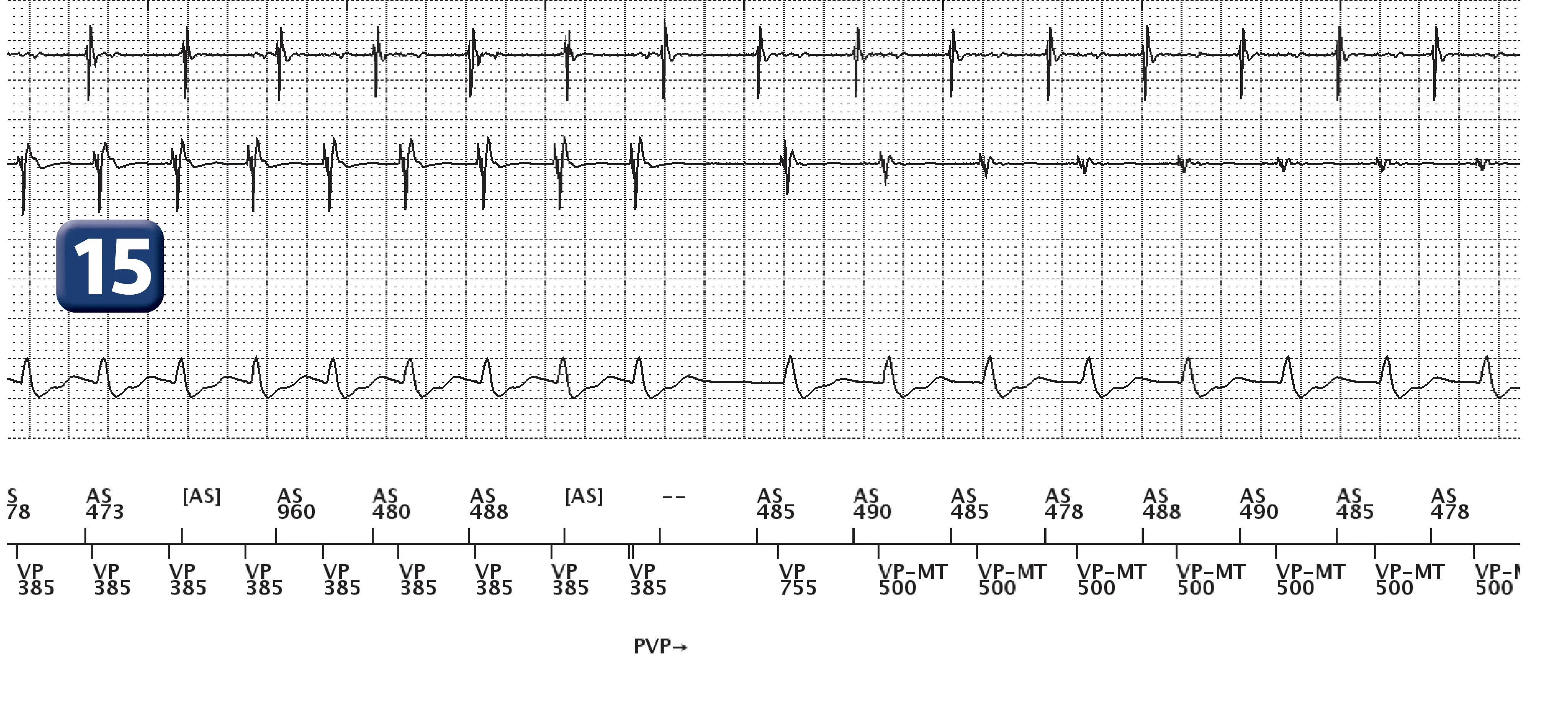
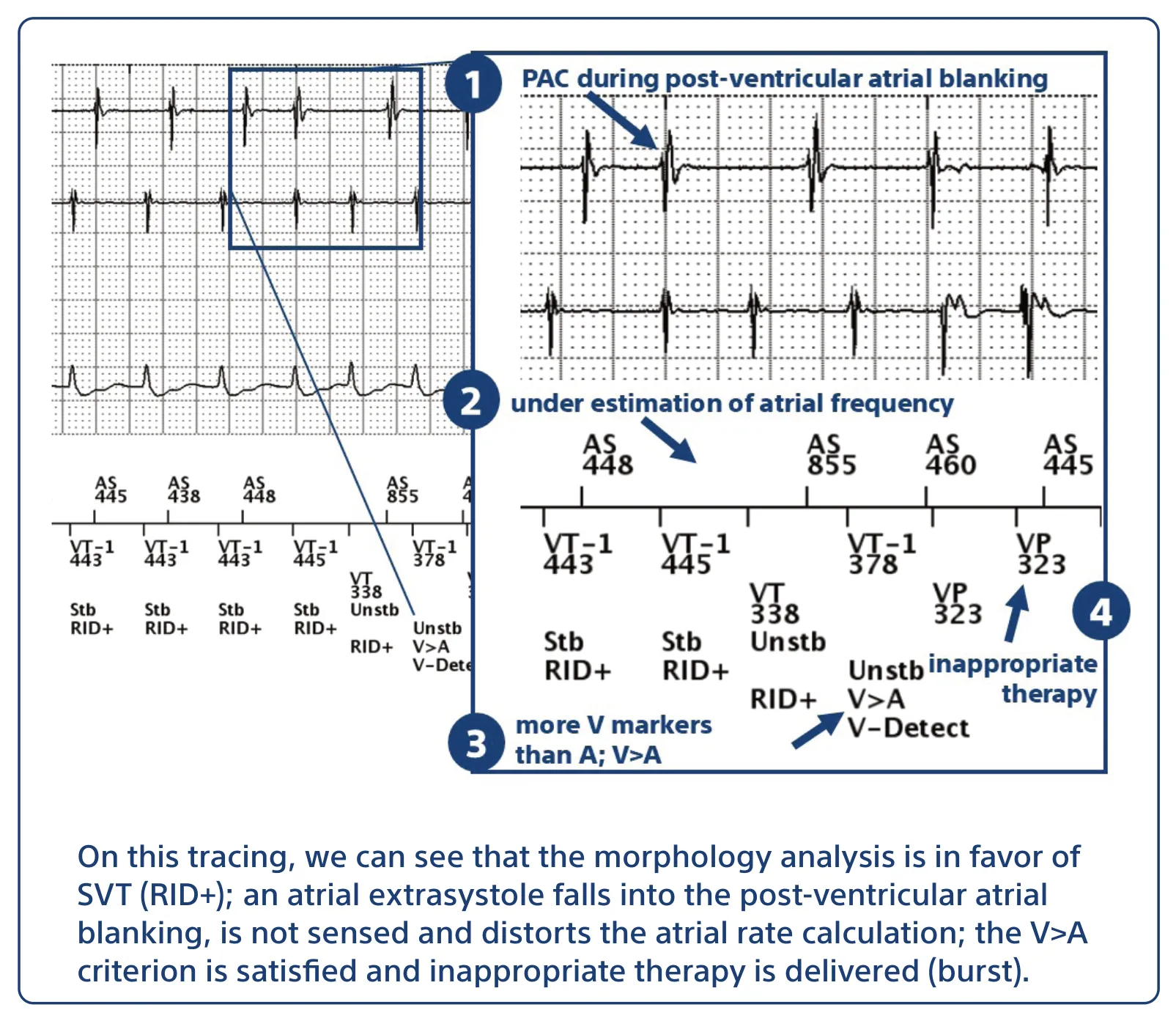
- New atrial extrasystole; as the PR is relatively long, the atrial extrasystole occurs at the same time as ventricular sensing of the R wave; it falls within the atrial refractory period after ventricular sensing and is not sensed.
- Since the atrial extrasystole is not counted, the subsequent compensatory rest is responsible for a false slowing of the atrial rhythm compared to the ventricular rhythm; V>A criterion is satisfied (comparison of atrial and ventricular rate over the previous 10 cycles); this criterion takes precedence over all others; decision to treat
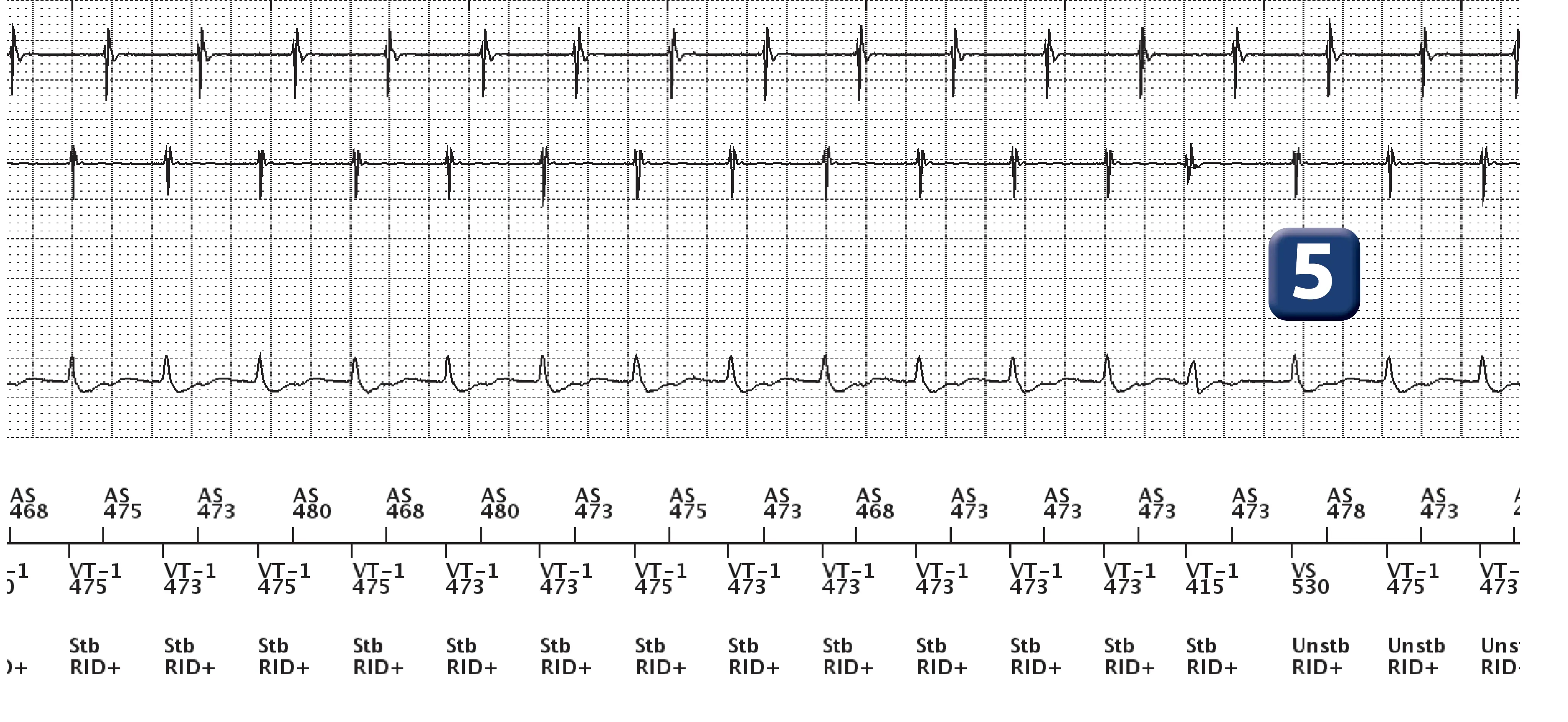
- First ATP burst
- Continuation of sinus tachycardia
- Second ATP burst
- Third ATP burst
- Fourth ATP burst
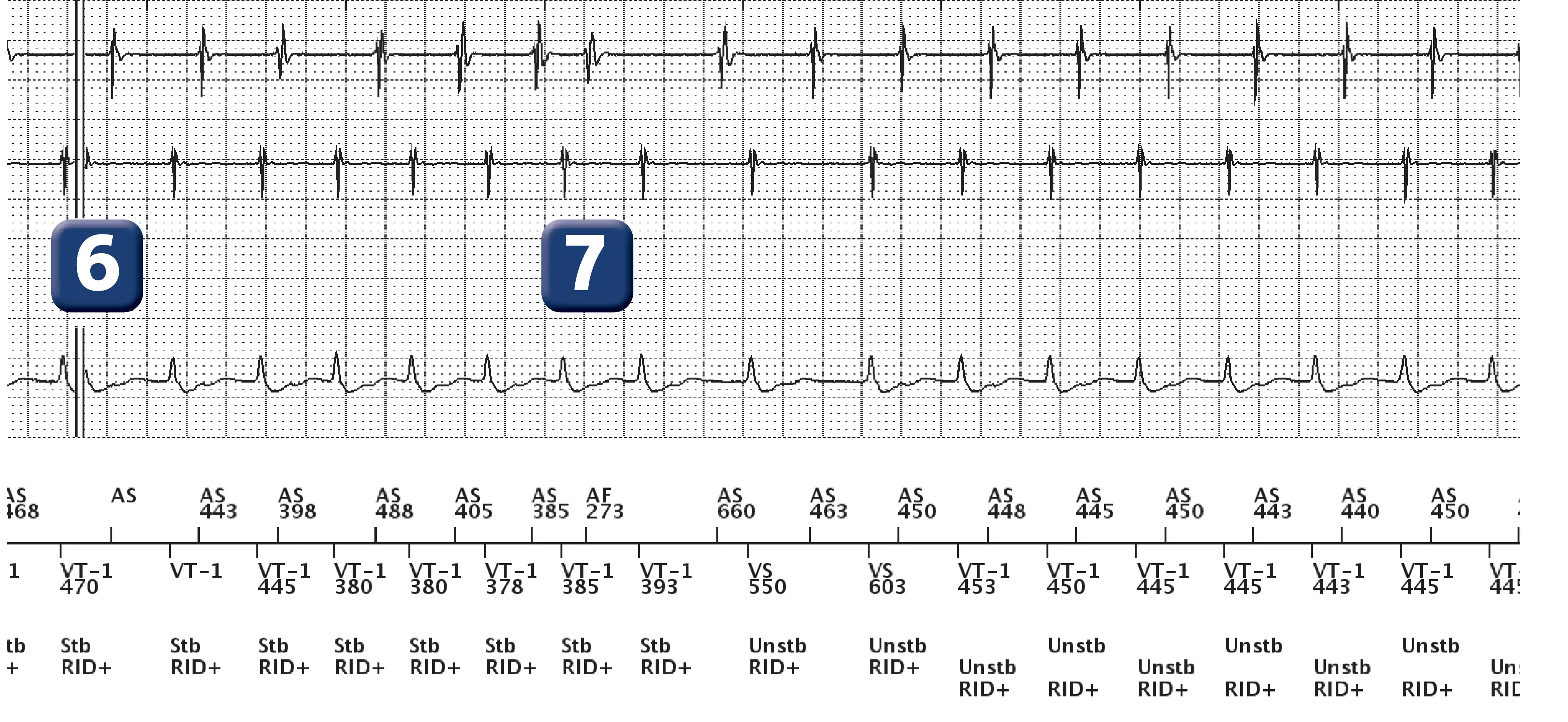
- Fifth ATP burst
- Slowing of sinus rate below VT-1 zone and end of episode
From the interrogation
Points to remember
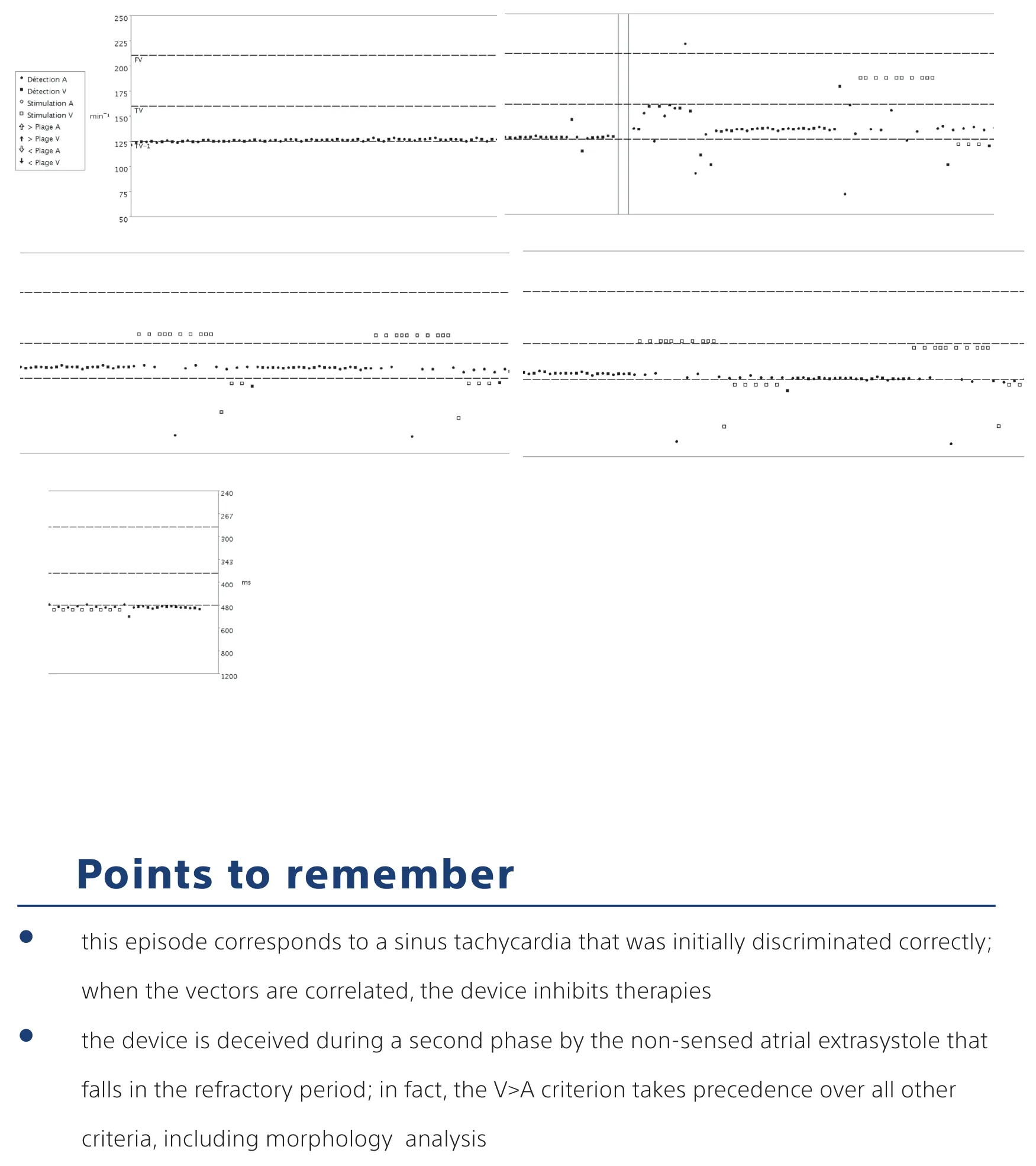
- This episode corresponds to a sinus tachycardia that was initially discriminated correctly; when the vectors are correlated, the device inhibits therapies
- The device is deceived during a second phase by the non-sensed atrial extrasystole that falls in the refractory period; in fact, the V>A criterion takes precedence over all other criteria, including morphology analysis
- As a general rule, the V>A criterion enables correct classification of the majority of ventricular tachycardias (atrioventricular dissociation is found in at least 80% of VTs); implementation of this criterion implies good atrial sensing; when the patient has imperfect atrial sensing (small amplitude signals or functional under- sensing, with atrial signals falling in the refractory period), this criterion, which takes precedence over other discriminants (morphology, stability, etc), systematically leads to a diagnosis of VT and must therefore be deprogrammed.
- For this patient, a first solution could be to avoid overlap between the detection/treatment zones and faster physiological rates
- Another option is to preferentially use discrimination based on vector analysis, which seems perfectly suited to this patient; this involves deprogramming the V>A criterion responsible for the inappropriate therapies.
Practice out loud
Just describe the tracing. What do you think is going on? Describing the numbers can help.
00:00
0%
—
From Boston Scientific ICD — clinical cases by P. Bordachar, M. Strik, A. Thiyagarajah, S. Ploux. Published by Cardiocases. Every numbered marker on a recording is explained in the list beneath it; tap a marker on the trace or an entry in the list.
Order hardcopyon Amazon