
Chapter 3 · Discrimination · Case 13
Dual-chamber discrimination and discrimination error due to inappropriate programming of the correlation percentage
Patient and episode
Patient 1
- 79-year-old male with ischemic cardiomyopathy implanted with a Resonate triple-chamber defibrillator
Summary
- Tachycardia episode with atrial rate equal to the ventricular frequency (V>A: False)
- Initially, Rhythm ID correlation: True; inhibition of therapies
- In a second step, Rhythm ID: False; AF: true + stable rhythm (threshold value programmed at 20 ms)
- A burst of ATP is delivered
Summary
- Tachycardia episode with atrial rate equal to ventricular rate (V>A False)
- Rhythm ID: False; AF: false; stable rhythm (threshold value set at 20 ms)
- Several bursts and ramps are delivered
The recording
Tap a number on the trace, or an entry in the list below
Trace 1
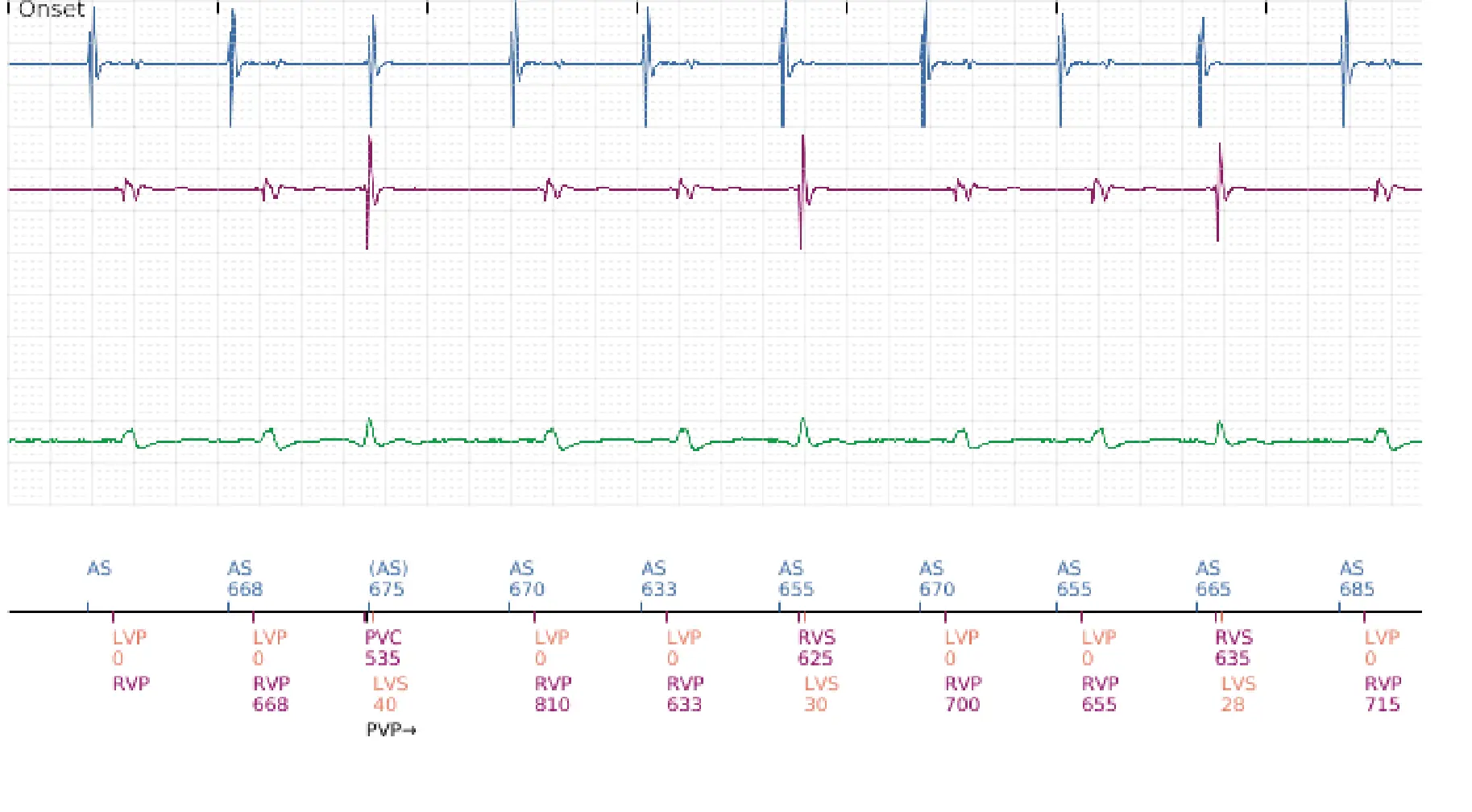
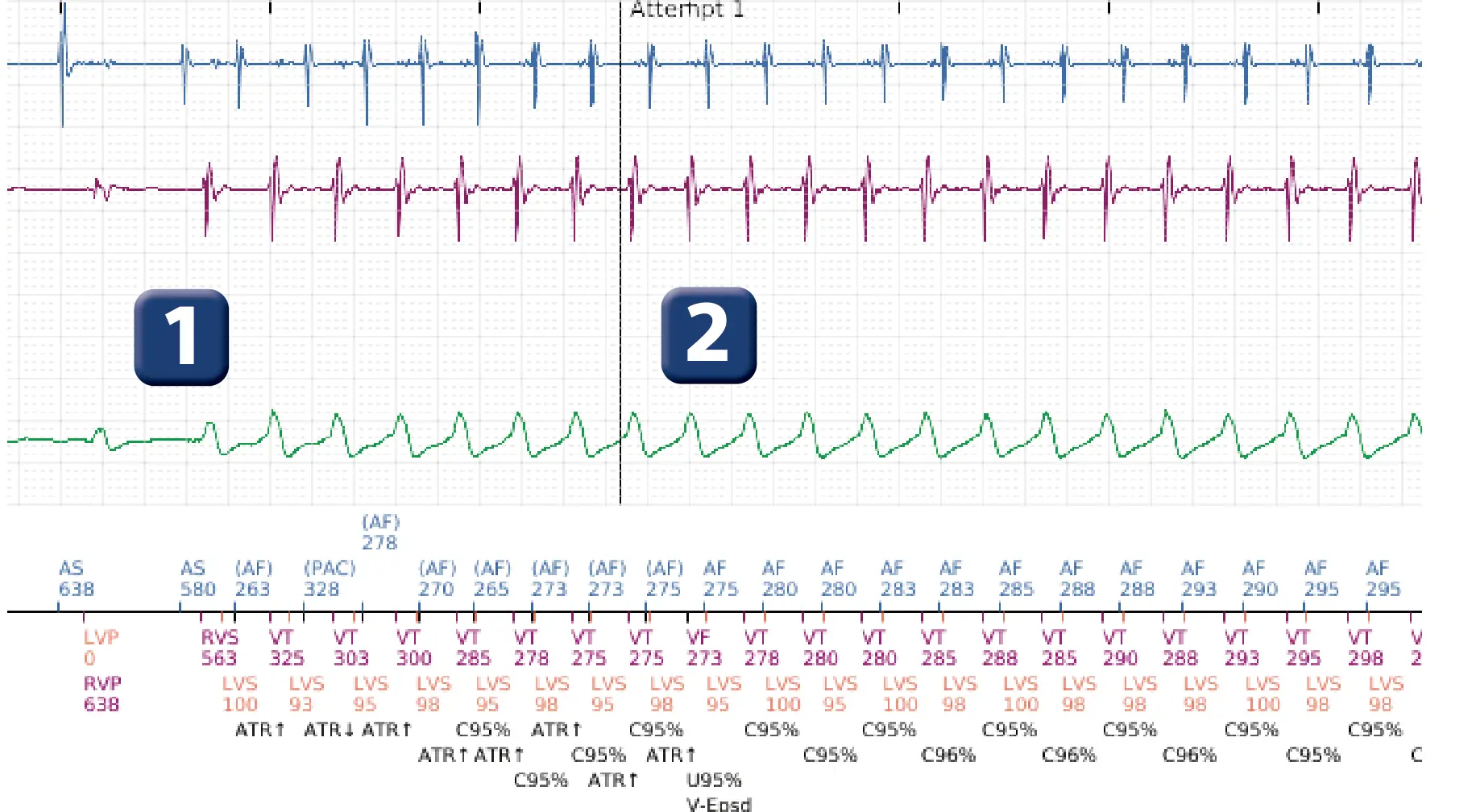
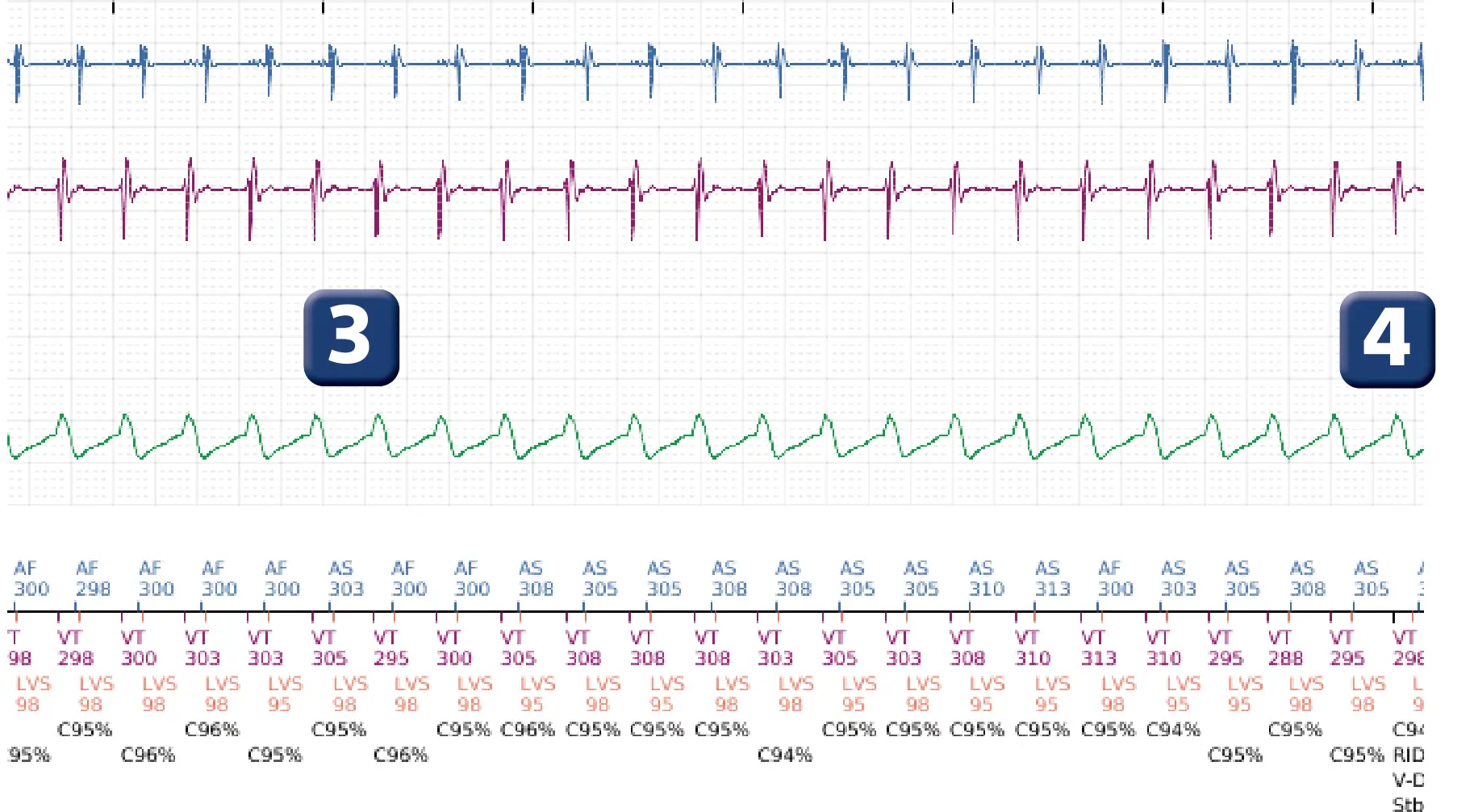
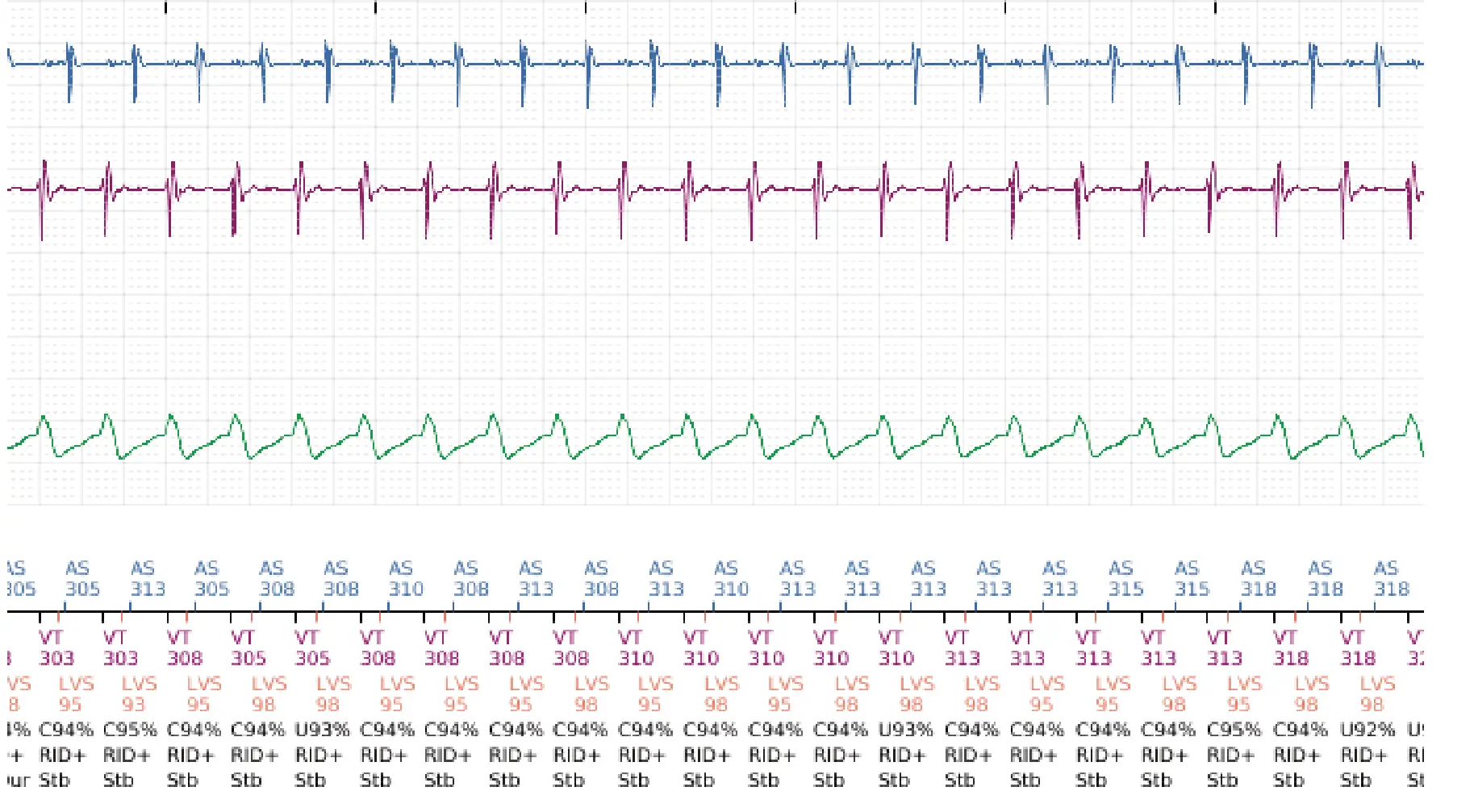
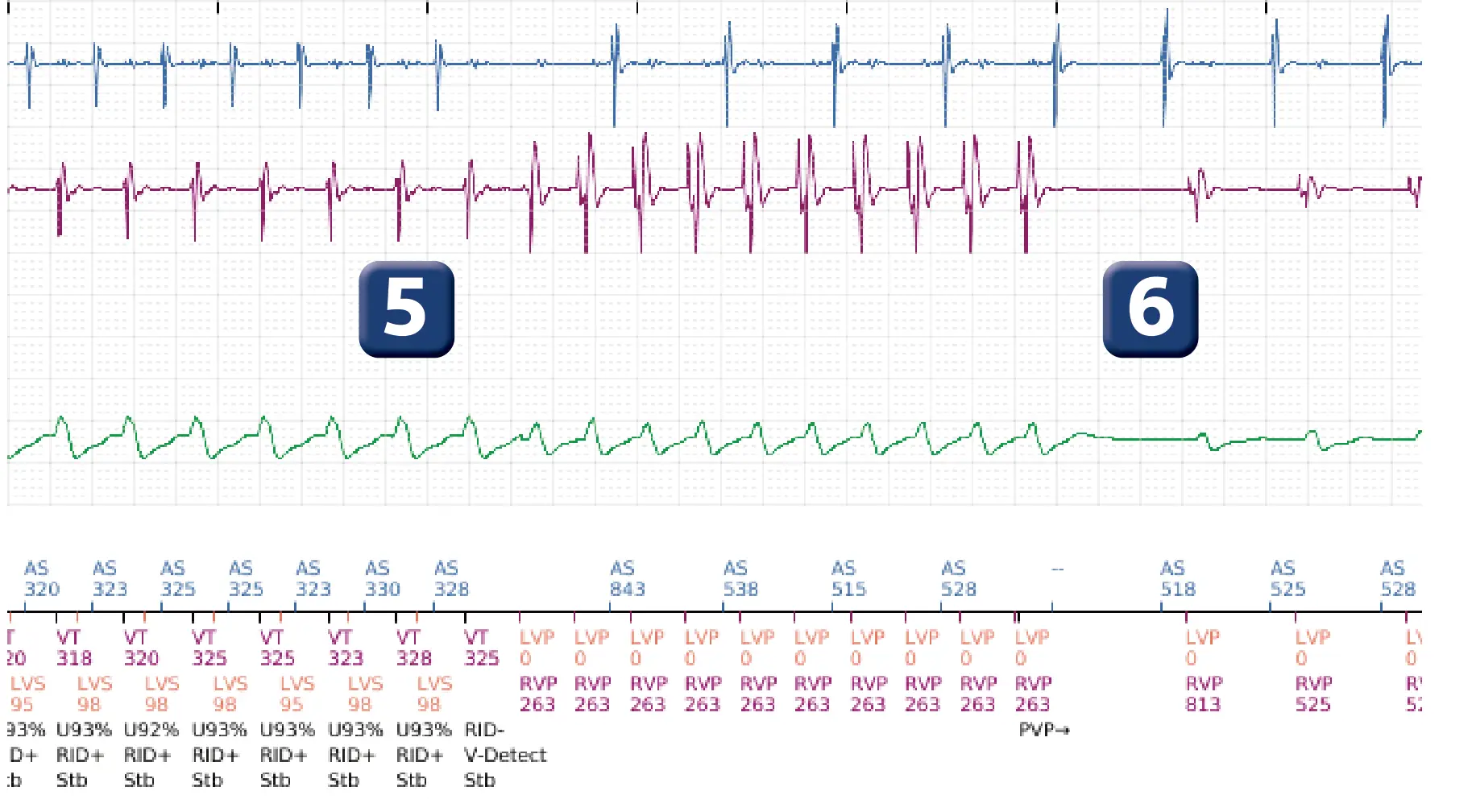
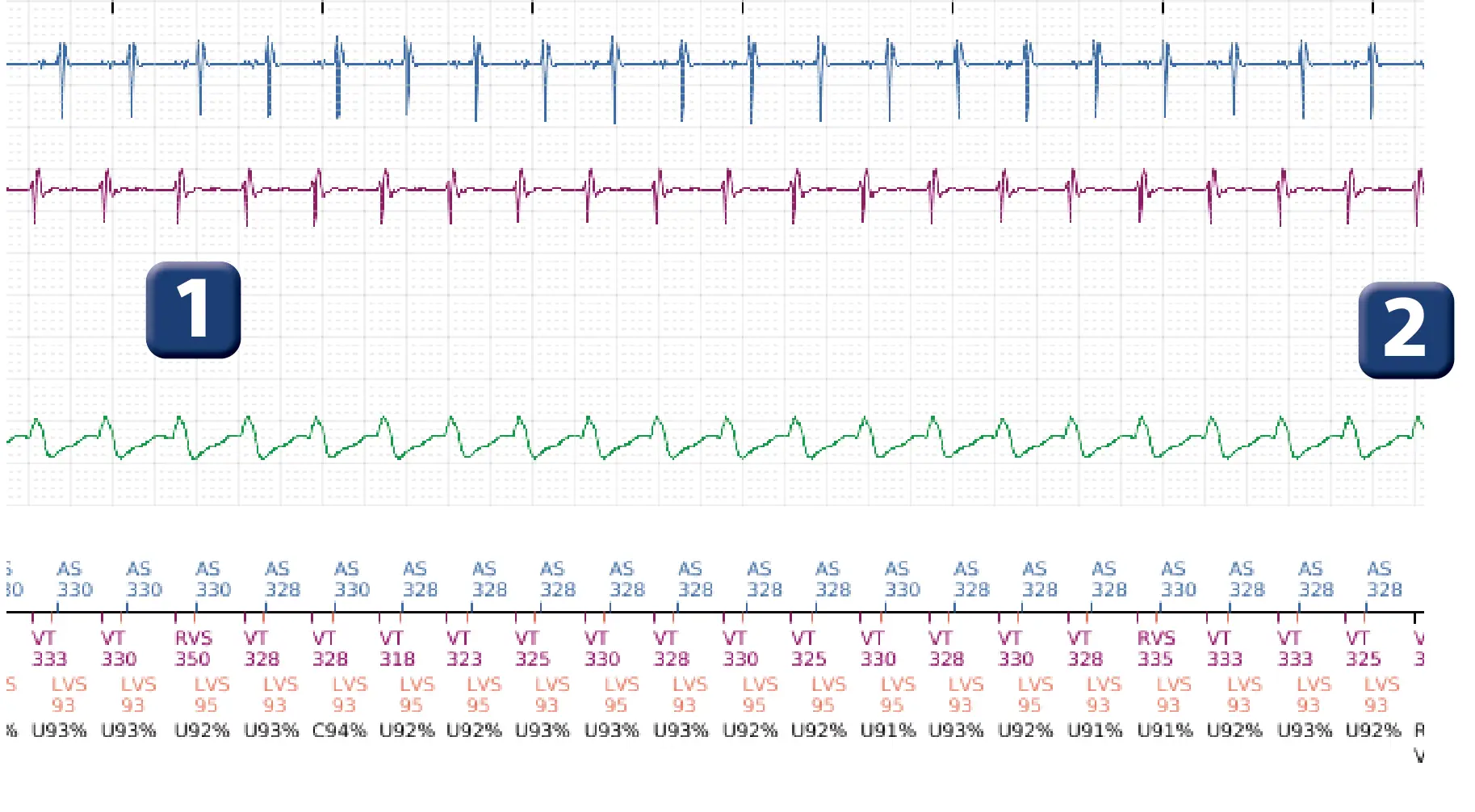
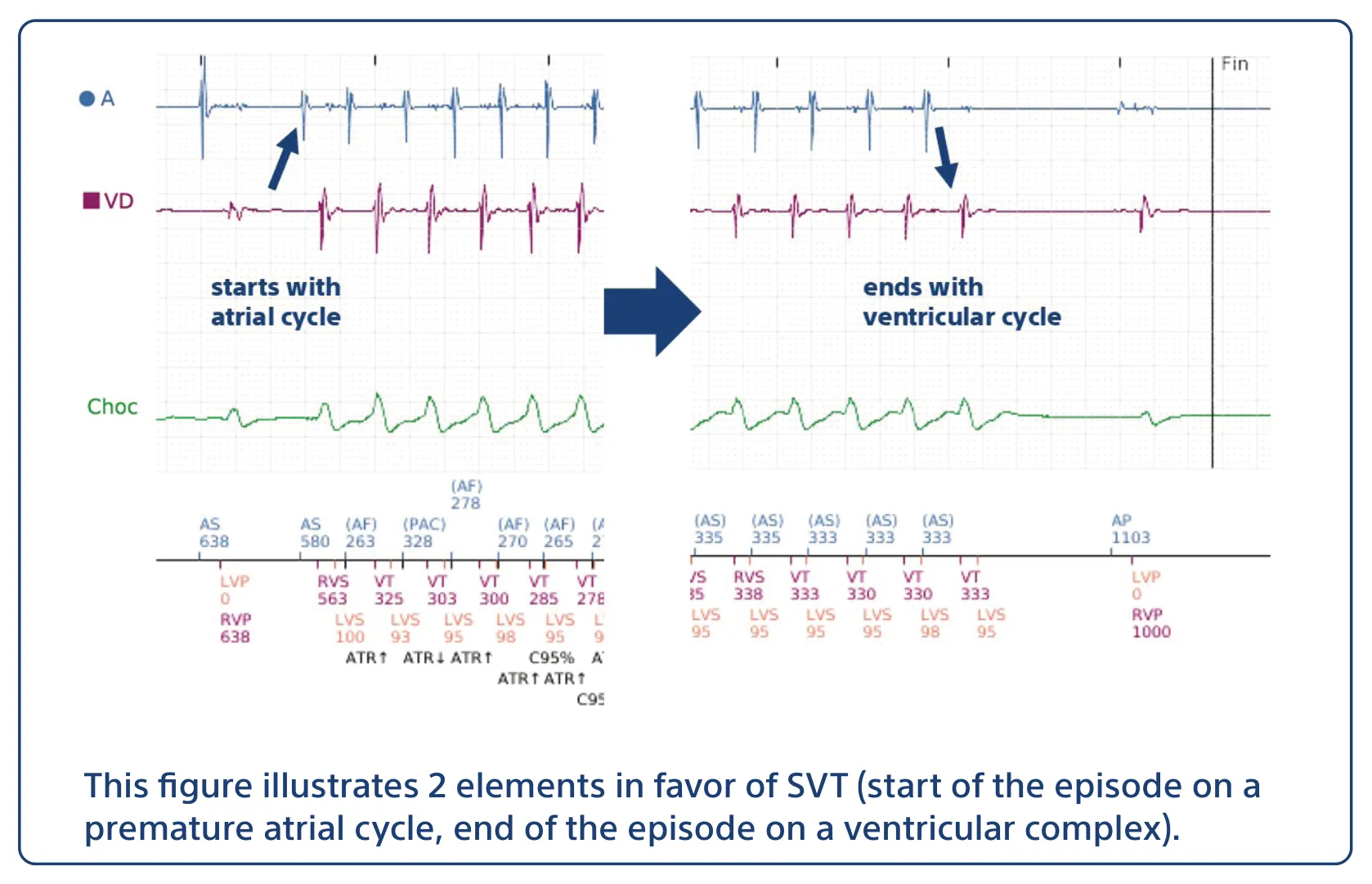
- Onset of regular 1/1 tachycardia; first rapid cycle originates in the atrium
- After 8 consecutive VT or VF cycles, V-Epsd marker; ventricular complexes are correlated
- End of duration; for the device, the rhythm is stable with a diagnosis of AF; therapies not delivered because RID+ (at least 3 correlated ventricular complexes out of 10).
- Cycle-by-cycle discrimination continues, still with RID+.
- RID- (less than 3 correlated cycles out of the last 10); stable rhythm with diagnosis of AF: suspicion of dual tachycardia and a burst of ATP is delivered
- Arrhythmia termination
Trace 2
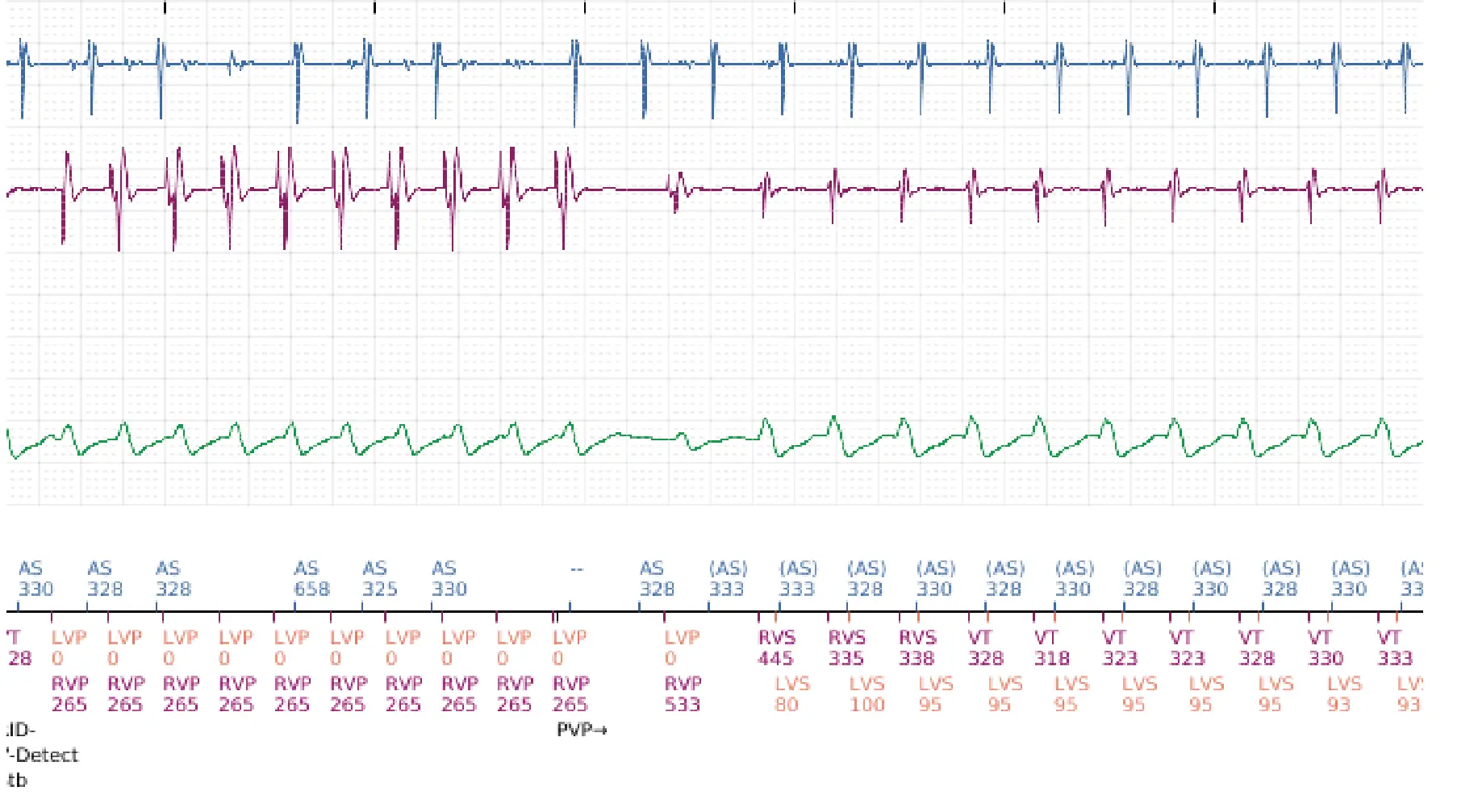
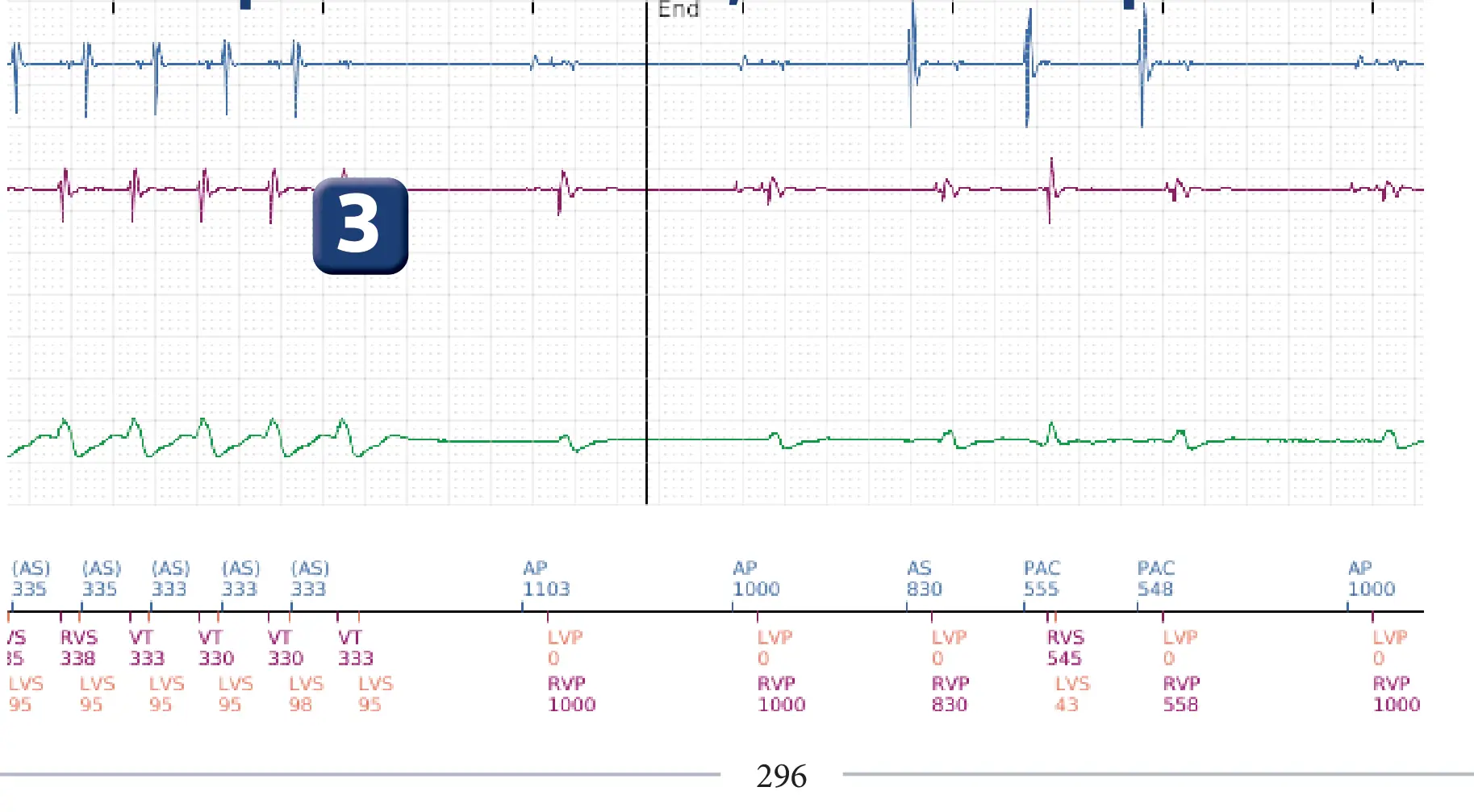
- Regular tachycardia 1/1 same as above
- End of duration; RID- (less than 3 correlated cycles out of the last 10); stable rhythm and ATP burst
- Spontaneous cessation of tachycardia in the ventricle
Points to remember
- This patient presented with episodes of atrial tachycardia that were poorly discriminated as a result of a correlation threshold that was programmed too high; programming a threshold at 88% would have prevented the occurrence of inappropriate therapies
- In the presence of a 1/1 tachycardia, several different diagnoses are possible (VT with retrograde conduction, sinus tachycardia, 1/1 atrial tachycardia, junctional tachycardia); in this patient, certain elements favor the diagnosis of atrial tachycardia: very fast heart rate argument in this 79-year-old patient (not typical for sinus tachycardia), tachycardia starts on a premature atrial cycle (first tracing), tachycardia stops spontaneously on a ventricular event (second tracing); on the first tracing, the tachycardia stops following a burst of ventricular anti-tachycardia pacing, which is not inconsistent with the diagnosis of atrial tachycardia, as a significant number of 1/1 atrial tachycardias can be terminated by ventricular pacing (retrograde conduction and arrhythmia terminated)
Practice out loud
Just describe the tracing. What do you think is going on? Describing the numbers can help.
00:00
0%
—
From Boston Scientific ICD — clinical cases by P. Bordachar, M. Strik, A. Thiyagarajah, S. Ploux. Published by Cardiocases. Every numbered marker on a recording is explained in the list beneath it; tap a marker on the trace or an entry in the list.
Order hardcopyon Amazon