
Chapter 3 · Discrimination · Case 15
Dual-chamber discrimination and atrial fibrillation
Patient and episode
Patient
- 76-year-old male implanted with Autogen triple-chamber defibrillator for ischemic cardiomyopathy
Summary
- Episode diagnosed in the VT zone with atrial rate greater than ventricular rate
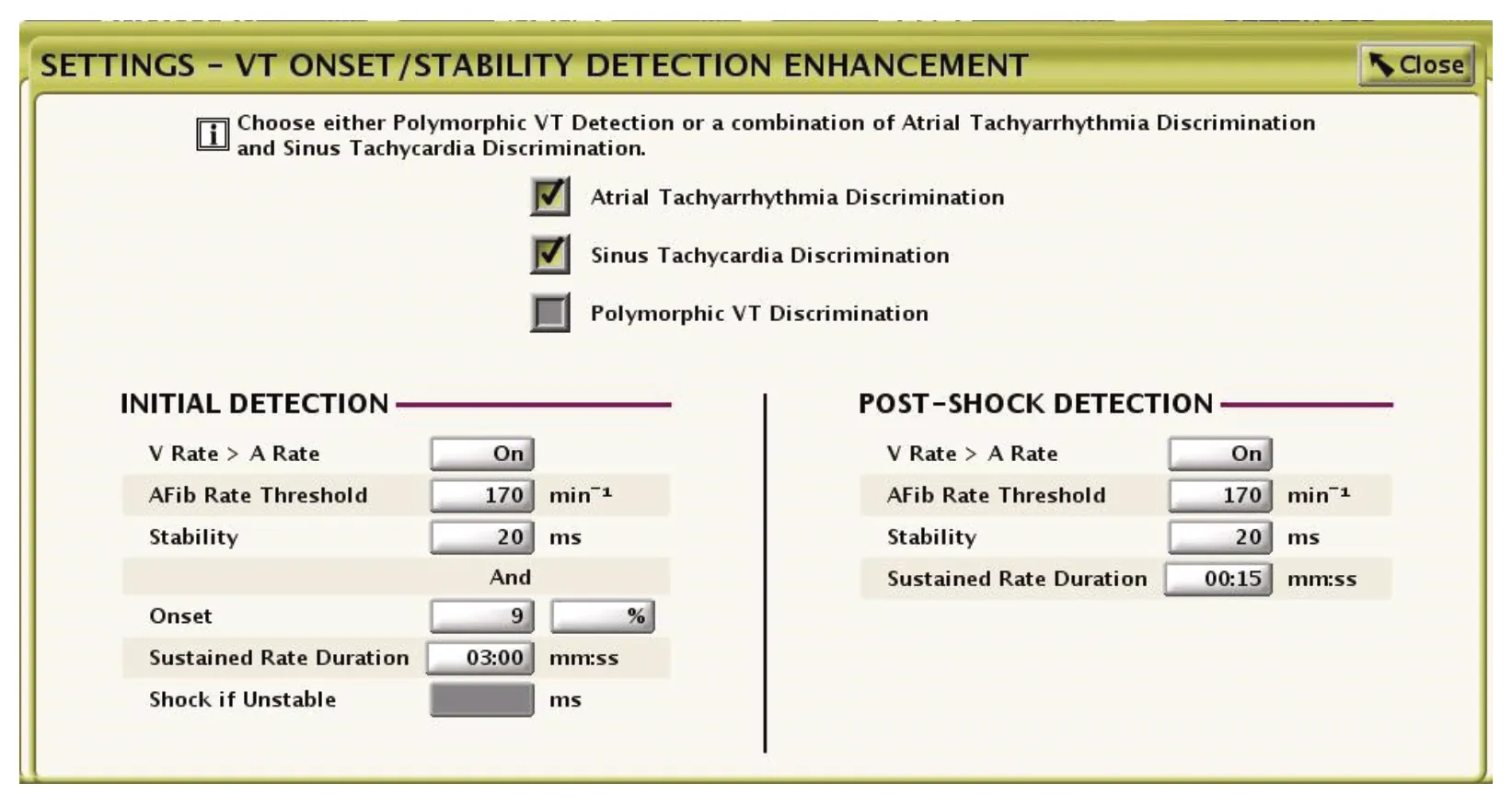
- Programmed discrimination: Onset/stability
- Initially, inhibition of therapies due to unstable rhythm with diagnosis of AF
- Secondly, therapies delivered (bursts, ramps, then 1 maximum output shock)
The recording
Tap a number on the trace, or an entry in the list below
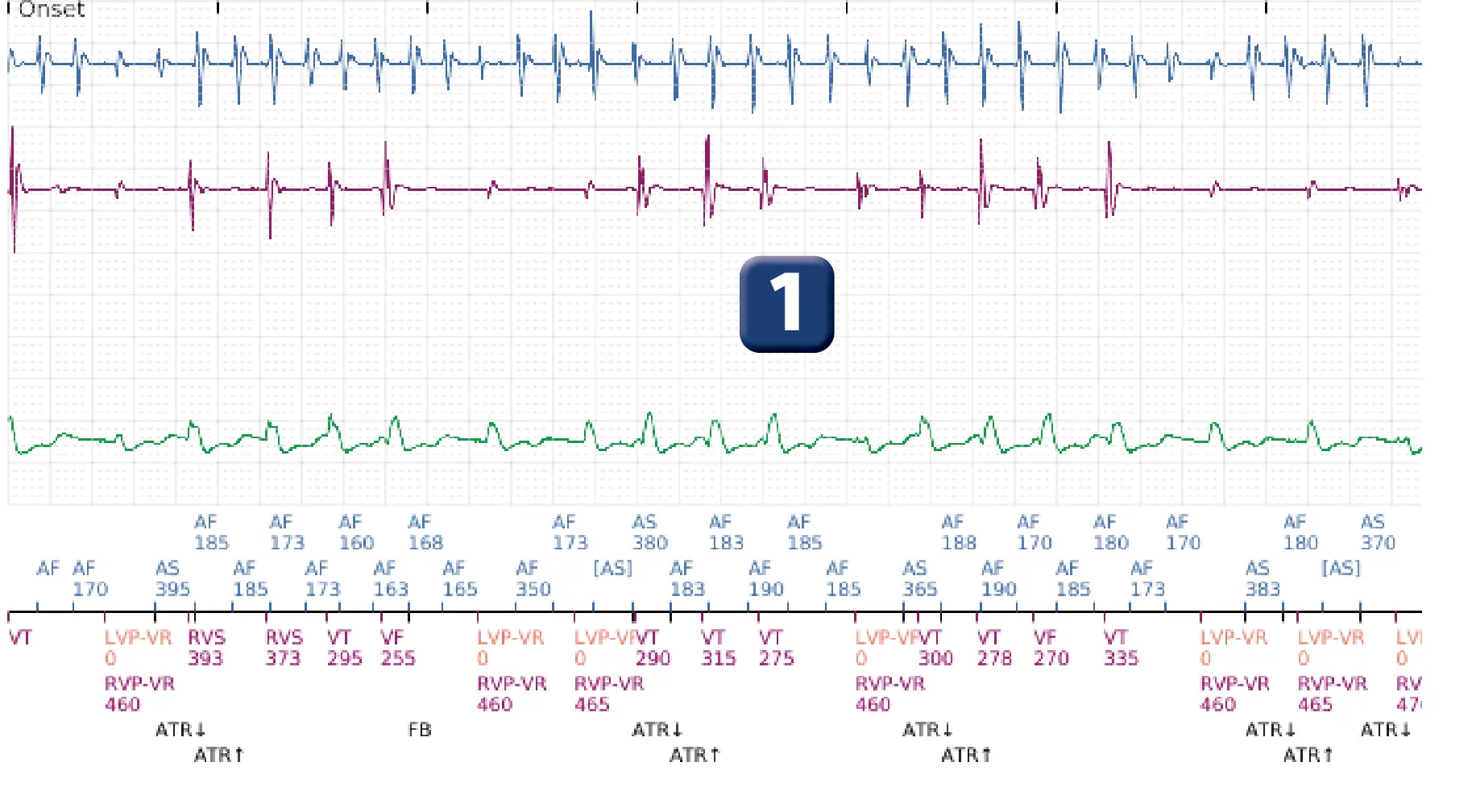
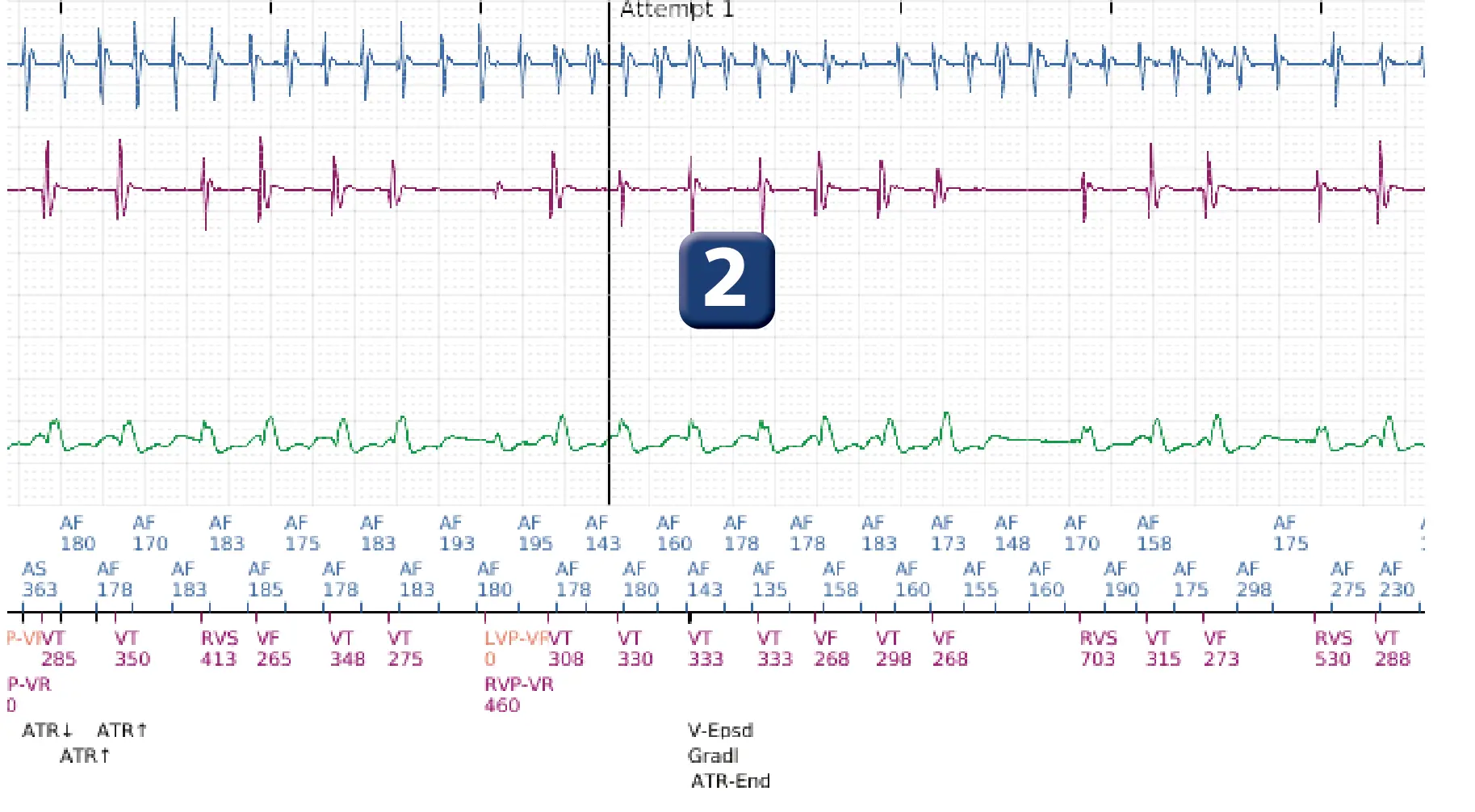
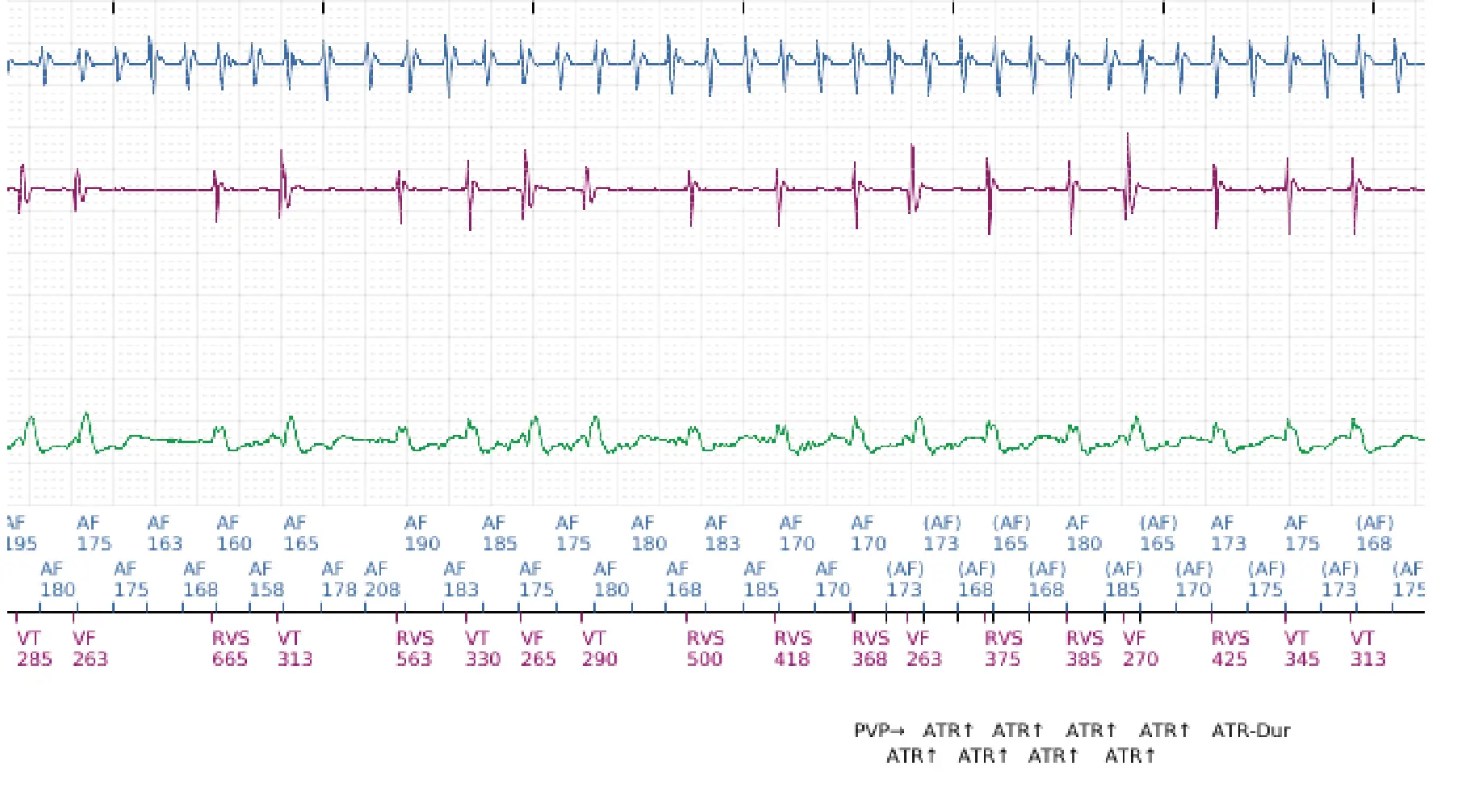
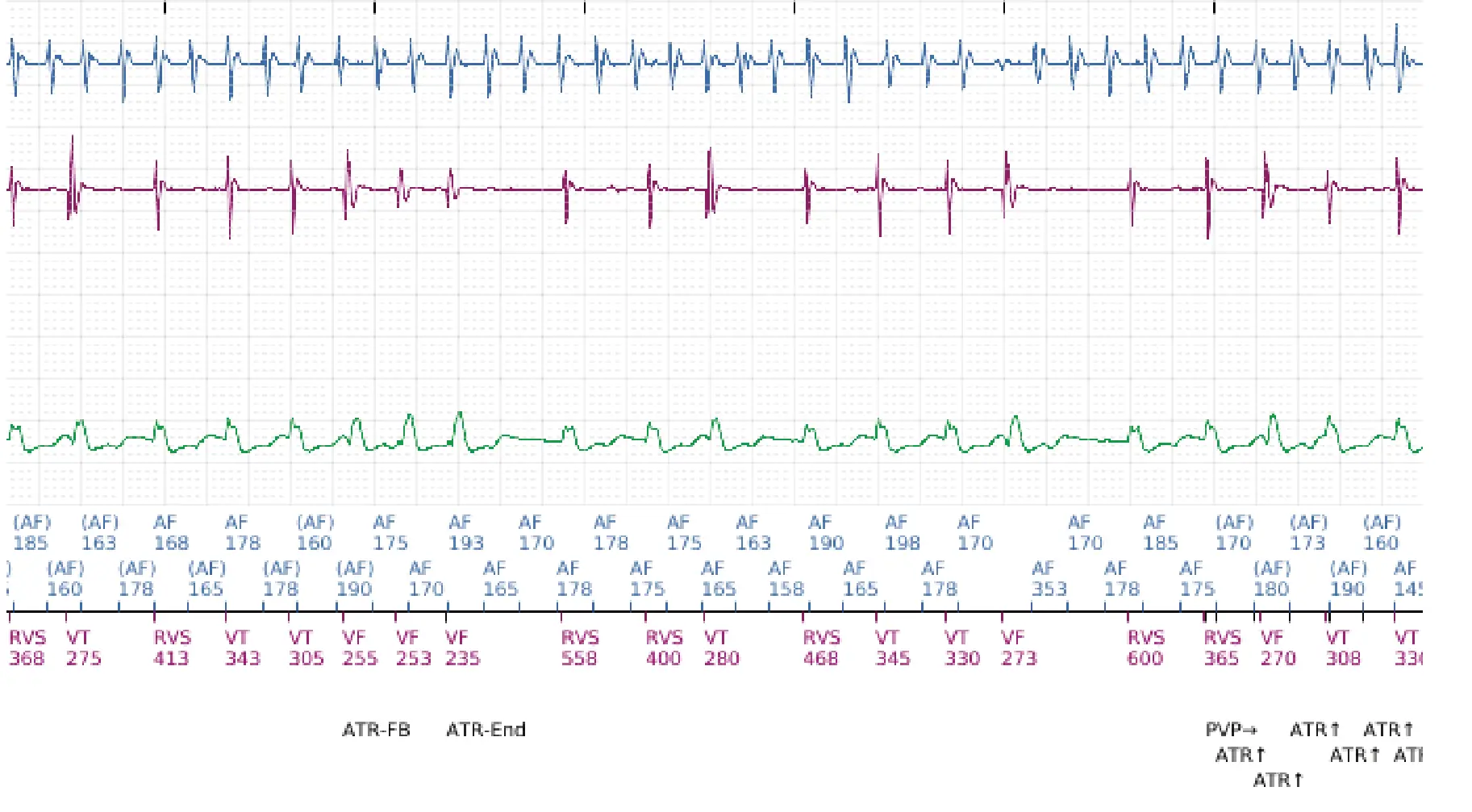
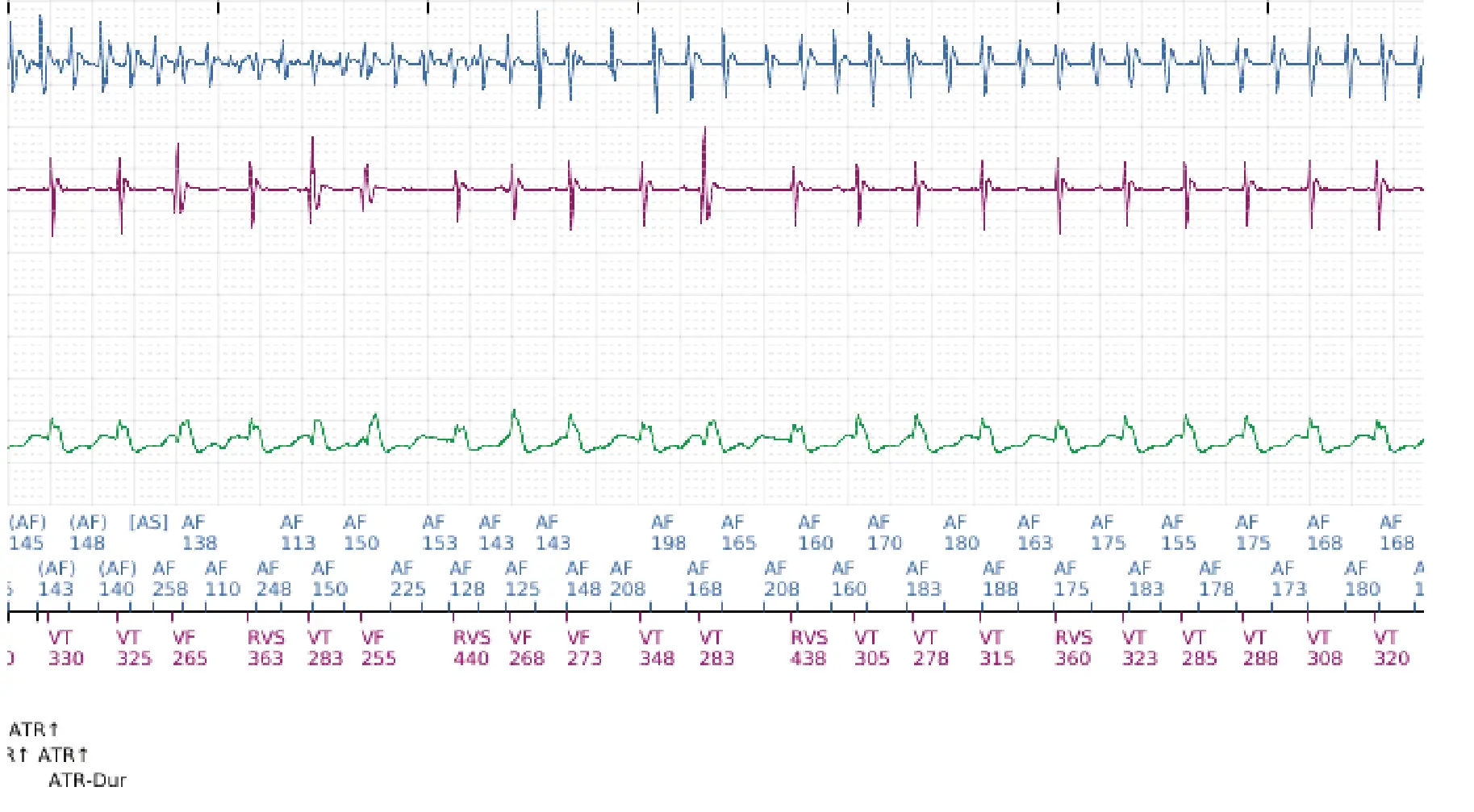
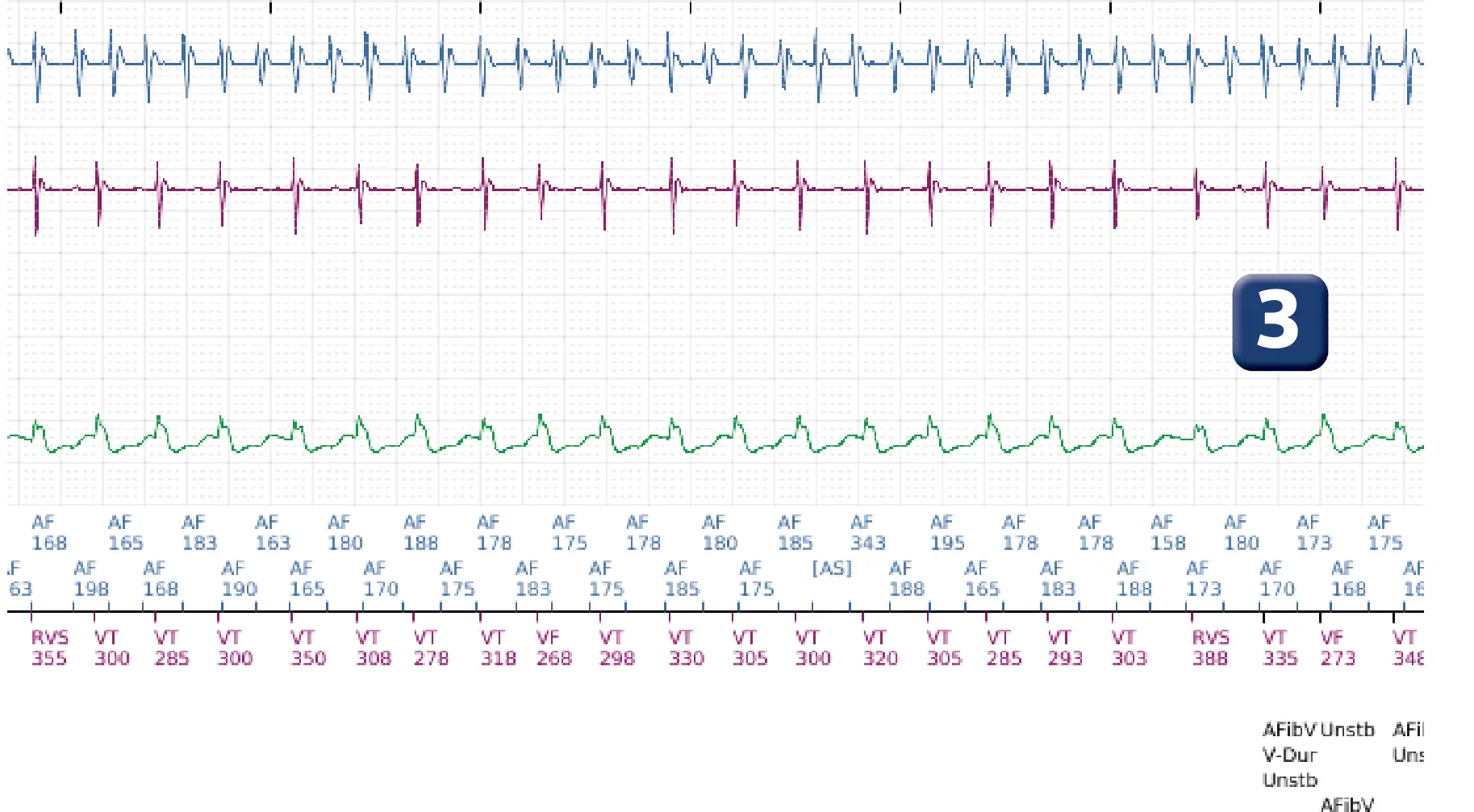
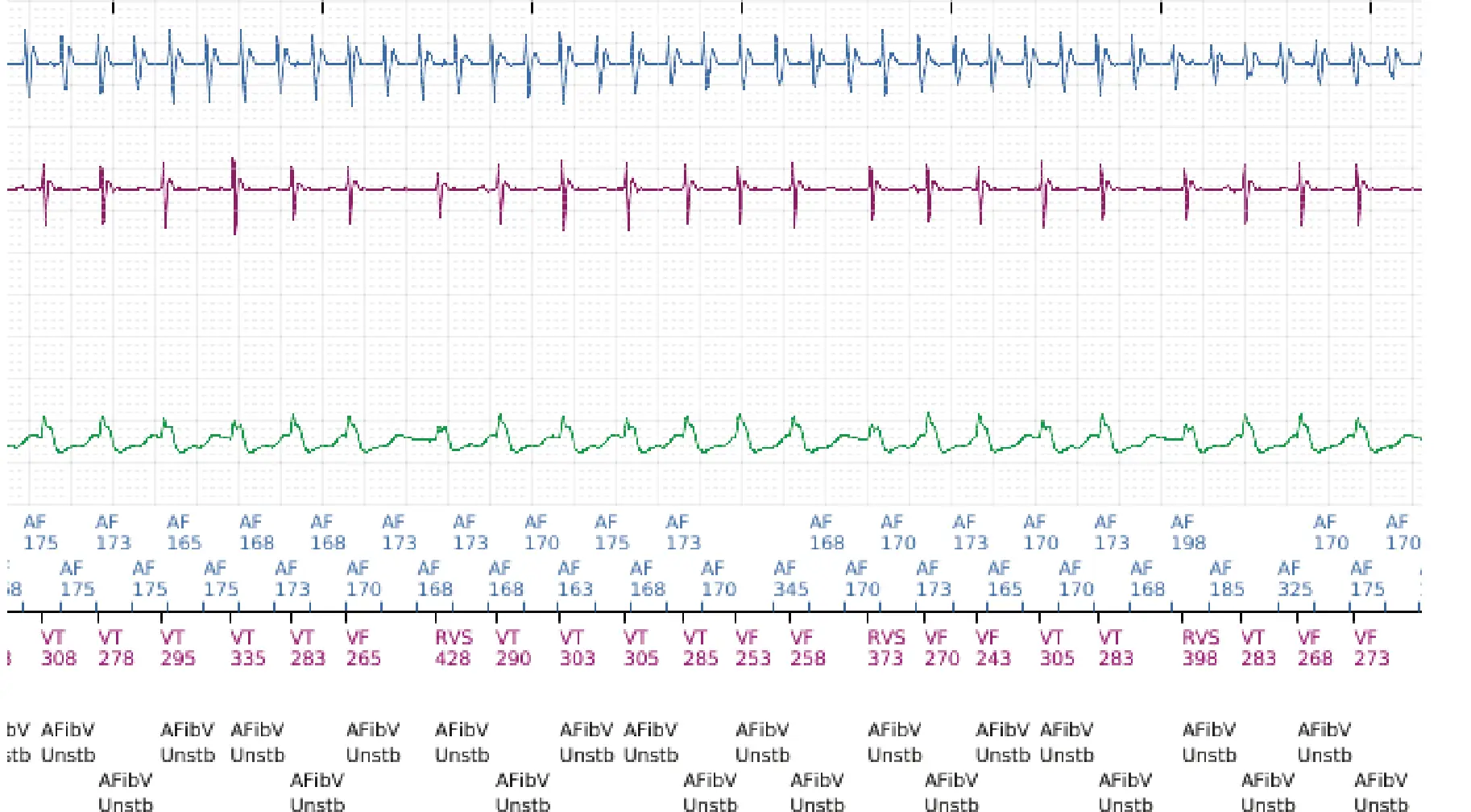
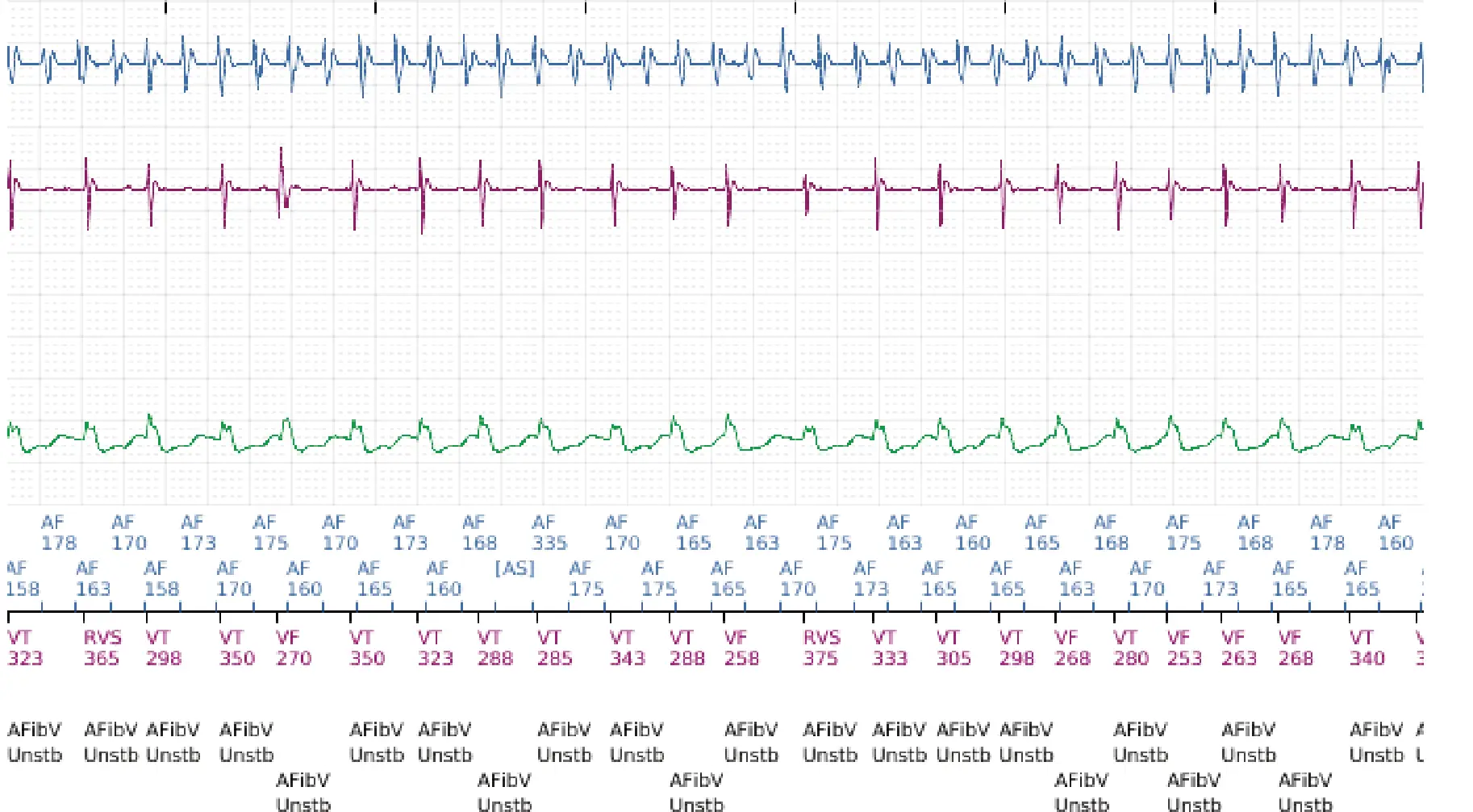
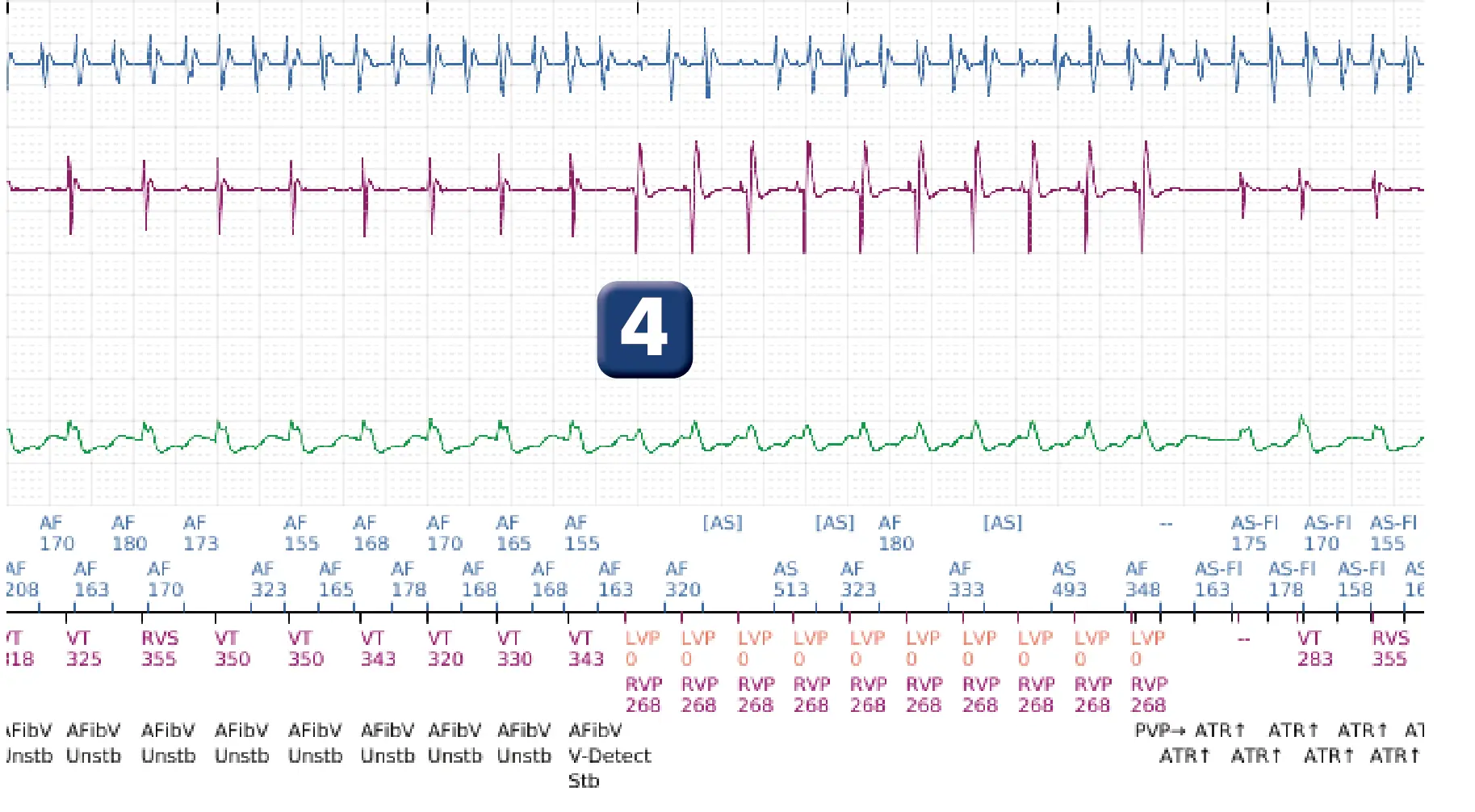
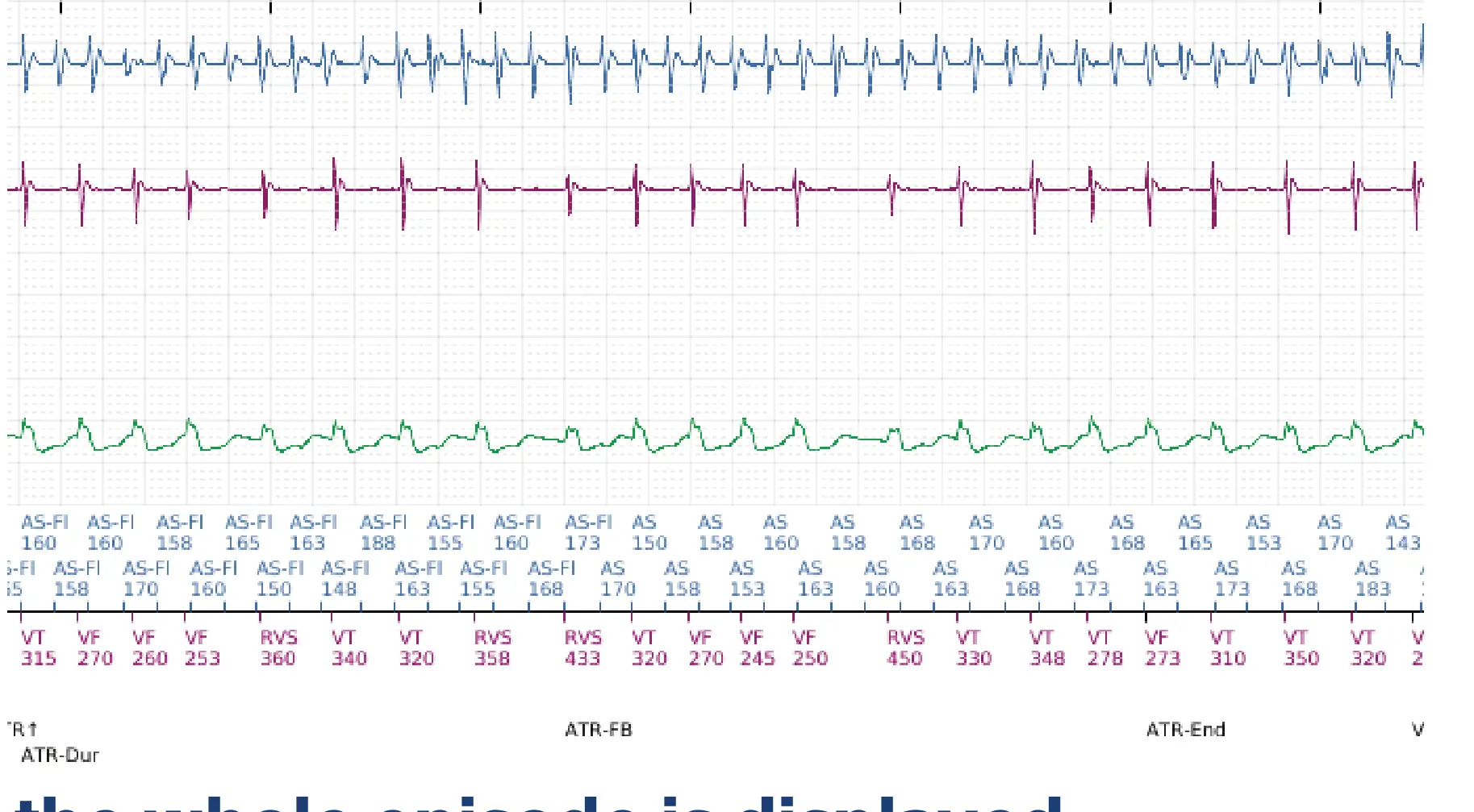
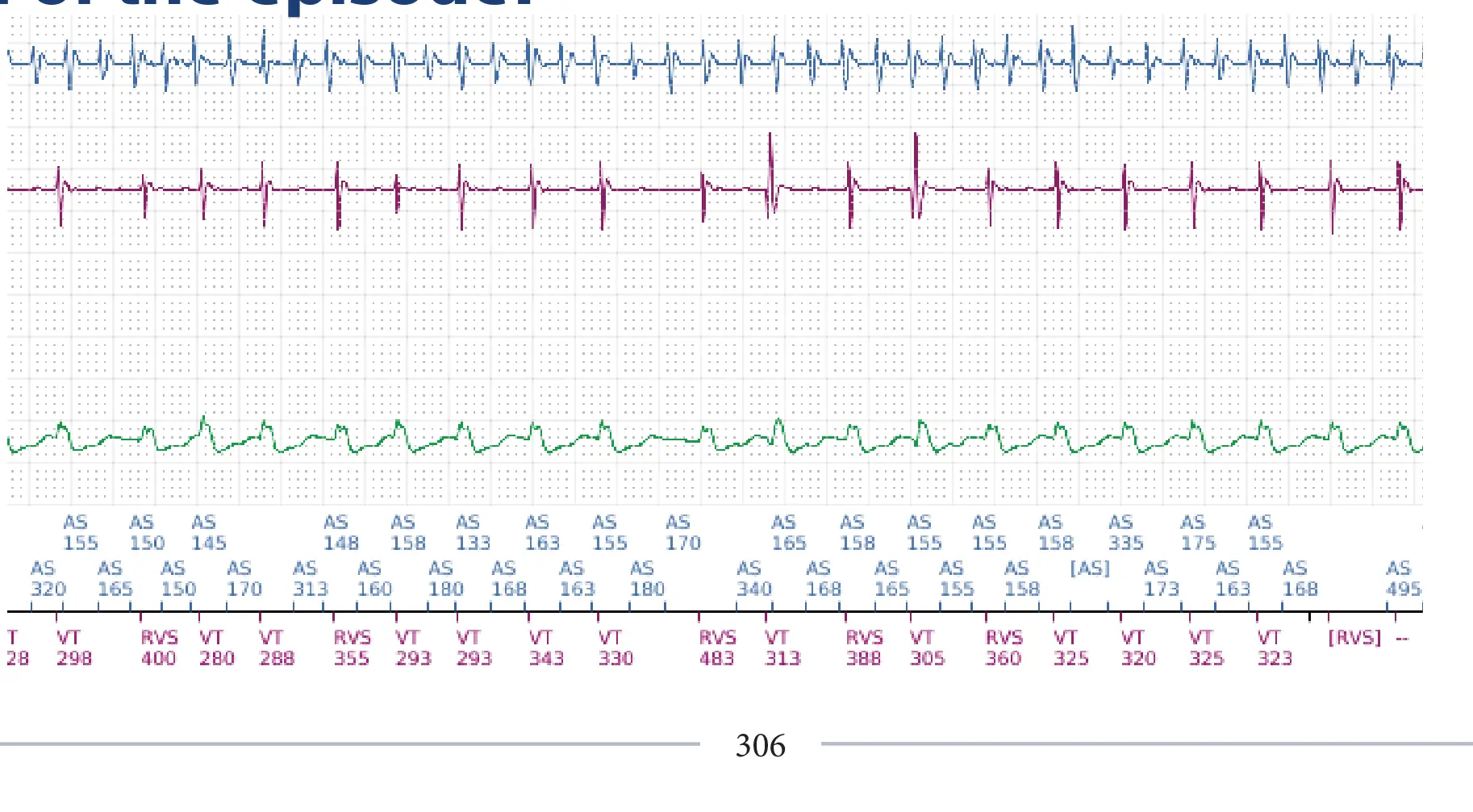
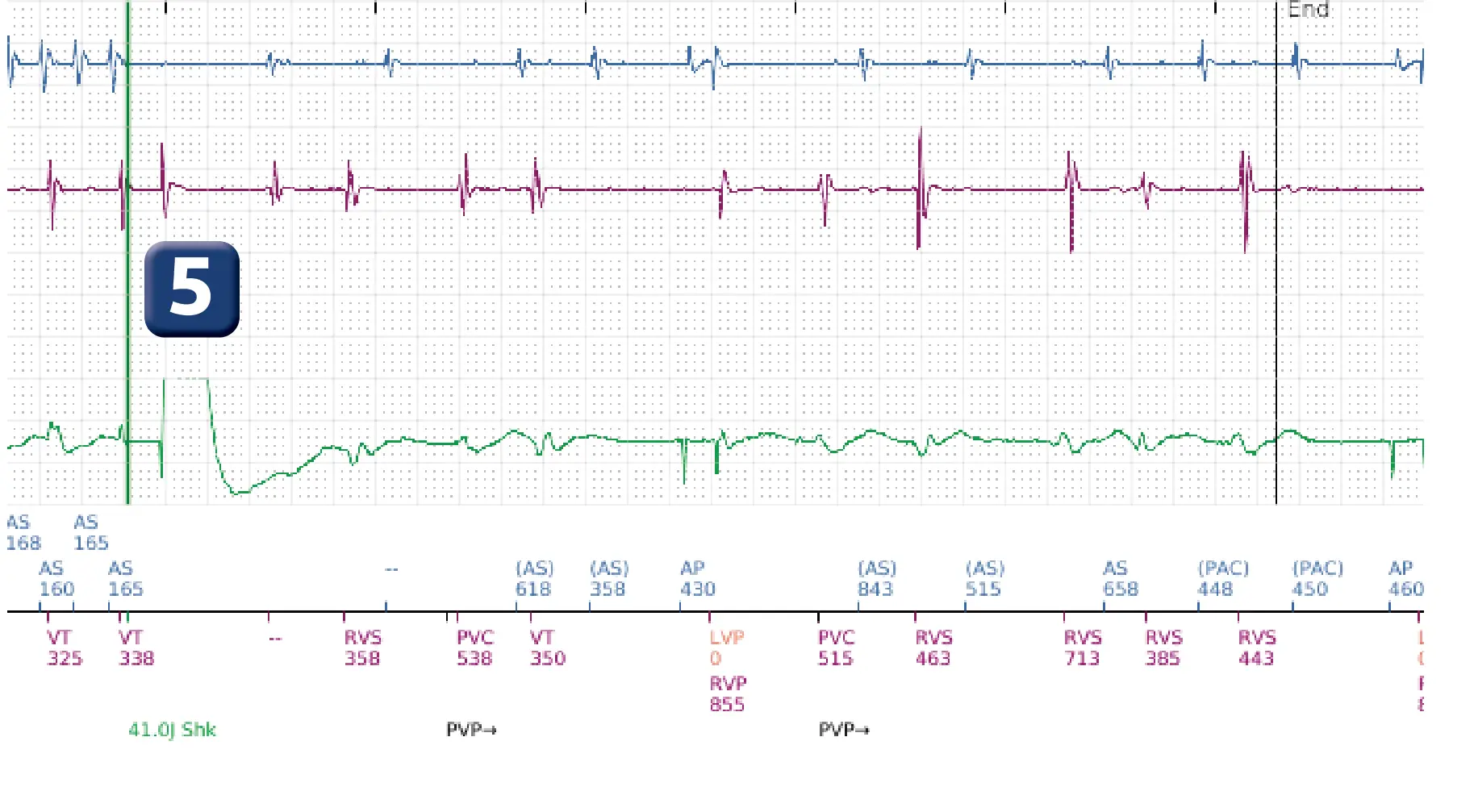
- AF with irregular conduction
- V-epsd marker (Gradl: gradual onset)
- End of duration; inhibition of therapies because of diagnosis of AF with unstable ventricular rhythm
- Rhythm considered stable; first burst of ATP
- Shock terminates atrial arrhythmia
Points to remember
- This episode corresponds to conducted AF, initially well discriminated by the device; the atrial rhythm is rapid, the ventricular rhythm is considered unstable and therapies are inhibited; in a second phase, the ventricular rhythm stabilizes, which is relatively classic for conducted AF with ventricular rates exceeding 160 beats/minute; unsure between conducted AF and dual tachycardia, the device favors sensitivity over specificity and delivers the programmed therapies.
- The stability criterion has been deceived; it was programmed at the nominal value of 20 ms; it is possible to make it less sensitive and more specific (setting discriminators is always a balancing act between sensitivity and specificity) by increasing this value (to 30 or 40 ms, for example)
When discrimination is set to Onset/Stability
- If the onset is considered sudden and the rhythm is stable, therapies are delivered
- If the onset is considered gradual, the AF criterion is satisfied and the rhythm is stable, the therapies are also delivered
- The setting of the stability parameter and the setting of the rate threshold for AF are decisive:
- When the AF threshold (nominally 170 beats/minute) is set too low (young patient): risk of inappropriate therapies for rapid sinus tachycardia (gradual onset, AF+ criteria, stable rhythm)
- When the stability criterion is programmed too low (20 ms in nominal): risk of inappropriate therapies (as in this example) if conducted AF stabilizes over a few cycles; there is the option of adapting the stability criterion (reprogramming to 30 ms, 40 ms, etc.)
Practice out loud
Just describe the tracing. What do you think is going on? Describing the numbers can help.
00:00
0%
—
From Boston Scientific ICD — clinical cases by P. Bordachar, M. Strik, A. Thiyagarajah, S. Ploux. Published by Cardiocases. Every numbered marker on a recording is explained in the list beneath it; tap a marker on the trace or an entry in the list.
Order hardcopyon Amazon