
Chapter 1 · Counters · Case 8
End-of-episode criteria following an electric shock
Patient and episode
Patient
- 75-year-old man with ischemic cardiomyopathy; implanted with a Resonate triple-chamber defibrillator
Summary
- Episode classified in VF zone
- 3 shocks of maximum output
The recording
Tap a number on the trace, or an entry in the list below
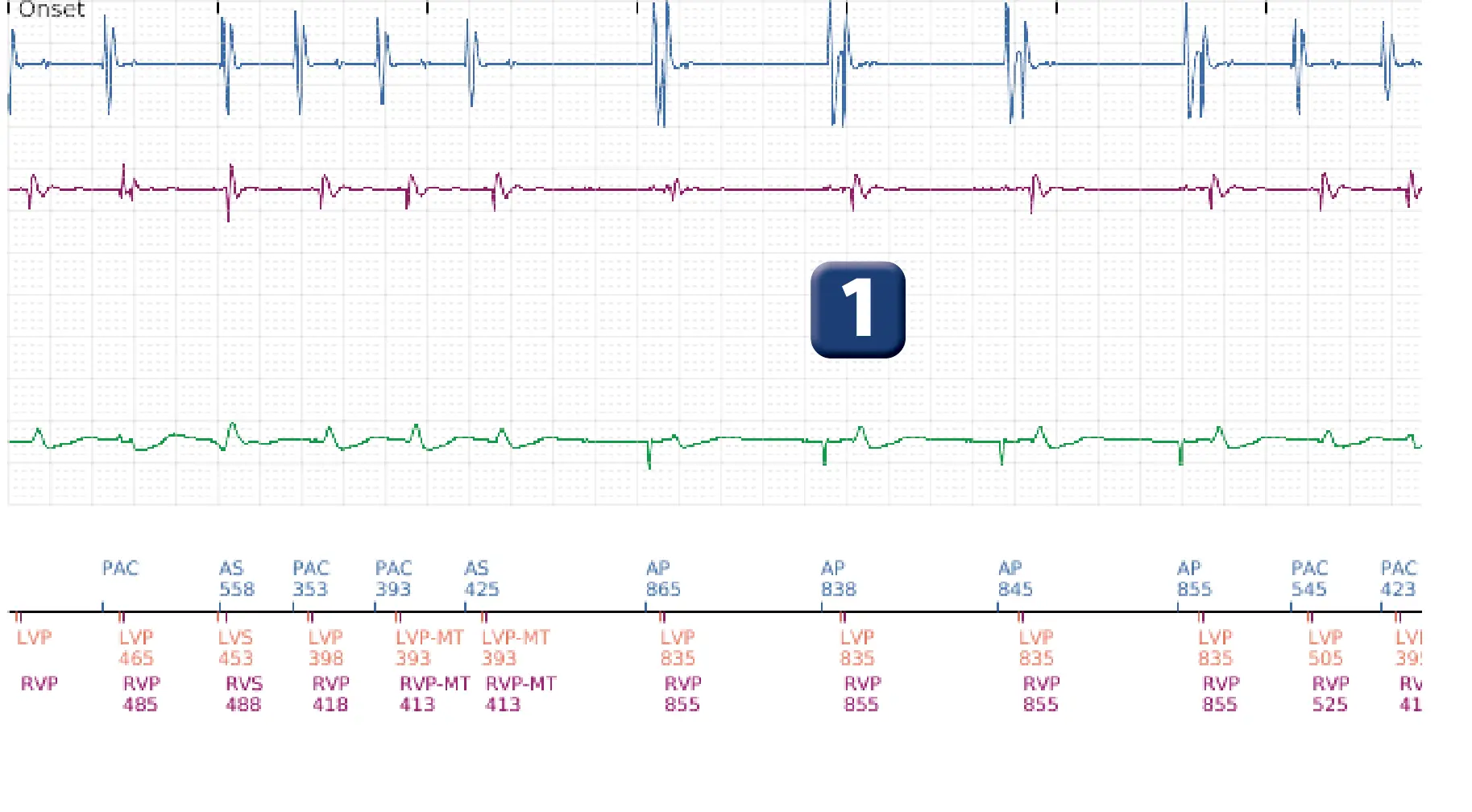
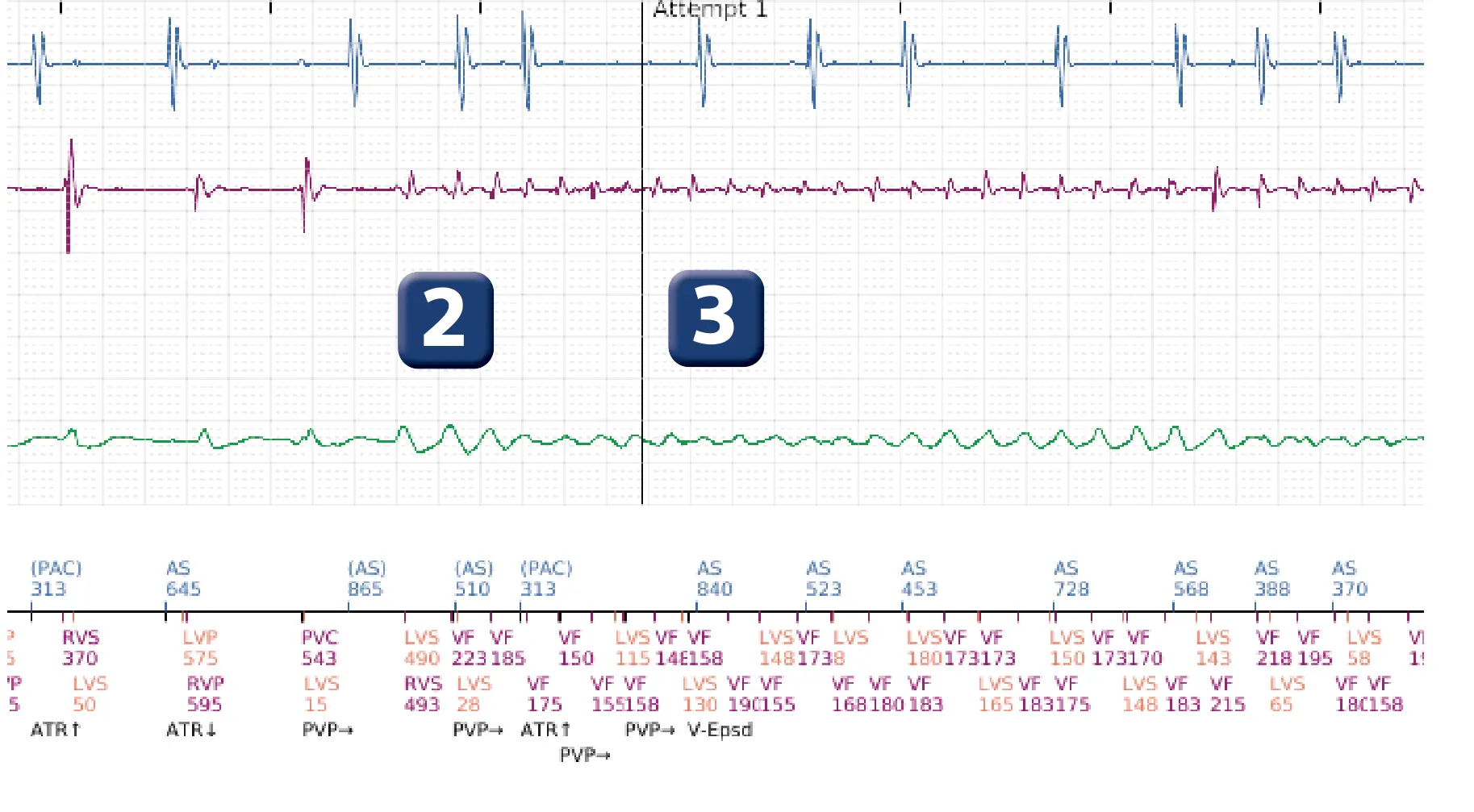
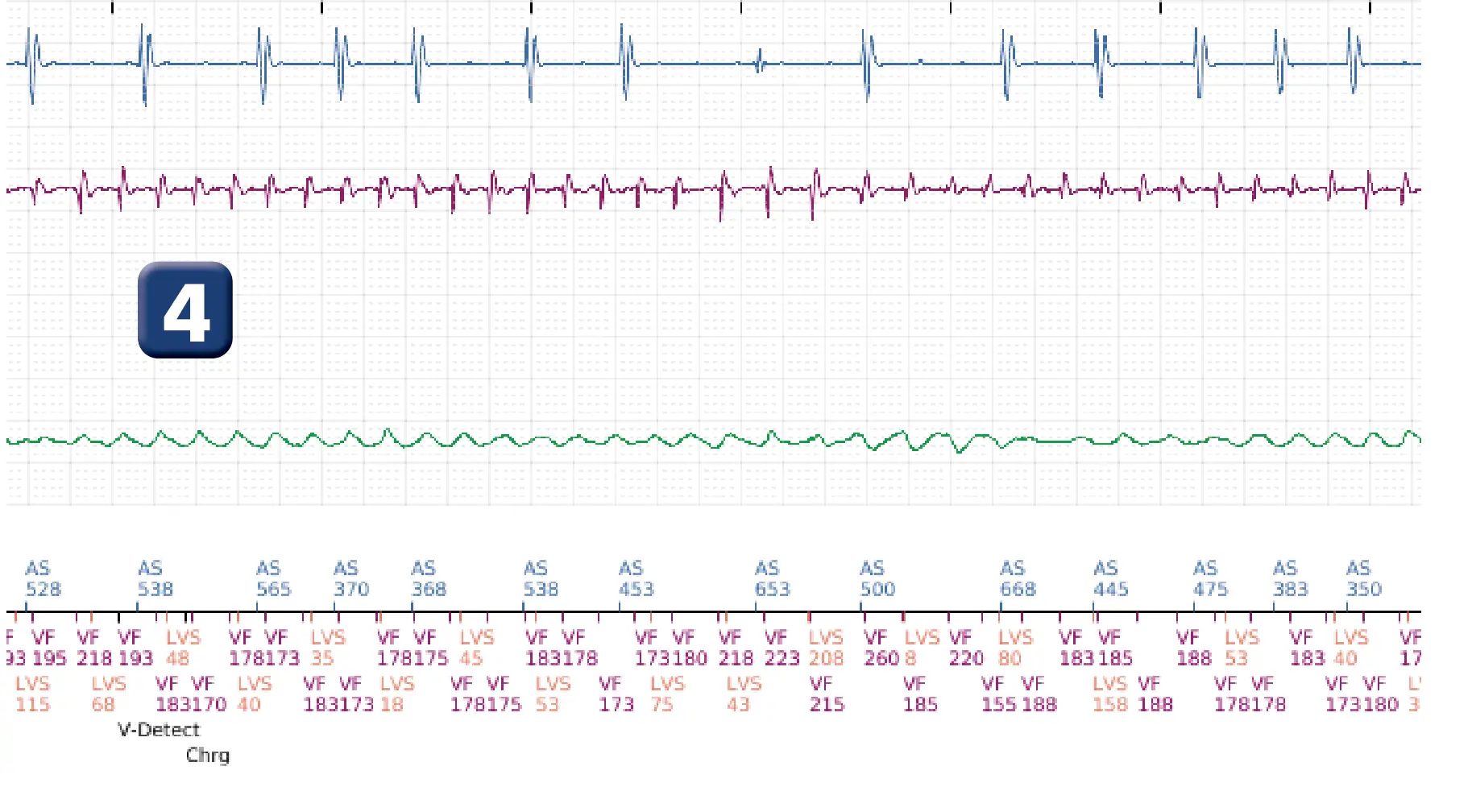
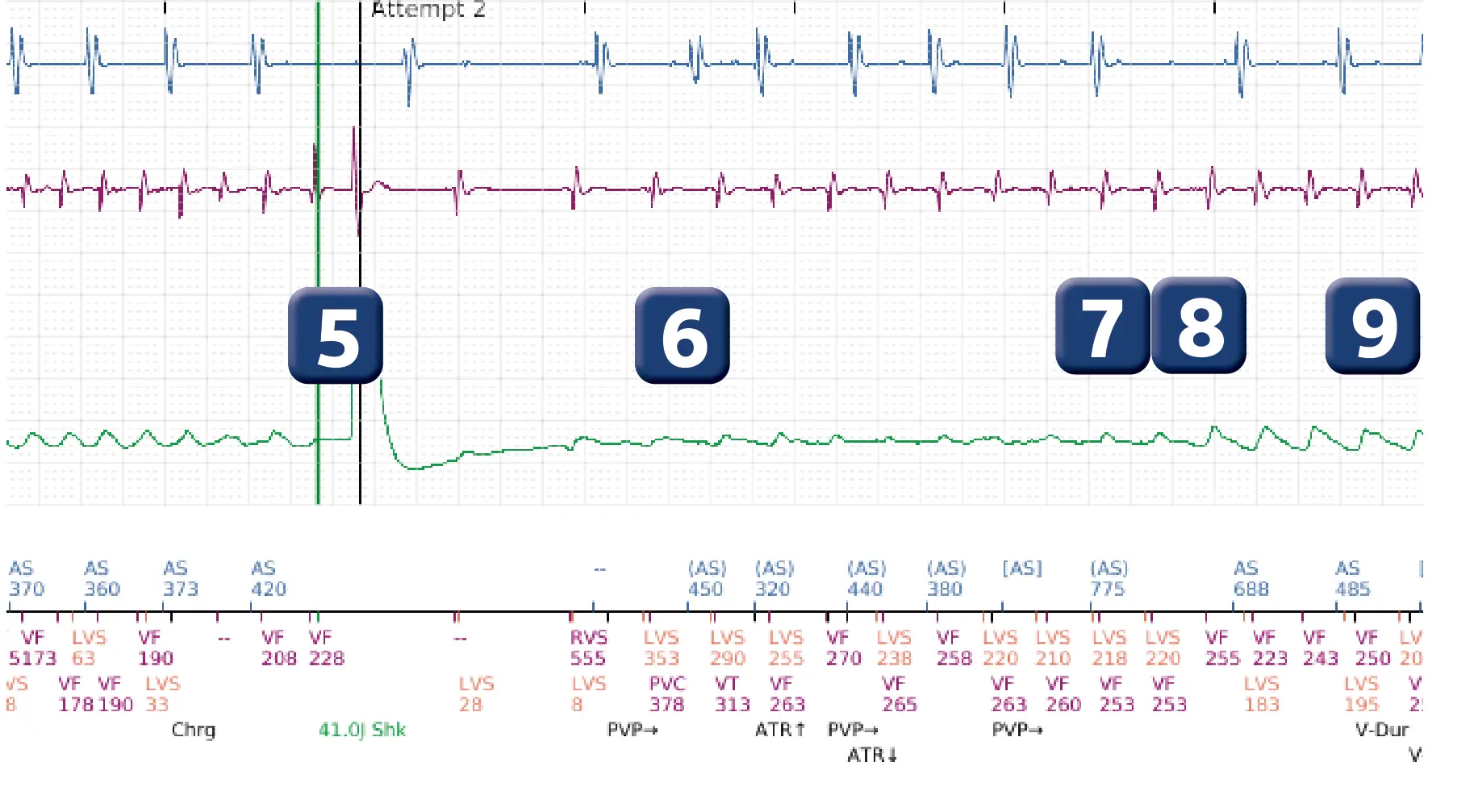
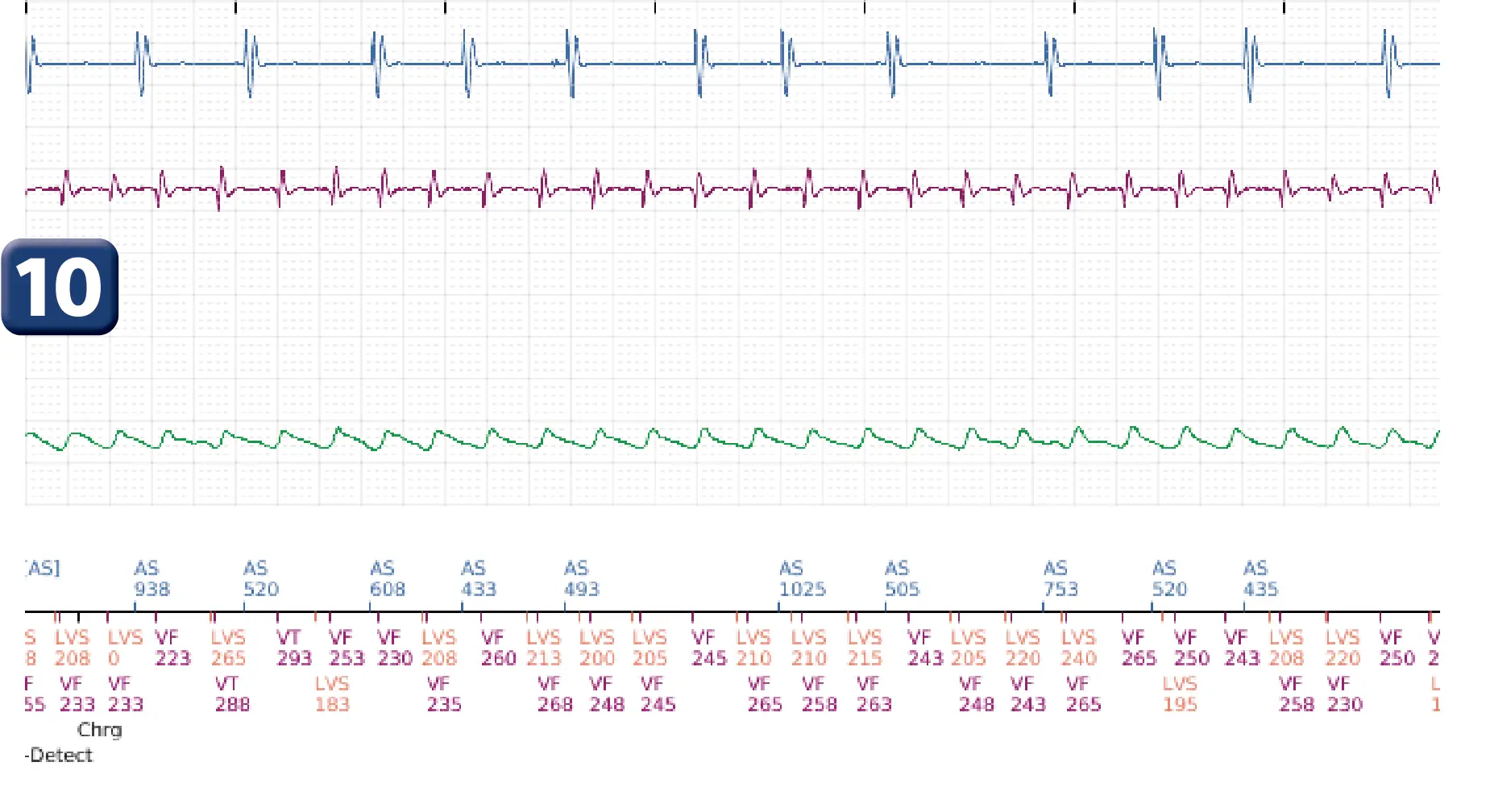
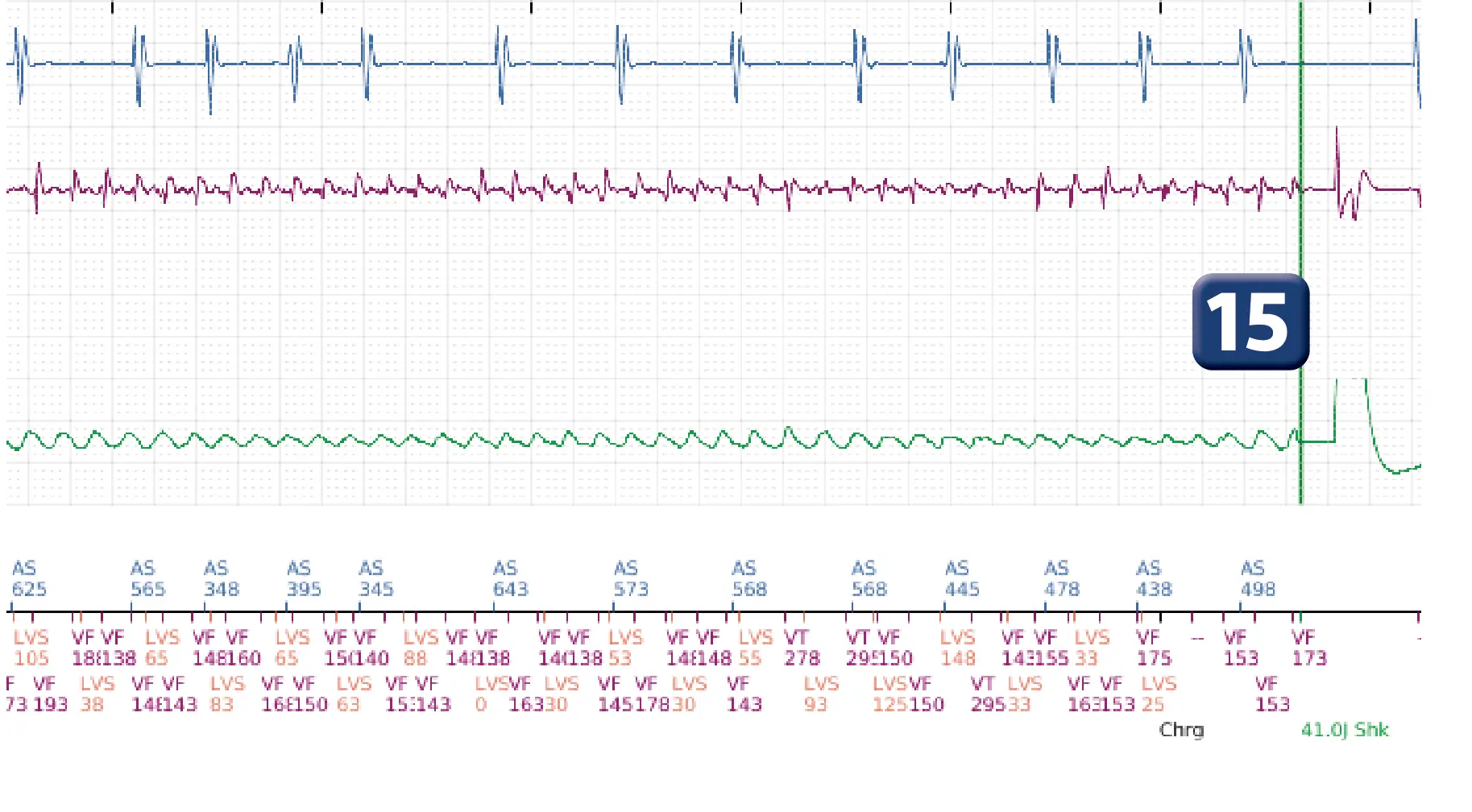
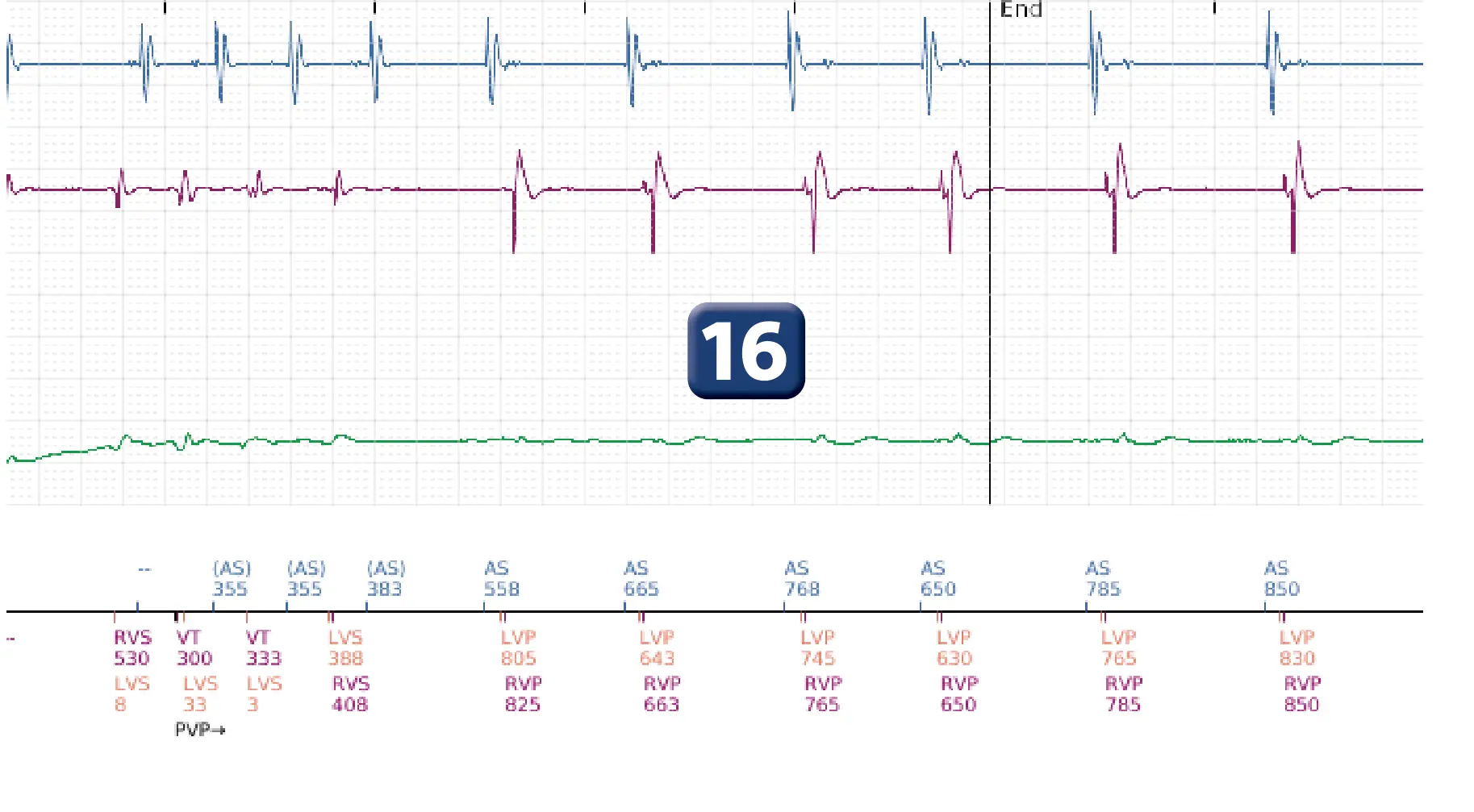
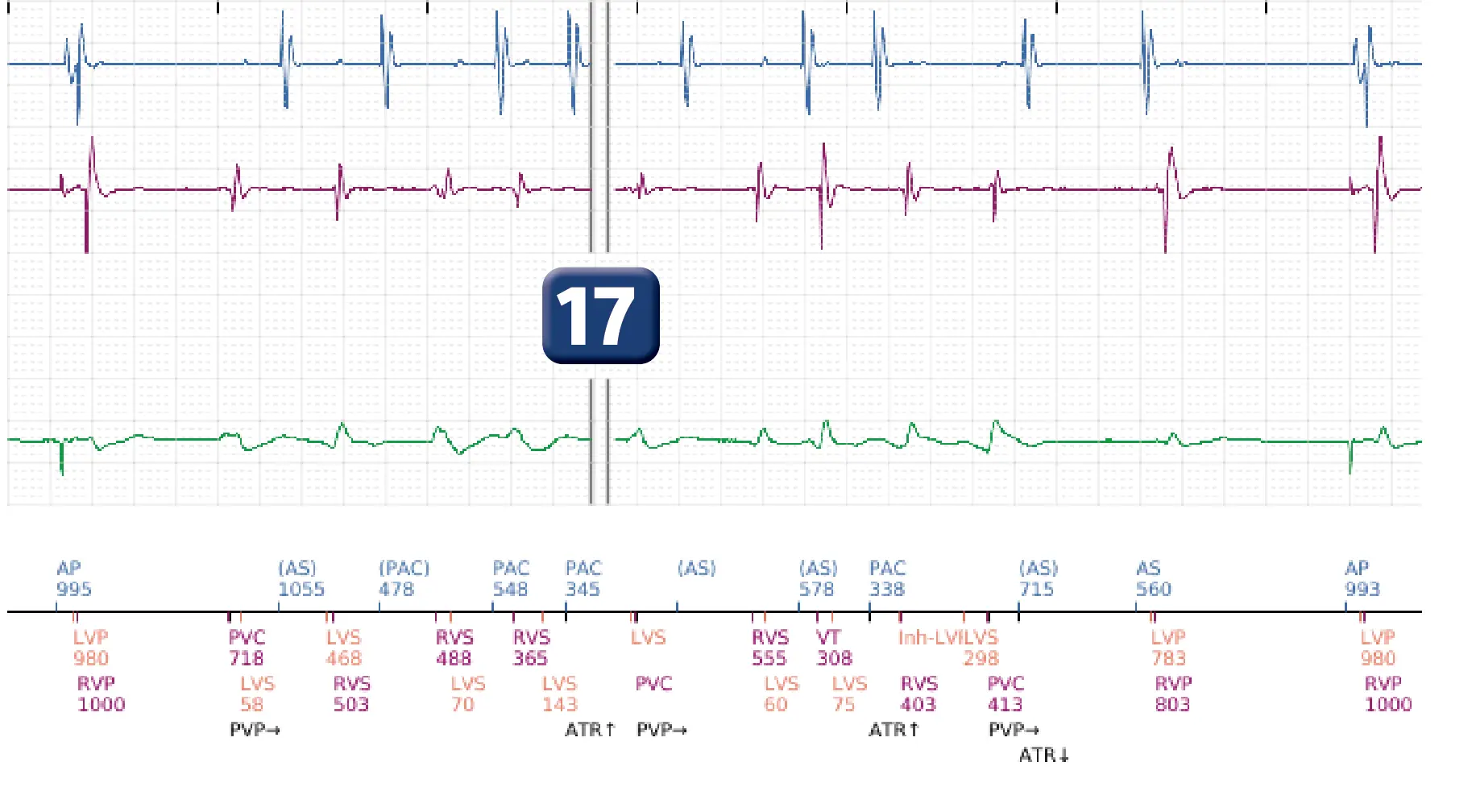
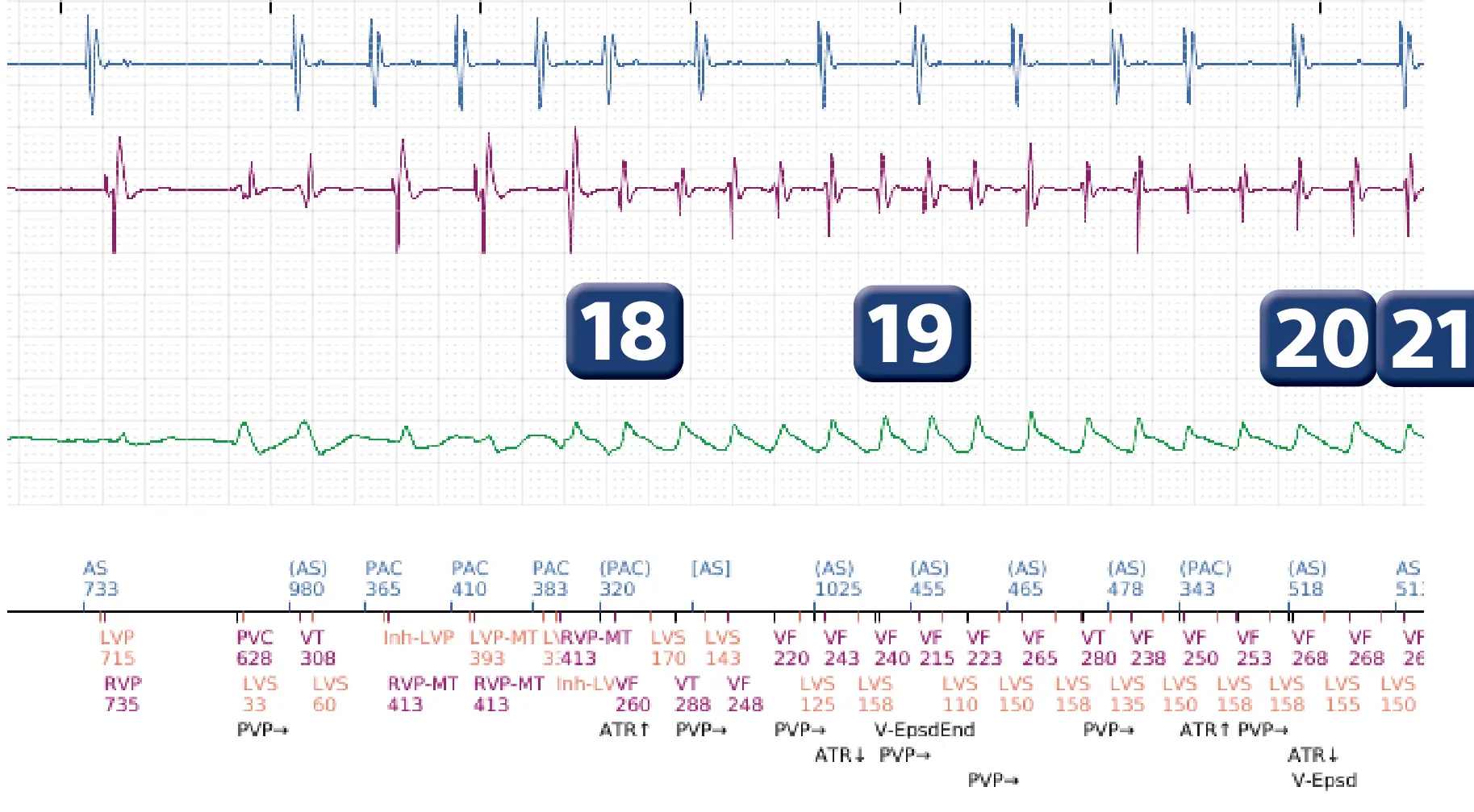
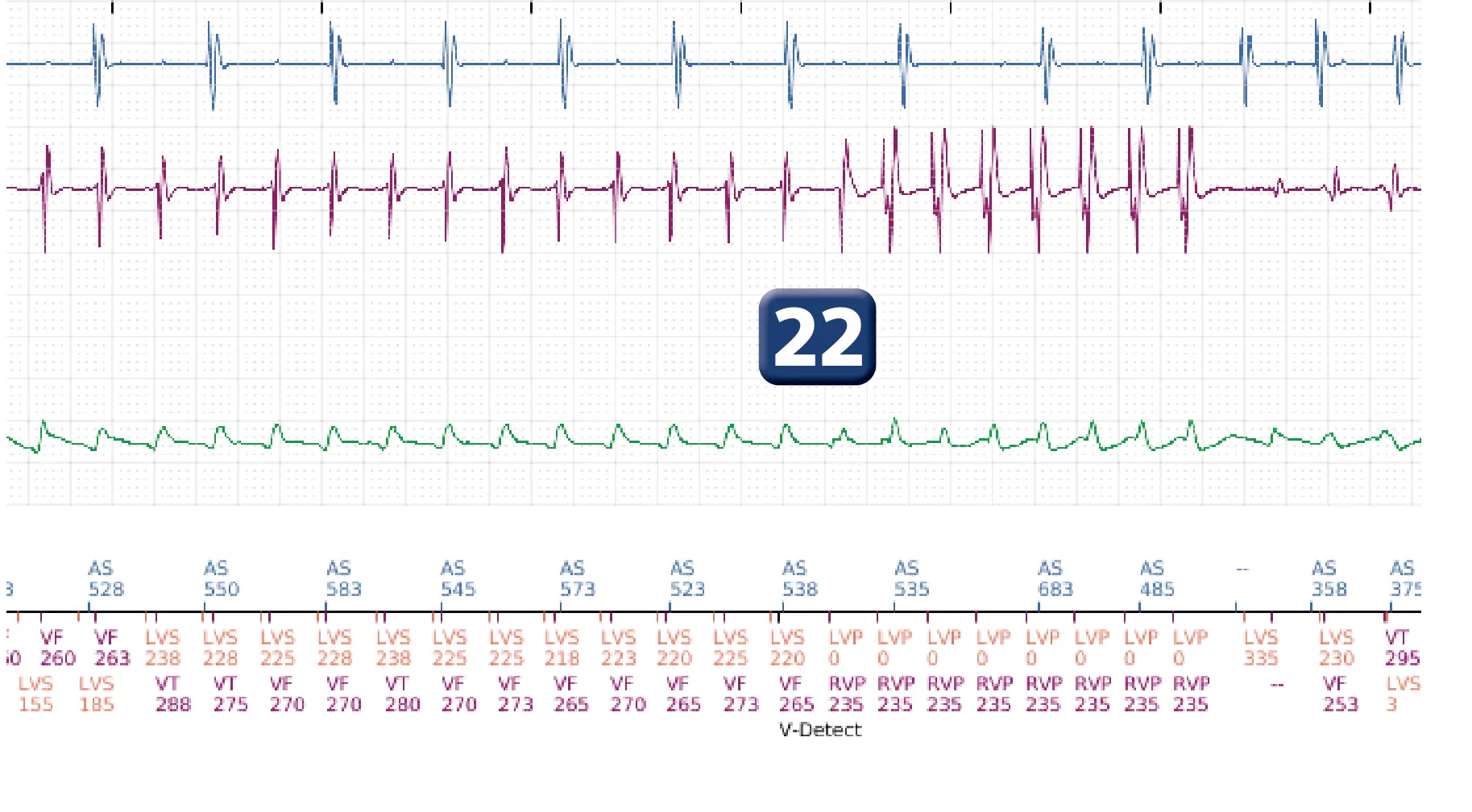
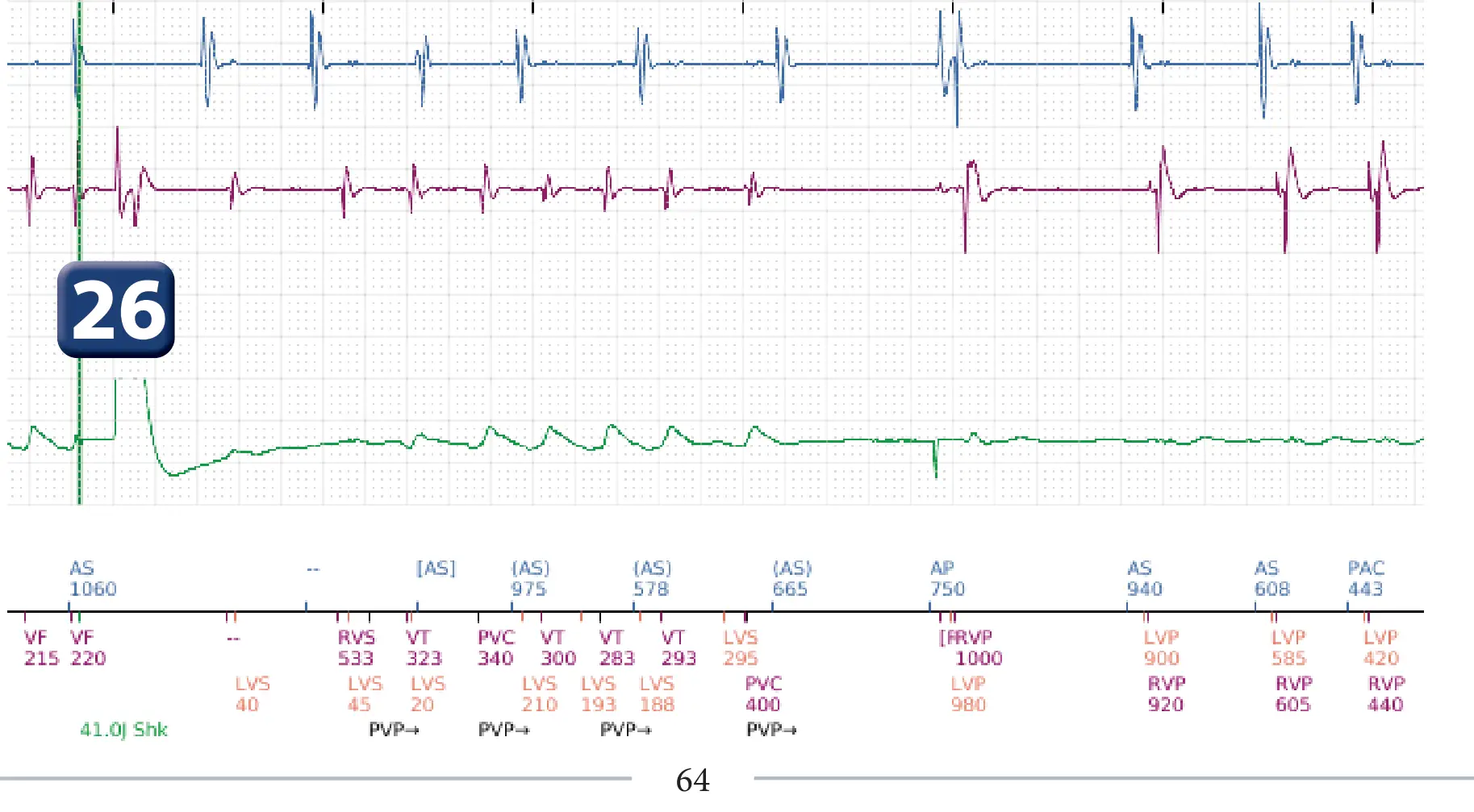
- Atrial and bi-ventricular pacing
- Onset of rapid, polymorphic ventricular arrhythmia (VF)
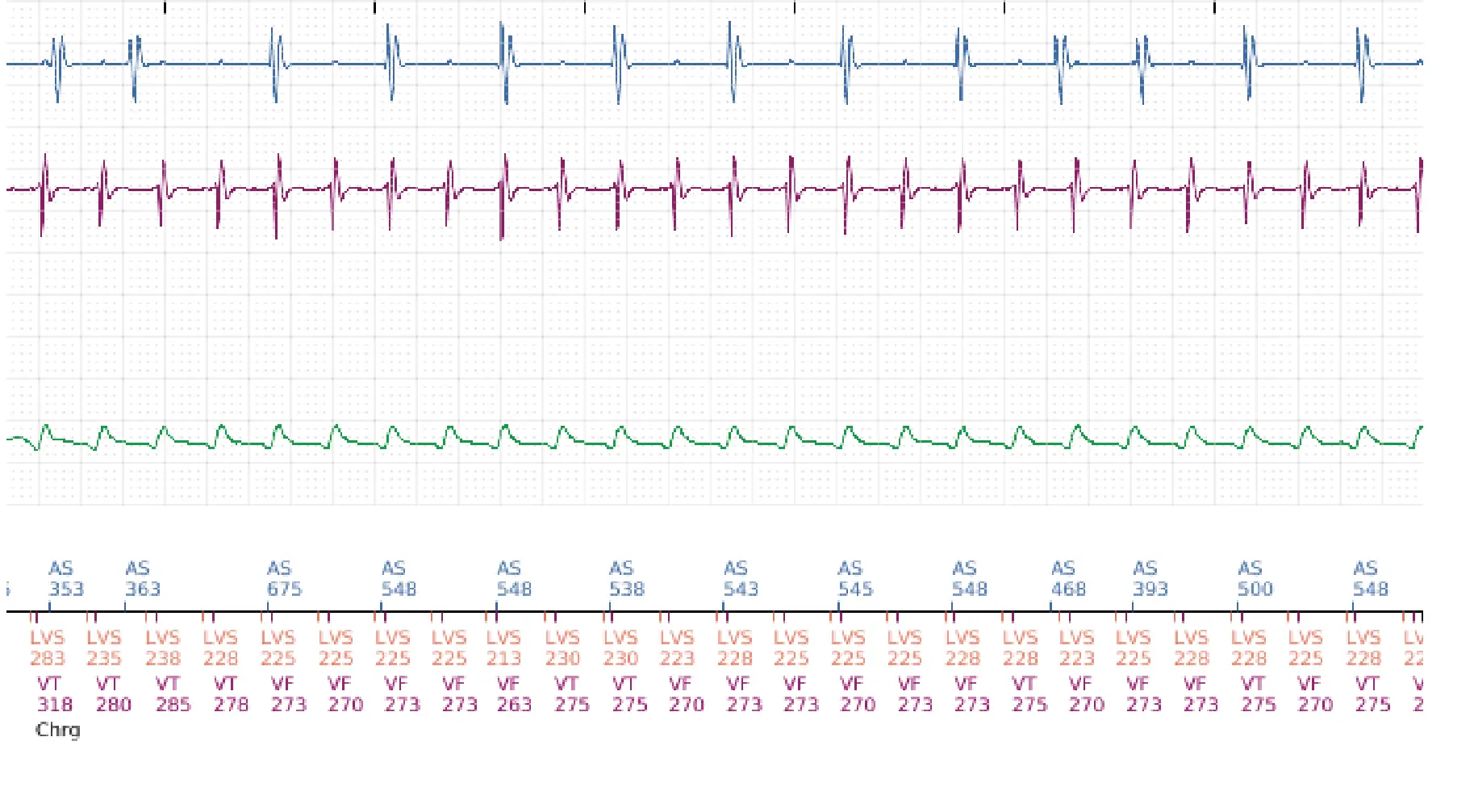
- Start of VF zone duration (5 seconds)
- End of duration and start of capacitor charging
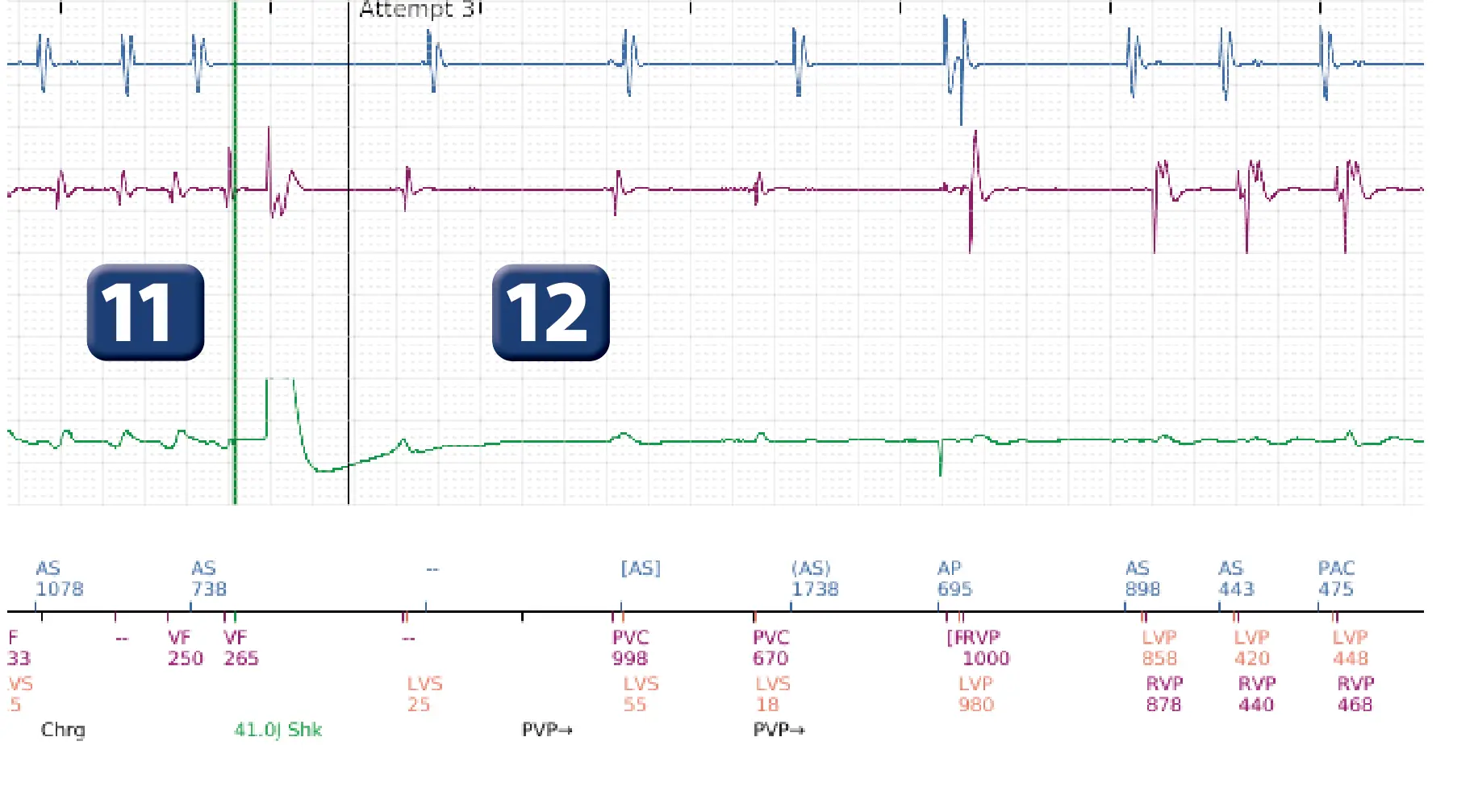
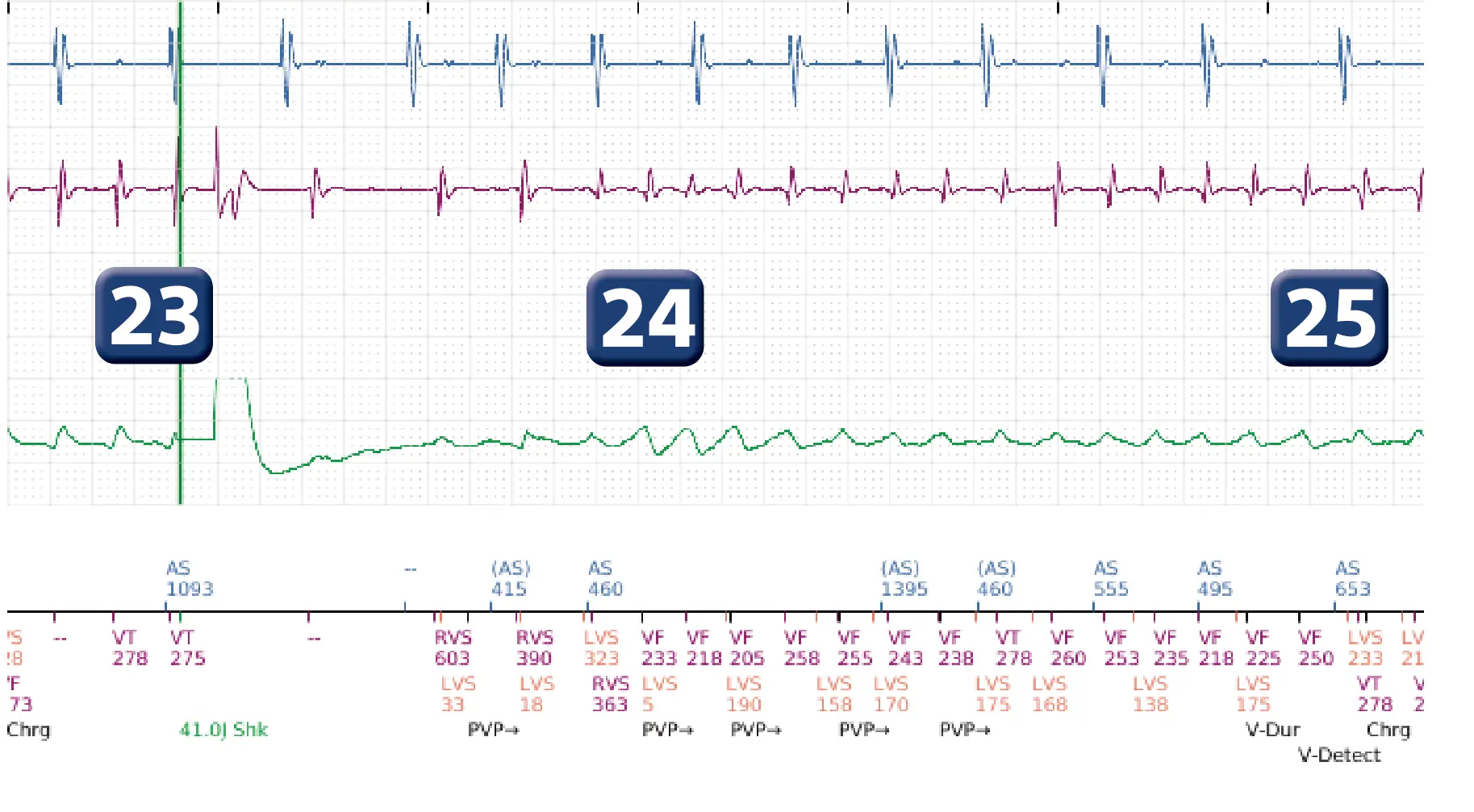
- End of charge and 41 Joule electric shock delivered on the second fast cycle (synchronized to the R wave)
- VF restarts immediately
- Redetection criterion 8/10 verified (1 VT cycle, 7 VF cycles) for VT zone (start of duration for VT zone)
- Redetection criterion 8/10 verified for VF zone (start of post-shock duration for non-programmable VF zone of 1 second)
- End of duration set at 1 second for VT zone (V-Dur); post-shock duration of VF zone is still active
- End of post-shock time for VF zone (V-Detect) and capacitor charging
- The shock is delivered at the end of the charge after the 500 ms post-shock window; when the shock is delivered, a 30-second period begins during which the device seeks to validate the 8/10 criterion.
- Effective shock
- Arrhythmia restarts before the end-of-episode criterion (less than 30 seconds after shock); on this cycle, criterion 8/10 verified; as the episode is not over, the device considers this to be the second shock and the post-shock duration of 1 second applies
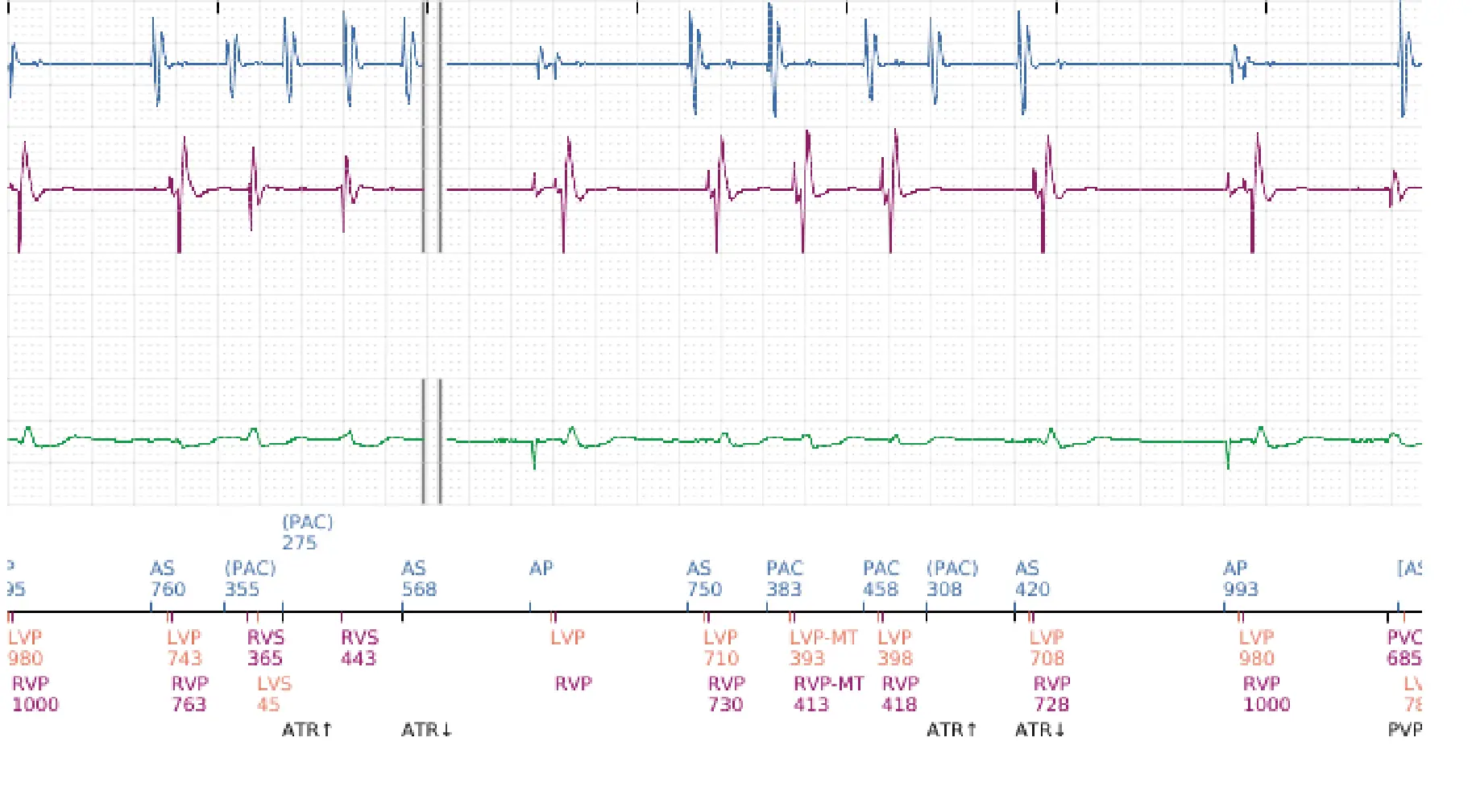
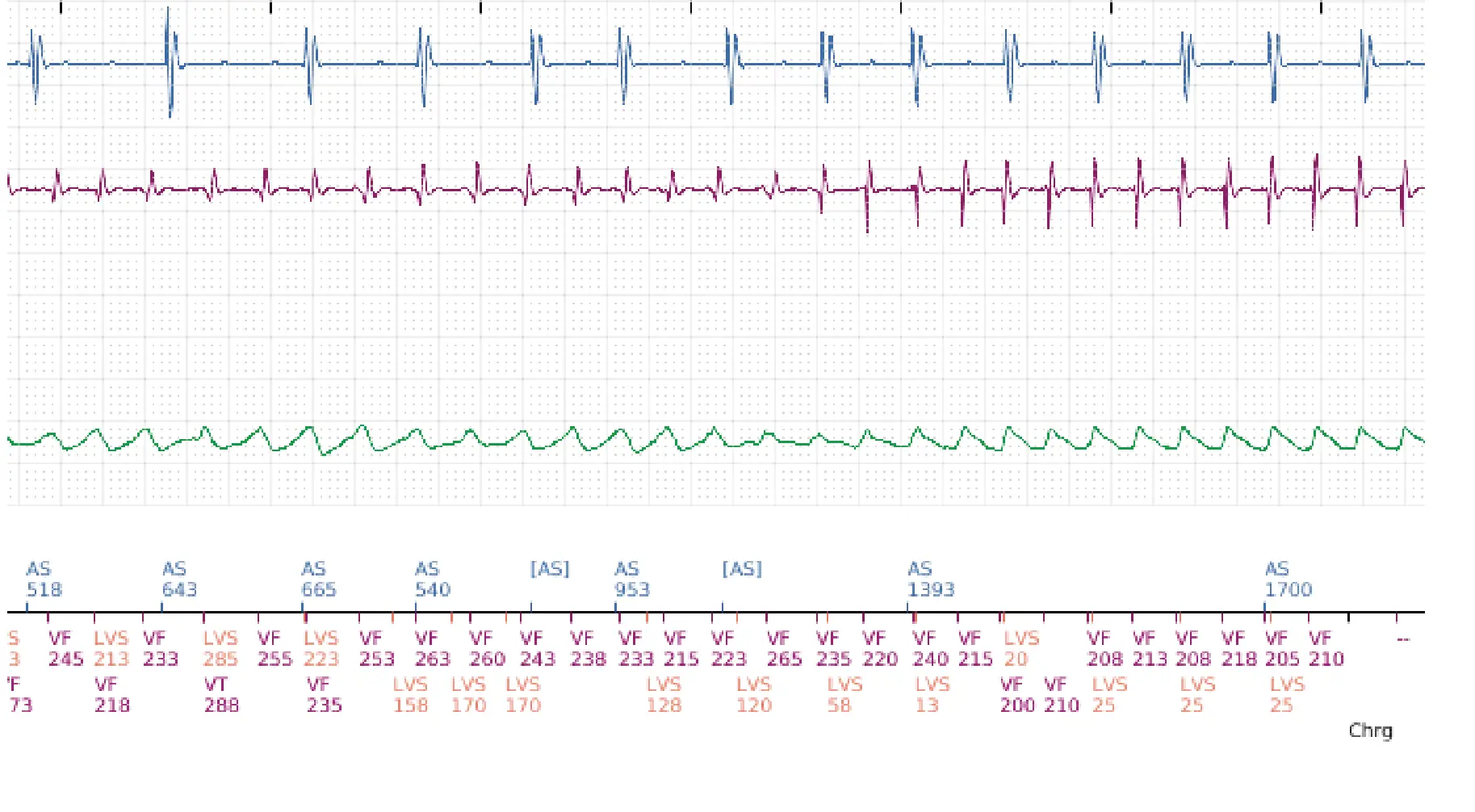
- End of post-shock period and capacitor charging
- Second shock
- Arrhythmia termination
- Interruption of the trace
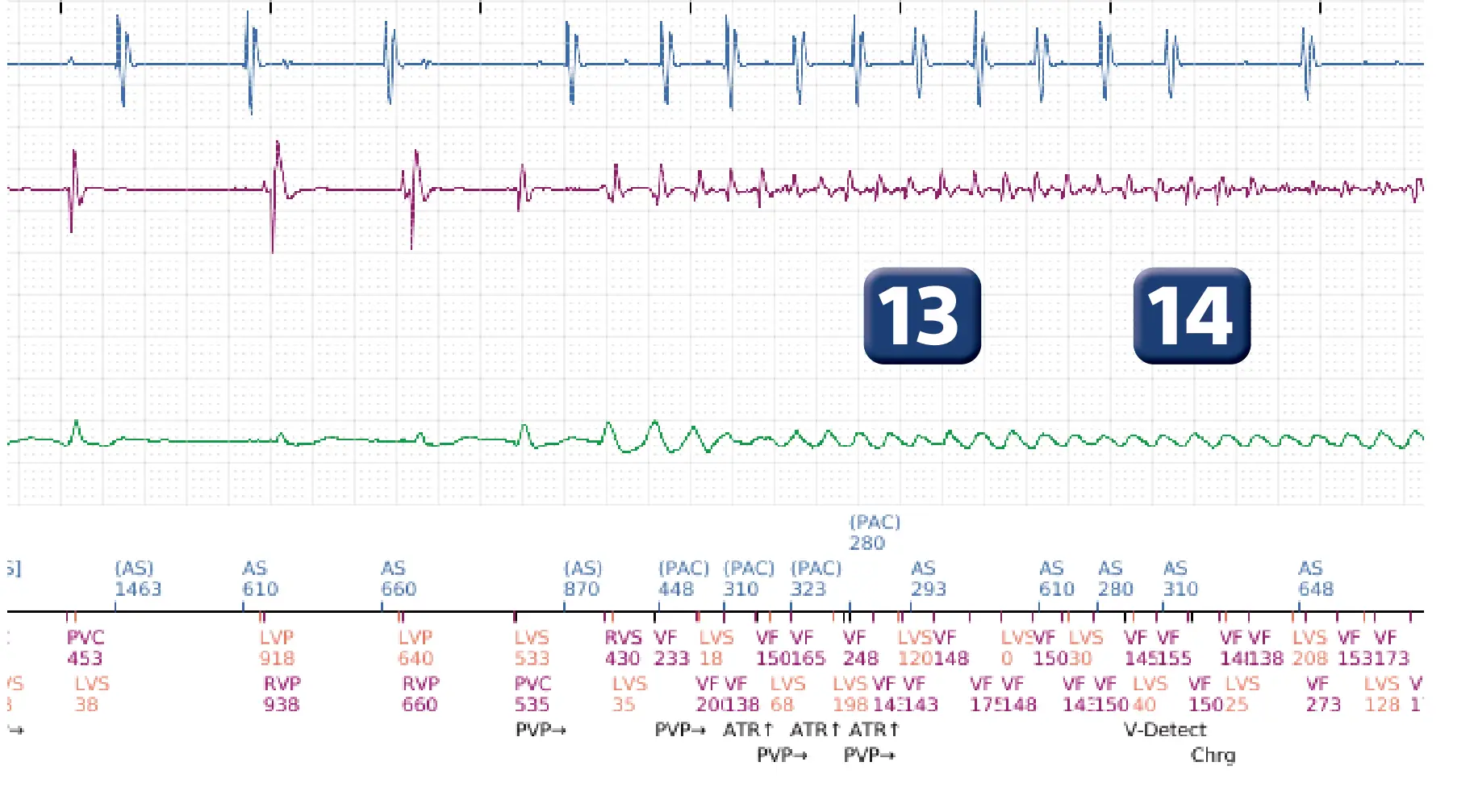
- Restart of ventricular arrhythmia
- V-Epsd End marker (end of episode) since it has been 30 seconds since the shock was delivered and criterion 8/10 has not been satisfied; VT and VF counters reset to 0
- 8/10 criterion verified for VT zone (1 VT cycle + 7 VF cycles from end-of-episode marker); start of initial VT zone duration
- Criterion 8/10 verified for VF zone; start of initial duration of VF zone
- End of duration for VF zone; ATP Quick Convert (the device considers this to be the first therapy of a new episode)
- Inefficient ATP, capacitor charging and electric shock
- Immediate recurrence of arrhythmia
- End of 1 second post-shock duration in VF zone
- Shock with VF termination
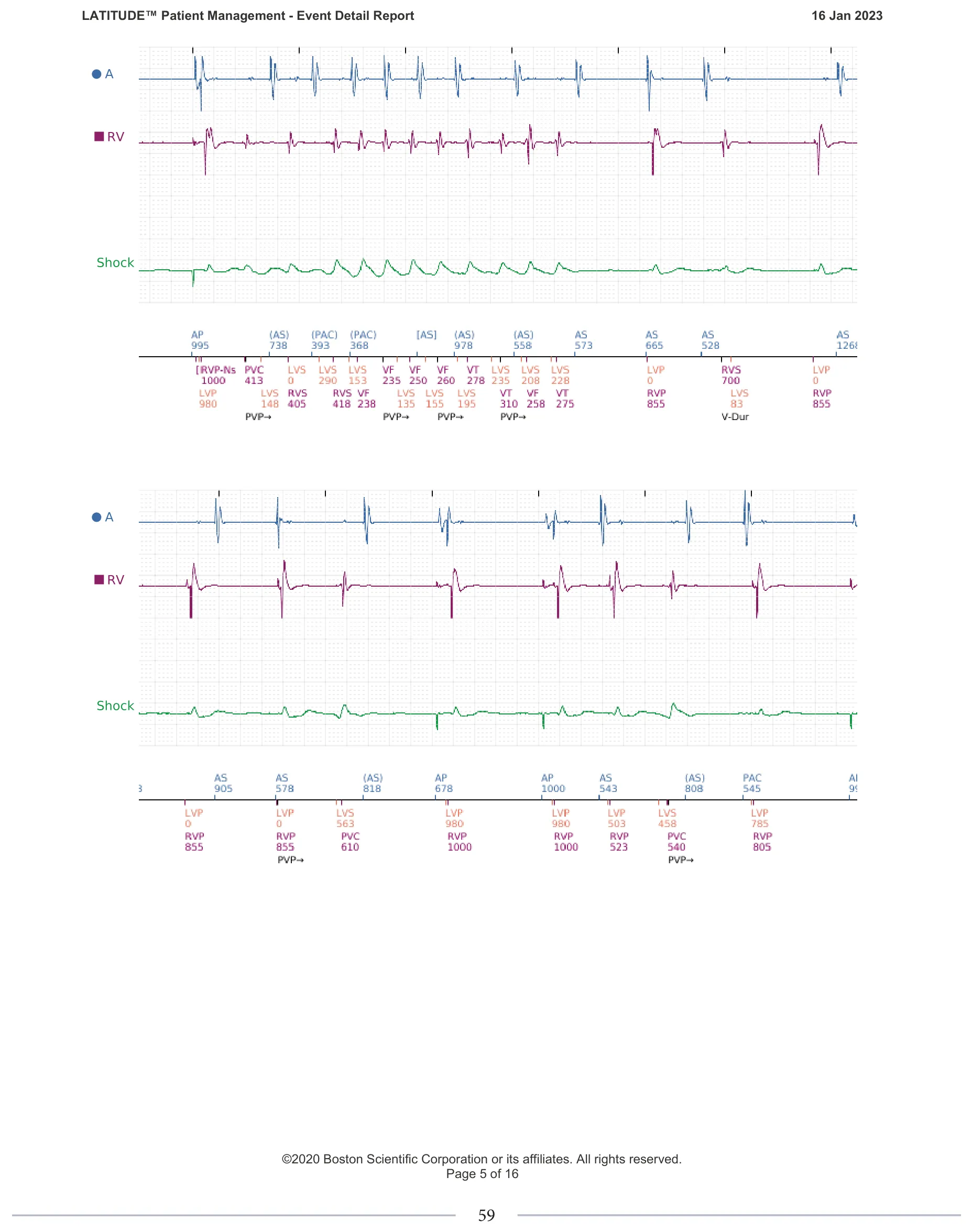
From the interrogation
Points to remember
- This patient presented with multiple episodes of VF (in addition to those on this tracing), which makes it possible to detail the operation of the device once the shock has been delivered
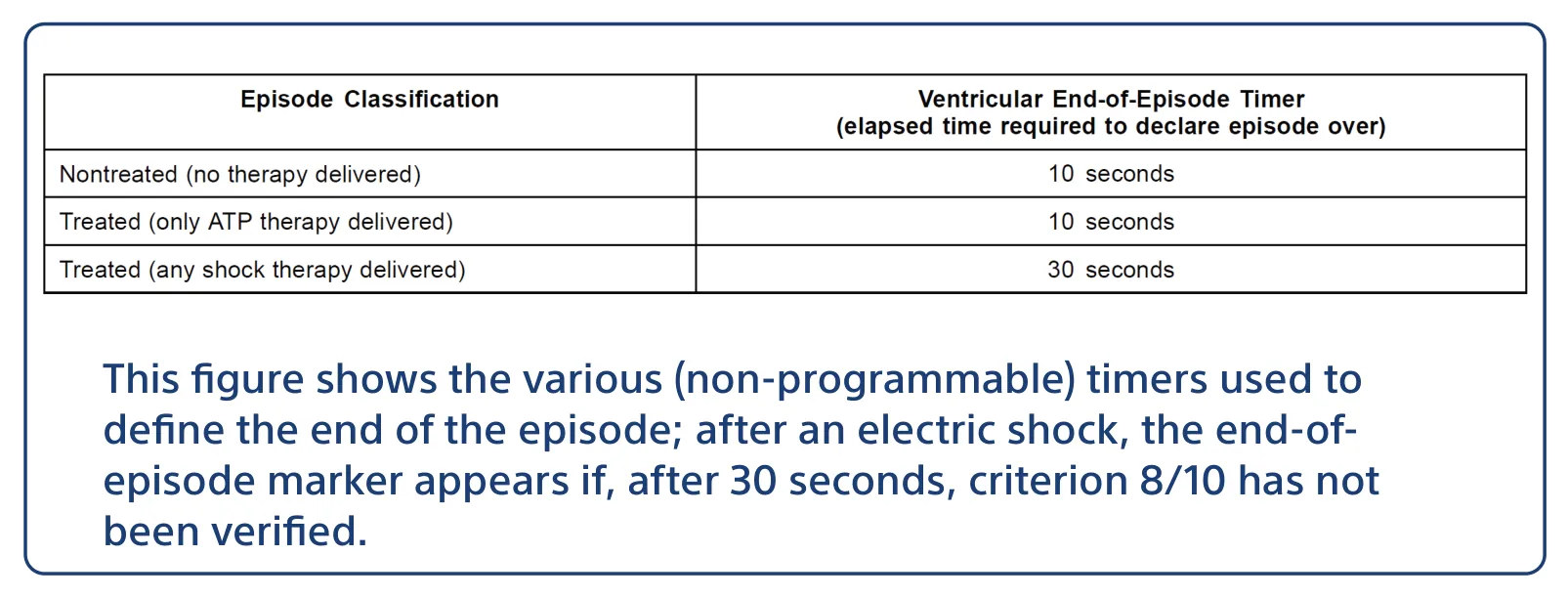
- When a shock has been delivered, a non-programmable 30-second timer starts; if during these 30 seconds, criterion 8/10 is verified, the device considers that it is the same episode, the post-shock duration applies (1 second in VF zone) and the next therapy is delivered (shock number 2 if it was previously shock number 1); if during these 30 seconds, criterion 8/10 is not verified, the device considers the episode to be over; if the arrhythmia then recurs, the device considers it to be a new episode, the initial duration is applied (today’s standard programming of a 5-second duration in the VF zone) and the first therapy in the VF zone is delivered.
- This operation can be problematic when the patient experiences effective shocks but relatively early recurrences of VF (less than 30 seconds); in fact, the post-shock duration of the VF zone is applied (short and non-programmable by 1 second) which leaves less time for spontaneous termination; similarly, therapies carry a risk (moderate as 8 electric shocks can be delivered for the same VF episode) that the device exhausts all therapies and a new episode is not treated
Practice out loud
Just describe the tracing. What do you think is going on? Describing the numbers can help.
00:00
0%
—
From Boston Scientific ICD — clinical cases by P. Bordachar, M. Strik, A. Thiyagarajah, S. Ploux. Published by Cardiocases. Every numbered marker on a recording is explained in the list beneath it; tap a marker on the trace or an entry in the list.
Order hardcopyon Amazon