
Chapter 1 · LV pacing and threshold · Case 8
CRT-D with a conduction-system lead: the LV trends jump
Patient and episode
Patient
- RESONATE CRT-D, DDD 50-145 bpm, with a Medtronic 3830 conduction-system pacing lead on the LV port, paced LV Only (LVtip>>RV); LV output Auto (PaceSafe LV)
- LATITUDE remote transmission, nearly 9 months after implant: no alert
The recording
Tap a number on the trace, or an entry in the list below
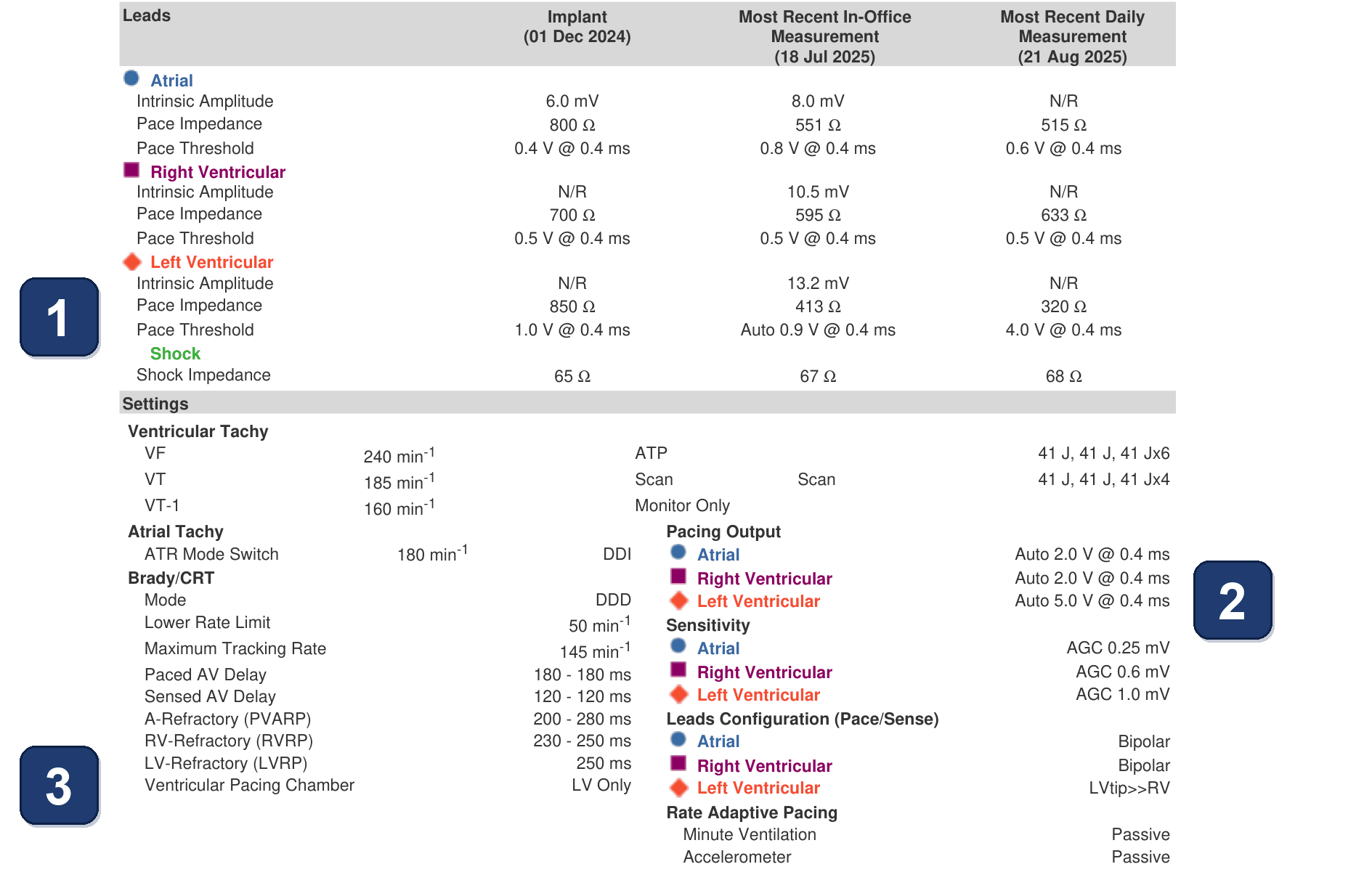
- Left Ventricular = the 3830 lead: pace threshold 1.0 V at implant, Auto 0.9 V at the office check 5 weeks earlier, 4.0 V on the last daily measurement; pace impedance 850 → 413 → 320 Ω. The atrial and RV values are stable, and the report shows no alert
- Pacing Output, Left Ventricular (right column): Auto 5.0 V @ 0.4 ms. PaceSafe LV has followed the threshold up: highest threshold of the last 7 tests plus the safety margin, never above the programmed maximum amplitude (nominal 5.0 V)
- Ventricular Pacing Chamber: LV Only; LV configuration LVtip>>RV (right column): only the 3830 lead paces; the RV lead senses, runs the timing cycles and defibrillates
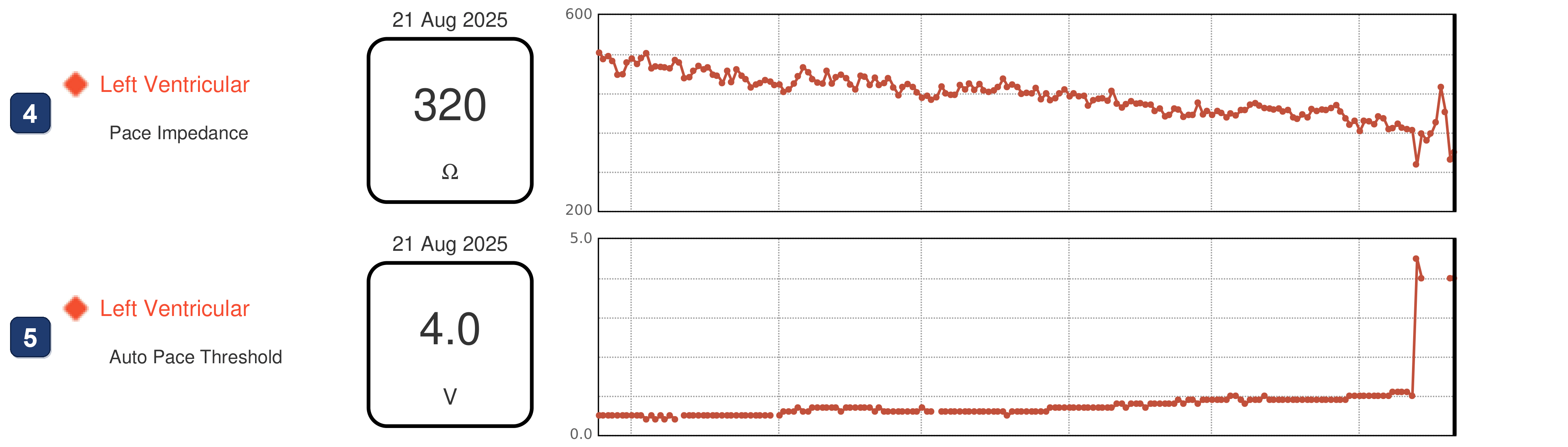
- LV pace impedance over 6 months (vertical lines: the 1st of each month): a slow fall from about 520 to 370 Ω over 5 months, then about 300 Ω a week before the transmission and unstable values since (300-450 Ω); 320 Ω on the last day
- LV automatic threshold (PaceSafe LV): about 0.5 V at first, creeping up to 1.0-1.1 V over 5 months, then a jump to 4.5 V a week before the transmission, the day of the impedance drop, and 4.0 V since
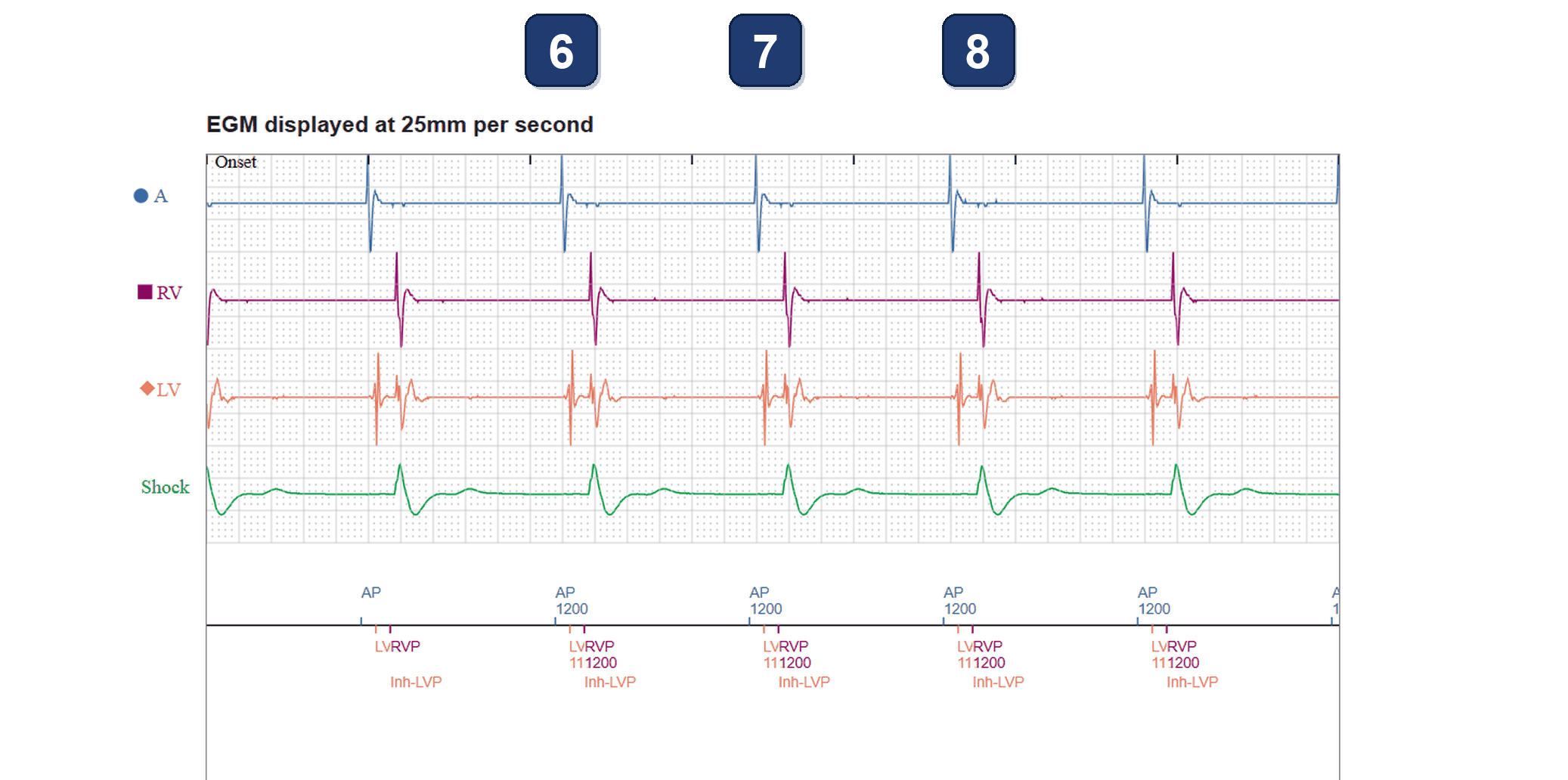
- Another recording: atrial pacing at the lower rate limit (AP 1200 ms = 50 bpm)
- Less than 100 ms after each AP, before any ventricular activation, a sharp signal on the LV channel is sensed (LV marker, half hidden under the RVP label): the 3830 lead is recording atrial activity
- The LV pace due at the end of the paced AV delay (180 ms) falls in the LV protection period (LVPP) started by that LV sense: it is inhibited (Inh-LVP) and, in LV Only, replaced by an RV pace (RVP 1200): RV pacing instead of conduction-system pacing
Points to remember
- A conduction-system lead on the LV port of a CRT-D is followed like an LV lead: the device tests its threshold about once a day, and the LV threshold and impedance trends show how it is doing
- Here the LV threshold jumped within a day from about 1 V to 4.5 V while the impedance fell: the picture of a dislodged lead. The device sent no alert: it simply raised the LV output to 5.0 V, so the jump shows only in the lead table and the LV trends
- With a threshold of 4.0-4.5 V, the 5.0 V output leaves a margin of only 0.5-1.0 V, and capture is not checked beat by beat, so it can be lost unnoticed
- In LV Only, an LV pace withheld after an LV sense is replaced by an RV pace: when the LV-port lead senses the atrium, the patient silently gets RV pacing instead of conduction-system pacing
Summary
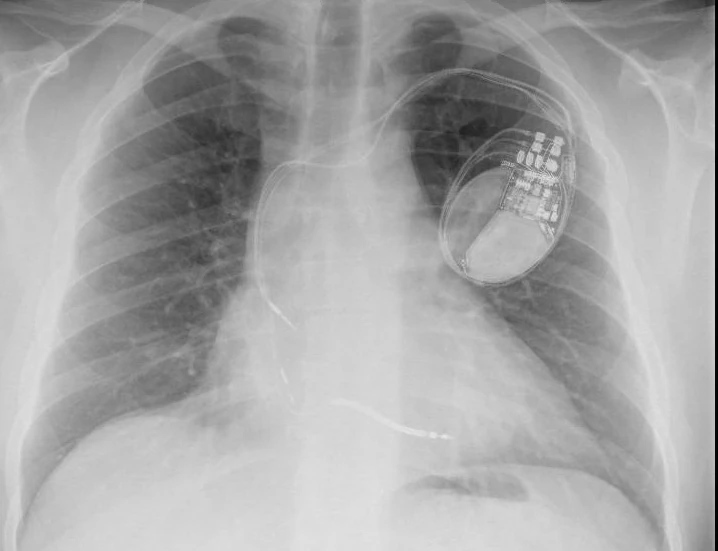
- Dislodgement of a conduction-system lead on the LV port: a jump in the LV threshold with a fall in LV impedance, without any alert
Clinical pearl
No alert does not mean no problem: the automatic LV output simply follows a rising threshold. Read the LV trends in every report: a sudden threshold jump with a fall in impedance means lead dislodgement until proven otherwise
Practice out loud
Just describe the tracing. What do you think is going on? Describing the numbers can help.
00:00
0%
—
From Boston Scientific CRT — clinical cases by M. Strik. Published by Cardiocases. Every numbered marker on a recording is explained in the list beneath it; tap a marker on the trace or an entry in the list.