
Chapter 4 · Keeping up the CRT · Case 15
CRT loss at rest with sinus bradycardia
Patient and episode
Patient
- RESONATE X4 CRT-D, DDD 50-130 bpm, BiV with LV offset 0 ms, sensed AV delay 95-120 ms, paced AV delay 120-150 ms, PVARP 240-280 ms; atrial amplitude 2.0-3.3 mV, atrial sensitivity AGC 0.25 mV
- Remote transmission 8 months after implant; a second recording was made after reprogramming
The recording
Tap a number on the trace, or an entry in the list below
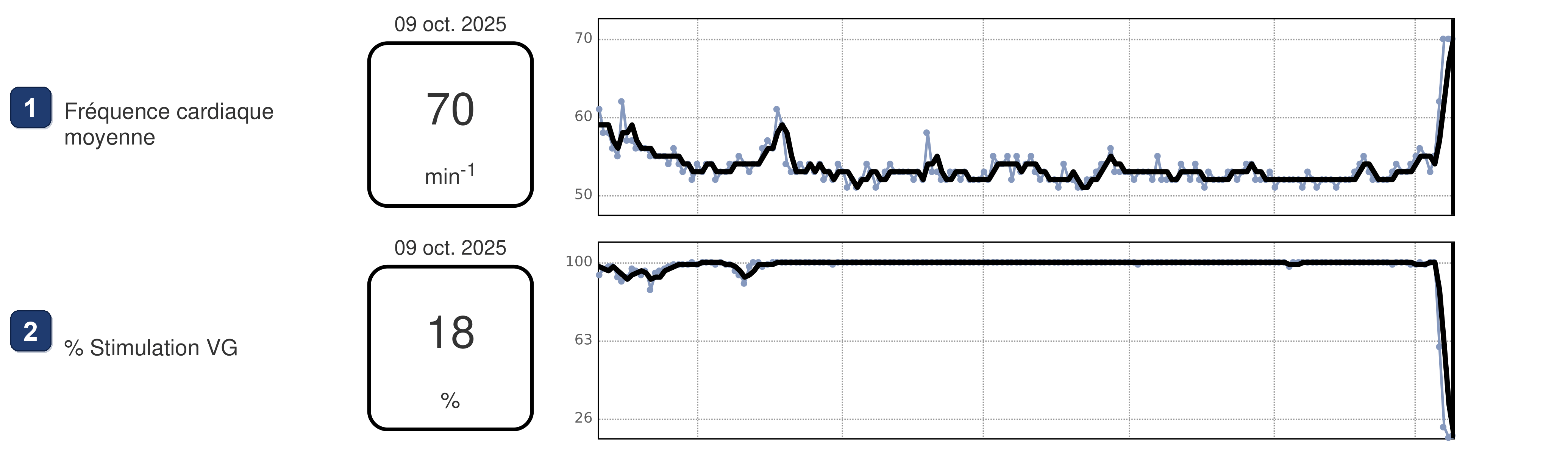

- Remote report: daily trends over 6 months (vertical lines = the 1st of each month). Mean heart rate 51-56 bpm a day in the previous weeks, then 62, 70, 70 and 70 bpm on the last 4 days (night heart rate 51-53, then 70-71 bpm)
- % LV pacing: 99-100% every day, then 60%, 22%, 17% and 18% on the last 4 days. No alert reports it: the only alerts, the day before the transmission, concern the RV and LV automatic threshold tests
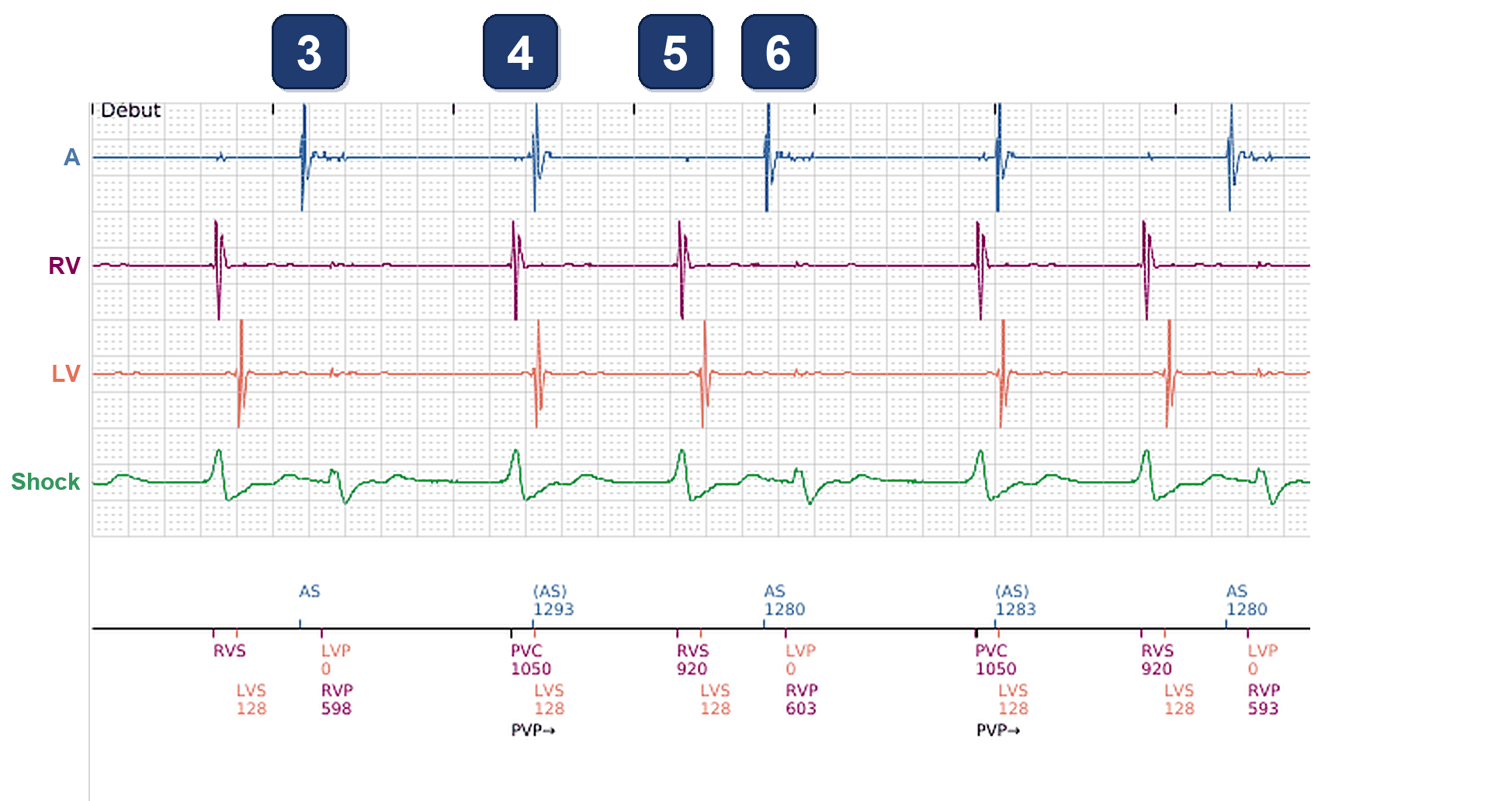
- Real-time EGM of the transmission. A sinus atrial event is sensed (AS; A-A 1280-1293 ms on this strip, 46-47 bpm) and tracked: LVP and RVP together 120 ms later (sensed AV delay, LV offset 0) = a BiV paced beat
- 1050 ms after the BiV beat, an escape beat is sensed (RV first, LV 128 ms later) with no atrial event before it: for the device it is a PVC, and PVARP is extended (PVP→). The next sinus atrial event comes 120 ms later, inside PVARP: (AS), sensed but not tracked = functional atrial undersensing
- The escape rhythm goes on: RVS 920 ms (65 bpm), faster than the sinus rhythm, LV sensed 128 ms after the RV: no CRT
- The next atrial event comes 480 ms after the escape beat, outside PVARP: it is tracked (AS 1280, then LVP and RVP 603) and the cycle starts again: one BiV beat in three
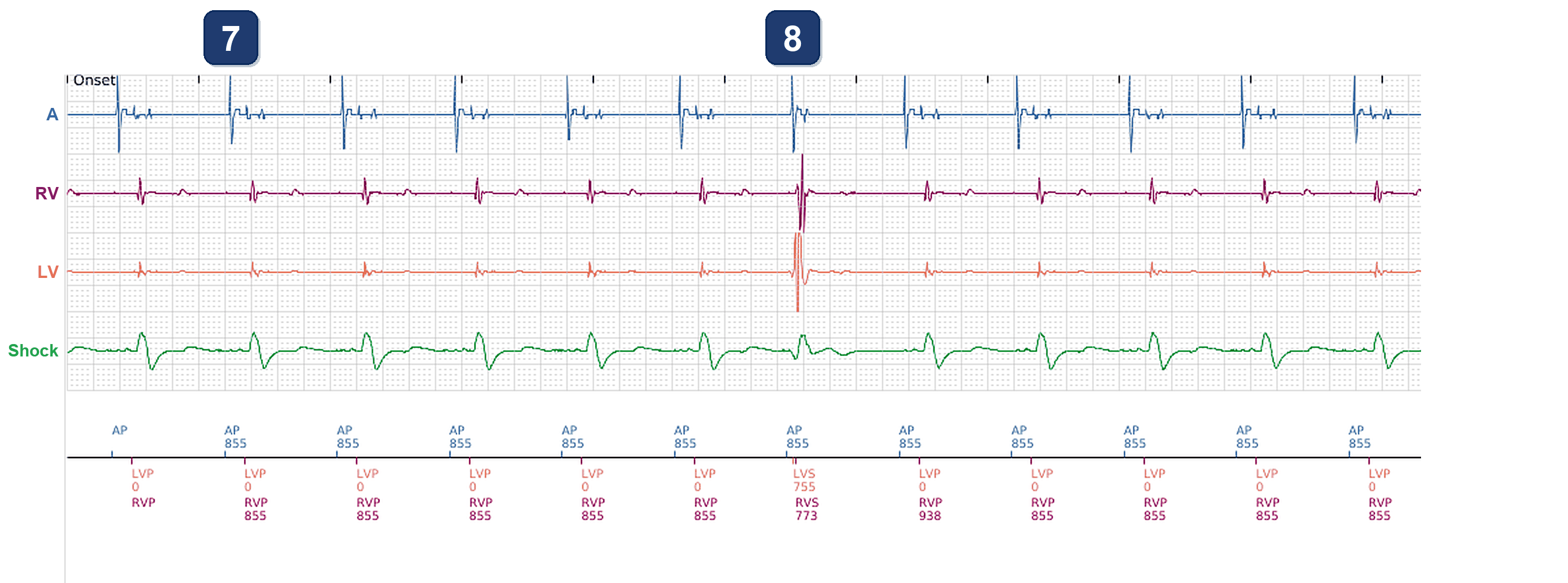
- After reprogramming to DDD 70: atrial pacing every 855 ms (70 bpm), ahead of the escape rhythm, with LVP and RVP together 150 ms later (paced AV delay): BiV pacing on almost every beat
- One of three sensed beats in 30 s: 50 ms after an atrial pace, too early to be conducted from it, the LV is sensed first (LVS 755) and the RV 18 ms later (RVS 773); no pacing on this beat, then BiV pacing again
Points to remember
- With a slow sinus rhythm (46-47 bpm here) and a faster escape rhythm (65 bpm), the ventricles beat before the next atrial event. With a lower rate of 50 bpm the device never paces the atrium ahead of them, and CRT is lost although the intrinsic atrial amplitude is high (2.0-3.3 mV)
- Each escape beat after a paced beat is taken for a PVC: the next atrial event falls in the extended PVARP and is not tracked (functional atrial undersensing), so only one beat in three is BiV paced
- No alert flagged it: the daily % of LV pacing fell from 99-100% to 17-22% in two days, while the mean heart rate rose from about 53 to 70 bpm. Read the % LV pacing trend together with the heart rate trend
- The fix is to pace the atrium faster than the escape rhythm: at DDD 70 (every 855 ms, against 920 ms for the escape rhythm), atrial pacing followed by BiV pacing returns on almost every beat
Summary
- A slow sinus rhythm (46-47 bpm) lets a faster escape rhythm (65 bpm) take over: each escape beat after a BiV beat is labelled a PVC, the next atrial event falls in PVARP, and only one beat in three is BiV paced. DDD 70 brings back atrial and BiV pacing
Clinical pearl
A sinus rate slower than the patient’s own escape rhythm costs CRT: the ventricles beat before the next atrial event can be tracked. Pacing the atrium faster than the escape rhythm (here DDD 70) brings BiV pacing back
Practice out loud
Just describe the tracing. What do you think is going on? Describing the numbers can help.
00:00
0%
—
From Boston Scientific CRT — clinical cases by M. Strik. Published by Cardiocases. Every numbered marker on a recording is explained in the list beneath it; tap a marker on the trace or an entry in the list.